- Category
- Meat
- State
- Fresh
- Usual unit
- g
What it is
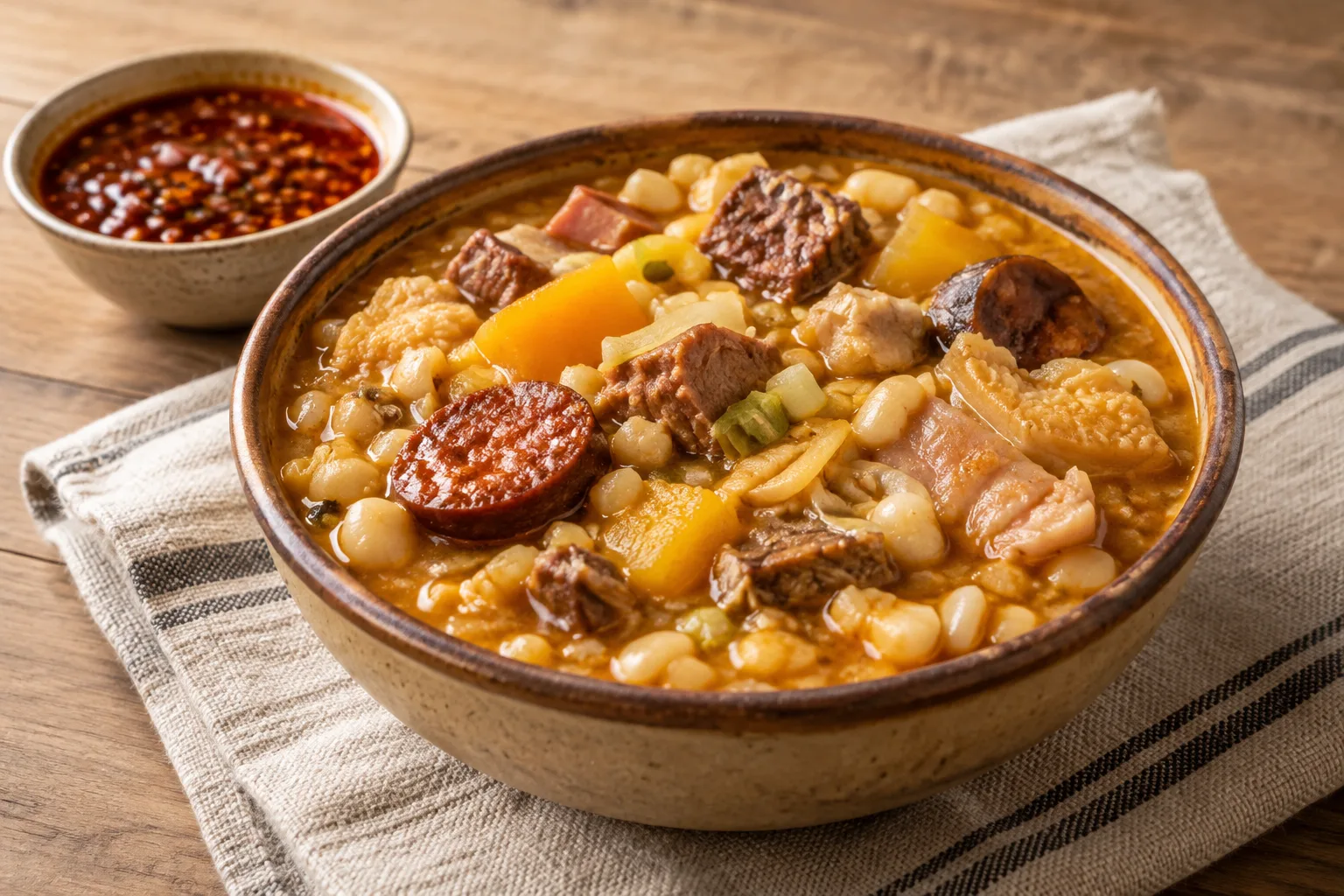
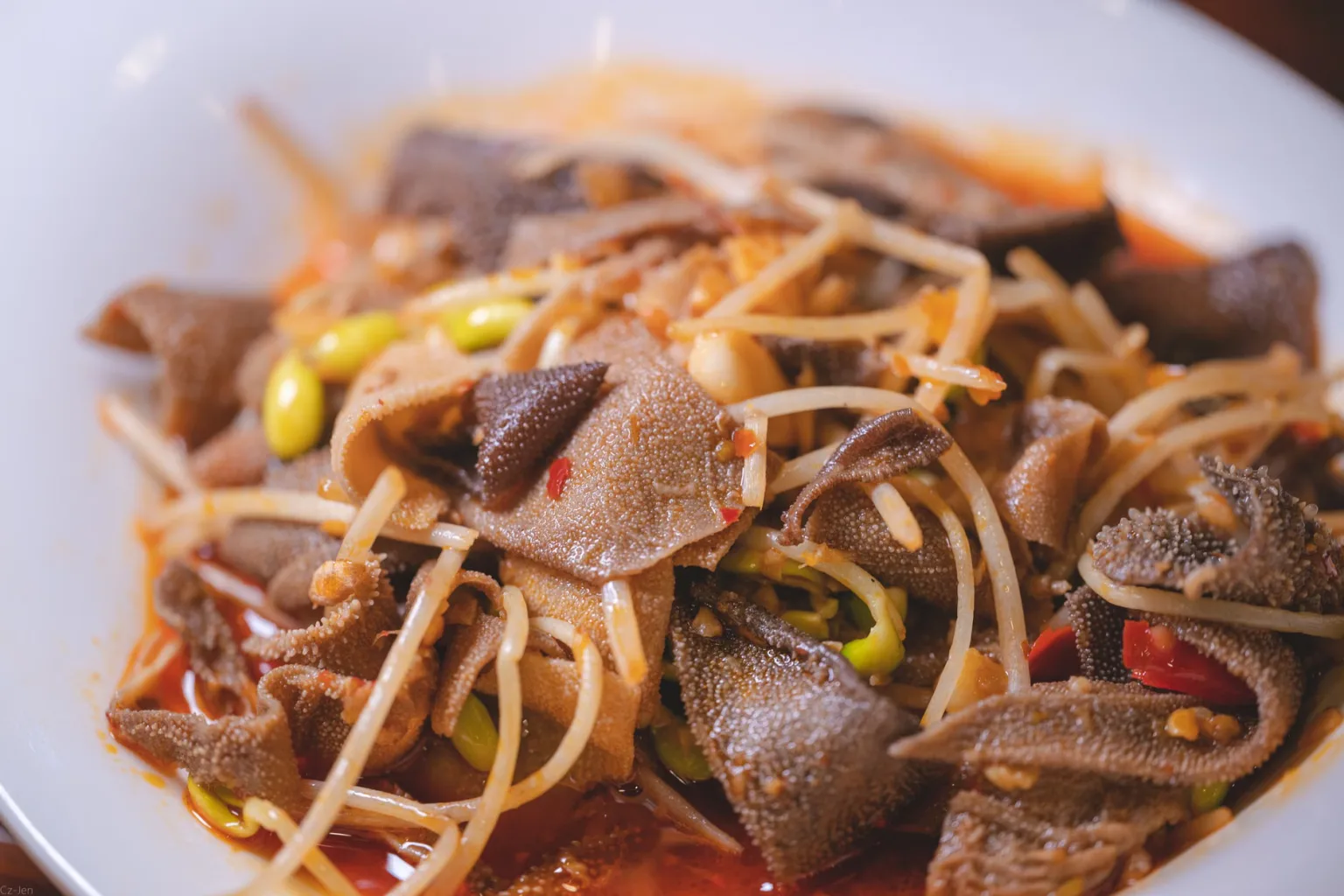
Beef tripe is edible offal from a bovine animal’s stomach. The name can refer to different cuts and preparations in different places, so it is useful to check with the seller which part is being offered and whether it has already been cleaned. In cooking, it is often cut into pieces for soups or stews. It is also prepared in strips and grilled. Tripe is not an ordinary muscle cut: it has a distinctive texture, and the result depends on the cut and how it is cooked for the dish.
When to use it
Use beef tripe when you want the distinctive texture of offal in a soup or stew. Cleaned, cut pieces can be cooked as part of a broth-based dish with vegetables or other ingredients. You can also choose it for a preparation in which it is cut into strips and grilled. Since the word tripe can describe different regional products and dishes, ask whether the piece is cleaned and which cut you are buying before choosing a recipe.
How to use it
First check whether the tripe you bought has already been cleaned; preparation can vary by product and seller. Cut it into pieces for soup or stew, or into strips for a grilled preparation. Cook it as part of the chosen dish until it reaches the texture you want, and follow the product’s or seller’s handling and storage directions. It can be served in soup with accompaniments such as rice, arepa, avocado, cilantro, or lemon. Regional recipes vary, so no single combination is required.
Flavour and texture
Tripe is particularly known for its offal texture; its flavor is not necessarily identical across cuts and preparations. The cut, cleaning, and cooking method affect the result. In soups and stews it is served in pieces, while a grilled preparation may use strips. If you are unfamiliar with the piece, ask how it is prepared before deciding how to cook it.
How to choose it
Choose a piece whose presentation you can identify, and ask whether it has already been cleaned or cut. The term can cover different regional preparations, so checking with the seller can help you avoid buying a cut that does not suit your intended dish. For packaged tripe, check the label and follow the seller’s handling and storage directions.
Storage
Store beef tripe according to the instructions on its packaging or those provided by the seller. Check the label if it is packaged; if you do not have clear guidance, ask the seller before storing or using it. No single storage temperature or duration can be specified here for every presentation.
Substitutions
No direct substitute with supported equivalent texture and culinary function is established for beef tripe. Leaving it out of a soup or stew changes the dish rather than replacing it. Switching from soup to a grilled preparation changes the method, but still uses tripe.
Common mistakes
Assuming that every piece of tripe is cleaned or that all cuts and presentations are the same can lead to an unsuitable preparation. Check how the piece is sold and cut it for the intended dish. Do not assume another ingredient will preserve tripe’s distinctive texture.
Safety and allergens
Check the label and follow the product’s handling and storage instructions. If you have a food allergy, check ingredient information for prepared products and ask about allergens in any accompaniments or finished dish.
Culinary uses
- Main ingredient in soups and stews
- Offal served in strips or pieces as a cooked dish
Recommended techniques
- Clean and cut into pieces before cooking
- Cook in a soup or stew
- Cut into strips for grilling
Pairs well with
- Rice
- Arepa
- Avocado
- Cilantro
- Lemon
Frequently asked questions
What is beef tripe?
It is edible offal from a bovine animal’s stomach. The name and presentation can vary by region.
How is beef tripe commonly cooked?
It is used in soups and stews, and it can also be sliced into strips for grilling.
Is tripe always sold cleaned?
Do not assume that every product is prepared the same way. Ask the seller whether it is cleaned and check the product directions.
Ingredient allergens
Allergen listThere are no verified associations for these ingredients yet.
Estimated nutrition
- Fat
- 3.69 g
- Saturates
- 1.29 g
- Carbohydrate
- 0 g
- Sugars
- 0 g
- Fibre
- 0 g
- Protein
- 12.1 g
- Salt
- 0.24 g
Sources and review
Automatically researched, cross-checked and validated content. Sources consulted:
- Alérgenos alimentarios | EFSA www.efsa.europa.eu/es/safe2eat/food-allergens
- Client Challenge doi.org/10.2307/jj.27939689.16
- Regionalismo y centralismo culinario en un manuscrito huancaíno del siglo XIX : influencias y sabores | OpenAlex openalex.org/W2981277873
- Agencia Española de Seguridad Alimentaria y Nutrición www.aesan.gob.es/
- Allergies - Food Safety - European Commission food.ec.europa.eu/food-safety/campaign-2026/allergies_en
- Food Allergies | FDA www.fda.gov/food/nutrition-food-labeling-and-critical-foods/food-allergies
- Food allergens | Food Safety and Quality | FAO www.fao.org/food-safety/scientific-advice/food-allergens/en
- Food Allergy Labeling Laws: International Guidelines for Residents and Travelers - PMC pmc.ncbi.nlm.nih.gov/articles/PMC10169132/
- Food allergen portal | Food Standards Australia New Zealand www.foodstandards.gov.au/consumer/foodallergies/food-allergen-portal
- Food allergen labelling and information requirements technical guidance - GOV.UK www.gov.uk/government/publications/food-allergen-labelling-and-information-requirements-tech…
- ¿Qué es el mondongo? Aprende a Cocinarlo | Recetas Nestlé® www.recetasnestle.com.co/blog-sabor/recetas-caseras/historia-mondongo
- - YouTube www.youtube.com/watch?v=ejt16XsmXEA
- Mondongo, la sopia tradicional de Venezuela bonviveur.com/es/recetas/mondongo
- Receta de Mondongo Panameño: Auténtica y Deliciosa – Productos Del Día productosdeldia.com/blogs/informacion/receta-de-mondongo-panameno-autentica-y-deliciosa