- Category
- Meat
- State
- Fresh
- Usual unit
- unit
What it is
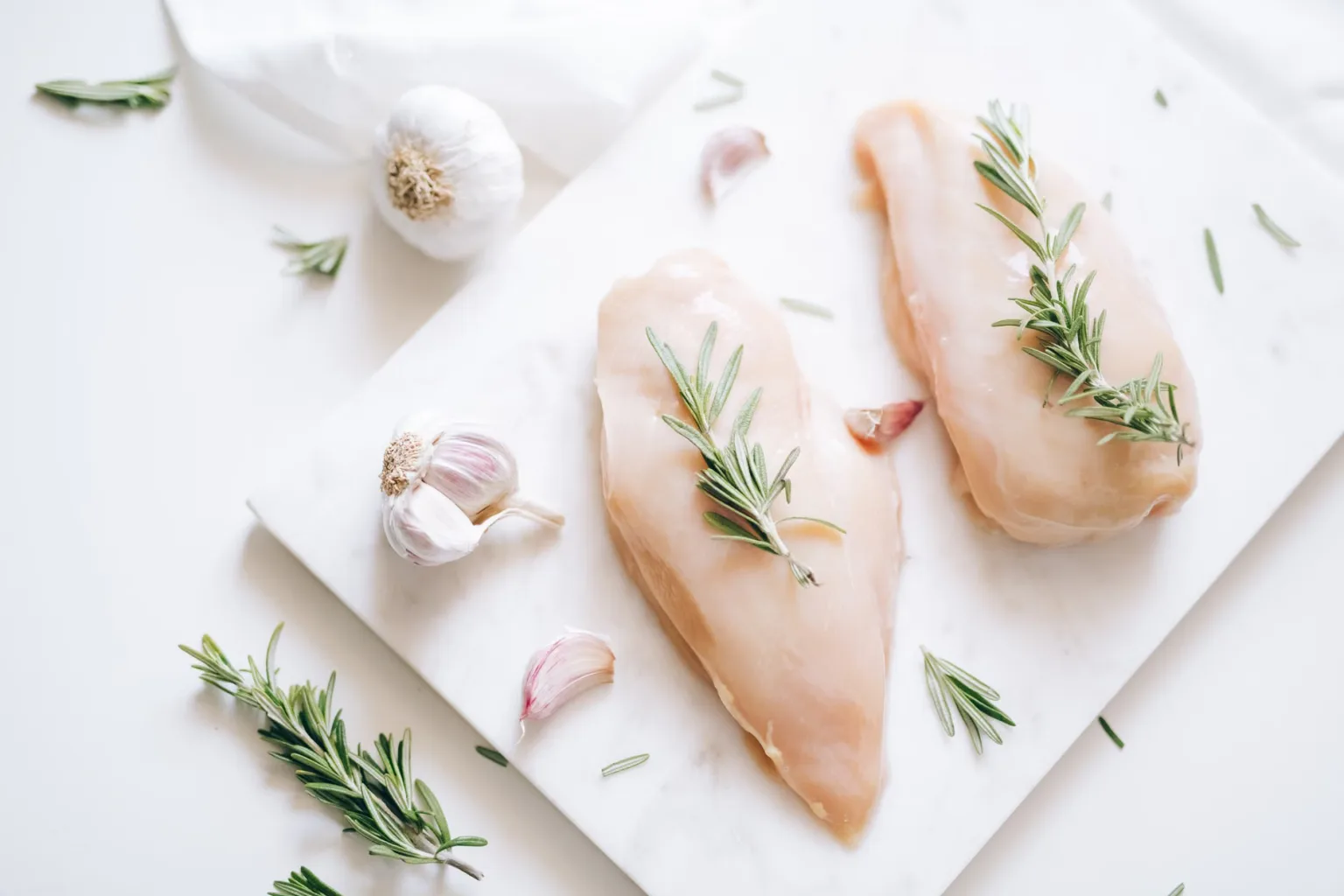
A boneless chicken breast is meat from the breast of a chicken with the bones removed. It may be sold whole or butterflied into fillets, and packs can also differ in whether the skin is present and how thick the pieces are, so check the label before choosing a method. The meat has a fairly mild flavour and works well with seasonings and sauces. It can be served as a main dish or, once cooked, sliced or shredded for salads, wraps, sandwiches and grain bowls. Thickness and cooking method influence the final texture; pieces of unequal size may finish cooking at different times. This cut is useful in many everyday preparations, but it does not automatically replace every other chicken cut without adjustments to how it is portioned and cooked.
When to use it
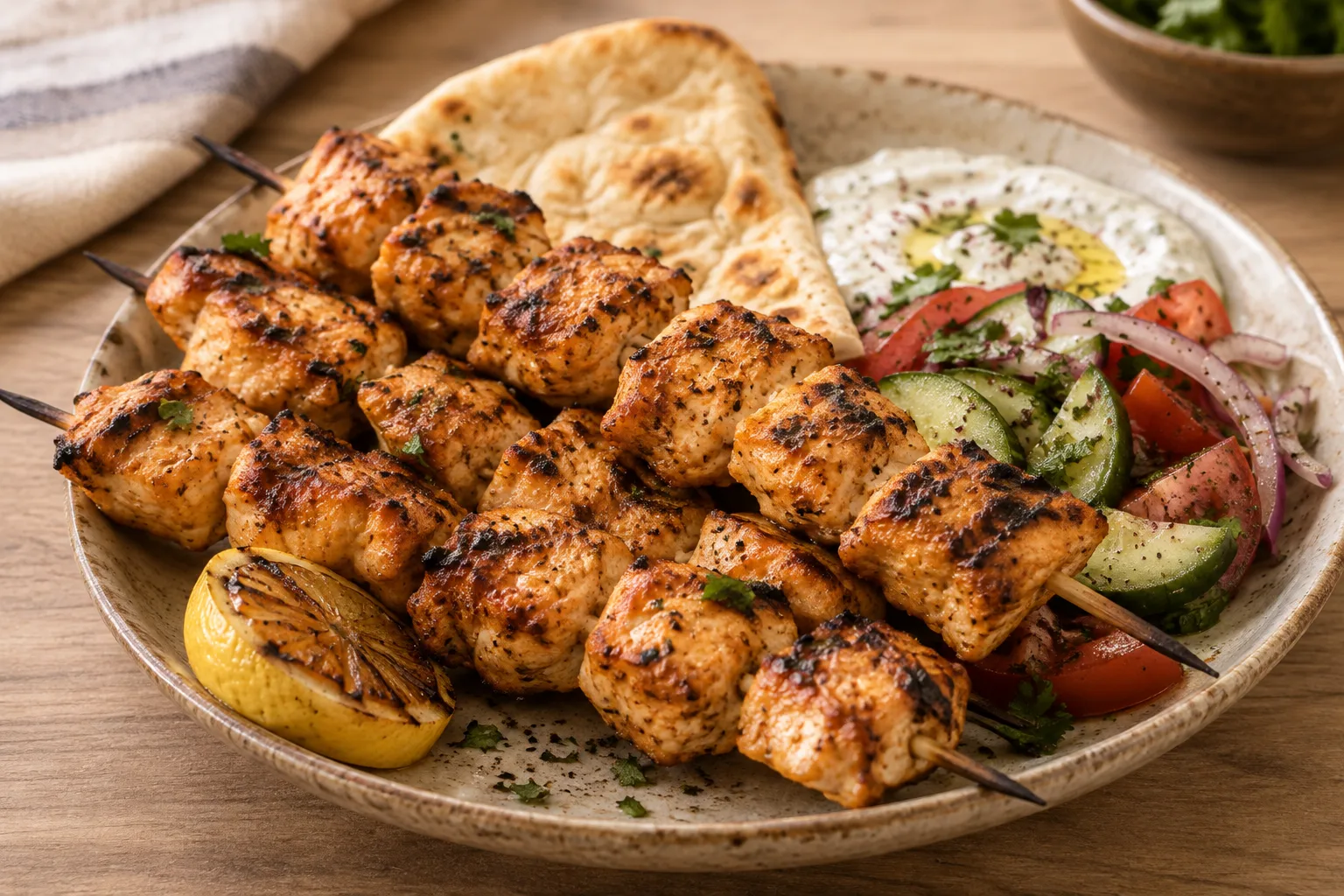
Choose boneless chicken breast when you want a boneless poultry cut that can be served whole or adapted for other dishes. A whole breast can be served with rice or vegetables; strips or cubes can go into stir-fries and skewers, while cooked, shredded meat works in salads, wraps and sandwiches. Its mild flavour suits marinades with lemon, garlic and herbs as well as sauces. Match the cut to the method: thin fillets and thick whole pieces will not cook in the same way. Chicken breast can also be pan-cooked, grilled or oven-baked.
How to use it
Check the pack and portion the meat to suit the recipe: cook it whole, butterfly it into fillets, or cut it into strips or cubes. Season with salt, pepper, garlic, herbs or spices, or use a marinade; lemon and herbs are one possible flavour combination. For browning, use a pan or grill; oven-baking is another option. Some preparations finish the meat covered with a little liquid. There is no single cooking time for every breast: thickness, size and method all matter. Follow current official food-safety advice in your area and the package instructions when handling, cooking and storing raw poultry. Let cooked meat rest briefly before slicing if that suits the dish. Alternatively, cook it, shred it and add it to salads, wraps, sandwiches or rice bowls.
Flavour and texture
Chicken breast has a mild flavour that takes well to marinades, spices and sauces. Properly cooked, it can be tender and juicy, but it can dry out if overcooked. Thin fillets and thick whole breasts produce different textures, so adapt the cooking method and keep an eye on the result rather than treating every piece alike.
How to choose it
Check that the pack identifies the cut as boneless chicken breast, and note whether it is skin-on, whole or sliced, and whether the pieces are a similar thickness. Choose a format that suits your recipe; evenly sized pieces make it easier to cook them consistently. Follow the storage directions on the pack, and read the ingredient list for added ingredients in marinated or prepared products.
Storage
Store the product according to its package directions and the official food-safety guidance that applies where you live. There is no universal storage period established here for every product, so do not infer one from the meat’s appearance. For product-specific advice, check its label and current local official guidance.
Substitutions
Boneless chicken thigh can work in a similar role in dishes that allow chicken, but its shape differs and cutting or cooking adjustments may be needed. If a recipe calls for cooked chicken, cooked, shredded breast can stand in for other cooked chicken pieces; it is not a direct replacement where a raw whole fillet must be browned.
Common mistakes
Cooking every breast for the same length of time despite different thicknesses can produce uneven results. Avoid extending the cooking without checking the result, and do not assume seasoning alone will keep the meat from drying out. Match the method to the piece and follow official food-safety guidance.
Safety and allergens
This is raw poultry. Follow current official food-safety advice in your area and the package instructions for handling, cooking and storage. This profile does not specify cooking times or temperatures.
Culinary uses
- main protein
- filling or topping for salads, wraps and grain bowls
Recommended techniques
- pan-searing
- grilling
- oven-roasting
- marinating
Pairs well with
- lemon
- leafy greens
- rice
- garlic and herbs
Frequently asked questions
How can boneless chicken breast be cooked?
It can be cooked in a pan, on a grill or in an oven. Adjust the method to the thickness and follow official food-safety guidance.
What flavours go well with chicken breast?
Its mild flavour works with lemon, garlic, herbs and spices. It can also be served with rice or leafy vegetables.
Can it be used in salads or wraps?
Yes. Once cooked, slice or shred it and add it to salads, wraps, sandwiches or grain bowls.
Ingredient allergens
Allergen listThere are no verified associations for these ingredients yet.
Estimated nutrition
- Fat
- 2.62 g
- Saturates
- 0.56 g
- Carbohydrate
- 0 g
- Sugars
- 0 g
- Fibre
- 0 g
- Protein
- 22.5 g
- Salt
- 0.11 g
Sources and review
Automatically researched, cross-checked and validated content. Sources consulted:
- Alérgenos alimentarios | EFSA www.efsa.europa.eu/es/safe2eat/food-allergens
- ¿Por qué la muerte es origen de miedos y tabúes? doi.org/10.64628/aao.fccyk3qj3
- 30 recetas de pechuga de pollo para la comida o la cena www.elle.com/es/gourmet/recetas-cocina/g63359475/recetas-pechuga-pollo/
- 8 usos del pollo en la cocina que no conocías www.cashfresh.es/8-usos-del-pollo-en-la-cocina-que-no-conocias/
- Carne de pollo - Wikipedia, la enciclopedia libre es.wikipedia.org/wiki/Carne_de_pollo
- Agencia Española de Seguridad Alimentaria y Nutrición www.aesan.gob.es/
- La cocina de Rebeca: Pechuga de pollo a baja temperatura (cocinada al vacío) www.lacocinaderebeca.es/2018/05/pechuga-pollo-baja-temperatura-vacio.html
- Cómo cocinar la pechuga de pollo para que quede sabrosa y jugosa (y 11 recetas para d www.directoalpaladar.com/curso-de-cocina/como-cocinar-pechuga-pollo-quede-sabrosa-jugosa-11-…
- Ficha Técnica de PECHUGAS DE POLLO S/H laabuelamarga.com/fichas-tecnicas/FT00130202.pdf
- Descubre recetas únicas con pechuga deshuesada que te encantarán cookpad.com/es/buscar/pechuga%20deshuesada
- Evolución del léxico culinario desde 1932 a 1972 | OpenAlex openalex.org/W2291578502
- Food Allergies | FDA www.fda.gov/food/nutrition-food-labeling-and-critical-foods/food-allergies
- Food allergens | Food Safety and Quality | FAO www.fao.org/food-safety/scientific-advice/food-allergens/en
- Food allergen labelling and information requirements technical guidance - GOV.UK www.gov.uk/government/publications/food-allergen-labelling-and-information-requirements-tech…
- Cuatro formas de hacer las pechugas para que queden jugosas | Te lo llevas fresco | El Comidista | EL PAÍS elpais.com/gastronomia/el-comidista/2021/04/29/articulo/1619706229_760839.html
- - YouTube www.youtube.com/watch?v=g9d_y_4E9Bs
- La Aesan amplía la alerta por sésamo no declarado en productos a base de pollo de Aldi y Carrefour | FACUA facua.org/noticias/la-aesan-amplia-la-alerta-por-sesamo-no-declarado-en-productos-a-base-de-…