- Category
- Vegetables
- State
- Fresh
- Usual unit
- g
What it is
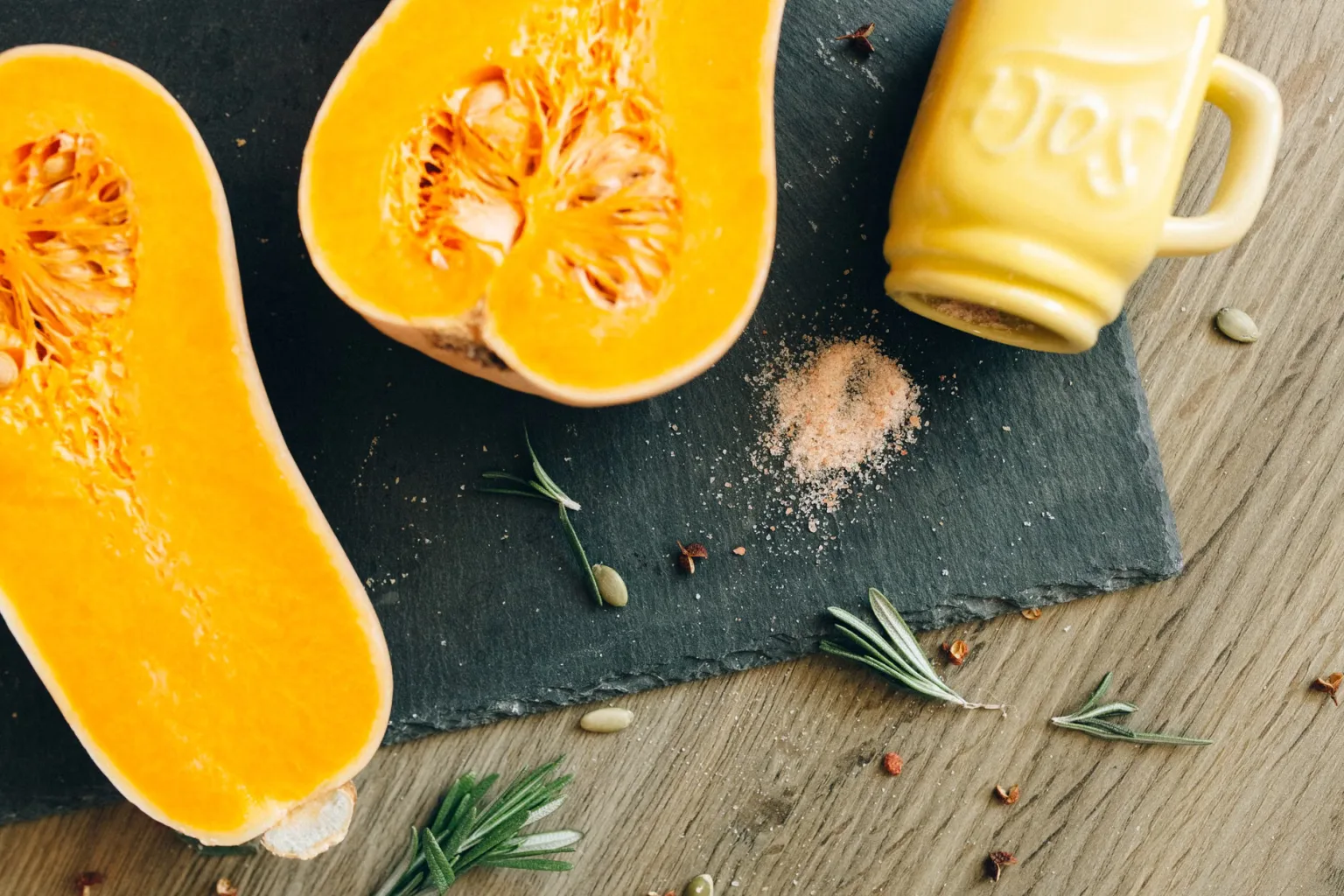
Butternut squash is a fresh squash variety, known as zapallo anco or anquito in parts of South America. It belongs to the cucurbit family. The fruit is used for its flesh, which can be cooked in halves or pieces and combined with other ingredients. In the kitchen, it can be roasted, boiled, steamed or grilled. It can also be made into a purée for savoury or sweet preparations. Colour, texture and flavour vary among squash varieties and with the cooking method, so choose how to prepare it with the desired result in mind.
When to use it
Use it when you want cooked squash to serve in pieces, add to a salad or turn into a purée. Roasting is one option for serving it with rocket or adding it to a salad with other ingredients. Boiled or steamed squash can be part of a simple dish or used in a blended preparation. It can also be used in sweet recipes, such as a squash preserve or spiced drink. Since different squashes can vary in texture and flavour, choose a preparation that suits the result you want.
How to use it
Clean the outside thoroughly with a brush before cutting. Cut it into halves or pieces according to the cooking method and how you plan to serve it; use a stable board and keep pieces from rolling. You can roast, boil, steam or grill it, then serve the flesh in pieces or purée it. For a salad, combine roasted squash with rocket; documented combinations also include lentils, almonds, raisins, lettuce and carrots. In sweet preparations, cooked squash can be combined with spices such as cinnamon and ginger. The final texture depends on the variety and cooking method, so check the flesh before blending or serving.
Flavour and texture
Butternut squash has orange flesh, but flavour and texture are not identical across all squashes. Variety and cooking both affect the result. Cooked flesh can be served in pieces or blended into a purée; roasted squash can also be added to salads. Choose a method to suit whether you want distinct pieces or a soft, even preparation.
How to choose it
Choose a squash with a firm, hard skin and no soft areas. The flesh should look dry and dull; shiny flesh can indicate early harvesting and may be less sweet. Squash varieties differ in texture and flavour, so consider how you will use it. For roasting or purée, look for a firm squash without visible damage.
Storage
The available guidance for a whole, uncut squash is to keep it in a cool, dark place. Once cut, refrigerate it and use it soon; the exact storage time depends on the variety and storage conditions, so do not assume a precise duration for every squash. Keep the flesh protected and check its condition before cooking.
Substitutions
Another squash variety can be used in roasted dishes or purée. Kabocha and Hokkaido, for example, are also described for those uses, although their texture and flavour may differ from butternut squash. Do not assume the swap will give exactly the same result; adjust the cooking and presentation to the flesh’s consistency.
Common mistakes
Do not choose a squash with soft areas or ignore the appearance of the flesh: shiny flesh can indicate early harvesting and may be less sweet. Do not assume every variety will make the same purée or roast to the same texture. Clean the outside before cutting, and avoid working with unstable pieces.
Safety and allergens
Clean the outside thoroughly before preparing it and use a stable board when cutting. Choose another squash if the one you have is damaged or has soft areas. For packaged products or preparations containing other ingredients, check the label and relevant allergen information.
Culinary uses
- Pulpa para cocinar y servir como guarnición o componente de un plato.
- Base para purés y preparaciones dulces, siguiendo los usos descritos para la calabaza.
Recommended techniques
- Asar, en mitades o trozos.
- Hervir o cocinar al vapor hasta que la pulpa esté tierna.
- Cocinar a la parrilla en trozos o mitades.
Pairs well with
- Lentejas y rúcula, en una ensalada con zapallo asado.
- Almendras, pasas, lechuga y zanahoria, en una ensalada.
- Canela y jengibre, en una preparación dulce o bebida de zapallo.
Frequently asked questions
What is a good way to cook butternut squash?
You can roast, boil, steam or grill it in halves or pieces. Choose the method based on whether you want to serve it in pieces or blend it.
Can butternut squash be used in sweet dishes?
Yes. Cooked squash can be used in sweet preparations; documented uses include cinnamon and other spices.
How do I choose a squash?
Look for a hard, firm skin without soft areas. Dry, dull-looking flesh is preferable to flesh that looks shiny.
Ingredient allergens
Allergen listThere are no verified associations for these ingredients yet.
Estimated nutrition
- Fat
- 0 g
- Saturates
- 0 g
- Carbohydrate
- 11.8 g
- Sugars
- 2.35 g
- Fibre
- 2.4 g
- Protein
- 1.18 g
- Salt
- 0 g
Sources and review
Automatically researched, cross-checked and validated content. Sources consulted:
- Alérgenos alimentarios | EFSA www.efsa.europa.eu/es/safe2eat/food-allergens
- Client Challenge doi.org/10.2307/jj.27939689.16
- Calabaza - Wikipedia, la enciclopedia libre es.wikipedia.org/wiki/Calabaza
- Agencia Española de Seguridad Alimentaria y Nutrición www.aesan.gob.es/
- El amaranto, propiedades, usos y aplicación en la gastronomía | OpenAlex openalex.org/W20082531
- Food Allergies | FDA www.fda.gov/food/nutrition-food-labeling-and-critical-foods/food-allergies
- Food allergens | Food Safety and Quality | FAO www.fao.org/food-safety/scientific-advice/food-allergens/en
- Allergen labelling for food businesses | Food Standards Australia New Zealand www.foodstandards.gov.au/business/labelling/allergen-labelling
- Zapallo: rico, económico y disponible todo el año : Prensa Gobierno de Mendoza www.mendoza.gov.ar/prensa/zapallo-rico-economico-y-todo-el-ano-en-gondola/
- Allergen guidance for food businesses - GOV.UK www.gov.uk/government/publications/allergen-guidance-for-food-businesses/allergen-guidance-f…
- Zapallo Anco: Características, Cultivo Y Cuidados www.fecoagro.com.ar/zapallo-anco-caracteristicas-cultivo-y-cuidados/
- - YouTube www.youtube.com/watch?v=HeJy6IILqL8
- El zapallo un alimento versátil y con historia amec.com.uy/blog/recetas/el-zapallo-un-alimento-versatil-y-con-historia/
- CÓMO COCINAR LA CALABAZA: 4 TEXTURAS Y TRUCOS PARA APROVECHARLA www.alambique.com/blog/como-cocinar-calabaza-n796?srsltid=AYCX9vLBWLhVD6zdFdTRfuTwXxsQgg5jtx…
- AESAN da las claves para los que sufren alergias alimentarias www.qcom.es/aesan/consumo/aesan-da-las-claves-para-los-que-sufren-alergias-alimentarias_6886…