- Category
- Grains, flour and pasta
- State
- Dry
- Usual unit
- g
What it is
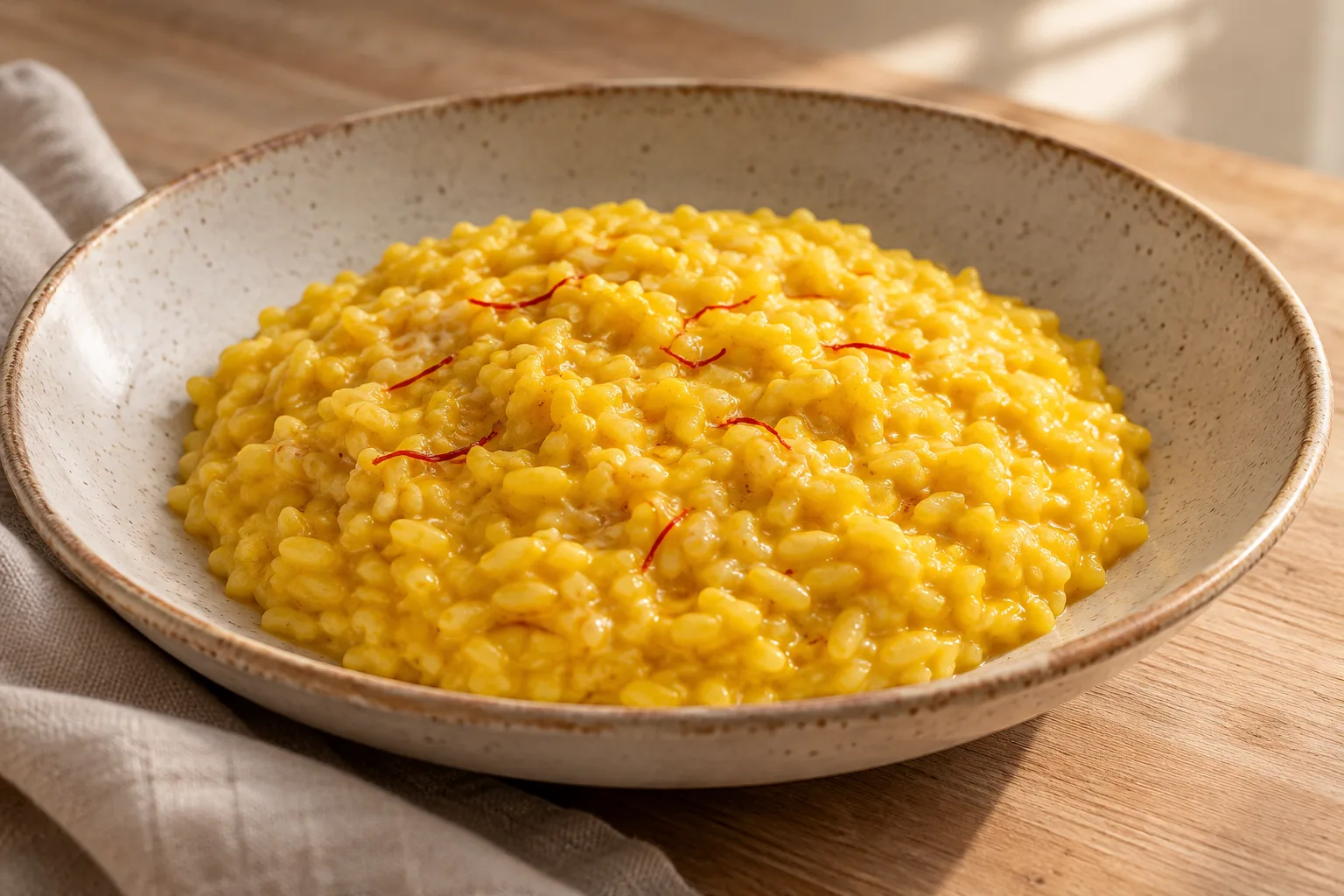
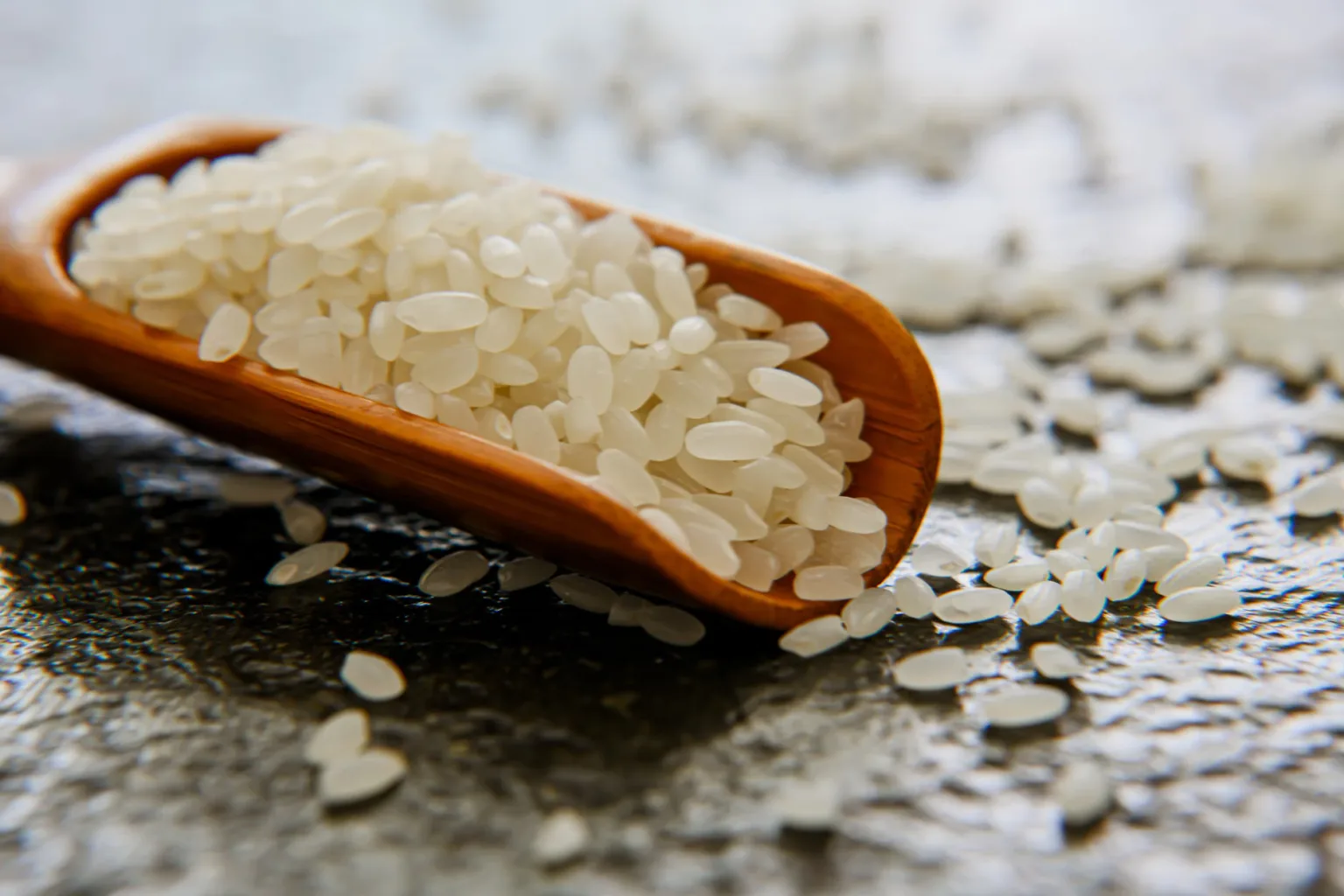
Carnaroli rice is a medium-grain, rounded white rice variety in the japonica group. It is often used in Italian cooking, particularly for risotto, because the grains can remain firm during cooking while contributing to a creamy consistency. Its ability to take up liquid and the flavours of accompanying ingredients also makes it useful in other rice dishes, including pilaf, salads and regional preparations. The finished texture depends on the recipe and cooking method: the variety alone does not guarantee a particular result.
When to use it
Choose Carnaroli when making risotto and you want grains that keep their shape while the dish develops a creamy consistency. It can also suit rice dishes where a firm grain that absorbs flavour is useful, such as pilaf, salads or some regional preparations. If a recipe relies on a particular rice variety, follow that choice: other varieties may behave differently in texture or absorption. For a dish where separate grains are important, use the method specified by the recipe rather than assuming Carnaroli will behave like any long-grain rice.
How to use it
For risotto, have the broth ready and cook the rice in a pan according to the recipe: add liquid gradually and stir so the rice cooks evenly. Check the texture as it cooks, since there is no universal cooking time and results can vary with the product and equipment. Aim for a grain that remains firm and a creamy overall consistency, without assuming the variety removes the need to adjust liquid or cooking. Carnaroli can also be cooked as pilaf or used in salads; follow the instructions for that preparation rather than automatically applying the risotto method to a different dish.
Flavour and texture
The rice has a mild flavour that lets other ingredients and seasonings come through. When cooked, the grain can remain firm and take up liquid and flavour; in risotto, released starch helps give the dish a creamy consistency. The final texture depends on the method and recipe, so check the rice while it cooks instead of relying on a fixed time.
How to choose it
Look for a pack clearly labelled Carnaroli rice and check that the packaging is intact and the contents appear clean. If you want the characteristics of this variety, make sure the product is identified specifically as Carnaroli rather than simply as risotto rice. It may be sold white or wholegrain, so check which form suits your recipe; the two should not automatically be assumed to cook or feel alike.
Storage
Keep the dry rice in its packaging or in a clean, tightly closed container, and follow the storage directions on the label. Avoid exposing it to moisture or strong odours from other foods. If the pack gives specific instructions, follow those; no universal storage duration is established here.
Substitutions
Arborio can replace Carnaroli in risotto, but the varieties do not have identical starch characteristics or texture. Vialone Nano is another option, although it may release less starch and produce a less compact result. Bomba is also mentioned as a risotto option, but its grain and cooking behaviour differ. Adapt the method to the recipe and check the texture as it cooks.
Common mistakes
Do not assume all rice varieties used for risotto behave in the same way. Replacing Carnaroli can change absorption, starch release and the final texture. Nor should the risotto method be transferred unchanged to a salad or pilaf: the dish and technique determine the result.
Safety and allergens
Follow the package and recipe directions for handling and cooking. Check the label of the specific product, especially if it contains ingredients in addition to rice.
Culinary uses
- Base for risotto
- Grain for rice dishes, salads and pilaf
Recommended techniques
- Cook gradually with broth, stirring, for risotto
- Cook as pilaf or prepare for a rice salad
Pairs well with
- Broth and vegetables
- Cheese and butter in traditional risotto
Frequently asked questions
What dishes is Carnaroli rice mainly used for?
It is used especially for risotto. It can also be prepared as pilaf and used in salads and other rice dishes.
Can I replace Carnaroli with Arborio?
Yes. Arborio is an option for risotto, though the varieties may differ in texture and cooking behaviour.
Will Carnaroli always make a creamy dish?
Not by itself. Creaminess depends on the method, liquid and recipe; in risotto, cooking and stirring help shape the result.
Ingredient allergens
Allergen listThere are no verified associations for these ingredients yet.
Estimated nutrition
- Fat
- 1.02 g
- Saturates
- 0.41 g
- Carbohydrate
- 77.6 g
- Sugars
- 0 g
- Fibre
- 4.1 g
- Protein
- 8.16 g
- Salt
- 0 g
Sources and review
Automatically researched, cross-checked and validated content. Sources consulted:
- ¿Por qué la muerte es origen de miedos y tabúes? doi.org/10.64628/aao.fccyk3qj3
- Client Challenge doi.org/10.2307/jj.27939689.16
- Arroz - Wikipedia, la enciclopedia libre es.wikipedia.org/wiki/Arroz
- Consumers’ Preferences for a Local Food Product: The Case of a New Carnaroli Rice Product in Lombardy - PMC pmc.ncbi.nlm.nih.gov/articles/PMC5505088/
- Restaurant Judgement - Ente Nazionale Risi www.enterisi.it/servizi/menu/dinamica.aspx?ID=19138
- Arroz Carnaroli www.gastronomiaycia.com/arroz-carnaroli/
- ¿Cuál es el mejor tipo de arroz para risotto? lafamigliarestaurantes.com/blog/cual-es-el-mejor-arroz-para-risotto/
- Arroz para risotto: variedades, características y cuál comprar panepanna.es/arroz-y-risotto-afinidades-y-divergencias-segunda-parte-variedades-y-caracteris…
- Carnaroli, the 'king of rice' turns 80 - Gift www.greatitalianfoodtrade.it/en/cereals/rice/carnaroli-king-of-risi-80-years/
- Production of carnaroli rice, arborio rice and black venere www.risoguerrini.it/italian-quality-rice.html
- RISODUOMO | 100% PURE CARNAROLI RICE www.risoduomo.it/en/
- ISTAT, A DICEMBRE 2024 EXPORT +1,9 www.enterisi.it/upload/enterisi/rassegnastampa/AGRAPRESS17febag2025_7289_4274.pdf