- Category
- Dairy and eggs
- State
- Fresh
- Usual unit
- slice
What it is
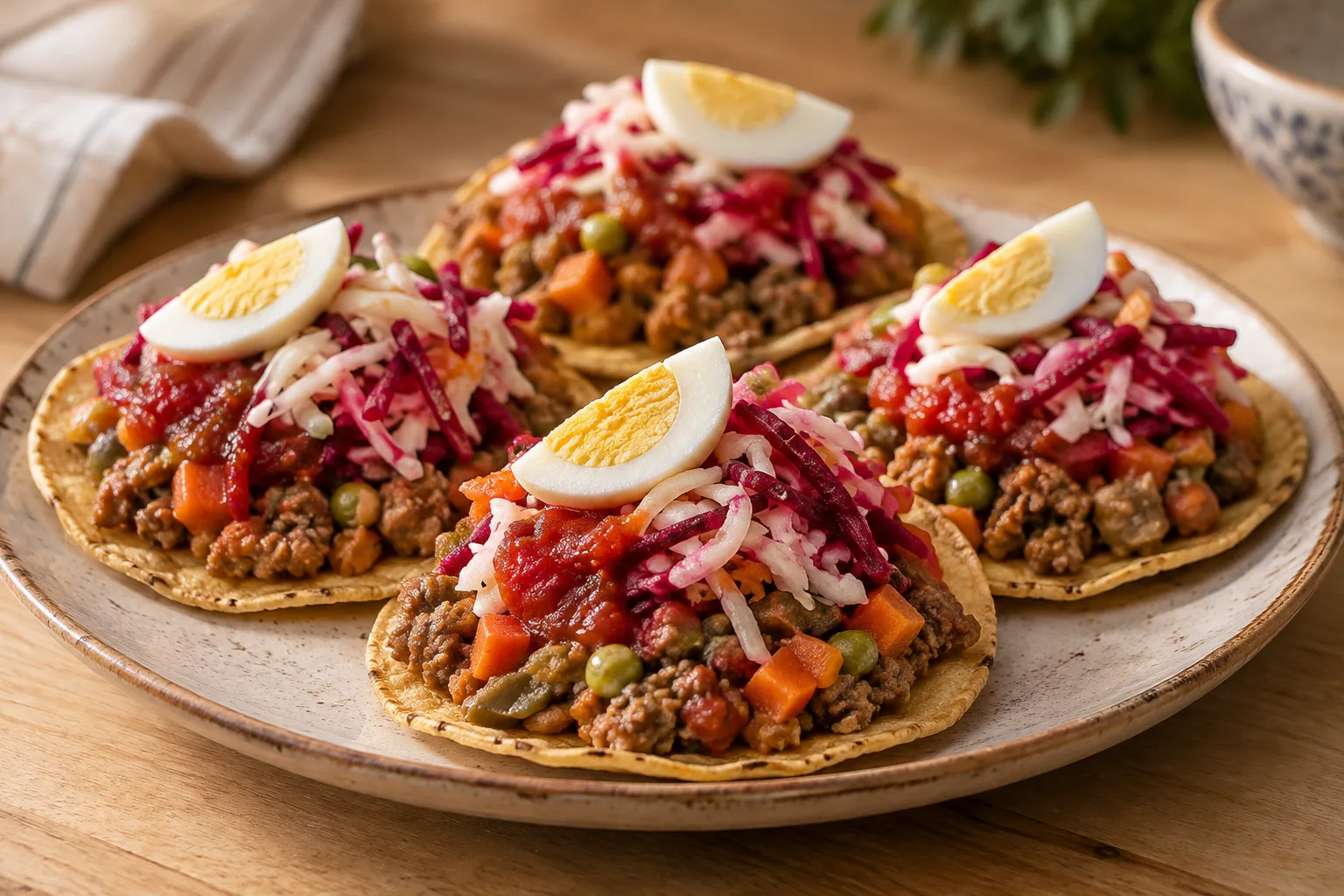
Cooked egg is an egg in which the white and yolk have set through cooking. When fully cooked, both parts are firm; other egg preparations may leave the yolk softer or partly liquid, so not every cooked-egg preparation has exactly the same texture. It can be served whole, sliced, diced, halved, grated or crumbled. In cooking it works as an ingredient in salads, fillings and sandwiches, and as an addition to soups and creamy dishes. It is also served stuffed or as part of cold plates. Egg is an allergen that must be declared in the European Union, so this ingredient profile is not a recommendation for anyone with an egg allergy.
When to use it
Use cooked egg when you want to add a tender, distinctive ingredient to a salad, sandwich or filling. Sliced or diced pieces are easy to distribute; grated or crumbled egg can be scattered over soups and creamy dishes. It can also be used to make stuffed eggs, with the halves serving as the base for a filling. In cold dishes it pairs with vegetables, potatoes, olives or tuna, and can add contrast to creamy preparations. Choose the cut to suit the result: visible pieces for a salad, small fragments to blend into a filling, or halves for individual portions.
How to use it
Peel the cooked egg and cut it with a knife into slices or dice, depending on the dish. For salads, add the pieces at the end if you want them to keep their shape, or fold them in gently if you want them distributed throughout. For a filling, halve the egg and, if the preparation calls for it, crumble the yolk with the other ingredients; you can also chop the whole egg for a sandwich filling. For soups and creams, use it diced, grated or crumbled as a topping. Match the cut to the use and avoid crushing it if you want recognisable pieces. Cooked egg is a different ingredient from raw egg; these serving ideas do not replace safe food-handling practices.
Flavour and texture
Cooked egg has a mild, familiar flavour, with a firm white and a yolk that is more tender and crumbly when fully cooked. Cut into pieces, it keeps a visible shape; grated or crumbled, it blends more readily into a filling or topping. The exact texture depends on the degree of cooking: a less-set yolk is creamier than that of a hard-cooked egg. Its restrained flavour allows it to pair with vegetables, tuna, potatoes and sauces without necessarily being overwhelmed by them.
How to choose it
When buying eggs to cook, check that the packaging is intact and read the storage and date information on the label. If buying ready-cooked, packaged egg, check the ingredients, the condition of the pack and the maker’s storage instructions. Egg size can affect how evenly pieces look when cut; choose similarly sized eggs when you want consistent slices or halves. Do not assume a prepared food is free from other allergens just because it contains cooked egg: check the information for the product and its accompaniments.
Storage
For packaged cooked egg, follow the storage directions on the label and observe any instructions that apply after opening. If you cook it at home, handle it with clean utensils and keep it under appropriate conditions for cooked food; the available evidence does not establish a universal storage period or a specific temperature here. Avoid leaving it exposed unnecessarily, and do not use an egg if the product or packaging shows signs of deterioration. If it is added to a prepared salad, filling or sandwich, also follow the storage directions for the other ingredients.
Substitutions
There is no substitute that reproduces the flavour, texture and role of cooked egg all at once. In a salad, beans can provide another substantial ingredient, but their flavour and texture are different. A tuna mixture can be used in a filling, but it is also different and not equivalent. If you need to avoid egg because of an allergy, do not treat these ideas as a safety guarantee: check every product’s ingredients and prevent cross-contact.
Common mistakes
A common mistake is treating every degree of cooking as if it produced the same texture: a fully set yolk does not behave like a partly liquid yolk. The egg can also lose its shape if it is mixed too vigorously after cutting. Cooked egg contains egg, so it is not suitable for avoiding this allergen. With prepared foods, do not assume that sauces or other ingredients are free from allergens; check the label or ask for information about the dish.
Safety and allergens
Egg is among the allergens that must be declared in the European Union. If you are allergic to egg, avoid this ingredient and check allergen information for prepared foods and accompaniments. An intolerance or preference is not the same as an allergy; seek advice from a health professional if you have questions about a reaction. Handle and store cooked egg according to the product instructions and ordinary food-safety practices.
Culinary uses
- proteína y elemento principal en ensaladas y platos fríos
- relleno o cobertura para sándwiches, sopas y cremas
Recommended techniques
- cortar en rodajas o dados
- desmenuzar o rallar
- partir por la mitad y rellenar
Pairs well with
- atún y mayonesa en rellenos
- patata, verduras y aceitunas en ensaladas
- sopas y cremas como guarnición
Frequently asked questions
How can cooked egg be served?
Serve it sliced, diced, halved, grated or crumbled. It works in salads, sandwiches and fillings, and as a topping for soups or creamy dishes.
Does cooked egg still contain the egg allergen?
Yes. Cooked egg is still egg and is not an alternative for someone who needs to avoid this allergen.
What can I use instead of egg in a salad?
Beans can provide another substantial ingredient, but their flavour and texture are not equivalent to cooked egg.
Ingredient allergens
Allergen listDocumented presence
-
Eggs
Cooked egg
Estimated nutrition
- Fat
- 2.07 g
- Saturates
- 0.42 g
- Carbohydrate
- 25.2 g
- Sugars
- 0.4 g
- Fibre
- 1.2 g
- Protein
- 4.54 g
- Salt
- 0.01 g
Sources and review
Automatically researched, cross-checked and validated content. Sources consulted:
- Alérgenos alimentarios | EFSA www.efsa.europa.eu/es/safe2eat/food-allergens
- Client Challenge doi.org/10.2307/jj.27939689.16
- Huevo (alimento) - Wikipedia, la enciclopedia libre es.wikipedia.org/wiki/Huevo_(alimento)
- El huevo: origen, tipos, tamaños, propiedades y elaboraciones www.faborit.com/el-huevo-un-ingrediente-con-muchas-y-buenas-propiedades/
- El huevo en la cocina: usos y secretos | CEAC www.ceac.es/blog/el-huevo-en-la-cocina
- Hoy, huevo hoyhuevo.es/el-huevo-protagonista-de-todos-los-platos-espanoles/
- Más de 20 formas distintas de cocinar un huevo y un cuento lacocinarojadecris.blogspot.com/2020/04/mas-de-20-formas-distintas-de-cocinar-un-huevo-y-un-…
- Los 7 platos para aprovechar el huevo cocido al máximo bonviveur.com/es/recetas/lista/huevo-cocido/
- Agencia Española de Seguridad Alimentaria y Nutrición www.aesan.gob.es/
- Huevo duro | Gastronomía & Cía www.gastronomiaycia.com/huevo-duro/
- Allergies - Food Safety - European Commission food.ec.europa.eu/food-safety/campaign-2026/allergies_en
- Food Allergies | FDA www.fda.gov/food/nutrition-food-labeling-and-critical-foods/food-allergies
- Food allergens | Food Safety and Quality | FAO www.fao.org/food-safety/scientific-advice/food-allergens/en
- Food allergen labelling and information requirements technical guidance - GOV.UK www.gov.uk/government/publications/food-allergen-labelling-and-information-requirements-tech…
- Food safety www.who.int/news-room/fact-sheets/detail/food-safety