- Category
- Pulses
- State
- Other
- Usual unit
- g
What it is
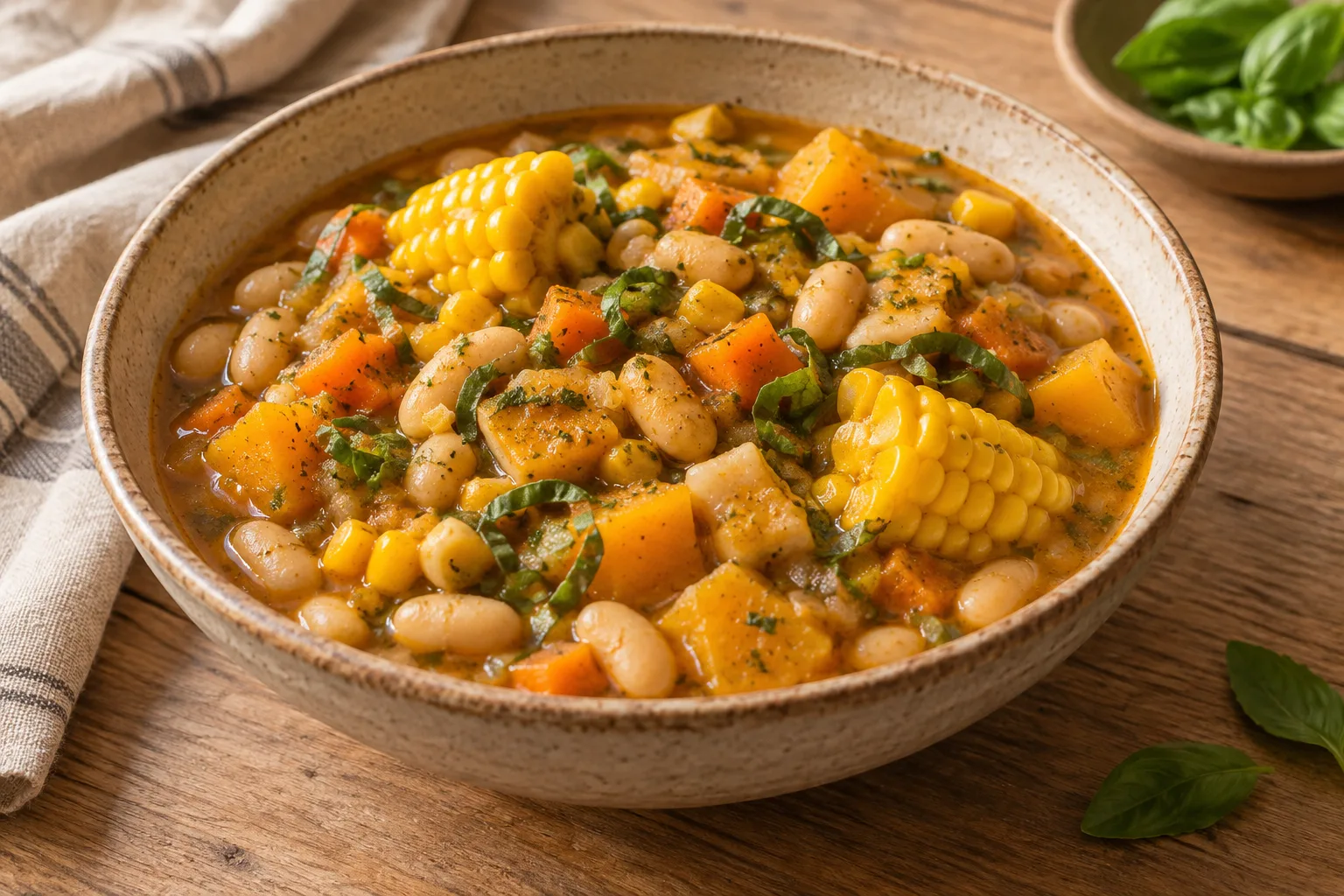
Cooked white beans are legumes that have already been cooked and can be added to a dish without starting with dried beans. The name can cover different white-bean varieties, so size, shape and firmness may vary. Use them whole when you want the beans to keep their shape, or mash and blend them for a thicker mixture. They are versatile in both hot and cold dishes, including stews, salads, creamy preparations and hummus-style dips. For packaged beans, check the label for the ingredient list and product-specific instructions.
When to use it
Use cooked white beans when you want to add a ready-cooked legume without beginning with dried beans. They work in stews and soups with vegetables and seasonings, and in warm or cold salads when you want to keep the beans whole. They can also be mashed or blended into a dip or creamy preparation. Their mild flavour leaves room to tailor the seasoning to the dish. If combining different legumes, allow for differences in size and texture.
How to use it
For packaged beans, check the label and drain them if your dish calls for beans without their liquid. For a salad, toss them whole with vegetables, herbs and a dressing; serve them cold or add them to a warm preparation. For soup or stew, add them with the other ingredients and seasonings, taking care not to crush them if you want them to stay whole. For a dip or cream, mash or blend them and adjust the flavour with the other ingredients in your recipe. They can also be included in mixed-legume dishes or mashed bean preparations. Do not assume that the liquid in the pack is needed: choose according to the texture you want and the product instructions.
Flavour and texture
Their flavour is generally mild and easy to combine with herbs, vegetables and seasonings. Once cooked, they may remain whole and tender or become softer, depending on the variety and preparation. Mashing or blending produces a thicker, more uniform mixture. In a stew they add body; for a salad, keep them whole if you want the beans to remain distinct.
How to choose it
Choose a product whose label clearly identifies the beans and lists its ingredients. For packaged beans, also check the preparation instructions and allergen information, which apply to that specific product. If buying cooked beans unpackaged, ask where to find ingredient and allergen information when you need it.
Storage
The available evidence does not establish one storage period or set of conditions for every form of cooked white beans. Follow the package instructions, including any advice about refrigeration or use after opening. For beans cooked at home, do not infer a storage time from this profile; consult official food-safety guidance that applies to your location and situation.
Substitutions
In stews containing several legumes, other cooked beans or cooked chickpeas can play a similar role, but they are not identical: shape, texture and flavour will differ. Adjust the seasoning and when you add them to suit the result you want. There is no evidence here for an exact substitution across all recipes.
Common mistakes
Do not assume that every white bean has the same firmness or that the liquid in a pack belongs in every recipe. Avoid blending them if you want whole beans in a salad, and do not expect a different variety to produce exactly the same texture. Always check the label of packaged beans.
Safety and allergens
Check the ingredient list and allergen information for the specific product, as composition can vary between products. For unpackaged food, ask for the available allergen information. Follow the storage and use instructions on the package.
Culinary uses
- Main ingredient in stews and soups
- Base for salads, dips and bean patties
Recommended techniques
- Drain and season for salads or warm dishes
- Mash or blend for dips and spreads
Pairs well with
- Tomato, onion, garlic and fresh herbs
- Rice, quinoa, squash and corn
Frequently asked questions
What dishes can I make with cooked white beans?
Add them whole to salads, soups and stews, or mash or blend them for a cream or dip.
Can I blend cooked white beans into a dip?
Yes. Blend or mash them, then adjust the flavour and consistency with the ingredients in your recipe.
Do all packaged cooked beans have the same ingredients?
Not necessarily. Check the specific product label, especially if you need to verify ingredients or allergens.
Ingredient allergens
Allergen listThere are no verified associations for these ingredients yet.
Sources and review
Automatically researched, cross-checked and validated content. Sources consulted:
- Alérgenos alimentarios | EFSA www.efsa.europa.eu/es/safe2eat/food-allergens
- Client Challenge doi.org/10.2307/jj.27939689.16
- Etiquetado de sustancias que causan alergias e intolerancias alimentarias www.aesan.gob.es/seguridad-alimentaria/informacion-alimentaria/etiquetado-sustancias
- Chorizo - Wikipedia, la enciclopedia libre es.wikipedia.org/wiki/Chorizo
- Obtención del ajo negro por reacción de Maillard para el desarrollo de productos culinarios y su aplicación en cocina innovadora | OpenAlex openalex.org/W2991569715
- Allergies - Food Safety - European Commission food.ec.europa.eu/food-safety/campaign-2026/allergies_en
- Food allergens | Food Safety and Quality | FAO www.fao.org/food-safety/scientific-advice/food-allergens/en
- Food allergen portal | Food Standards Australia New Zealand www.foodstandards.gov.au/consumer/foodallergies/food-allergen-portal
- Food allergen labelling and information requirements technical guidance - GOV.UK www.gov.uk/government/publications/food-allergen-labelling-and-information-requirements-tech…
- Have Food Allergies? Read the Label | FDA www.fda.gov/consumers/consumer-updates/have-food-allergies-read-label
- Etiquetado precautorio de alérgenos NO intencionados < Tecoal ® tecoal.net/seguridad-alimentaria/etiquetado-precautorio-alergenos-no-intencionados/
- Agua de cocción de porotos: un ingrediente para alimentos saludables » UNLP unlp.edu.ar/investiga/cienciaenaccion/agua-de-coccion-de-porotos-un-ingrediente-para-aliment…
- - YouTube www.youtube.com/watch?v=GThR2uL8vEk
- Porotos cocidos . Gastronomia.com.uy gastronomia.montevideo.com.uy/Gastronomia/Porotos-cocidos-uc41376
- Recetas con porotos - Paulina Cocina www.paulinacocina.net/ingrediente/porotos
- Recetas imperdibles con porotos blancos: ¡sabrosas y nutritivas! cookpad.com/ar/buscar/porotos%20blancos
- Alérgenos alimentarios: mejoras en el etiquetado |Consumer www.consumer.es/seguridad-alimentaria/nuevas-mejoras-etiquetado-alergenos-alimentos