- Category
- Vegetables
- State
- Fresh
- Usual unit
- unit
What it is
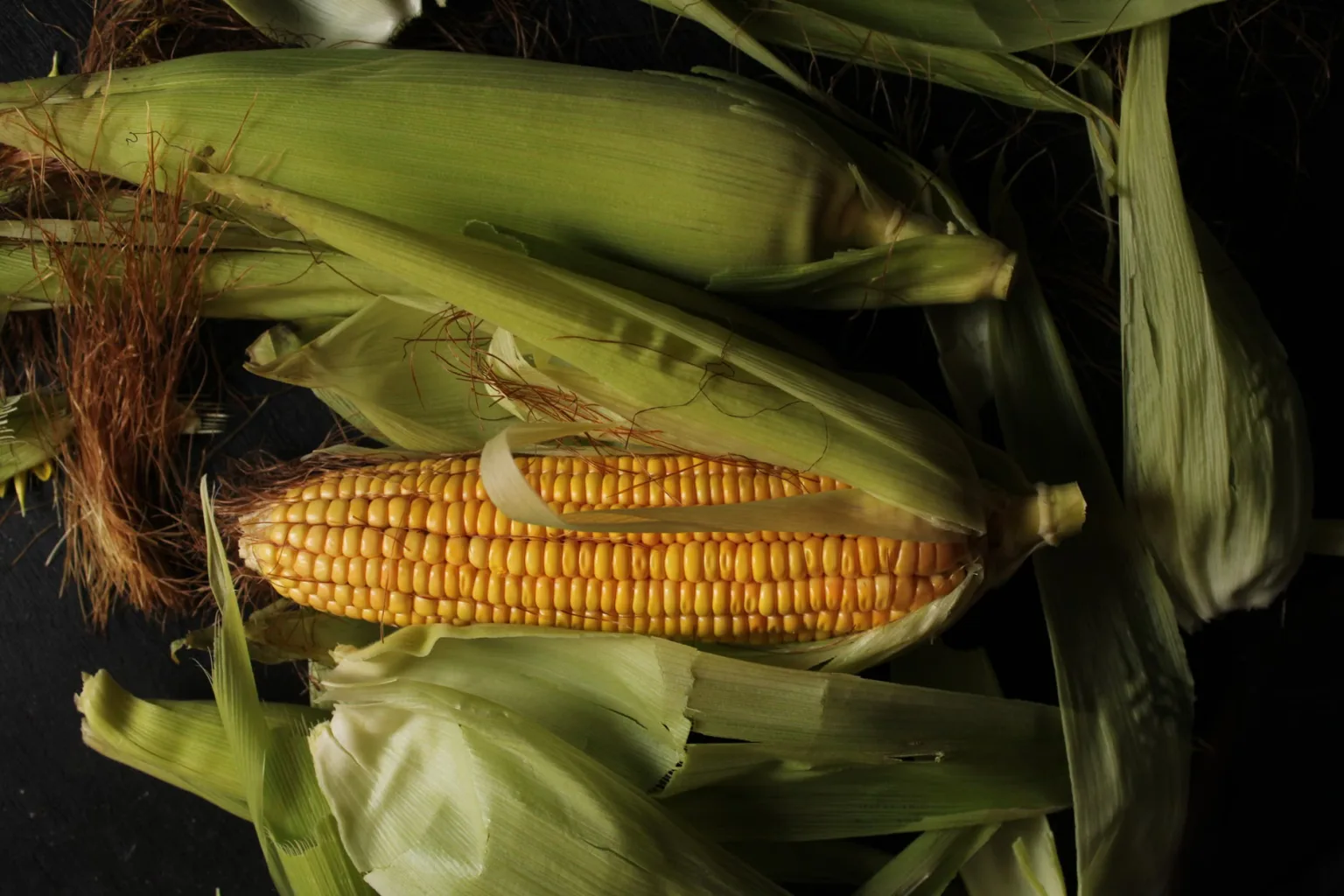
Corn on the cob is an ear of maize with its kernels attached, considered here in its fresh, tender form for cooking and serving directly. Sweet corn is eaten while the kernels are still tender; it is different from dry maize used for flour, meal or popcorn. The cob can be cooked whole and served as a side, or the kernels can be removed for salads, soups, stews and rice dishes. Its flavour and texture can vary with the variety and how mature the kernels are.
When to use it
Choose a cob when you want to serve corn whole as a side, or cook it on a grill, in an oven or in a pan. It is also useful when you would like to remove the kernels after cooking and mix them into salads, soups, stews or rice. If a recipe needs kernels only and the presentation does not matter, you can use canned or frozen corn instead, bearing in mind that its texture and preparation may differ from fresh corn on the cob.
How to use it
Remove the husk and silk before cooking, if present, and choose a method that suits the dish. You can boil, roast or grill the cob, or brown it in a pan. For serving whole, add seasonings such as salt, pepper or butter to taste. To use the kernels in another recipe, let the cob cool enough to handle and cut the kernels off carefully. Add them to salads, soups, stews or rice dishes. Adjust the seasoning at the end, especially when using other salty ingredients.
Flavour and texture
Sweet corn usually has a naturally sweet, vegetal flavour. Tender kernels can be juicy and firm, although sweetness and texture vary with variety and maturity. Grilling, roasting or pan-searing can brown the surface; boiling gives a simpler, moist texture. Canned or frozen corn may have a different texture from fresh corn on the cob.
How to choose it
Choose cobs that look fresh, with well-formed kernels and no visibly damaged areas. For packaged or prepared corn, check the label and ingredient list: contents and added seasonings can vary between products. Fresh corn on the cob, frozen corn and canned corn are not identical in texture or preparation, so choose the format that suits your recipe.
Storage
Store fresh corn on the cob according to any instructions on the label or from the seller, and avoid leaving it at room temperature for unnecessarily long periods. The available evidence does not establish a single storage time for all cobs, since product condition and storage circumstances can vary. Follow package directions for packaged products and refrigerate cooked leftovers in a suitable container.
Substitutions
If fresh corn on the cob is unavailable, use kernels cut from another cob, or canned or frozen corn, depending on the dish. These formats work best when a recipe calls for kernels rather than a whole cob. Frozen corn may need cooking; canned corn is generally already cooked and should be drained. Differences in texture, flavour and added salt can affect the result, so check the label and adjust the seasoning.
Common mistakes
Do not assume fresh corn on the cob, frozen corn and canned corn are exactly interchangeable: texture, preparation and seasonings can differ. Avoid adding salt or other salty ingredients without tasting first, especially when using a packaged product. When cutting off the kernels, hold the cob carefully and work on a stable board to reduce the chance of it slipping.
Safety and allergens
Check the labels of packaged corn and any seasonings you add, especially if you need to avoid an ingredient because of an allergy or intolerance. Handle hot cobs carefully when cutting or serving to avoid burns.
Culinary uses
- Served whole as a simple side dish
- Grilled, roasted or boiled as a base for seasonings
- Cut from the cob and added to salads, soups, stews or rice dishes
Recommended techniques
- Boiling
- Grilling
- Roasting
- Pan-searing
Pairs well with
- Butter and salt
- Black pepper
- Chilli or other spices
Frequently asked questions
How can I cook fresh corn on the cob?
You can boil, roast, grill or pan-sear it. Choose the method according to the texture and finish you want.
Can I use canned corn instead of corn on the cob?
Yes, when the recipe needs kernels rather than a whole cob. Drain it and allow for differences in texture and seasoning.
Can I add the kernels to other dishes?
Yes. Cut them off the cob and add them to salads, soups, stews or rice dishes.
Ingredient allergens
Allergen listThere are no verified associations for these ingredients yet.
Estimated nutrition
- Fat
- 1.18 g
- Saturates
- 0 g
- Carbohydrate
- 22.4 g
- Sugars
- 5.88 g
- Fibre
- 1.2 g
- Protein
- 3.53 g
- Salt
- 0 g
Sources and review
Automatically researched, cross-checked and validated content. Sources consulted:
- Alérgenos alimentarios | EFSA www.efsa.europa.eu/es/safe2eat/food-allergens
- Client Challenge doi.org/10.2307/jj.27939689.16
- El patrimonio culinario peruano ante UNESCO | OpenAlex openalex.org/W187461318
- Etiquetado de sustancias que causan alergias e intolerancias alimentarias www.aesan.gob.es/seguridad-alimentaria/informacion-alimentaria/etiquetado-sustancias
- Maíz: qué es, tipos y beneficios bonviveur.com/es/noticias/maiz
- Maíz dulce: propiedades, calorías, tipos y cómo utilizarlo en la cocina | Gastronomía & Cía www.gastronomiaycia.com/maiz-dulce/
- Maíz dulce, el cereal sin gluten que puedes disfrutar como una deliciosa verdura: propiedades, beneficios y cómo cocinarlo en casa www.directoalpaladar.com/ingredientes-y-alimentos/maiz-dulce-cereal-gluten-que-puedes-disfru…
- Mazorca de maíz - Wikipedia, la enciclopedia libre es.wikipedia.org/wiki/Mazorca_de_ma%C3%ADz
- El maíz, un alimento muy versátil | Huercasa www.huercasa.com/maiz-historia-usos-y-propiedades-de-un-producto-unico/el-maiz-un-alimento-m…
- Allergies - Food Safety - European Commission food.ec.europa.eu/food-safety/campaign-2026/allergies_en
- Food Allergies | FDA www.fda.gov/food/nutrition-food-labeling-and-critical-foods/food-allergies
- Risk assessment of food allergens: part 1: review and validation of Codex alimentarius priority allergen list through risk assessment: meeting report www.who.int/publications/i/item/9789240042391
- Food Allergy Labeling Laws: International Guidelines for Residents and Travelers - PMC pmc.ncbi.nlm.nih.gov/articles/PMC10169132/
- Allergen guidance for food businesses - GOV.UK www.gov.uk/government/publications/allergen-guidance-for-food-businesses/allergen-guidance-f…
- Global food safety standards body Codex agrees on new guidance on “may contain” allergen labels www.fao.org/newsroom/detail/global-food-safety-standards-body-codex-adopts-new-guidance-on--…