- Category
- Grains, flour and pasta
- State
- Dry
- Usual unit
- g
What it is
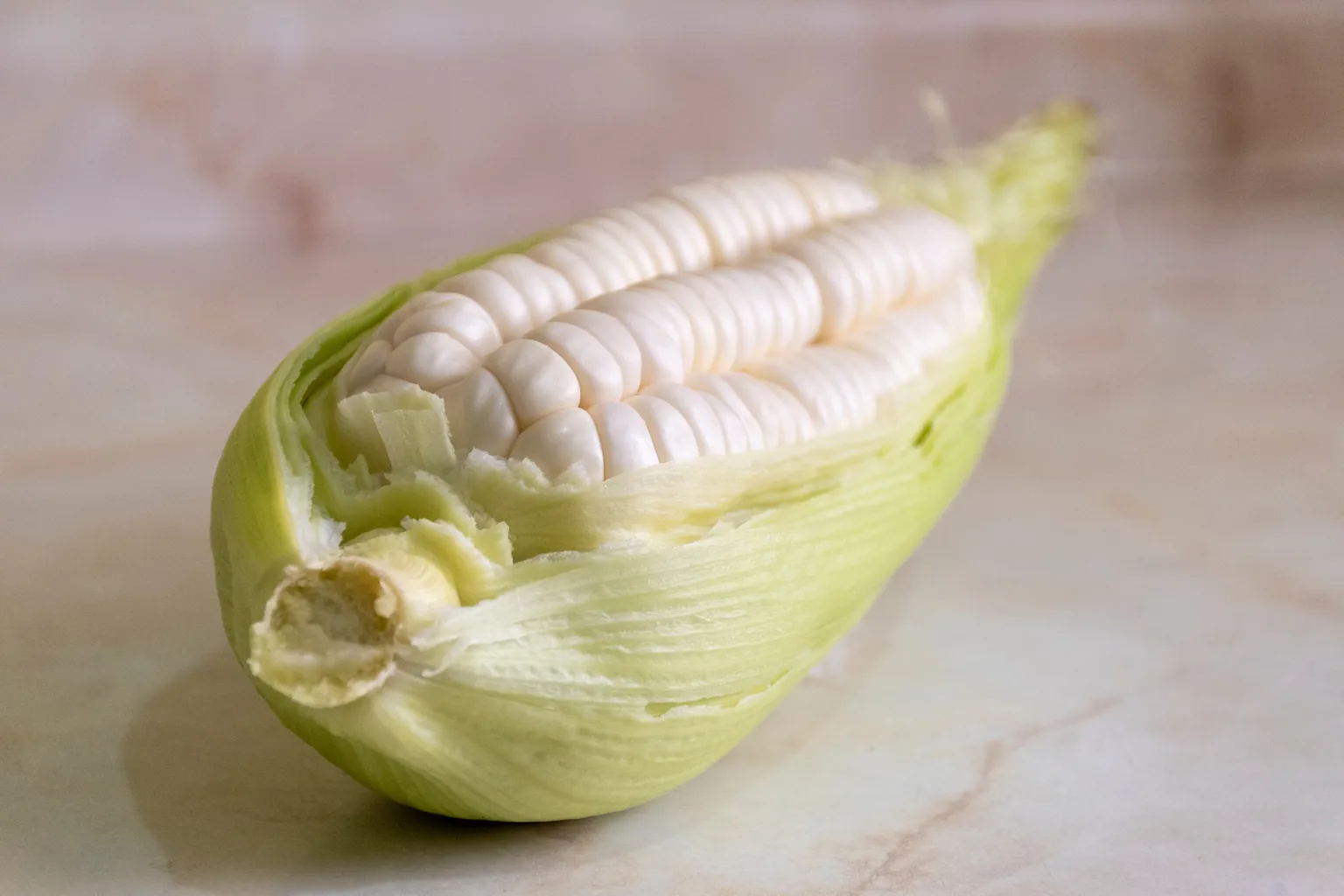
Cracked white corn is white maize presented as pieces rather than fine flour. “Cracked” describes the grain size or milling, but does not by itself tell you whether the product has been precooked or how long it needs to soften. White corn is a maize variety, and coarse milling of dry maize is associated with products such as grits and polenta. Treat this ingredient as a coarse-textured maize grain and check the package for its processing and preparation directions. The result can vary from one product to another according to the size of the pieces and any processing they have undergone.
When to use it
Use it when a recipe calls for cracked corn, a coarse maize grain, or a cooked polenta-style base. It can also go into soups when the recipe is designed for a grain that needs to cook and soften in liquid. Do not automatically replace it with fine cornmeal: grain size changes the texture and how the ingredient blends into a dish. If the package says it is precooked or gives specific directions, follow them; otherwise, choose a recipe written for dry cracked corn and adapt the method to the product.
How to use it
First read the package to see whether the corn is precooked, needs soaking, or has manufacturer preparation directions: the word “cracked” does not settle those details. For a cooked preparation, use the liquid and method specified by the recipe, and cook until the desired texture is reached. Stir when the recipe calls for it, and keep an eye on the liquid so the mixture does not become too dry before the pieces soften. For soup, follow a recipe designed for a grain that requires cooking, or for its commercial equivalent; do not add this product at the end as if it were tender canned corn. There is no single cooking time that applies to every grind and product.
Flavour and texture
The ingredient retains the cereal character of white maize, while its texture depends especially on piece size and processing. Once cooked, it can add body to a dish; a coarser grind generally gives a more granular feel than fine meal. The white color identifies the type of maize but does not guarantee identical flavor or texture across brands. Soaking, precooking, and cooking method can affect the result, so use the appearance and directions of the particular product as your guide.
How to choose it
Look for a package clearly identified as cracked white corn and check whether it is dry, precooked, or ready to cook. The stated grain size and preparation directions are useful clues when predicting the result. Choose an intact package with no visible moisture, and avoid confusing the product with fine cornmeal, a differently milled semolina, or whole corn. If you need a particular texture, compare the product description with the texture called for in your recipe.
Storage
Follow the package storage directions, since processing and packaging can differ. For a dry product, keep the package closed in a cool, dry place; after opening, seal it well and keep moisture out. If the package specifies refrigeration or another condition, follow that instruction. Do not use the appearance of the grain as your only guide to shelf life: check the date and the manufacturer's directions.
Substitutions
To keep a coarse texture, look for another cracked maize product or grits of a similar size and check its cooking directions. Maize semolina may work in polenta-style preparations, but a different grind can change both consistency and cooking rate. Fine cornmeal is not a direct replacement for cracked grain. Do not assume quantities or cooking times are interchangeable; adapt the recipe to the substitute's form.
Common mistakes
Do not assume every product called cracked corn is raw, precooked, or interchangeable with every other one. Milling size can affect texture and preparation time, and the name does not confirm whether soaking is needed. Avoid treating it as fine cornmeal or adding it to a recipe without checking the directions. There is no universal cooking time: use the package and a recipe suited to that product.
Safety and allergens
Check the package directions and do not use a damaged package or one showing signs of moisture. If you have a food allergy, check the specific product label and contact the manufacturer if the information is not sufficient.
Culinary uses
- Coarse maize grain for cooked dishes
- Base for polenta-style preparations
Recommended techniques
- Simmer or boil in liquid until the grain is cooked to the texture required by the recipe
- Use as a coarse maize ingredient rather than treating it as fine maize flour
Pairs well with
- Soups
- Polenta-style preparations
Frequently asked questions
Is cracked white corn the same as cornmeal?
Not necessarily. Cracked corn retains larger grain pieces; cornmeal is finer and can produce a different texture.
Does cracked corn need soaking before cooking?
That depends on its processing and piece size. Check the package and choose a recipe suited to that form.
Can I use it for a polenta-style dish?
It can be used in polenta-style preparations when the recipe allows for a coarse grind. The finished texture depends on the product and its directions.
Ingredient allergens
Allergen listThere are no verified associations for these ingredients yet.
Estimated nutrition
- Fat
- 5.18 g
- Saturates
- 0.83 g
- Carbohydrate
- 75.2 g
- Sugars
- 6.47 g
- Fibre
- 16.6 g
- Protein
- 9.72 g
- Salt
- 0.01 g
Sources and review
Automatically researched, cross-checked and validated content. Sources consulted:
- Alérgenos alimentarios | EFSA www.efsa.europa.eu/es/safe2eat/food-allergens
- Client Challenge doi.org/10.2307/jj.27939689.16
- Harinas de maíz ¿Cuántos tipos hay y para qué sirven? - Formacion en Gastronomia www.formacionengastronomia.com/cocina-latina/harinas-de-maiz-cuantos-tipos-hay-y-para-que-si…
- Agencia Española de Seguridad Alimentaria y Nutrición www.aesan.gob.es/
- Maíz: qué es, tipos y beneficios bonviveur.com/es/noticias/maiz
- Zea mays - Wikipedia, la enciclopedia libre es.wikipedia.org/wiki/Zea_mays
- El maíz nativo: un tesoro ancestral en la gastronomía - UNAM Global unamglobal.unam.mx/global_revista/el-maiz-nativo-un-tesoro-ancestral-en-la-gastronomia/
- Nixtamalización de variedades locales seleccionadas de maíz y aplicación a recetas tradicionales y de autor | OpenAlex openalex.org/W2248536553
- Allergies - Food Safety - European Commission food.ec.europa.eu/food-safety/campaign-2026/allergies_en
- Food Allergies | FDA www.fda.gov/food/nutrition-food-labeling-and-critical-foods/food-allergies
- Food allergens | Food Safety and Quality | FAO www.fao.org/food-safety/scientific-advice/food-allergens/en
- Food allergen labelling and information requirements technical guidance - GOV.UK www.gov.uk/government/publications/food-allergen-labelling-and-information-requirements-tech…
- Allergen labelling for consumers | Food Standards Australia New Zealand www.foodstandards.gov.au/consumer/labelling/allergen-labelling
- Maíz blanco o amarillo es cultivo de tradición y desarrollo | Secretaría de Agricultura y Desarrollo Rural | Gobierno | gob.mx www.gob.mx/agricultura/articulos/maiz-blanco-o-amarillo-es-el-cultivo-de-tradicion-y-desarro…
- Nuestro Maíz Blanco y Amarillo alimafra.com/nuestro-ma%C3%ADz
- - YouTube www.youtube.com/watch?v=p9huOSs2S10
- 4.103 recetas muy ricas de maíz blanco compartidas por cocineros caseros- Cookpad cookpad.com/es/buscar/ma%C3%ADz%20blanco