- Category
- Vegetables
- State
- Dry
- Usual unit
- unit
What it is
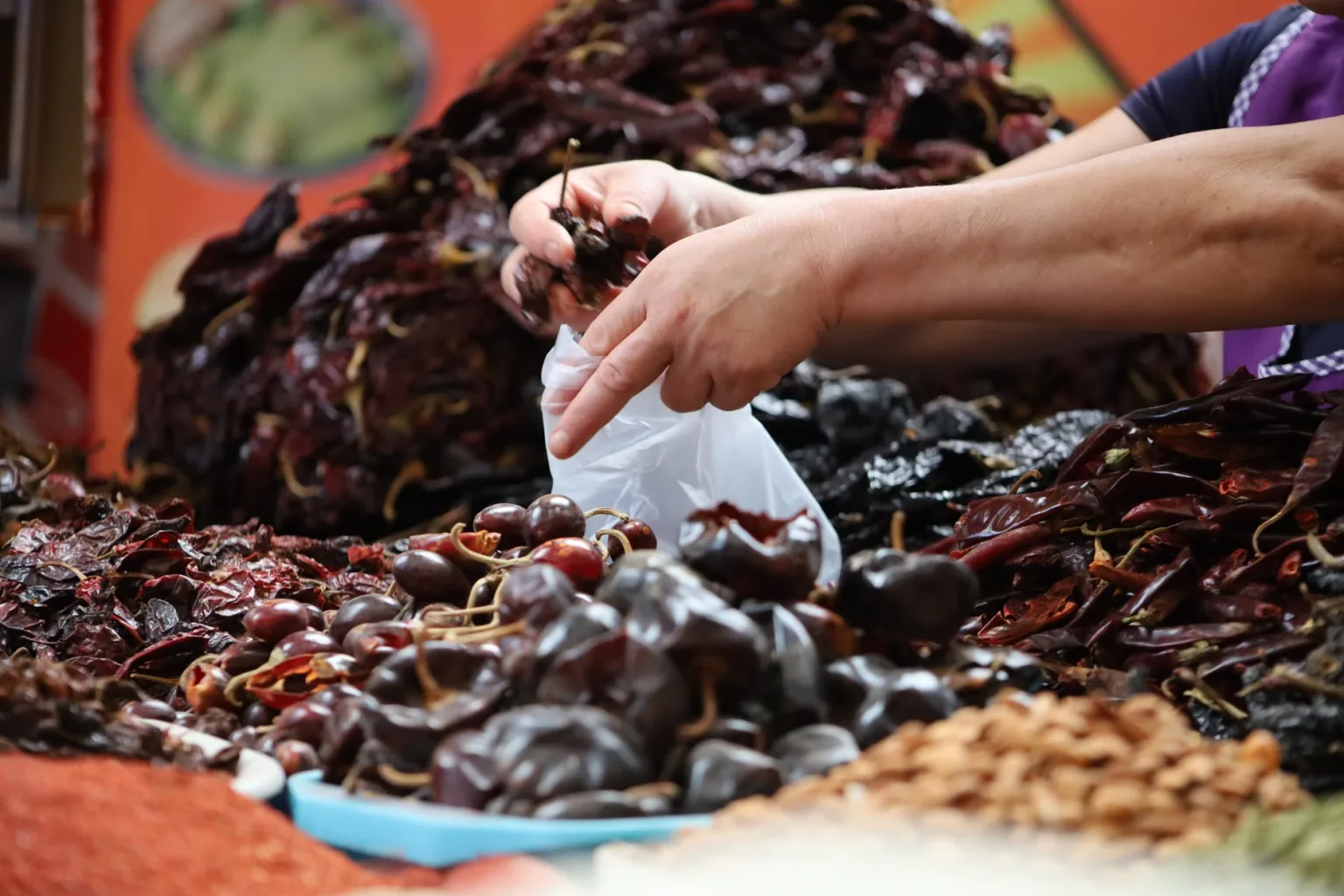
Dried ancho chile is the dehydrated form of a mature poblano chile. It is recognized by its broad, flattened shape, wrinkled skin and color, often described as reddish brown or dark red. Drying changes the fresh chile: its texture is no longer crisp and its flavor becomes concentrated. In cooking, the flesh is used especially to bring color, body and a sweet, fruity profile to dishes such as moles, adobos and red sauces. Ancho is generally described as mild, but heat can vary from one chile to another, so the name does not guarantee an exact level. It should not automatically be confused with mulato chile: both are associated with poblano, but culinary descriptions distinguish ancho by reddish tones and fruity notes, and mulato by a darker color and more chocolate-like notes.
When to use it
Choose ancho chile when you want a sauce, adobo or mole to gain color, body and sweet, fruity flavor rather than relying only on heat. It can be one chile in a blend, alongside varieties such as guajillo or pasilla, or contribute to the flavor of a mole. It is also used in enchilada preparations and saucy stews. Since dried chiles can differ in intensity, add the flesh gradually and taste the mixture before adjusting the heat. If you want a redder, fruitier profile, ancho may suit the dish; if you specifically want darker, more chocolate-like notes, bear in mind that mulato has a different profile.
How to use it
Inspect the chile and remove the stem. If you prefer a less hot sauce or want to reduce bitter notes, remove the seeds and veins too; this is optional and does not guarantee uniform heat. You can toast the chile lightly, taking care not to burn it, then soak it in hot water to soften the flesh. Drain it and blend it with the ingredients for your sauce or adobo, such as tomato, garlic and onion, or with the liquid specified in your recipe. Another common preparation is to boil the chiles before blending them with other ingredients. Use the softened flesh in moles, adobos or red sauces. Taste the mixture before adding more chile: flavor and heat vary from piece to piece. Discard any chile with visible signs of spoilage.
Flavour and texture
Ancho flesh is described as sweet and fruity, with notes reminiscent of dried fruit. Its profile can add depth and color without making heat the defining feature. When dry, it has wrinkled skin; once soaked, the flesh softens and can be blended into sauces and adobos. The precise flavor and heat are not identical in every chile.
How to choose it
Look for whole chiles that are clean and not badly broken; wrinkled skin is typical of the dried product. One culinary description identifies ancho by reddish-brown tones, its broad shape and flexible, glossy skin. Compare the appearance with the label, since regional chile names can vary and ancho is not the same as mulato. For packaged products, check the label and the condition of the package before buying.
Storage
Keep whole chiles in a tightly closed container or bag and keep them dry. One culinary reference describes storing whole chiles in a plastic bag in the freezer to preserve their texture and color. If you freeze them, protect them from moisture and reseal the package after taking out what you need. There is no universally validated storage duration here for every package; follow the manufacturer’s directions and discard the product if it shows signs of spoilage.
Substitutions
Mulato can play a similar role in a mole or sauce, but it is not identical: it is often described as darker and more chocolate-like. Guajillo can be used in sauces or adobos and combined with ancho, though it has a different profile. Taste as you adjust the blend; do not assume a substitute will give the same color, flavor or heat, or that a fixed amount will be equivalent.
Common mistakes
Do not confuse ancho with mulato just because both are associated with poblano: they are described as differing in color and flavor profile. Avoid burning the chile when toasting it, as this can make the result bitter. Do not assume every chile has the same heat. Removing seeds and veins is one preparation option, but it does not guarantee a non-hot result.
Safety and allergens
If you have a food allergy, check the label on packaged products and the information available for unpackaged food. Composition and possible contact with other ingredients depend on the product and how it was made; do not assume a product is allergen-free simply because it is dried chile. Handle and prepare food with clean utensils and follow the package directions.
Culinary uses
- Aporta sabor y color a salsas y adobos
- Da cuerpo y profundidad a moles y guisos
Recommended techniques
- Retirar el tallo, las semillas y las venas antes de usar, si se desea
- Tostar ligeramente y después hidratar en agua caliente para triturar
Pairs well with
- Tomate, ajo y cebolla
- Otros chiles secos como guajillo o pasilla
Frequently asked questions
What chile is dried ancho made from?
It is made from mature poblano chile that has been dried. The dried form has wrinkled skin and a flavor profile different from fresh poblano.
How do you prepare it for a sauce?
You can remove the stem, remove seeds and veins if desired, toast it lightly, then soak it in hot water before blending the flesh.
Are ancho and mulato chiles the same?
No. They are described as different chiles: ancho tends toward reddish tones and fruity notes, while mulato is darker and associated with chocolate-like notes.
Ingredient allergens
Allergen listThere are no verified associations for these ingredients yet.
Estimated nutrition
- Fat
- 8.82 g
- Saturates
- 0 g
- Carbohydrate
- 52.9 g
- Sugars
- 0 g
- Fibre
- 23.5 g
- Protein
- 0.01 g
- Salt
- 0.07 g
Sources and review
Automatically researched, cross-checked and validated content. Sources consulted:
- Alérgenos alimentarios | EFSA www.efsa.europa.eu/es/safe2eat/food-allergens
- Client Challenge doi.org/10.2307/jj.27939689.16
- Agencia Española de Seguridad Alimentaria y Nutrición www.aesan.gob.es/
- Tipos de Chiles Secos Mexicanos: Características y Usos abarrotes.es/blog/chiles-secos-mexicanos-caracteristicas-y-usos/
- Variedades y usos actuales del maíz en el Valle Calchaquí Norte (Salta, Argentina). El aporte de la etnobotánica en la interpretación de los vestigios vegetales del pasado prehispánico | OpenAlex openalex.org/W4313197870
- Food Allergies | FDA www.fda.gov/food/nutrition-food-labeling-and-critical-foods/food-allergies
- Food allergens | Food Safety and Quality | FAO www.fao.org/food-safety/scientific-advice/food-allergens/en
- Allergen labelling for food businesses | Food Standards Australia New Zealand www.foodstandards.gov.au/business/labelling/allergen-labelling
- RISK ASSESSMENT OF FOOD ALLERGENS - IRIS iris.who.int/server/api/core/bitstreams/6c71a3db-88b8-4fcd-a807-f5220eb4fc34/content
- Food allergen labelling and information requirements technical guidance - GOV.UK www.gov.uk/government/publications/food-allergen-labelling-and-information-requirements-tech…
- Tipos de Chiles Secos | Carácteristicas y usos en la Cocina Mexicana www.mexicoenmicocina.com/tipos-de-chiles-secos/
- Chile Ancho Mexicano | Comprar Seco en España jalapenostugitana.es/chile-ancho-mexicano/
- Chile ancho: cuánto pica y cómo se usa | Recetas Mexas recetasmexas.com/guia/chile-ancho
- De chiles frescos a secos: descubre la transformación de este fruto - Culinaria Mexicana www.culinariamexicana.com.mx/chiles-frescos-a-secos/
- Chiles secos son el ingrediente secreto en gastronomía mexicana - The Westside Gazette thewestsidegazette.com/chiles-secos-son-el-ingrediente-secreto-en-gastronomia-mexicana/