- Category
- Herbs and spices
- State
- Dry
- Usual unit
- teaspoon
What it is
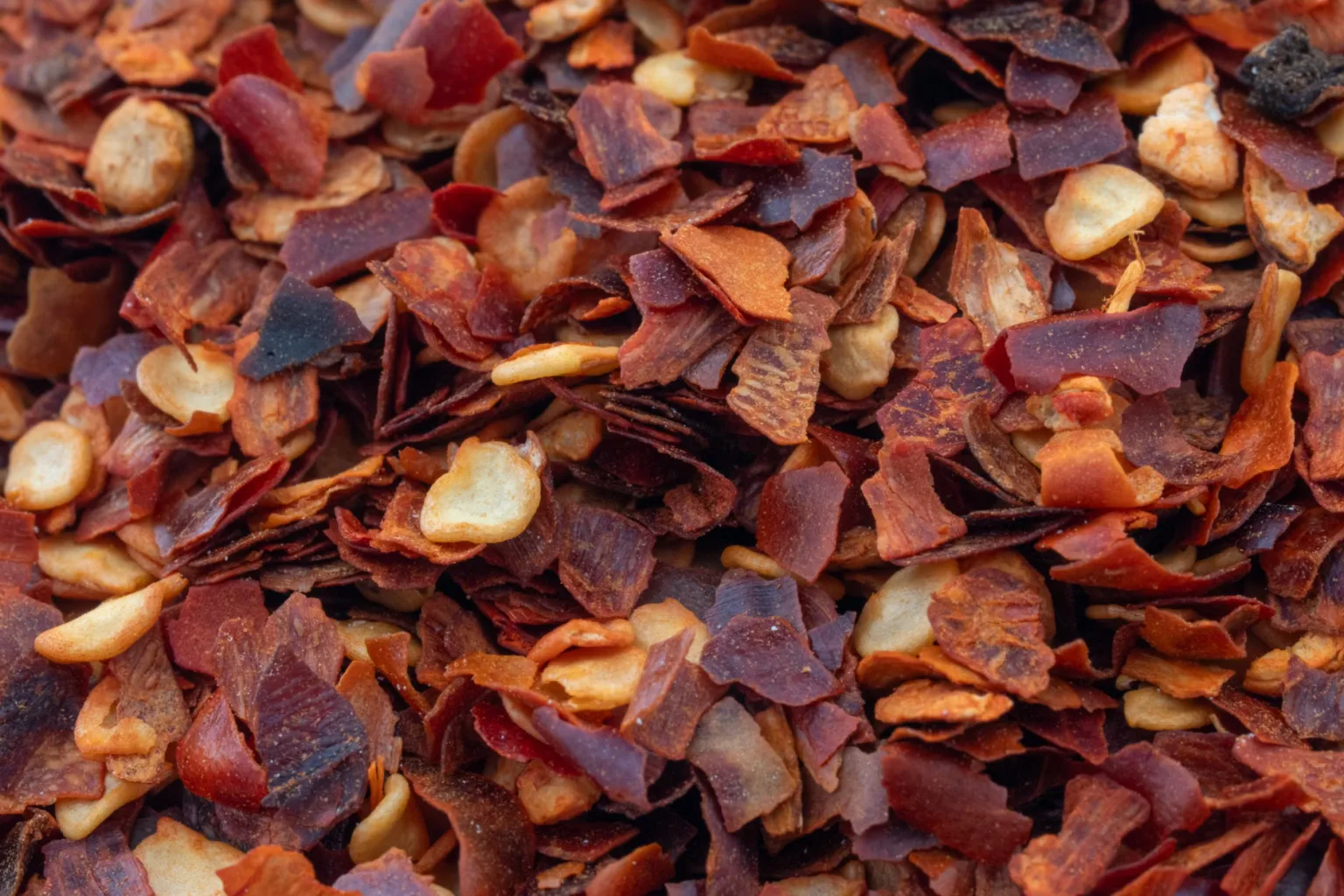
Dried chili flakes are dried chilies crushed into coarse pieces. They are not one specific chili and do not have a fixed heat level: flavour and intensity depend on the variety and how the product was prepared. They may contain seeds or be sold without them. Use them as a seasoning, much like chili powder, while their visible pieces also make them easy to sprinkle over a finished dish. Choose the amount according to the heat you want and the character of the chili you have.
When to use it
Use them when you want to add adjustable heat to soups, stews, curry, pasta or sauces. They can also be sprinkled over salads and other dishes at serving time for a spicy accent. Since products vary in intensity, start with a small amount and taste before adding more. They are useful when you want the chili to remain visible in the dish, but they do not automatically replace fresh chili or a chili preparation with a different flavour and texture.
How to use it
Add the flakes directly as a seasoning: stir them into soups, stews, curry, pasta or sauces while seasoning, or scatter them over a salad or another dish just before serving. Begin with a small amount, mix and taste before adding more, since heat varies with the chili variety and product. They can be paired with garlic or ginger and used in tomato dishes and pasta preparations. Not all flakes taste alike, so adjust the amount to the dish and your preference for heat. Do not assume that a teaspoon of one product has the same strength as a teaspoon of another brand or variety.
Flavour and texture
They provide chili heat and aroma; the strength and flavour notes depend on the variety and product. Their dry, crushed pieces remain visible when sprinkled, unlike a fully ground seasoning.
How to choose it
Choose a tightly sealed pack and check that the product looks dry and clean. Flakes can differ in size, seeds, aroma and heat depending on the chili and preparation. Read the label if you need to identify the variety or specific ingredients; do not assume all products have the same level of heat.
Storage
Keep dry chili flakes in a tightly closed container in a cool, dry place. Seal the container after each use and keep wet utensils out, as dried products can absorb moisture from their surroundings. Follow any storage directions on the pack; there is no single shelf-life that applies to every product.
Substitutions
Chili powder can provide a similar seasoning role, but its heat and flavour may differ. Crushed dried chili can also be used; begin with a small amount and adjust to taste. There is no fixed equivalence between products or varieties.
Common mistakes
Adding a large amount of flakes at once can make a dish hotter than intended. Heat varies between varieties and products, so start small, mix and taste. Do not assume flakes provide the same flavour as fresh chili or chili powder.
Safety and allergens
If you have a food allergy, check the ingredients list for the specific product and any allergen information on its label. Do not use a damaged pack or a product showing signs of moisture or contamination.
Culinary uses
- Seasoning for adding heat to savoury dishes
- Finishing garnish for salads and other dishes
Recommended techniques
- Sprinkle in gradually while seasoning and adjust to taste
- Scatter over a dish as a finishing garnish
Pairs well with
- Garlic
- Ginger
- Tomato
- Pasta, soups, stews and curry
Frequently asked questions
What are dried chili flakes?
They are dried chilies crushed into coarse pieces, used to season dishes or sprinkle over them at serving time.
How hot are chili flakes?
Heat depends on the variety and product. Add a small amount, taste, and adjust gradually.
Can I substitute chili powder?
It can provide a similar seasoning effect, but flavour and heat may differ. Start with a little and taste.
Ingredient allergens
Allergen listThere are no verified associations for these ingredients yet.
Sources and review
Automatically researched, cross-checked and validated content. Sources consulted:
- Alérgenos alimentarios | EFSA www.efsa.europa.eu/es/safe2eat/food-allergens
- ¿Por qué la muerte es origen de miedos y tabúes? doi.org/10.64628/aao.fccyk3qj3
- Etiquetado de sustancias que causan alergias e intolerancias alimentarias www.aesan.gob.es/seguridad-alimentaria/informacion-alimentaria/etiquetado-sustancias
- Tipos de Chiles Secos Mexicanos: Características y Usos abarrotes.es/blog/chiles-secos-mexicanos-caracteristicas-y-usos/
- Chiles secos: el Ama de nuestra gastronomía | Love Veg loveveg.mx/chiles-secos-el-ama-de-nuestra-gastronomia/
- Chile seco - Wikipedia, la enciclopedia libre es.wikipedia.org/wiki/Chile_seco
- Hojuelas de chile (¿crudas?, ¿orgánicas?) | Fundación G+E www.diet-health.info/es/recetas/ingredientes/in/uy9408-copos-de-chile
- Desarrollo de una nueva propuesta gastronómica con base en el uso de palmito en recetas de sal y dulce | OpenAlex openalex.org/W2588337870
- - YouTube www.youtube.com/watch?v=84GRW0Vc6k0
- Allergies - Food Safety - European Commission food.ec.europa.eu/food-safety/campaign-2026/allergies_en
- Food Allergies | FDA www.fda.gov/food/nutrition-food-labeling-and-critical-foods/food-allergies
- Food allergens | Food Safety and Quality | FAO www.fao.org/food-safety/scientific-advice/food-allergens/en
- RISK ASSESSMENT OF FOOD ALLERGENS - IRIS iris.who.int/server/api/core/bitstreams/6c71a3db-88b8-4fcd-a807-f5220eb4fc34/content
- Declaration of allergens on food labels: overview of Latin America - PMC pmc.ncbi.nlm.nih.gov/articles/PMC11205258/
- Chiles secos y su variedad: ¿cuántos de estos has probado ya? - El Tajín Coyoacán eltajin.com.mx/chiles-secos-y-su-variedad-cuantos-de-estos-has-probado-ya/
- Guía de chiles secos mexicanos para cocinar – Salsas Trucho salsastrucho.shop/blogs/news/guia-de-chiles-secos-mexicanos?srsltid=AYCX9vLEBcqHdiMS5mCAV85d…