- Category
- Herbs and spices
- State
- Dry
- Usual unit
- g
What it is
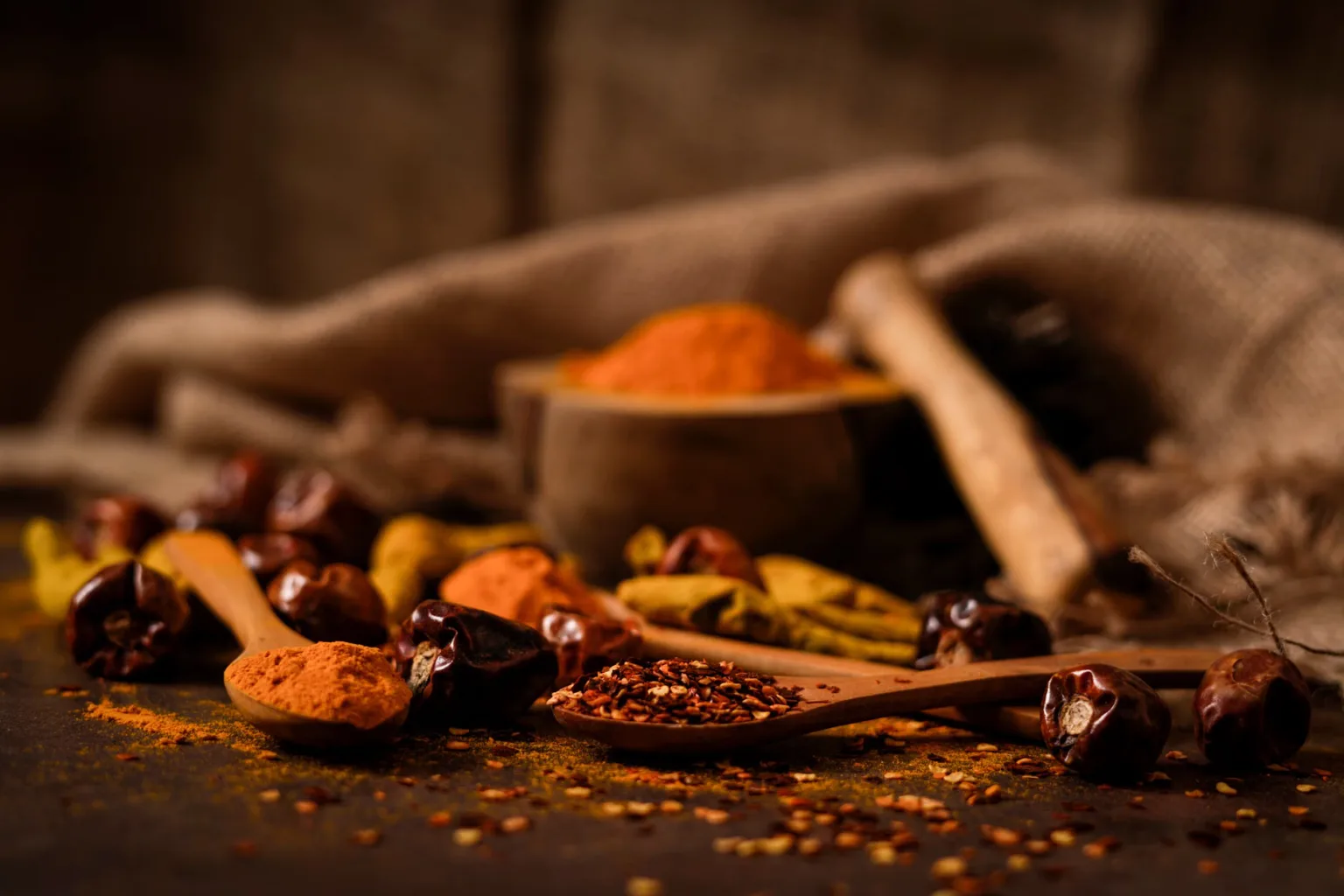
Dried chilies are fruits of plants in the Capsicum genus that have been dehydrated; some varieties are also smoked. Drying reduces moisture and concentrates flavor, but it does not make all chilies the same ingredient: size, skin, color, aroma, flavor, and heat vary by variety and product. Common names include ancho, guajillo, pasilla, chipotle, morita, and chile de árbol. Some are dried forms of fresh chilies, and some are smoked as well. “Dried chili” therefore describes a family of ingredients, not a single flavor or heat level.
When to use it
Use dried chilies when you want chili to contribute more than heat: they can add color, aroma, and concentrated depth to sauces, adobos, moles, soups, and stews. Choose a variety for the role you want, bearing in mind that profiles differ; some may bring fruity, sweet, earthy, or smoky notes. If you do not know the chili or its heat, begin with a small amount, taste the dish, and increase gradually. Do not assume that two dried chilies can be substituted in equal quantities.
How to use it
First inspect the pods, and remove stems, seeds, or veins if the recipe calls for it or if you want to manage heat and texture. For a sauce that will be blended, you can rehydrate the chilies and then blend them with the other ingredients; preparation varies by recipe. They may also be toasted briefly before rehydrating or adding to a dish, but watch them closely: excessive toasting can impair flavor. Some dried chilies are smoked and contribute that character without another technique. Adjust the amount to the variety and taste as you cook, since heat and flavor vary among varieties and individual pods.
Flavour and texture
Flavor and heat are not the same in every dried chili; they depend on the variety. Drying concentrates flavor and can yield fruity, sweet, earthy, or more complex notes; smoking adds its own character. Skins can be thin or thick and wrinkled, while colors range from red to dark brown. These differences are normal and help you choose a chili for its intended role in a dish.
How to choose it
Choose pods that look and smell appropriate for the product, with no visible signs of mold, insects, disease, or decay. Wrinkled skin and differences in appearance between varieties are normal; do not expect every chili to be flexible or the same color. Check the package and variety name when available, as the label can help distinguish flavor profiles and choose an expected heat level. Avoid pods that are clearly damaged or show signs of contamination.
Storage
Keep dried chilies in a tightly closed container or package in a cool, dry place to limit exposure to ambient moisture. Keep the container clean and protect the chilies from moisture; inspect them before use and discard any with mold, insects, or decay. Available sources do not establish a universal storage period for every variety and condition, so also follow package directions and do not keep chilies if their condition is in doubt.
Substitutions
There is no universal substitute that reproduces the heat, aroma, color, and flavor of every dried chili. Try another dried chili or a blend, but begin with a small amount and adjust after tasting. Fresh chilies are not fully interchangeable with dried ones: preparation and results may differ. Choose an alternative for the dish’s flavor profile, not only for its heat level.
Common mistakes
Treating every dried chili as if it had the same heat and flavor can throw a recipe out of balance. Adding a large amount without tasting, or toasting the chilies too much, may overwhelm the dish or impair its flavor. It is also a mistake to use pods with mold, insects, or decay, or to assume that a fresh chili will produce the same result as a dried one. Identify the variety when possible and adjust gradually.
Safety and allergens
Inspect chilies before use and discard pods with mold, insects, disease, or decay. Protect the product from moisture and follow package directions. Heat varies; start with a small amount if you do not know the variety.
Culinary uses
- Aportar picor, aroma y color
- Construir la base de salsas, adobos y moles
Recommended techniques
- Rehidratar antes de triturar en salsas
- Tostar brevemente y con cuidado para realzar el aroma
Pairs well with
- Tomate y ajo
- Frijoles y cebolla
Frequently asked questions
Do all dried chilies have the same heat?
No. Heat and flavor profile differ by variety and can also vary from pod to pod. Start with a little and adjust after tasting.
Do dried chilies have to be rehydrated?
Not always. Rehydrating is useful when blending chilies into a sauce, but the technique depends on the recipe. Some preparations toast them or use them another way.
How can I tell if a dried chili is spoiled?
Do not use pods with mold, insects, disease, or decay. If you are unsure about their condition, discard them.
Sources and review
Automatically researched, cross-checked and validated content. Sources consulted:
- ¿Por qué la muerte es origen de miedos y tabúes? doi.org
- Client Challenge doi.org
- Pimentón - Wikipedia, la enciclopedia libre es.wikipedia.org
- Los japonesismos culinarios | OpenAlex openalex.org
- Storing White Rice | USU extension.usu.edu
- Agencia Española de Seguridad Alimentaria y Nutrición aesan.gob.es
- Tipos de Chiles Secos Mexicanos: Características y Usos abarrotes.es
- Chiles secos: el Ama de nuestra gastronomía | Love Veg loveveg.mx
- Chile seco - Wikipedia, la enciclopedia libre es.wikipedia.org
- Salsa Picante de Jícama (Spanish) - National Center for Home Food Preservation nchfp.uga.edu
- Assessing Food Access in Oregon's Willamette Valley pdxscholar.library.pdx.edu
- Para cocineros en Europa: 12 chiles mexicanos básicos y sus sustitutos – La Condesa lacondesabarcelona.com
- informe anual de indicadores - agricultura, pesca y alimentación servicio.mapa.gob.es
- Preferences in 'Jalapeño' Pepper Attributes upcommons.upc.edu
- Using Chile to Make Ristras and Chile Sauce | New Mexico State University - BE BOLD. Shape the Future. pubs.nmsu.edu
- Tanzania Food Composition Tables | The Nutrition Source nutritionsource.hsph.harvard.edu
- Nuts: Safe Methods for Consumers to Handle, Store, and ... ucfoodsafety.ucdavis.edu
- Oregon’s Cottage Food Exemption | OSU Extension Service extension.oregonstate.edu
- Los chiles secos más usados en la cocina mexicana directoalpaladar.com.mx
- Guía de chiles secos mexicanos para cocinar – Salsas Trucho salsastrucho.shop
- Guía 2025 de chiles secos mexicanos: nombres, niveles de picor y marid – Mayoreo Online mayoreo.online