- Category
- Grains, flour and pasta
- State
- Dry
- Usual unit
- Variable
What it is
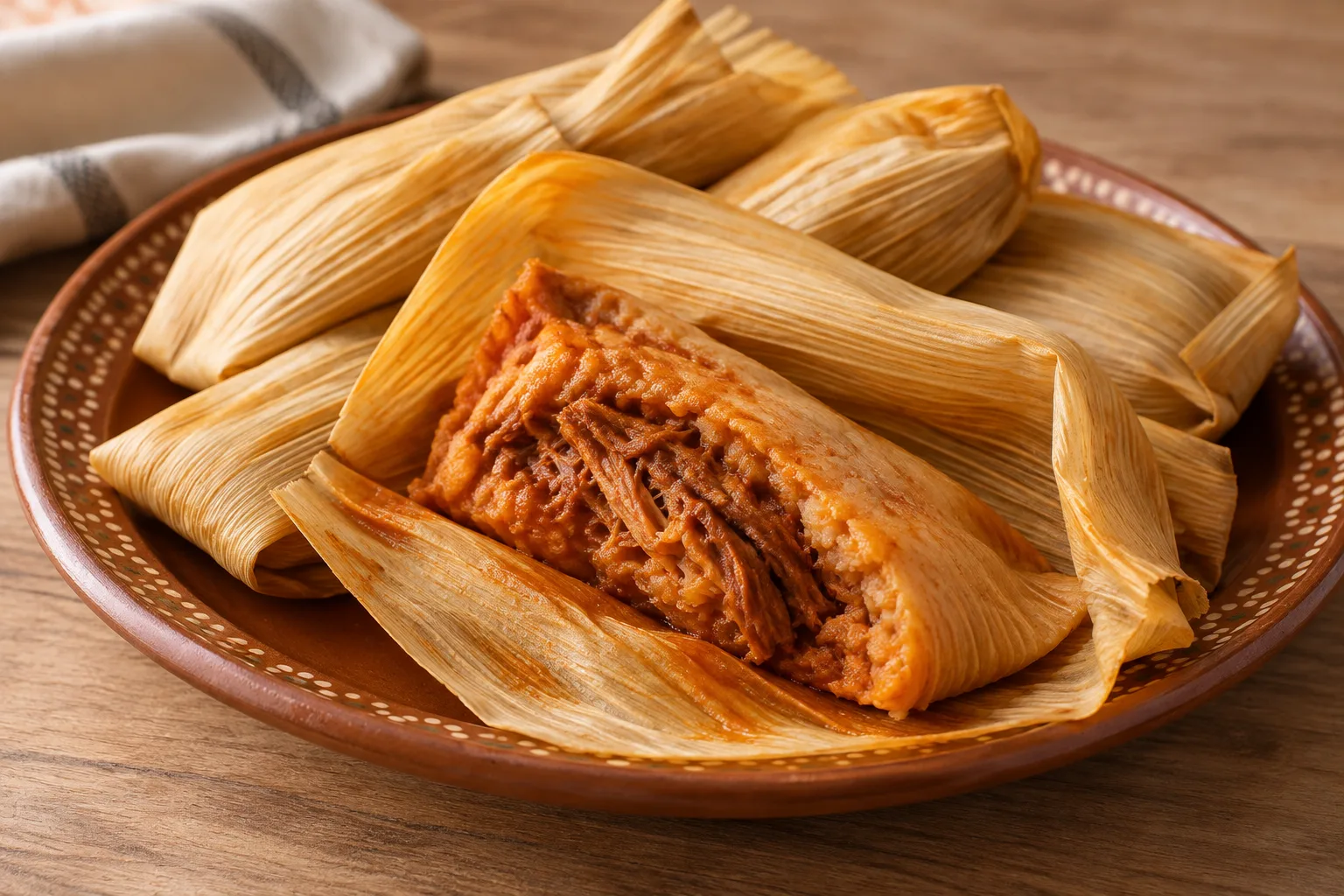
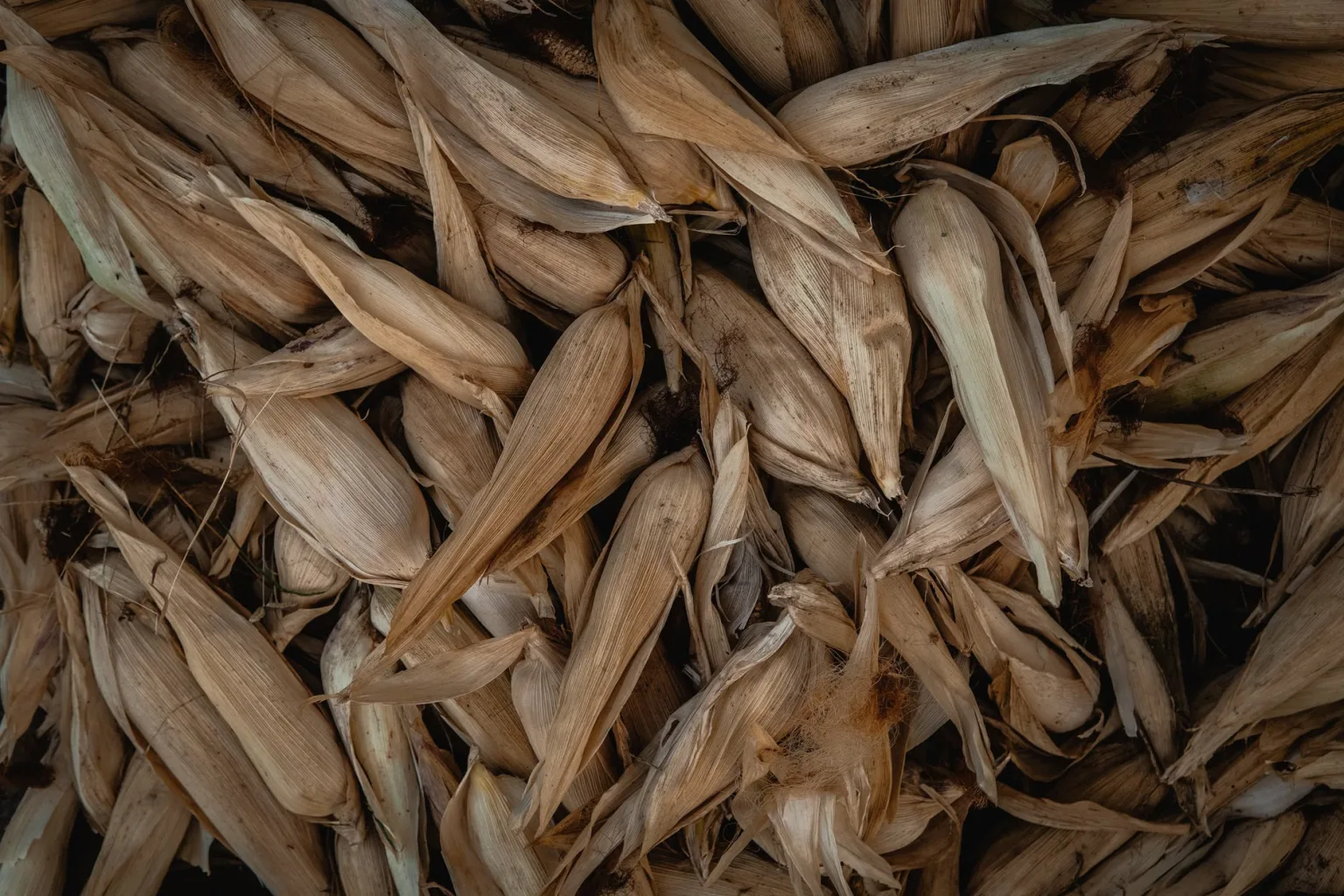
Dried corn husks are the outer leaves that cover an ear of corn. Once separated and dried, they can be used in cooking as wrappers. Their main role is to contain food, such as tamale masa and filling, while the parcel is assembled and cooked. Soaking helps make the leaves flexible and easier to handle. They do not replace the masa: they serve as a wrapper, not as the filling. In Mexico, dried corn husks are also known as totomoxtle. Their colour can vary, so individual leaves do not necessarily look the same.
When to use it
Use them when you want to wrap tamales or other foods prepared inside a leaf. They are a plant-based wrapper that can be soaked to make it flexible enough to fold around the food. Choose leaves that can cover the portion and close the parcel; overlap pieces if one leaf is not large enough. They have also been used to wrap and transport other foods. For any use, check that the product is intended for culinary use and follow the package directions.
How to use it
Carefully separate the husks and soak them to make them flexible. Drain them and lay them out. Place the masa and filling in the centre, leaving room to fold the husk; fold the sides and close the ends to form the tamale. If one husk does not cover the food, overlap another piece to close the parcel. The husk is for wrapping and is not mixed into the masa. Cook tamales according to your recipe: they can be prepared by steaming or baking. There is no universal soaking time or single set of cooking instructions for every preparation.
Flavour and texture
The main culinary role of these husks is to serve as wrappers, not as filling. When dry, they are less flexible for shaping parcels; soaking helps make them easier to fold around food. Their colour can vary. The available information does not establish their precise aroma, flavour, or effect on the taste of a tamale, so choose them for their ability to wrap and contain the preparation rather than for a specific flavour contribution.
How to choose it
Look for husks sold for culinary use and enough pieces to wrap the preparation you have in mind. Check the package and product directions before use. The colour of the leaves can vary, so do not expect every husk to look exactly the same. If you need to wrap a large portion, you may need to overlap leaves to cover it and close the parcel.
Storage
Husks are sold dried, but storage conditions and shelf life can vary by product. Follow the instructions on the package and store the product as directed. After soaking, use the recipe and product directions as your guide; the available information does not establish a universal method for storing or reusing soaked husks.
Substitutions
Banana leaves are also used to wrap tamales and can serve as another wrapper. Aluminium foil is also cited as a material for wrapping them. These materials are not identical: adapt the folding and closure to the chosen wrapper and follow a recipe suited to that preparation. No exact size or quantity equivalence is established for these options.
Common mistakes
Trying to fold dry husks without soaking them can make assembly difficult, because soaking helps make them flexible. Another mistake is confusing the wrapper with the masa or filling: its role is to contain the preparation. Do not assume that one husk will cover every portion; overlap pieces if needed and close the parcel to suit the shape of the wrapper.
Safety and allergens
Use husks intended for culinary use and follow the package directions. For cooking the wrapped food, follow a suitable recipe and any specific product instructions. The available information does not establish a universal cleaning, storage, or preparation method for every product.
Culinary uses
- Envoltura para tamales
- Cubierta para envolver o transportar alimentos
Recommended techniques
- Remojar para flexibilizar antes de envolver
- Envolver los alimentos y plegar la hoja para formar un paquete
Pairs well with
- Tamales de masa de maíz
- Rellenos salados o dulces para tamales
Frequently asked questions
What are dried corn husks used for?
They are used mainly to wrap tamales and can also be used to cover or transport other foods.
Should corn husks be soaked before use?
Soaking helps make them flexible and easier to fold. No universal soaking time is given for every product.
Can banana leaves replace corn husks?
Banana leaves are also used as tamale wrappers. Adapt the assembly and follow a recipe suited to the chosen wrapper.
Ingredient allergens
Allergen listThere are no verified associations for these ingredients yet.
Estimated nutrition
- Fat
- 0 g
- Saturates
- 0 g
- Carbohydrate
- 0 g
- Sugars
- 0 g
- Fibre
- 0 g
- Protein
- 0 g
- Salt
- 0 g
Sources and review
Automatically researched, cross-checked and validated content. Sources consulted:
- Agencia Española de Seguridad Alimentaria y Nutrición www.aesan.gob.es/
- Corazón de Maíz Un tributo a los pueblos mayas | OpenAlex openalex.org/W4405331222
- Maíz: qué es, tipos y beneficios bonviveur.com/es/noticias/maiz
- Métodos de cocción: los tipos secos, húmedos y mixtos www.igi-la.com/blog/metodos-de-coccion-guia/
- Tamal - Wikipedia, la enciclopedia libre es.wikipedia.org/wiki/Tamal
- Allergies - Food Safety - European Commission food.ec.europa.eu/food-safety/campaign-2026/allergies_en
- Food Allergies | FDA www.fda.gov/food/nutrition-food-labeling-and-critical-foods/food-allergies
- Food allergens | Food Safety and Quality | FAO www.fao.org/food-safety/scientific-advice/food-allergens/en
- Food Allergy Labeling Laws: International Guidelines for Residents and Travelers - PMC pmc.ncbi.nlm.nih.gov/articles/PMC10169132/
- Food allergen labelling and information requirements technical guidance - GOV.UK www.gov.uk/government/publications/food-allergen-labelling-and-information-requirements-tech…
- Allergen labelling for consumers | Food Standards Australia New Zealand www.foodstandards.gov.au/consumer/labelling/allergen-labelling
- Tamal Vegano vitela.javerianacali.edu.co/bitstreams/0c5dd965-9d81-4075-8cba-ba5a22a15d92/download
- Descubre qué es el totomoxtle, sus múltiples usos en la gastronomía mexicana y su importancia en el Día de Muertos | Grupo Animal grupoanimal.mx/gastronomia/historias-cocina/totomoxtle-hoja-seca-maiz
- HOJADEMAÍZ revista-agroproductividad.org/index.php/agroproductividad/article/download/501/381