- Category
- Vegetables
- State
- Dry
- Usual unit
- unit
What it is
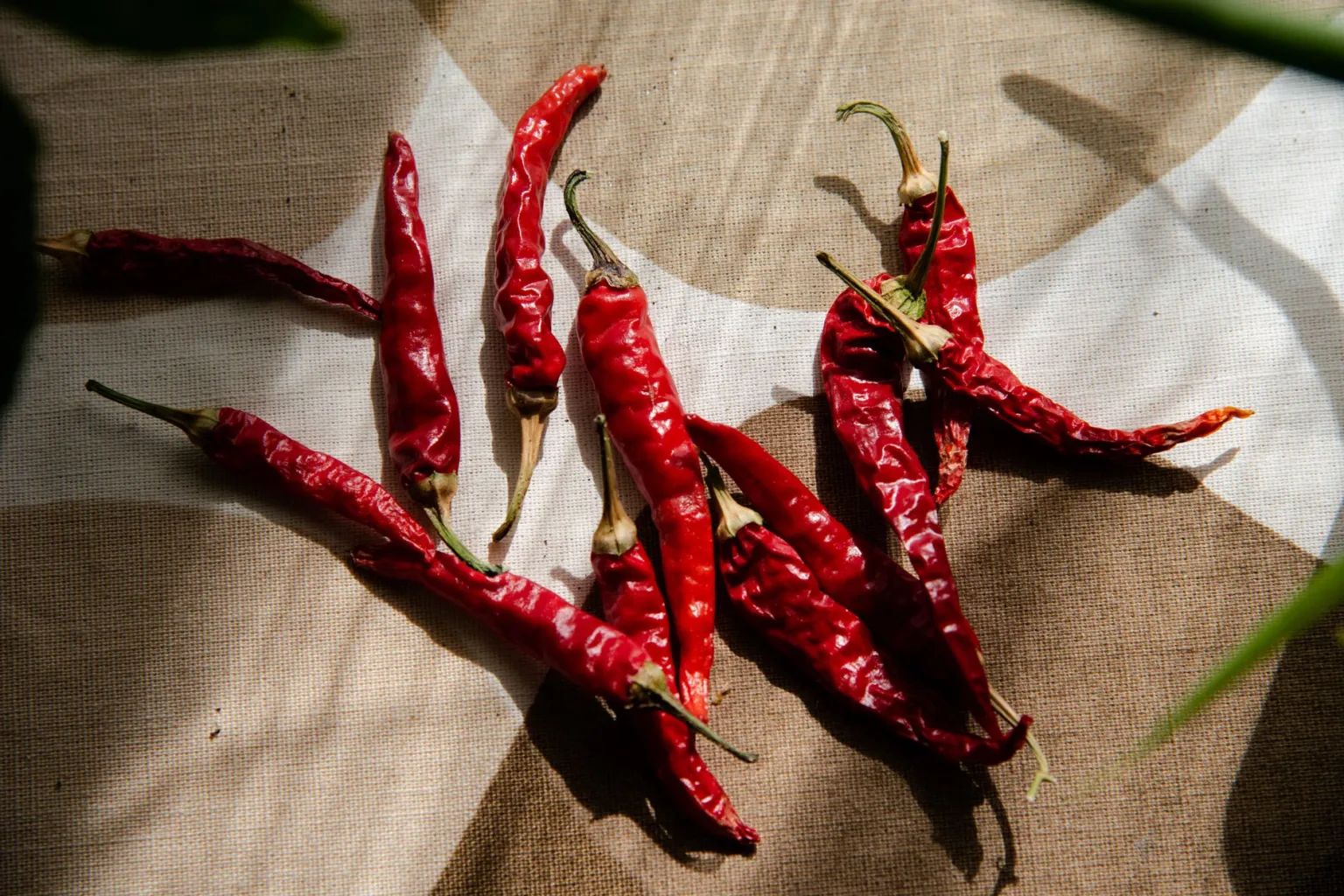
Dried guajillo chile is a dehydrated chile pod that culinary sources identify as the dried form of mirasol chile, Capsicum annuum. It is commonly described as elongated, reddish and smooth or glossy-skinned. In cooking, it is valued for both the color it brings and a fruity flavor that can have citrus-like or dried-fruit notes. Its heat is not identical from pod to pod, or across descriptions, so it is better to taste the dish and adjust rather than rely on a fixed heat figure. The pod is often softened in water and blended to carry its flavor into sauces and other dishes.
When to use it
Use guajillo when you want red color and a fruity character in a sauce, adobo or stew, rather than relying on heat alone. It appears in Mexican-style preparations such as red sauces, moles and stews; some sources also associate it with pozole rojo. It can be combined with other dried chiles for a more layered flavor. If you want a smooth sauce, prepare the pod before blending and strain the mixture if the skin's texture remains noticeable. Since heat can vary, add the blended chile gradually and adjust to taste.
How to use it
Inspect the pod and remove its stem. For a sauce or paste, split the chile and, if you wish, remove the seeds and veins; culinary sources describe this as a common way to prepare dried chiles, but removing these parts does not guarantee a particular heat level. Toast it briefly and attentively if you want to develop its aroma: do not let it burn, since excessive toasting can make it bitter. Then soak it until softened, blend it with the recipe ingredients, and strain the mixture if you want a finer texture. You can also grind it as a seasoning. Avoid adding all the paste at once: taste and adjust the flavor and heat.
Flavour and texture
Guajillo is commonly described as fruity, with a slightly tart or citrus-like note; some descriptions also mention earthy qualities. Its heat varies between pods and between sources, so treat it as variable and adjust the amount as you taste. The dried pod is elongated with smooth or glossy skin. Once soaked, it softens, but its skin may still be noticeable in a sauce; blending thoroughly or straining can give a more even texture.
How to choose it
Look for whole dried pods clearly labeled guajillo rather than simply dried red chile, since different chiles can have different flavor profiles. Available descriptions commonly note an elongated shape and reddish, smooth or glossy skin. Size and heat can vary, so appearance is not a guarantee of intensity. Ground chile has a different texture and is incorporated differently from a whole pod that you can soak and blend.
Storage
Keep dried pods in a clean, tightly closed container, protected from moisture. The available evidence does not establish a universal storage period, so do not assume an exact shelf life. Keep the product dry and follow the package directions if it is commercially packaged. Do not use it if you notice moisture, visible deterioration or unusual odors. Ground chile and whole pods behave differently in cooking, so keep each format in its own sealed container.
Substitutions
Ancho chile can work in sauces or stews, but it is described as milder and less fruity, so the result will not be identical. Pasilla can suit darker sauces and moles, although it brings a different character. Choose according to the color, flavor and heat you want, and add the substitute gradually. The available sources do not support one universal quantity equivalence for every recipe.
Common mistakes
Do not assume every pod has the same heat or that a substitute will reproduce guajillo's flavor exactly. Toasting it too long can make it bitter; soaking and blending without tasting first can make a sauce more intense than expected. If you want a fine texture, do not assume the skin will disappear during blending: strain the sauce if needed.
Safety and allergens
Heat can vary, so taste the dish before adding more chile. If you have a food allergy, check the packaged product's label and the ingredient information for the rest of the recipe.
Culinary uses
- Da color y sabor a salsas y guisos
- Condimento para adobos, moles y sopas
Recommended techniques
- Rehidratar antes de triturar para salsas
- Tostar brevemente y con atención para intensificar el aroma
Pairs well with
- Chile ancho y otros chiles secos
- Tomate y especias como comino, clavo y orégano
Frequently asked questions
What is dried guajillo chile?
It is a dried chile pod commonly identified as the dried form of mirasol chile.
How do you use it in a sauce?
Soak it, blend it with the recipe ingredients, and strain it if you want a finer texture.
Is it always the same level of heat?
No. Heat varies, so add it gradually and taste before adding more.
Ingredient allergens
Allergen listThere are no verified associations for these ingredients yet.
Estimated nutrition
- Fat
- 0 g
- Saturates
- 0 g
- Carbohydrate
- 60 g
- Sugars
- 0 g
- Fibre
- 0 g
- Protein
- 20 g
- Salt
- 0 g
Sources and review
Automatically researched, cross-checked and validated content. Sources consulted:
- Alérgenos alimentarios | EFSA www.efsa.europa.eu/es/safe2eat/food-allergens
- Agencia Española de Seguridad Alimentaria y Nutrición www.aesan.gob.es/
- Tipos de Chiles Secos Mexicanos: Características y Usos abarrotes.es/blog/chiles-secos-mexicanos-caracteristicas-y-usos/
- Chile guajillo - Wikipedia, la enciclopedia libre es.wikipedia.org/wiki/Chile_guajillo
- Tipos de chile: cuáles son y cómo usar cada uno sin cocinar a ciegas www.abc.es/recetasderechupete/tipos-de-chile-cuales-son-y-como-usar-cada-uno-sin-cocinar-a-c…
- Chile guajillo: guía práctica para cocinarlo y comprarlo lacondesabarcelona.com/chile-guajillo/
- Chile Guajillo: Guía Completa del Chile Seco Más Versátil de México www.piloncilloyvainilla.com/chile-guajillo-guia-completa-del-chile-seco-mas-versatil-de-mexi…
- Food Allergies | FDA www.fda.gov/food/nutrition-food-labeling-and-critical-foods/food-allergies
- Food allergens | Food Safety and Quality | FAO www.fao.org/food-safety/scientific-advice/food-allergens/en
- Allergen labelling for food businesses | Food Standards Australia New Zealand www.foodstandards.gov.au/business/labelling/allergen-labelling
- RISK ASSESSMENT OF FOOD ALLERGENS - IRIS iris.who.int/server/api/core/bitstreams/6c71a3db-88b8-4fcd-a807-f5220eb4fc34/content
- Food allergen labelling and information requirements technical guidance - GOV.UK www.gov.uk/government/publications/food-allergen-labelling-and-information-requirements-tech…
- - YouTube www.youtube.com/watch?v=8JextH9_EHE
- Chile guajillo: sabor, picor, usos | Recetas Mexas recetasmexas.com/guia/chile-guajillo
- ▷ El Chile Guajillo Seco | ¿Que és y Como Comerlo? Beneficios y Más salsaspicantes.net/chile-guajillo/
- Chile guajillo | www.cocinista.es www.cocinista.es/web/es/enciclopedia-cocinista/ingredientes-del-mundo/chile-guajillo.html