- Category
- Grains, flour and pasta
- State
- Dry
- Usual unit
- g
What it is
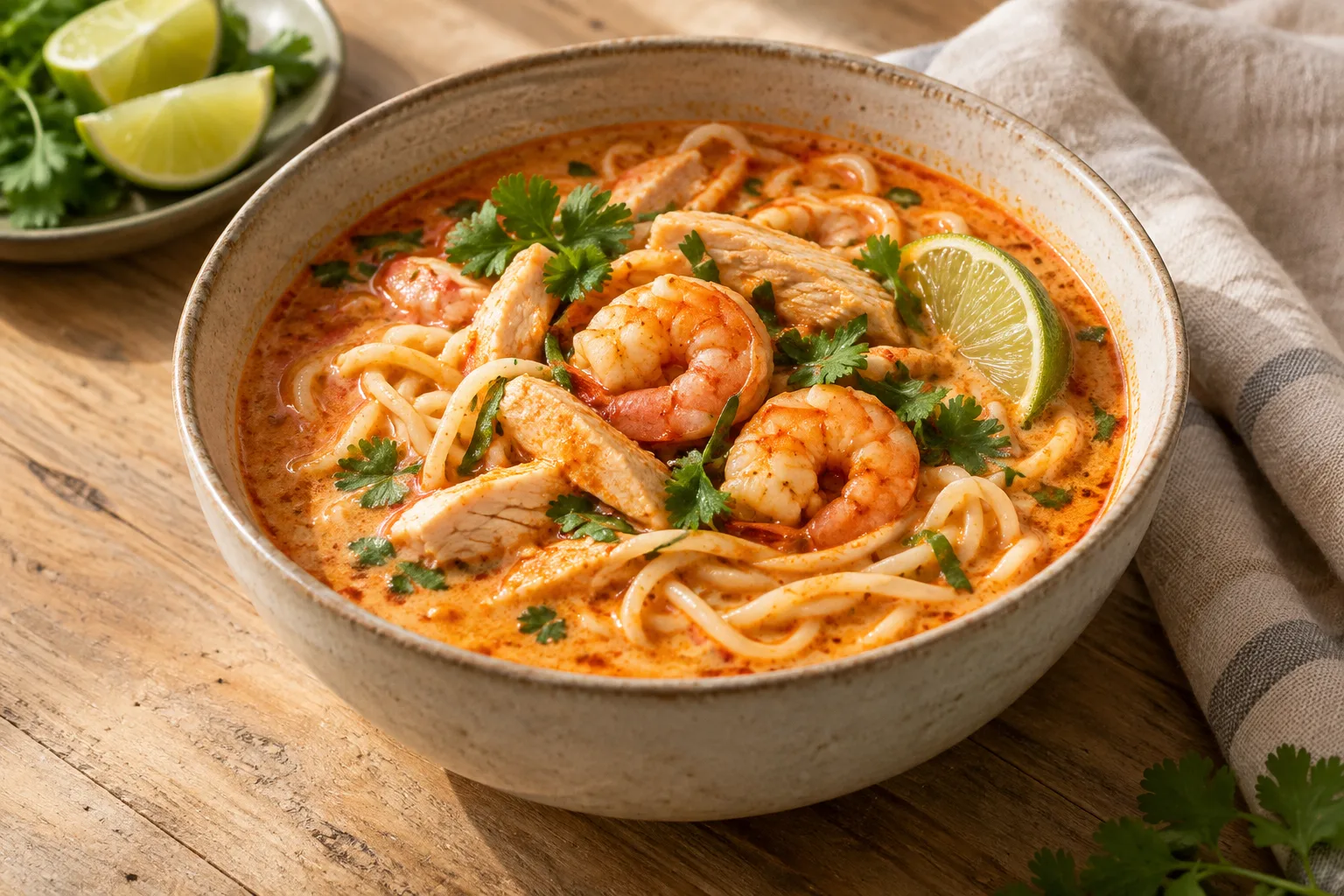
Dried noodles are dehydrated pasta products sold in a range of shapes and made from different ingredients. Depending on the variety, they may be made with wheat flour, rice or other grains; some pasta products also include egg or other ingredients. For that reason, “dried noodles” does not describe one fixed recipe or composition. The shape, thickness and ingredient list on the package help identify the product and how to use it. Some noodles suit soups, sauced dishes or stir-fries, but instructions vary from product to product. Check the package before cooking: it identifies the ingredients and usually gives the recommended preparation method. Do not assume that a cooking time or method for one noodle variety will work for another.
When to use it
Use dried noodles as a grain-based component in soup, a broth-based dish, a sauced meal or a stir-fry. Shape and thickness affect the result, so choose a variety that fits the recipe rather than assuming all noodles behave alike. Thin and thick noodles may need different amounts of liquid and different cooking times in a one-pot dish. If the recipe calls for a particular shape and you have another, check the package directions and adapt the cooking with care. You can also choose between wheat-based and rice-flour varieties when the recipe suits the change, while bearing in mind that they are not identical in texture or necessarily in preparation.
How to use it
First identify the variety and read the ingredient list and package directions. If the instructions call for boiling, cook the noodles as directed and check their texture before adding them to the recipe. For soup, they may be cooked in liquid or added to the broth, depending on the product and recipe method. For a stir-fry, cook them first when required for that variety, then combine with vegetables, sauce and other ingredients. Some one-pot noodle recipes briefly toast the noodles before adding broth, but thickness affects both liquid amounts and cooking time. Do not automatically transfer instructions from one type to another: follow the package directions and adjust the recipe if you change the shape or ingredients.
Flavour and texture
Flavor and texture depend on the ingredients and shape of each variety; there is no single profile shared by all dried noodles. Once cooked, noodles can be firm, soft or more chewy, depending on the type and preparation. Wheat, rice and other varieties are not automatically interchangeable in texture. Thickness also affects how noodles feel and how they take up broth or combine with a sauce. To get the result you want, choose a suitable variety and avoid cooking it longer than the package directions indicate.
How to choose it
Compare the shape, thickness and ingredient list on the package before buying. “Noodles” can refer to products made with different flours, and some varieties include additional ingredients; do not infer composition from the name or appearance alone. If a recipe calls for a particular shape, look for a similar one and check whether the package provides preparation directions. For an allergy, intolerance or other dietary requirement, read the full ingredient list and allergen information for the specific product.
Storage
Check and follow the storage directions printed on the package, as products may differ. Reseal the package after opening and check its label for any specific storage or use instructions. Do not assume every dried noodle has the same shelf life or that directions for one variety apply to another. If the package is damaged or the label gives different instructions, use the information for the product you have.
Substitutions
You can swap one noodle shape for another, but thickness may change liquid absorption and cooking time; adjust the recipe and check the package. Rice-flour noodles can work in some dishes in place of wheat noodles, but their texture and preparation may differ. Do not assume an exact equivalence or that a swap suits every dish.
Common mistakes
A common mistake is treating all dried noodles as if they had the same ingredients and cooking time. Swapping a thin shape for a thick one without adjusting liquid or cooking can also affect the dish. Read the label, follow its directions and check the texture as you cook.
Safety and allergens
Check the ingredient list and allergen information on each package because composition varies between products. If you need to avoid an ingredient because of an allergy, do not rely on the noodle name or appearance; check the label for the specific product.
Culinary uses
- Base for soups and broths
- Main component of stir-fried, sauced or baked noodle dishes
Recommended techniques
- Boil or cook in liquid, following the product instructions
- Cook and then stir-fry or combine with other ingredients
Pairs well with
- Broths, vegetables and meat or seafood, depending on the dish
- Tomato, cream-style or herb-based sauces, depending on the noodle variety
Frequently asked questions
Are all dried noodles made from wheat?
No. Varieties can be made with different flours, including wheat or rice, and composition depends on the product. Check the ingredient list.
Can I substitute one kind of noodle for another?
Sometimes, but shape and ingredients can change texture and cooking. Adjust the liquid and follow the package directions.
How do I know how long to cook dried noodles?
Check the directions on the package for the specific product. Different types, thicknesses and ingredients may need different preparation.
Ingredient allergens
Allergen listThere are no verified associations for these ingredients yet.
Sources and review
Automatically researched, cross-checked and validated content. Sources consulted:
- Alérgenos alimentarios | EFSA www.efsa.europa.eu/es/safe2eat/food-allergens
- Client Challenge doi.org/10.2307/jj.27939689.16
- Los japonesismos culinarios | OpenAlex openalex.org/W2906636610
- Pasta - Wikipedia, la enciclopedia libre es.wikipedia.org/wiki/Pasta
- Agencia Española de Seguridad Alimentaria y Nutrición www.aesan.gob.es/
- Diferencia entre tallarines y noodles bonviveur.com/es/noticias/diferencia-entre-tallarines-y-noodles
- Tipos de pasta en diferentes culturas: un recorrido por el mundo - Pastas Gallo : Pastas Gallo www.pastasgallo.es/tipos-de-pasta-en-diferentes-culturas-un-recorrido-por-el-mundo/
- Métodos de cocción: los tipos secos, húmedos y mixtos www.igi-la.com/blog/metodos-de-coccion-guia/
- (西班牙语)Alternativa de Pasta de Cocción Rápida | Fideos Semifermentados Comerciales Fabricados por Wudeli www.xn--rssq37c995a.com/index.php?a=index&aid=182&c=View&m=home
- Food Allergies | FDA www.fda.gov/food/nutrition-food-labeling-and-critical-foods/food-allergies
- Food allergens | Food Safety and Quality | FAO www.fao.org/food-safety/scientific-advice/food-allergens/en
- Allergen guidance for food businesses - GOV.UK www.gov.uk/government/publications/allergen-guidance-for-food-businesses/allergen-guidance-f…
- Noodles: tipos, donde comprarlos y receta - Oriental Market www.orientalmarket.es/conoce-acerca-los-noodles/?srsltid=AYCX9vI2zpDdWjweWCccWX3RtmO2WzxD6Ez…
- - YouTube www.youtube.com/watch?v=YACuaJnBwFU
- Las 1.001 posibilidades de los fideos "arroceados" | Recetas | Gastronomía | EL PAÍS elpais.com/gastronomia/recetas/2020/05/07/receta/1588862377_738670.html