- Category
- Meat
- State
- Fresh
- Usual unit
- g
What it is
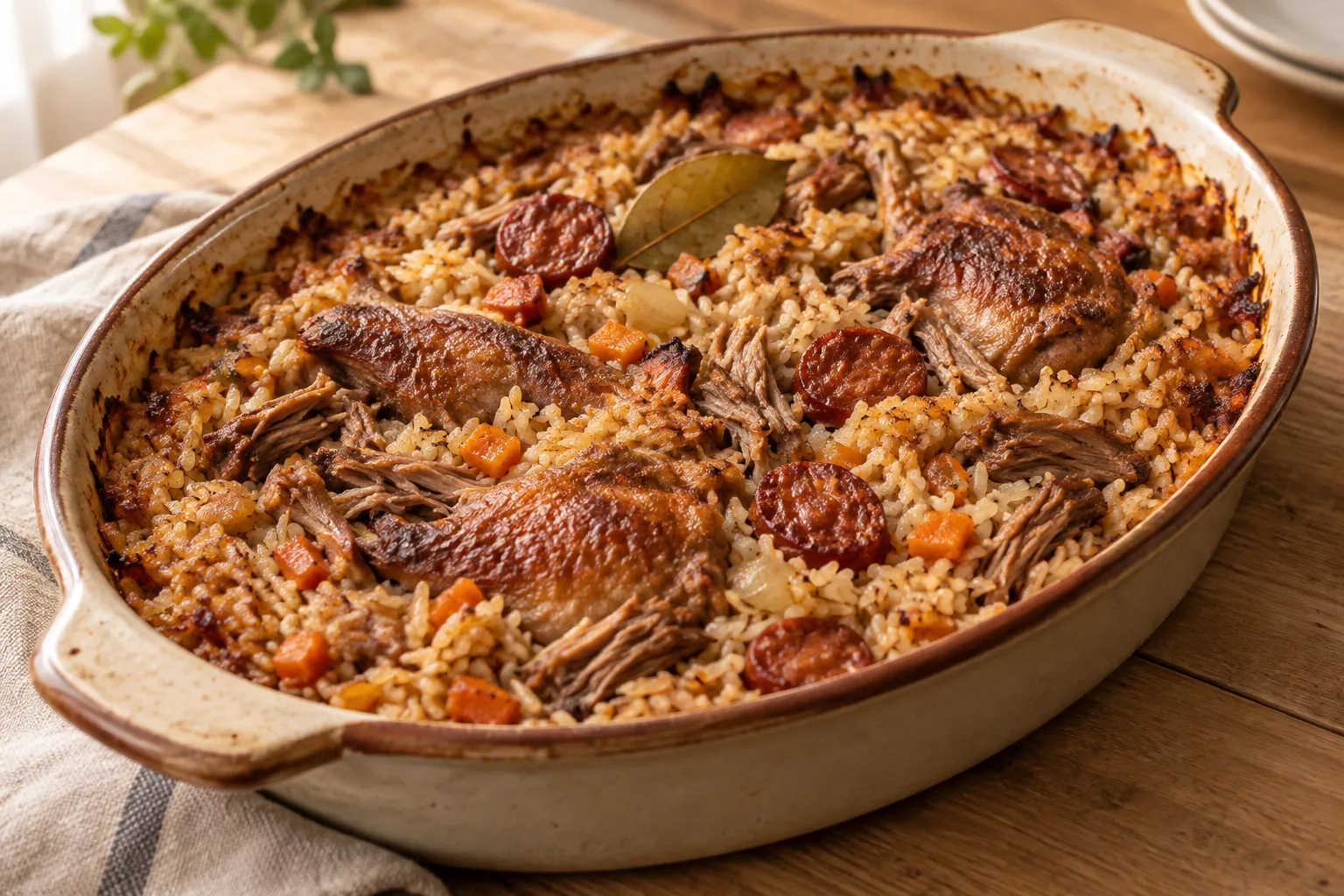
Duck is poultry used in a range of dishes and sold whole or in separate cuts. Common cuts and products include breast, magret, legs, confit and foie gras; these forms are not interchangeable without changing the result. Magret is breast with the skin and a layer of fat, while confit describes a preparation cooked slowly in fat. The amount of fat and the texture vary with the cut and product. When choosing duck, consider both the piece and the planned recipe rather than treating every form as the same kind of meat. Different cuts suit different methods and produce different textures on the plate.
When to use it
Choose duck when you want poultry with a pronounced flavour and a cut suited to roasting, baking, grilling or pan-cooking. Breast or magret works in dishes where the skin can be browned and the meat served in slices; legs suit slow-cooked preparations or can be bought already prepared as confit. Duck also works in recipes with tart fruit, mushrooms, onions or wine sauces. Before cooking, check which cut the recipe calls for: a breast and a leg differ in shape, fat distribution and cooking behaviour, so a recipe for one may not give the intended result with the other.
How to use it
Choose the cut to match the method: duck breast and magret can be pan-cooked, grilled or baked, while legs can be roasted or used in slow-cooked dishes. When cooking magret with the skin on, its fat can render during cooking and help the skin brown; some preparations brown the skin before finishing the other side. Confit is made by cooking the piece slowly in duck fat, which is different from frying. Pair the meat with apple or pear, plums, mushrooms, onions or a wine sauce. Match the recipe to the cut and follow applicable official food-safety guidance for poultry, as well as any cooking and handling directions on the product.
Flavour and texture
Duck is often described as flavourful, with a more pronounced taste than mild poultry. Its character and texture can vary between domestic and wild duck and between cuts. On magret, the skin and fat layer can brown and become crisp; the meat differs from a leg cooked slowly as confit. The cut, the amount of fat and the preparation all contribute to the final texture, so products labelled simply as duck may not behave alike in a recipe.
How to choose it
First decide whether you need a whole bird, breasts, magret, legs or a prepared product such as confit. For fresh duck, look for a firm appearance and a fresh, pleasant smell; avoid pieces with unusual appearance or odour. Duck may also be sold frozen or prepared, so check the format and package directions before buying. Cuts and products have different culinary uses, so make sure the piece you choose suits the method in your recipe.
Storage
Fresh and frozen duck need different handling. Follow the package instructions and official local food-safety guidance. Keep the product in its packaging until needed and prevent raw meat juices from contacting ready-to-eat foods. For packaged, canned or prepared confit, follow the product-specific directions, including after opening. Do not use appearance alone to decide how long duck can be stored safely.
Substitutions
There is no universal substitute for every duck cut. Another duck breast may work in a breast recipe, though its thickness and fat cover can change how it cooks. A duck leg may replace another leg in a slow-cooked preparation, but it will not have the shape or texture of magret. Changing cuts can require adjusting the method and timing using a reliable recipe.
Common mistakes
A common mistake is treating breast, leg and confit as equivalent pieces: each has a different shape, fat content and suitable method. A magret recipe may not produce the intended result with a leg, or vice versa. Do not choose by the general word “duck” alone; check the cut, product state and package directions.
Safety and allergens
Handle raw duck carefully, keep its juices away from ready-to-eat foods, and follow official local guidance for poultry storage and cooking. For packaged or prepared products, also follow the label directions.
Culinary uses
- Main ingredient for roasted, grilled, pan-cooked or fried dishes
- Source of distinct cuts and preparations, including magret, confit and foie gras
Recommended techniques
- Roasting or baking
- Grilling or pan-cooking
- Slow cooking in duck fat for confit-style preparations
Pairs well with
- Acidic fruits such as apple and pear
- Dried plums, mushrooms, onions and wine sauces
Frequently asked questions
What is the difference between magret and confit?
Magret is breast with the skin and a layer of fat. Confit is a preparation cooked slowly in fat; they are different cuts or products and are used differently.
What flavours go well with duck?
Duck can be paired with tart fruits such as apple and pear, plums, mushrooms, onions and wine sauces.
Can I use any duck cut in a recipe?
Do not assume that every cut is interchangeable. Breast, magret and leg have different characteristics; match the method to the cut and use a suitable recipe.
Ingredient allergens
Allergen listThere are no verified associations for these ingredients yet.
Estimated nutrition
- Fat
- 39.3 g
- Saturates
- 13.2 g
- Carbohydrate
- 0 g
- Sugars
- 0 g
- Fibre
- 0 g
- Protein
- 11.5 g
- Salt
- 0.16 g
Sources and review
Automatically researched, cross-checked and validated content. Sources consulted:
- Client Challenge doi.org/10.2307/jj.27939689.16
- Los japonesismos culinarios | OpenAlex openalex.org/W2906636610
- Gastronomía del Perú - Wikipedia, la enciclopedia libre es.wikipedia.org/wiki/Gastronom%C3%ADa_del_Per%C3%BA
- Food Allergies | FDA www.fda.gov/food/nutrition-food-labeling-and-critical-foods/food-allergies
- Food allergens | EFSA www.efsa.europa.eu/en/safe2eat/food-allergens
- Food allergens | Food Safety and Quality | FAO www.fao.org/food-safety/scientific-advice/food-allergens/en
- Precautionary labelling of foods for allergen content: are we ready for a global framework? - PMC pmc.ncbi.nlm.nih.gov/articles/PMC4005619/
- Food allergen portal | Food Standards Australia New Zealand www.foodstandards.gov.au/consumer/foodallergies/food-allergen-portal
- Managing allergens | Food Standards Scotland www.foodstandards.gov.scot/business-guidance/running-a-food-business/managing-allergens
- Grasa de pato: usos y cómo aprovecharla en cocina www.elmercadodeorigen.com/grasa-de-pato-para-que-sirve-como-utilizarla-cocina/
- El pato como ingrediente de la cocina china - Gran Muralla www.restaurante-chino-granmuralla.com/pato-un-alimento-habitual-en-china/
- Origen del Pato Pekín - Valencia - Dragón Imperial dragonimperial.es/origen-del-pato-pekin/
- La carne de PATO y todos los productos derivados | Cocina con Burruezo cocinaconburruezo.es/carne-de-pato/
- El pato: una carne versátil y sabrosa - Tasca Ihuey ihueytasca.es/el-pato-una-carne-versatil-y-sabrosa/
- Pato- Gastronomía - Región de Murcia Digital www.regmurcia.com/servlet/s.Sl?r=ReP-23870-DETALLE_REPORTAJESPADRE&sit=c%2C543%2Cm%2C2717
- 12 recetas con pato fáciles de hacer, sencillas y ricas www.nuevoestilo.es/recetas-trucos-cocina/g61401935/recetas-con-pato/
- Pato Pekín: Un poco de historia del pato, y dos recetas www.afuegolento.com/articulo/pato-pekin-poco-historia-pato-dos-recetas--ingredientes-product…