- Category
- Grains, flour and pasta
- State
- Dry
- Usual unit
- Variable
What it is
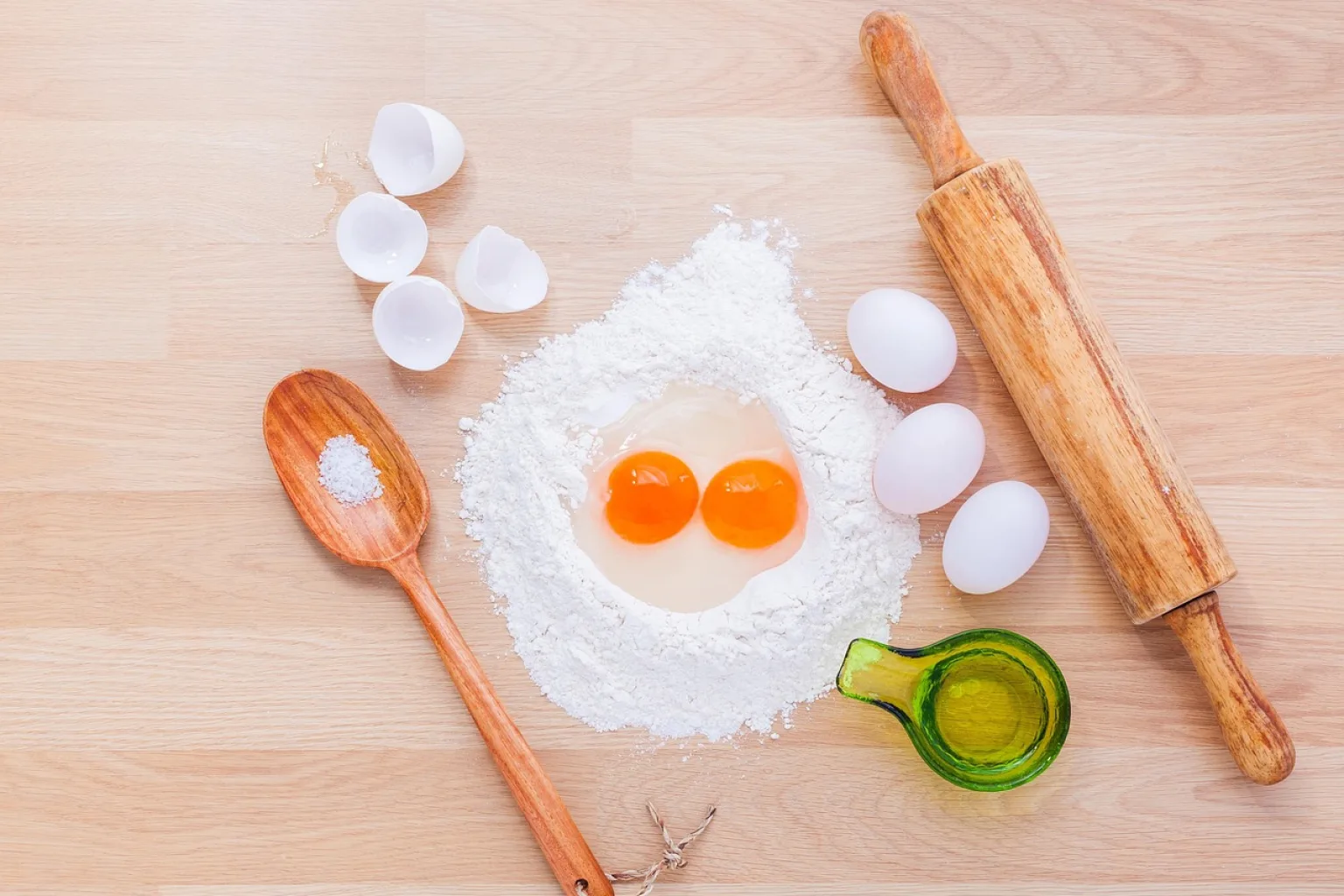
“Flour for dusting” does not identify one particular flour; it describes a kitchen use. Flour is a powder made by milling solid ingredients such as cereals, seeds, or legumes. When working with dough, a recipe may call for a little flour on a clean work surface or rolling pin. The ingredient name does not say whether it is wheat flour or another grain, or whether it is white, whole-grain, or of a particular strength. Those distinctions matter: flours vary by source and processing, and the strength of some wheat flours is related to protein content. Check the package and follow the flour specified by the recipe when one is named.
When to use it
Use it when a recipe calls for flouring the work surface or rolling pin before handling or rolling dough. For example, a cookie recipe in the supplied sources calls for dusting the work surface and dough portions with flour before rolling them out. Flour may also be used as a dusted finish in a preparation, though recipes do not all use it for the same purpose. Choose the type specified by the recipe if it names one: flours differ by grain and by characteristics such as strength. Do not assume that “flour for dusting” means a particular variety or cereal.
How to use it
Read the recipe and package to identify the required flour; “for dusting” describes the use, not the grain source. If the recipe directs you to, dust a clean work surface and rolling pin before placing or rolling the dough. The cookie recipe cited in the supplied sources also divides the dough and lightly flours each portion before rolling. Follow the recipe’s amount and procedure, since the available evidence does not establish a universal quantity. If flour is called for as a finish, use it only at the stage and on the preparation specified by the recipe. Avoid substituting flour from a different source without considering that its characteristics may differ.
Flavour and texture
The available sources do not describe one distinctive flavor or texture for flour used for dusting. Flour is generally a fine powder, but its appearance and properties depend on its raw material and processing. For example, whole-grain flours may look more granular and have a denser texture than some white flours. Therefore, the flavor and mouthfeel of a finished dish cannot be inferred from the name “flour for dusting” alone.
How to choose it
Check the grain or other source and flour type on the package; “for dusting” does not specify whether it is wheat flour or how refined it is. If a recipe names a particular flour, look for that variety and consult protein or strength information when it is relevant to a wheat dough. Flours from different grains are not necessarily interchangeable in every preparation. The available evidence does not support recommending a particular brand, milling level, or retail format.
Storage
Follow the storage directions on the package, as the available evidence does not establish a general method, container, or storage period for this flour. Check the variety too: the sources report that whole-grain flours may have a shorter shelf life than refined flours because the germ and bran contain fats that break down quickly. That observation concerns whole-grain flour and does not establish a storage period for all flours. Use the label for the specific product as your guide.
Substitutions
Choose another flour only if it suits the recipe: varieties differ by grain and characteristics, so the result may change. Rice flour is one recognized flour variety, but the sources do not explain whether it performs the same way for dusting dough. If the flour type matters to the recipe, it is safer to keep the specified one than to assume an equivalent.
Common mistakes
Do not mistake “flour for dusting” for a specific variety: the name describes the use, not the grain or strength. Nor should you assume that every flour produces the same result; the sources describe differences by origin and characteristics. Use the type named in the recipe and do not apply a fixed quantity that the recipe itself does not specify.
Safety and allergens
The grain source and allergens cannot be identified from the phrase “flour for dusting” alone. Check the package and follow its directions, especially if you need to avoid a particular ingredient.
Culinary uses
- Espolvorear superficies de trabajo y rodillos al manipular masas
- Aportar estructura y consistencia a masas
- Absorber humedad en algunas preparaciones
Recommended techniques
- Espolvorear ligeramente la superficie de trabajo y el rodillo
- Incorporar a una masa según las indicaciones de la receta
- Usar como espesante cuando la receta lo indique
Pairs well with
- Masa
- Rodillo
- Superficie de trabajo limpia
- Azúcar para acabados espolvoreados
Frequently asked questions
What does flour for dusting mean?
It describes flour used by sprinkling it, for example on a work surface or rolling pin while handling dough. The name does not specify the grain or variety.
Can I use any type of flour?
Do not assume they are all equivalent. Flours vary by grain and characteristics; follow the variety named in the recipe.
Is flour for dusting always wheat flour?
That cannot be concluded from the name. Check the source and ingredients stated on the package.
Sources and review
Automatically researched, cross-checked and validated content. Sources consulted:
- Guía: tipos de harina, usos y características | Aprende Institute aprende.com
- Tipos de harina y su uso en la cocina profesional - EN LA COCINA Magazine enlacocina.telemesa.es
- Evaluación de harina de amaranto como ingrediente antioxidante para la preparación de matrices alimentarias funcionales doi.org
- Washington State Food Access English-Spanish Glossary wpcdn.web.wsu.edu
- Recetas Económicas | Universidad Estatal de California Stanislaus es.csustan.edu
- Tipos de harina, diferencias y usos en cocina | IFEMA MADRID ifema.es
- Enjoying home-dried fruits and vegetables | Servicio de Extensión de OSU extension.oregonstate.edu
- ¿Qué es la harina? | ¡¡TE LO CONTAMOS TODO!! - Nutrición Duque restauranteduque.es
- Walnut-Raisin Somersaults/Galletitas de Pasas y Nueces (LCH) | CSU Northridge w2.csun.edu
- Pizza fácil y rápida eatingsmartbeingactive.colostate.edu
- Rosca de Reyes 1974 - lacocina.utsa.edu
- Manzana Crujiente - MyLLU - Loma Linda University myllu.llu.edu
- cocina ub.edu
- Cocina fácil aces.edu
- - YouTube youtube.com