- Category
- Vegetables
- State
- Fresh
- Usual unit
- g
What it is
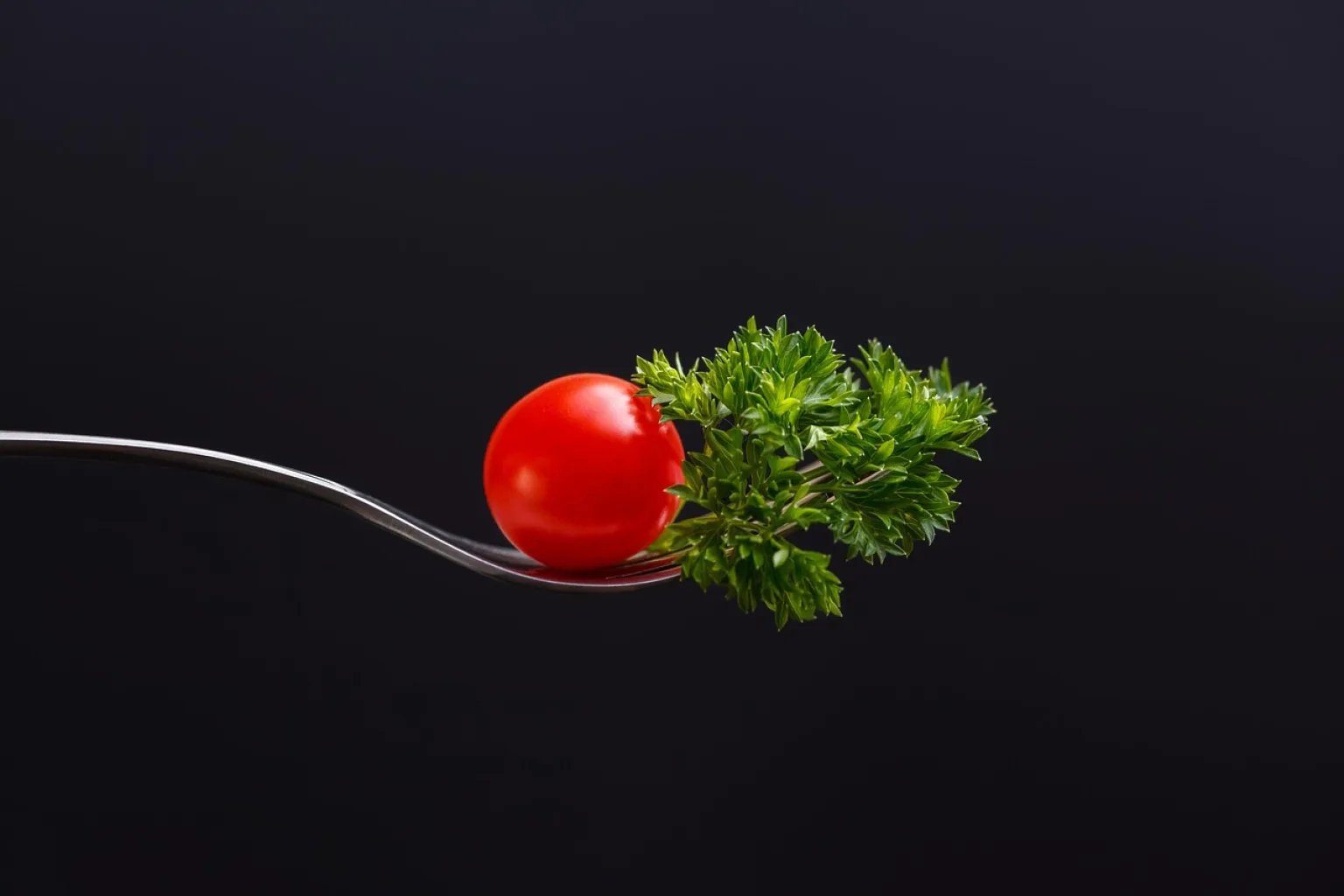
A fresh tomato is the whole fruit of Solanum lycopersicum, although it is generally treated as a vegetable in cooking. It has juicy flesh and seeds and comes in many shapes and sizes, from small cherry tomatoes to large, meaty ones. Its appearance, fleshiness, juiciness, firmness and flavour vary with variety and ripeness. Tomatoes can be eaten raw or cooked, as the main ingredient, a base for another preparation or a garnish. Calling a tomato a vegetable in culinary use does not change its botanical classification as a fruit.
When to use it
Use fresh tomatoes when you want juiciness and freshness in salads, sandwiches or toast. Large, meaty tomatoes can be served in slices as a main element, while small ones are convenient whole or halved in salads and side dishes. For sauces, chilled soups and stews, choose a variety with plenty of flesh or adjust the liquid as it cooks. If you want a milder flavour or a firmer texture, remember that these qualities differ between varieties and individual fruits. Tomatoes may be available throughout the year in some markets, but availability and quality depend on location and growing conditions.
How to use it
Remove the stem and cut the tomato shortly before serving if you want to retain a fresh texture. Use slices or wedges in salads and sandwiches; halve small tomatoes for a side dish. For toast, grate the flesh and spread it over the bread. For sauces and stews, chop the tomato and cook it with ingredients such as onion and pepper until it blends into the dish; cooking changes and concentrates its flavour and texture. You can also roast tomatoes whole or in pieces. To peel one, make a shallow cut, briefly dip it in boiling water, transfer it to iced water and carefully remove the skin.
Flavour and texture
Tomatoes combine sweet notes with gentle acidity, with differences between varieties and stages of ripeness. The flesh is usually juicy, but some tomatoes are firmer or meatier, while others contain more liquid and seeds. Skins may be thinner or thicker, and colour alone does not reliably indicate flavour. Raw tomatoes taste fresh and juicy; cooking softens the flesh and concentrates the flavour.
How to choose it
Choose tomatoes without damaged areas or unexpected soft spots. Match the tomato to the dish: meaty, flesh-rich tomatoes are convenient for sauces, while salad tomatoes can be sliced and served raw. Small cherry tomatoes are handy for salads and side dishes. Compare firmness, aroma and appearance within the variety, since size, colour and texture differ among tomato types.
Storage
Keep tomatoes at room temperature while they are still ripening. Cold storage can affect flavour and texture, particularly in unripe fruit. If a ripe tomato needs refrigeration to delay use, take it out ahead of time so it can regain some of its aromas before serving. Avoid crushing the fruit and check stored tomatoes, removing any that are damaged. How long they keep depends on variety, ripeness and storage conditions.
Substitutions
No substitute exactly reproduces a tomato's sweet-acid flavour, juice and flesh. In a salad, cucumber can add freshness and crunch, but the result will taste different. In a stew or sauce, red pepper can contribute colour and body, but not the tomato's characteristic acidity. Choose a replacement according to the role the tomato plays in the dish.
Common mistakes
Do not assume every tomato has the same juiciness, firmness or flavour: variety and ripeness matter. Avoid routinely refrigerating fruit that is still ripening, since cold can reduce its aroma and make its texture less appealing. Also, do not cook pieces for too long if you want them to remain firm in a warm salad or side dish.
Safety and allergens
If you have a diagnosed food allergy, check the information on packaged products and ready-to-eat preparations, as their ingredients can vary. Seek advice from a healthcare professional if symptoms after eating a food are concerning.
Culinary uses
- Fresh salad ingredient
- Base for sauces, soups and stews
- Juicy topping or garnish
Recommended techniques
- Slice or dice and serve raw
- Grate for toast or a sauce base
- Roast whole or cut into pieces
- Cook slowly with onion and pepper
Pairs well with
- Olive oil and salt
- Onion and pepper
- Bread
- Arugula
Frequently asked questions
Is a tomato a fruit or a vegetable?
Botanically, it is a fruit. In cooking, it is commonly treated as a vegetable and is used mainly in savoury dishes.
Which tomatoes work well for sauce?
Fleshy tomatoes, such as pear-shaped types, are a practical choice for sauces. Other varieties can also be cooked, but their juiciness and texture may differ.
Can you peel a fresh tomato?
Yes. Make a shallow cut, briefly dip it in boiling water, cool it in iced water and carefully remove the skin.
Ingredient allergens
Allergen listThere are no verified associations for these ingredients yet.
Estimated nutrition
- Fat
- 0.44 g
- Saturates
- 0.06 g
- Carbohydrate
- 74.7 g
- Sugars
- 43.9 g
- Fibre
- 16.5 g
- Protein
- 12.9 g
- Salt
- 0.34 g
Sources and review
Automatically researched, cross-checked and validated content. Sources consulted:
- Client Challenge doi.org/10.2307/jj.27939689.16
- Tomate - Wikipedia, la enciclopedia libre es.wikipedia.org/wiki/Tomate
- La historia del tomate en la cocina | Hida hida.es/historia-del-tomate-en-la-cocina/
- Tomate. Propiedades, beneficios y usos en la cocina www.abc.es/recetasderechupete/tomate-beneficios-propiedades-y-alimentacion/25400/
- Tipos de tomate y cómo usarlos www.academianutricionydietetica.org/saber-comprar/tipos-tomate-usos/
- Agencia Española de Seguridad Alimentaria y Nutrición www.aesan.gob.es/
- Tomates: los imprescindibles de la gastronomía | Consumer www.consumer.es/alimentacion/tomates-imprescindibles-gastronomia-verano
- Food Allergies | FDA www.fda.gov/food/nutrition-food-labeling-and-critical-foods/food-allergies
- Food allergens | EFSA www.efsa.europa.eu/en/safe2eat/food-allergens
- Food allergens | Food Safety and Quality | FAO www.fao.org/food-safety/scientific-advice/food-allergens/en
- Food Allergy: Labelling and exposure risks - PMC pmc.ncbi.nlm.nih.gov/articles/PMC11250542/
- Allergen guidance for food businesses - GOV.UK www.gov.uk/government/publications/allergen-guidance-for-food-businesses/allergen-guidance-f…
- Allergen labelling for consumers | Food Standards Australia New Zealand www.foodstandards.gov.au/consumer/labelling/allergen-labelling
- EL TOMATE: HISTORIA, COCINA Y CULTURA. CINCO SIGLOS ENTRE ... www.scielo.cl/pdf/rivar/v12n36/0719-4994-rivar-12-36-102.pdf
- - YouTube www.youtube.com/watch?v=osuPZB5M2pw
- El tomate, el ingrediente estrella de la gastronomía mediterránea - El Hogar Gallego elhogargallego.cat/es/el-tomate-el-ingrediente-estrella-de-la-gastronomia-mediterranea-2/