- Category
- Vegetables
- State
- Other
- Usual unit
- tablespoon
What it is
Fried onion is onion cooked in oil. The name can describe different products: thin, crisp fried pieces or a softer, juicier preparation used like a cooked onion base. Their appearance, moisture and best uses therefore vary. Crisp fried onion is usually added as a topping or finishing touch, while softer preparations can be mixed into stews and other cooked dishes. Both have the characteristic flavour of cooked onion, with sweetness and toasted notes. Check the ingredient list on a packaged product, since commercial fried onions do not necessarily have the same composition from one brand to another.
When to use it
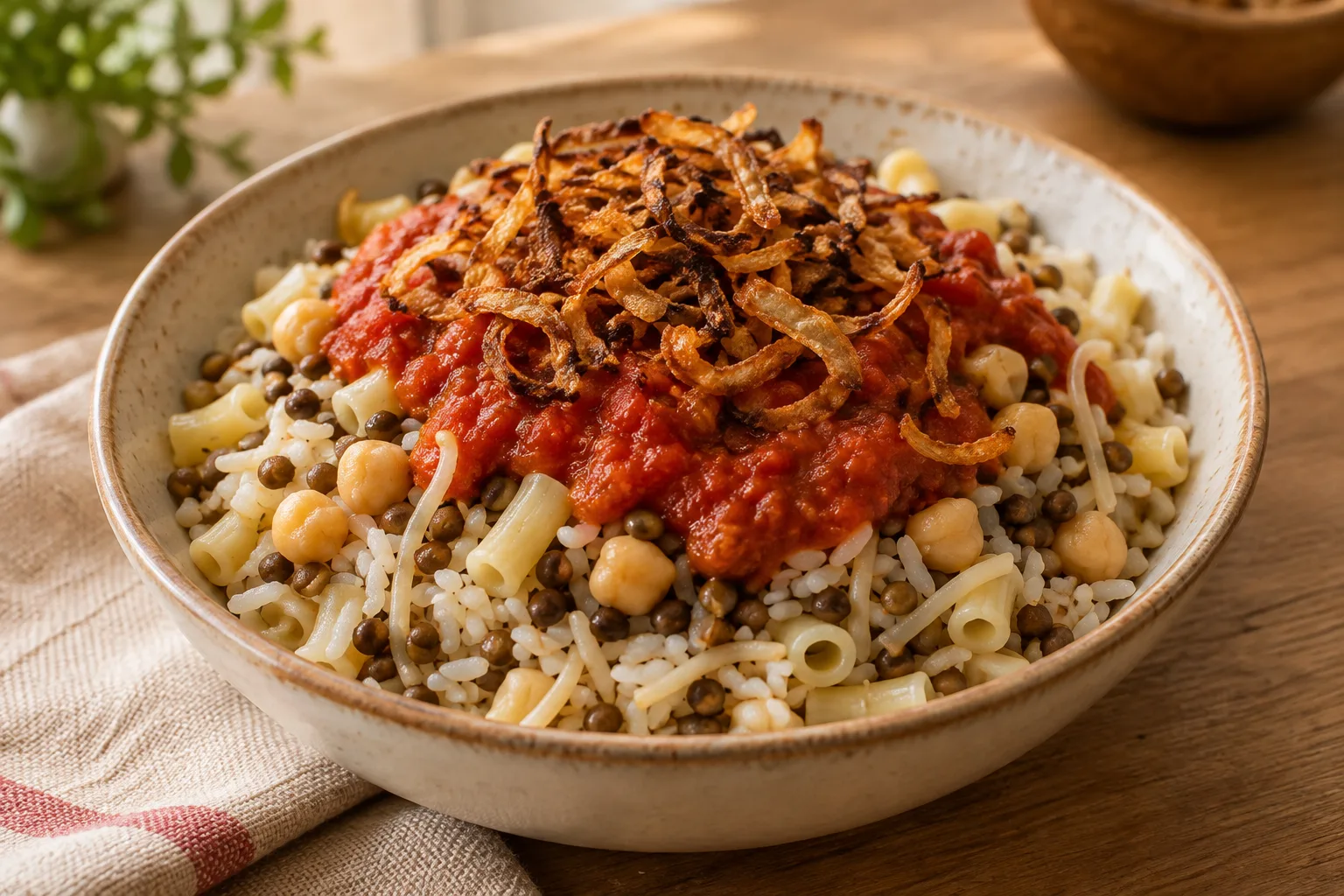
Use fried onion when you want cooked-onion flavour without starting with raw onion, or when a textural contrast suits the dish. Crisp pieces work as a last-minute topping for soups, stews, rice, omelettes, salads and sandwiches. If they are mixed into a moist dish or cooked for a long time, they may soften; add them just before serving when you want to preserve their crunch. A softer preparation can be added during cooking as part of the dish’s flavour base. Adjust the amount to the flavour and saltiness of the particular product.
How to use it
First check whether you have crisp fried onion or a soft, sofrito-style preparation: they behave differently in a dish. To preserve the crisp texture, scatter the crisp version over finished food just before serving, or serve it separately so people can add their own. Use it as a topping for soups and stews, or to add crunch to rice, omelettes, salads and sandwiches. If you want it to blend in and soften, stir it into a hot dish while it cooks. Taste before adding more salt, as some products are already salty. Follow the package directions for storage and use.
Flavour and texture
Its flavour is that of cooked onion, with sweet and toasted notes. Intensity depends on the product and how deeply it has browned. Crisp fried onion adds a dry, brittle contrast; a softer version is tender and juicy. When mixed with moist foods or heated for longer, the crisp version can lose its texture.
How to choose it
Choose the format that suits the dish: crisp strips or slices for topping, or softer cooked onion to mix into a preparation. Read the ingredient list and package information, since composition can vary between products. If you need to avoid an ingredient because of an allergy, do not assume all commercial fried onions are the same; check the label on the specific product and brand you plan to use.
Storage
There is no single storage instruction that applies to every fried-onion product: the package may contain a crisp product or a softer, moister preparation. Store it according to the directions on its label and follow any instructions for storage after opening. Keep it closed as directed by the manufacturer, and do not use it if the package or product appears questionable.
Substitutions
If you do not have fried onion, thinly sliced fresh onion cooked until tender can provide onion flavour, but it will not automatically reproduce the crunch or degree of browning. Fried shallot can work when a more delicate onion flavour is wanted. Making crisp onion at home lets you choose the cut and browning, though the final texture and flavour depend on how it is prepared.
Common mistakes
Adding crisp fried onion too early to a moist dish can make it soft. Add it at the end when you want to keep the contrast. Another mistake is assuming all formats are interchangeable: a soft sofrito-style preparation does not provide the same crunch as fried strips. Taste before adding salt as well.
Safety and allergens
The composition of packaged fried onion can vary. If you have a food allergy, check the label on the specific product and ask the seller or manufacturer if the information is not clear. Fried onion is not necessarily a single-ingredient product.
Culinary uses
- crujiente o guarnición
- ingrediente de sofritos y platos cocinados
- toque de sabor y textura al terminar un plato
Recommended techniques
- freír en tiras o rodajas finas
- espolvorear al final para conservar el crujiente
- incorporar durante la cocción cuando se busca una textura más blanda
Pairs well with
- sopas y guisos
- arroz y tortillas
- ensaladas y bocadillos
Frequently asked questions
Is fried onion always crisp?
No. The name may refer to crisp fried pieces or to a softer, juicier preparation. Check the product’s appearance and directions.
When should I add crisp fried onion?
Add it just before serving to help preserve its texture. Contact with moist food can soften it.
Can I replace it with fresh onion?
Yes, when onion flavour is what you need, but cooked fresh onion will not necessarily provide the same crunch or browning.
Ingredient allergens
Allergen listThere are no verified associations for these ingredients yet.
Estimated nutrition
- Fat
- 19.82 g
- Saturates
- 3.17 g
- Carbohydrate
- 39.94 g
- Sugars
- 4.96 g
- Fibre
- 2.6 g
- Protein
- 4.19 g
- Salt
- 1.44 g
Sources and review
Automatically researched, cross-checked and validated content. Sources consulted:
- Alérgenos alimentarios | EFSA www.efsa.europa.eu/es/safe2eat/food-allergens
- Client Challenge doi.org/10.2307/jj.27939689.16
- La cebolla, la base de la gastronomía española - Enrique Romay eromay.com/la-cebolla-la-base-de-la-gastronomia-espanola/
- Para la ciudadanía www.aesan.gob.es/para-la-ciudadania
- Food Allergies | FDA www.fda.gov/food/nutrition-food-labeling-and-critical-foods/food-allergies
- Food allergens | Food Safety and Quality | FAO www.fao.org/food-safety/scientific-advice/food-allergens/en
- Allergen labelling for food businesses | Food Standards Australia New Zealand www.foodstandards.gov.au/business/labelling/allergen-labelling
- Food Allergy Labeling Laws: International Guidelines for Residents and Travelers - PMC pmc.ncbi.nlm.nih.gov/articles/PMC10169132/
- Food allergen labelling and information requirements technical guidance - GOV.UK www.gov.uk/government/publications/food-allergen-labelling-and-information-requirements-tech…
- La cebolla, ingrediente imprescindible en la cocina - La Española Aceites www.laespanolaaceites.com/blog/gastronomia/cebolla-imprescindible-en-la-cocina/
- Cebolla Frita Crujiente - Javi Recetas www.javirecetas.com/cebolla-frita-crujiente/
- Cebollas: variedades y cuál utilizar en cada receta | masymas supermercados www.supermasymas.com/blog/cebollas-variedades-y-cual-utilizar-en-cada-receta/
- - YouTube www.youtube.com/watch?v=VBodVp1BnSQ
- Razones para incluir la cebolla frita en tu dieta - Hida hida.es/razones-para-incluir-la-cebolla-frita-en-tu-dieta/
- ▷ Transforma tus platos con el sabor de la cebolla frita líquida | La Casa de los Sabores lacasadelossabores.com/transforma-tus-platos-con-el-sabor-de-la-cebolla-frita-liquida/?srslt…