- Category
- Baking
- State
- Dry
- Usual unit
- g
What it is
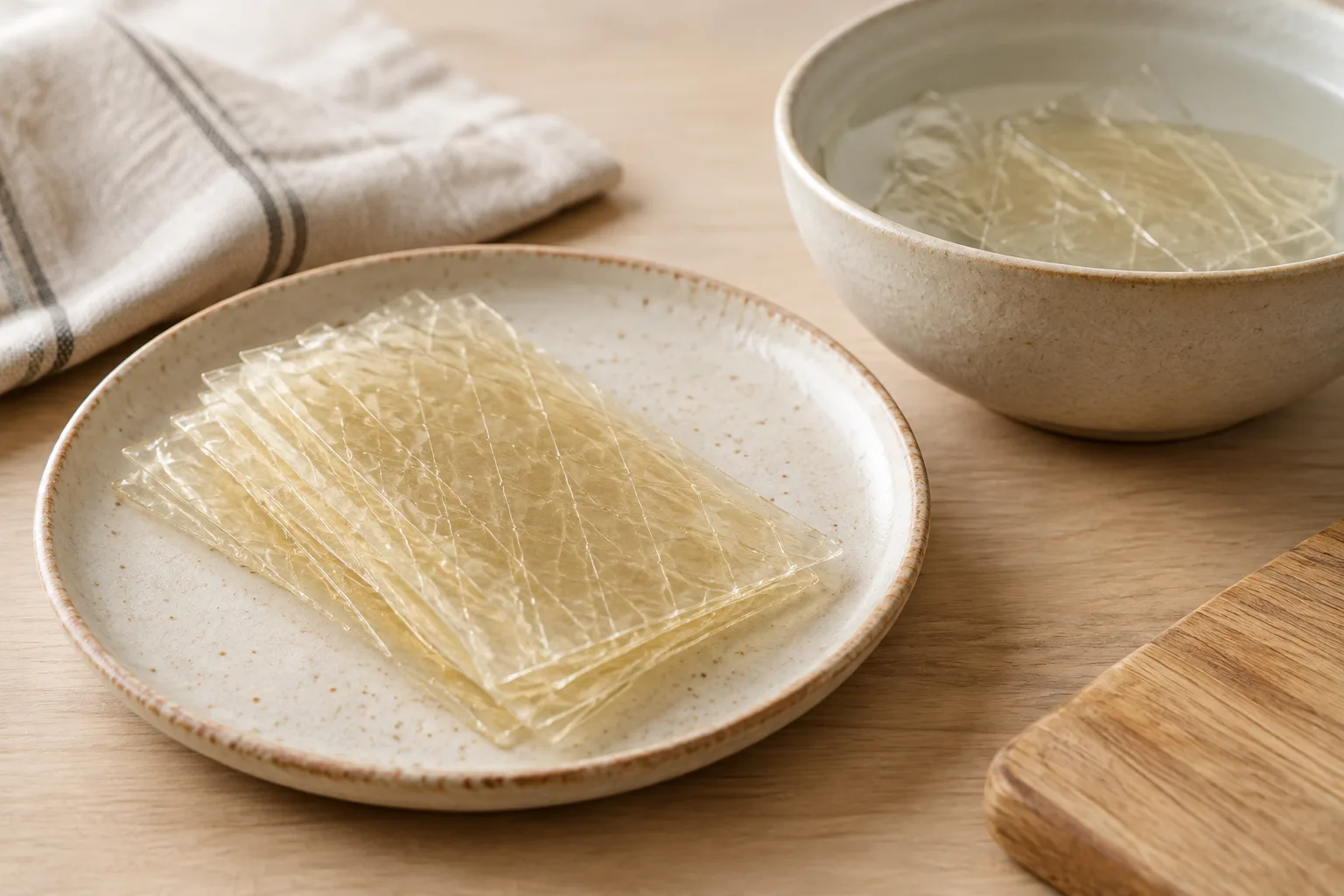
Gelatin sheets are a dry, portioned form of gelatin, a protein made by processing animal collagen. In cooking, gelatin acts as a gelling agent: after it is hydrated and dissolved in a mixture, it helps the mixture set as it cools. It is commonly used in creams, mousses, desserts and sweet or savoury preparations that need a light gel or help retaining liquid. Commercial sheets are not necessarily identical: sheet weight, gelling strength and animal source can vary. A sheet count therefore does not always correspond to the same weight or result across brands. Check the package and follow the recipe instructions for the specific product. Gelatin sheets are not a plant-based ingredient.
When to use it
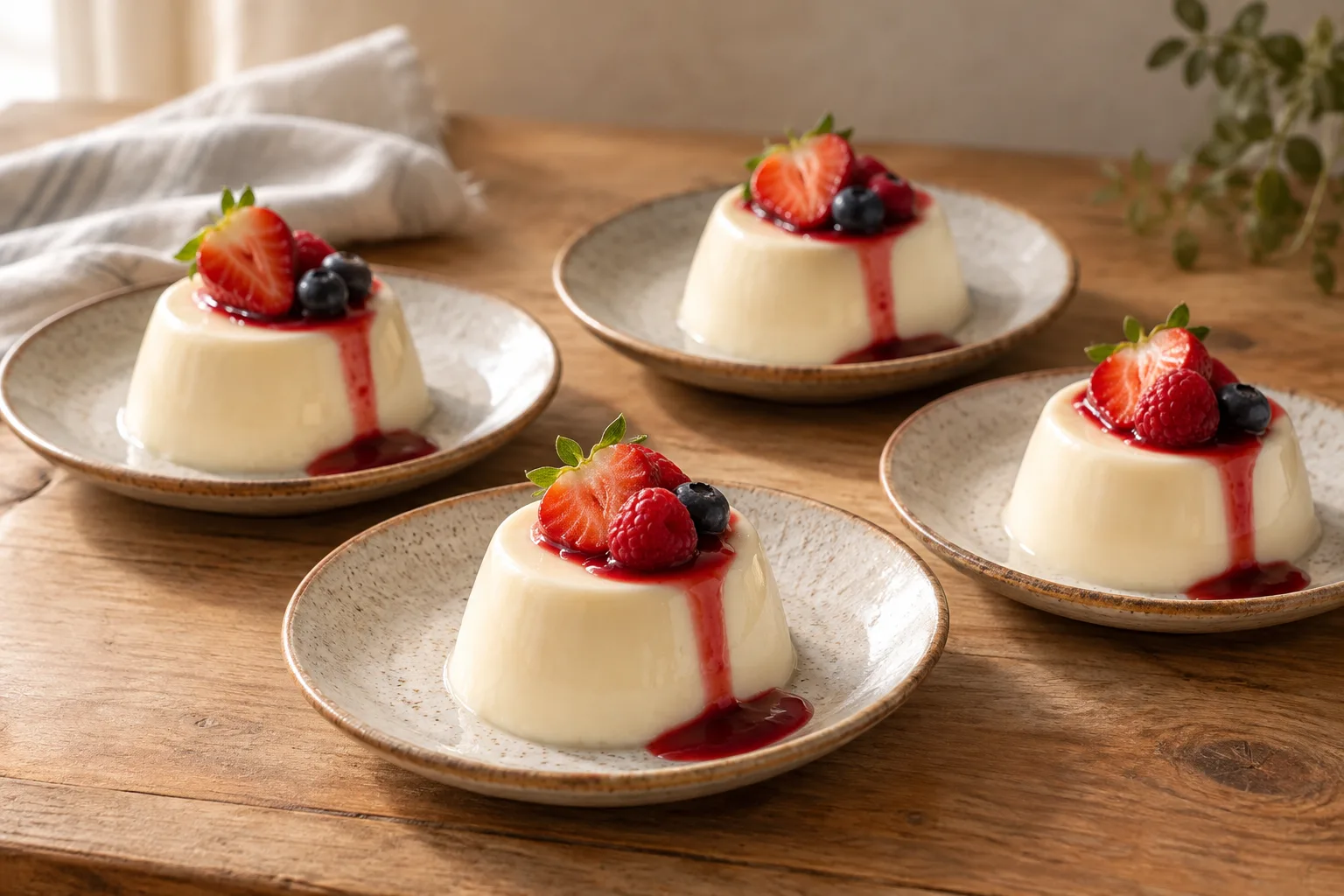
Use gelatin sheets when a recipe needs to set into a soft, flexible or lightly firm texture, such as a mousse, cream or moulded dessert. They can also provide structure in some savoury preparations. Choosing the right product and amount matters: sheet weight and gelling strength vary, so do not assume that one sheet from one brand is equivalent to one from another. Also consider the full mixture and the product instructions. Fresh fruits with enzymes that break down gelatin, including pineapple, papaya and kiwi, can interfere with setting. Follow a recipe designed for that fruit or use fruit treated as directed by the recipe.
How to use it
First check the recipe and package for the amount and instructions that apply to your sheets. Place the sheets in cold water until softened, then drain and gently squeeze away surface water. Add them to a warm part of the liquid or mixture and stir until fully dissolved. Combine that portion with the rest of the preparation as the recipe directs. Avoid boiling gelatin after it has dissolved unless the specific product instructions say otherwise. Let the preparation cool and set as directed: the result depends on the full formula and the sheets’ weight and strength, not just on chilling time. Do not automatically swap the number of sheets for the weight of a different product; check its label or use a validated conversion for those particular products.
Flavour and texture
Gelatin sheets are typically neutral in flavour, colourless and odourless, so they can add structure without a strong taste of their own. Their gel is generally soft and flexible, a useful texture for mousses, creams and set desserts. Final firmness depends on the amount used, the product and the rest of the recipe. Sheet weight and gelling strength are not the same across all brands, so texture can vary between products and preparations.
How to choose it
Choose a sealed package and check whether the recipe specifies a particular strength, weight per sheet or product format. Sheets can differ in weight and gelling capacity between brands, so do not rely only on the sheet count or a commercial colour name. Check animal origin if it matters for your diet or preferences: gelatin can come from different animals, and a particular product may state its source. Read the label for the composition of the product you plan to use.
Storage
Keep dry sheets in their closed package in a cool, dry place, following the manufacturer’s instructions. Protect them from moisture before use and keep them clearly identified so they are not confused with other ingredients. Once hydrated or added to a recipe, follow the storage instructions for the recipe and its other ingredients; storage guidance for dry gelatin does not establish how long a finished dessert will keep.
Substitutions
Agar agar can also gel liquids, but it sets into a more brittle, less elastic gel and does not behave like gelatin. Its use and quantity are not interchangeable with gelatin. Pectin can thicken or gel some fruit preparations, but is better suited to recipes designed for it. Do not substitute sheet for sheet or weight for weight without a validated conversion for the specific product and recipe.
Common mistakes
Do not assume all sheets have the same weight or that the same count will give the same result across brands. Do not add sheets without softening them first, or expect poorly dissolved gelatin to distribute evenly. Avoid unnecessary boiling after dissolution. Fresh fruits with proteolytic enzymes, such as pineapple, papaya and kiwi, can prevent gelatin from setting; account for the fruit and recipe before adding them.
Safety and allergens
Conventional gelatin is made from animal collagen; check the label if its source matters because of an allergy, diet, religious practice or preference. Follow storage instructions for each ingredient and for the finished preparation. If you have a food allergy, check the product label and contact the manufacturer if the information is insufficient.
Culinary uses
- Setting creams, mousses and desserts into soft, flexible gels
- Adding light gel structure or helping retain liquid in sweet and savoury preparations
Recommended techniques
- Soak the sheets in cold water until softened, then gently squeeze out excess water
- Dissolve softened sheets in a warm part of the recipe, stirring until fully dissolved; avoid boiling after dissolution
Pairs well with
- Cream and dairy-based dessert mixtures
- Fruit preparations, subject to the recipe and the effect of fresh enzyme-rich fruit
Frequently asked questions
Are gelatin sheets plant-based?
No. Gelatin is made from animal collagen. Check the package for the stated source of the specific product.
Can I swap gelatin sheets directly for agar agar?
Not automatically. Agar can gel liquids, but it sets differently and produces a more brittle texture; use a recipe formulated for agar.
Why might a mixture with fresh fruit fail to set?
Some fresh fruits, including pineapple, papaya and kiwi, contain enzymes that break down gelatin. Use a recipe suited to that fruit and gelling agent.
Ingredient allergens
Allergen listThere are no verified associations for these ingredients yet.
Sources and review
Automatically researched, cross-checked and validated content. Sources consulted:
- Romanica Olomucensia : «¿Qué pinga es esto?». Usos disfemísticos en el español de Cuba doi.org/10.5507/ro.2021.007
- Gastronomía del Perú - Wikipedia, la enciclopedia libre es.wikipedia.org/wiki/Gastronom%C3%ADa_del_Per%C3%BA
- Qué es (y qué no es) la estadística, usos y abusos de una disciplina clave en la vida de los países y las personas | Estudios económicos doi.org/10.52292/j.estudecon.2015.740
- THE SAFETY OF GELATINE - Food Safety - European Commission food.ec.europa.eu/document/download/73f8ceea-6d0c-4a70-ab65-bbbe7b6769c4_en
- CLASE 10 / PASTELERIA unlp.edu.ar/wp-content/uploads/45/28245/f74cb331e2652172ad43d88ad0b5bd5f.pdf
- Gelatin Sheets, Powder and Bloom Strength www.tannov.com/pastry-journal/gelatin-sheets-powder-and-bloom-strength
- HOJA DE GELATINA 180 BLOOM - 100%Ingredients 100x100ingredients.com/product/hoja-de-gelatina?print=print
- composite products food.ec.europa.eu/horizontal-topics/international-affairs/eu-entry-conditions/composite-prod…
- HOJA DE GELATINA 180 BLOOM - 100%Ingredients 100x100ingredients.com/product/hoja-de-gelatina
- Mora (fruta) - Wikipedia, la enciclopedia libre es.wikipedia.org/wiki/Mora_(fruta)