- Category
- Herbs and spices
- State
- Dry
- Usual unit
- teaspoon
What it is
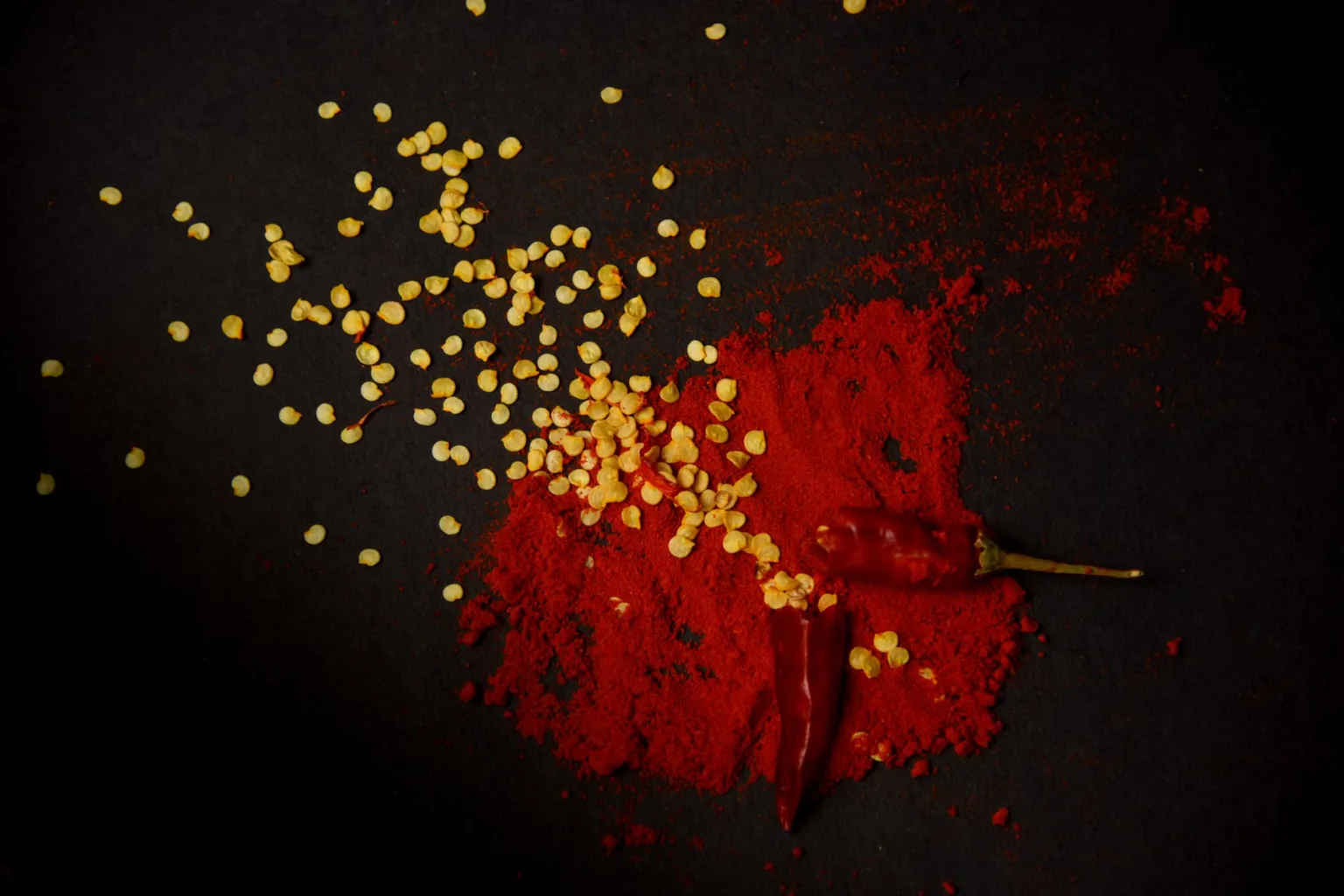
Gochugaru is Korean chilli that has been dried and crushed. It is sold in grinds ranging from coarse flakes to fine powder and is used to add red colour, aroma and heat to a range of dishes. Its flavour and intensity are not identical across products: they can vary with the chilli used and the grind. Gochugaru is a dry seasoning, not a fermented paste; it should not be confused with gochujang, which is a different preparation. The grind affects how it blends into food: flakes remain visible, while fine powder disperses more readily in sauces and mixtures.
When to use it
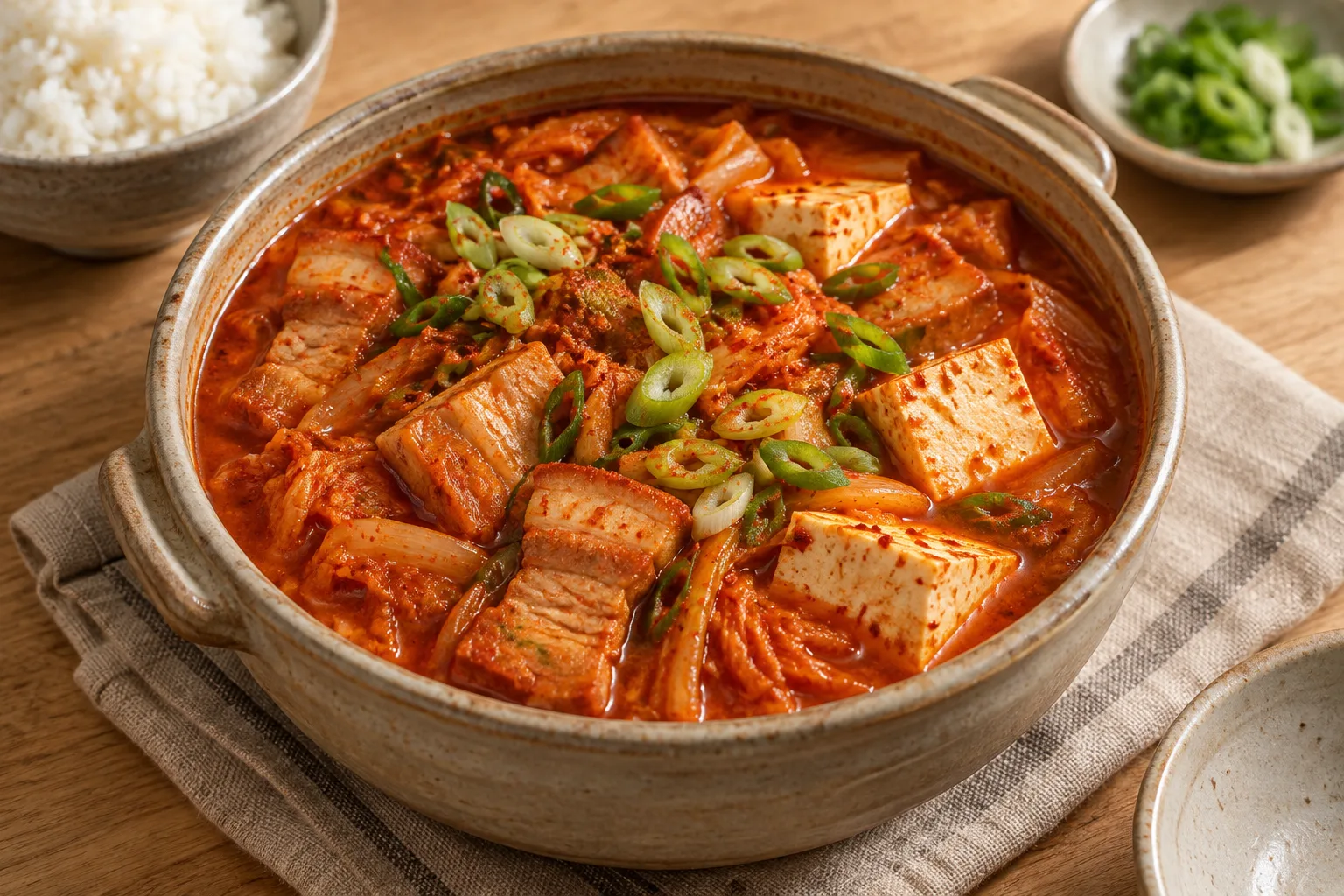
Use gochugaru when you want to add red colour and heat to vegetables, kimchi, soups, stews, rice, noodles or marinades. Coarse flakes work well when you want visible pieces, for example in rustic preparations or kimchi mixtures. Fine powder is convenient for sauces and dressings with a more even texture. Since heat can vary between products, begin with a modest amount and adjust after tasting. Do not substitute gochujang without changing the recipe: they are different products.
How to use it
Add gochugaru according to the format and texture you want. Coarse flakes can go into vegetable mixtures, kimchi, soups, stews or marinades when visible pieces are welcome. Fine powder blends more readily into sauces and dressings. To control heat, start with a little, mix well and taste before adding more; intensity varies from one product to another. You can also sprinkle it over, or mix it into, rice and noodle dishes. Follow the package instructions, and remember that dry gochugaru is not a direct substitute for fermented gochujang paste.
Flavour and texture
Gochugaru adds red colour and a level of heat that can vary between products. It is described as having lightly sweet, fruity and smoky notes, although the exact profile is not uniform. Coarse flakes give a visible, rustic texture; fine powder disperses more readily and makes a more even mixture.
How to choose it
Choose coarse flakes or fine powder according to the recipe: flakes leave visible texture, while powder blends more easily into sauces. Check the product description and any stated heat level, since gochugaru products do not all have the same intensity. Read the ingredient list and package warnings, especially if you need to avoid an allergen.
Storage
Follow the storage directions on the package and keep it properly closed between uses. Check the date and any product-specific instructions too. If the product or its packaging has an unexpected change in smell, appearance or condition, do not use it without checking the manufacturer's information.
Substitutions
Hot paprika can play an approximate role by adding red colour and heat, but it is not guaranteed to taste like gochugaru. You can also switch between gochugaru flakes and fine powder: powder blends more evenly, while flakes retain visible texture. Adjust the amount by tasting, as heat varies.
Common mistakes
Do not assume that every product has the same heat level or that flakes and powder will give the same texture. Start with a small amount and adjust after tasting. Also, do not confuse gochugaru, dried ground chilli, with gochujang, a fermented paste that changes a dish's composition and texture.
Safety and allergens
Check the ingredient list and product warnings if you have a food allergy or intolerance; composition can depend on the product and manufacturer. When cooking for someone with an allergy, confirm the package information rather than assuming the ingredient is allergen-free.
Culinary uses
- Aportar color rojo y picor a preparaciones
- Condimentar kimchi, sopas, guisos, salsas y marinados
Recommended techniques
- Añadir en copos para conservar una textura visible y rústica
- Mezclar la molienda fina en salsas y aderezos para una distribución más uniforme
Pairs well with
- Verduras y kimchi
- Sopas, guisos y tofu
- Arroz y fideos
- Marinados de carne o pescado
Frequently asked questions
Are gochugaru and gochujang the same?
No. Gochugaru is dried, crushed chilli; gochujang is a fermented paste. They are not direct substitutes.
Which grind works well in a sauce?
Fine powder generally blends more easily and gives a more even mixture. Flakes leave visible texture.
Does gochugaru always have the same heat?
No. Heat can vary between products. Start with a small amount and adjust after tasting.
Ingredient allergens
Allergen listThere are no verified associations for these ingredients yet.
Estimated nutrition
- Fat
- 6.25 g
- Saturates
- 1.25 g
- Carbohydrate
- 25 g
- Sugars
- 3.75 g
- Fibre
- 17.5 g
- Protein
- 6.88 g
- Salt
- 1.72 g
Sources and review
Automatically researched, cross-checked and validated content. Sources consulted:
- Alérgenos alimentarios | EFSA www.efsa.europa.eu/es/safe2eat/food-allergens
- Client Challenge doi.org/10.2307/jj.27939689.16
- Gochujang: qué es y cómo usarlo | Gastronosfera www.gastronosfera.com/tendencias/gochujang-que-es-y-como-usarlo
- Agencia Española de Seguridad Alimentaria y Nutrición www.aesan.gob.es/
- Allergies - Food Safety - European Commission food.ec.europa.eu/food-safety/campaign-2026/allergies_en
- Food Allergies | FDA www.fda.gov/food/nutrition-food-labeling-and-critical-foods/food-allergies
- Food allergens | Food Safety and Quality | FAO www.fao.org/food-safety/scientific-advice/food-allergens/en
- Centre for Food Safety www.cfs.gov.hk/english/food_leg/food_leg_lgfa.html
- Food allergen portal | Food Standards Australia New Zealand www.foodstandards.gov.au/consumer/foodallergies/food-allergen-portal
- Food Safety and Standards (Labelling & Display) ... www.fssai.gov.in/upload/uploadfiles/files/Compendium_Labelling_Display_30_06_2022.pdf
- Gochugaru coreano: análisis y comparativa de los mejores productos para preparar auténticos platos asiáticos y sushi sukimotril.es/gochugaru-coreano/
- - YouTube www.youtube.com/watch?v=9s_t4mP-ras
- AESAN da las claves para los que sufren alergias alimentarias www.qcom.es/aesan/consumo/aesan-da-las-claves-para-los-que-sufren-alergias-alimentarias_6886…
- Día mundial del Kimchi | CocinaSinReceta.com www.cocinasinreceta.com/tecnicas/dia-mundial-del-kimchi/
- Challenge of Precautionary Allergen Labeling for Ensuring the Safety of Children With Food Allergies - PMC pmc.ncbi.nlm.nih.gov/articles/PMC11650331/
- Fuego y Fermentación: El Gochugaru, Gochujang y Doenjang en Corea - Quaterni quaterni.es/2025/11/20/especias-esenciales-corea/?srsltid=AYCX9vK92mF8Z-GSv4FpyHJSUsVfE_D_ud…
- Gochujang en hostelería: qué es y cómo usarlo en carta plusiberica.es/blog/que-es-gochujang-usos-hosteleria/