- Category
- Vegetables
- State
- Fresh
- Usual unit
- unit
What it is
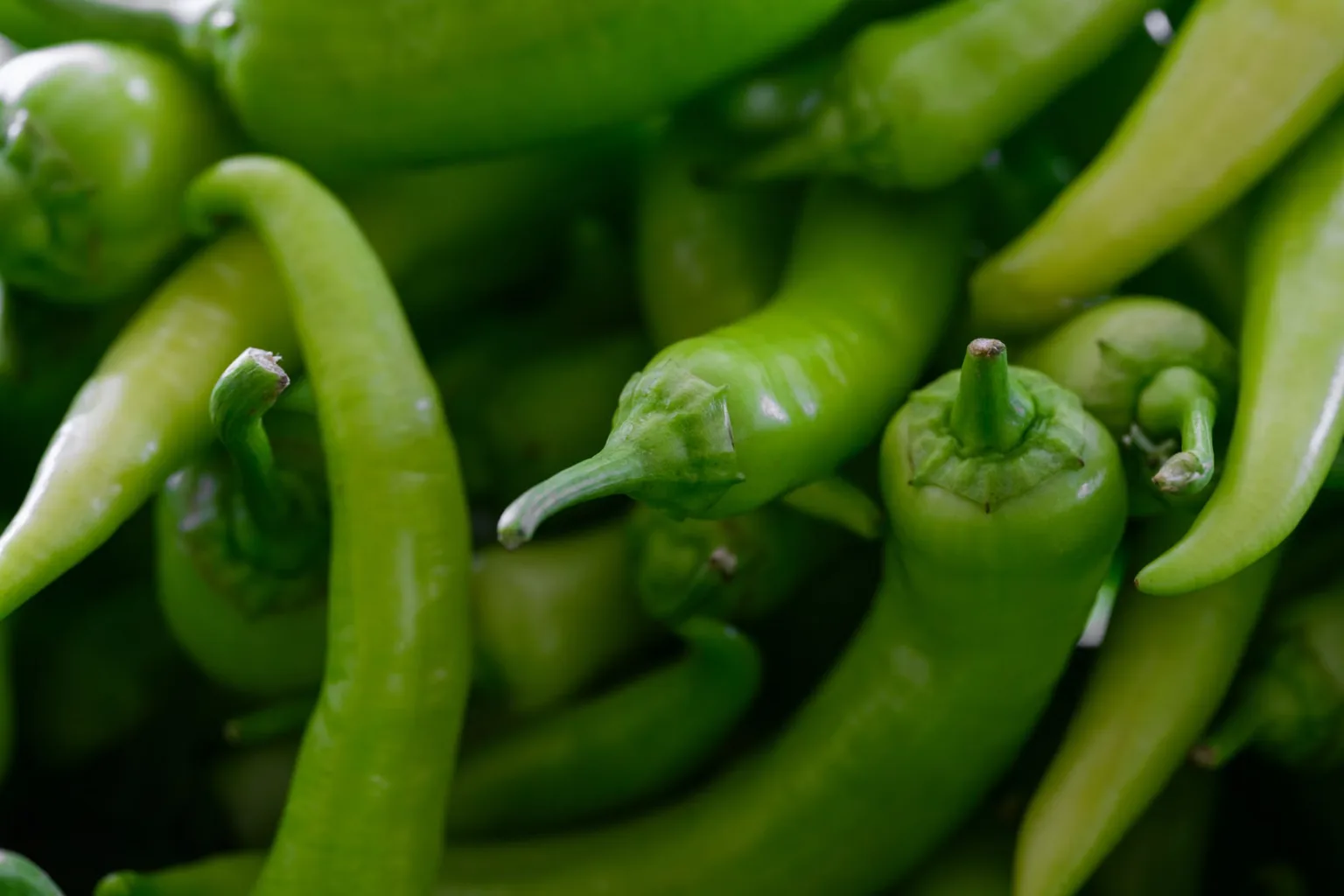
Hot peppers are edible fruits from plants in the Capsicum genus, used as vegetables or seasonings. The name covers many varieties, so it does not describe one fixed size, color or heat level. Peppers may be green, red or another color, with flavors ranging from fruity or vegetal to intensely hot. Fresh flesh is often firm and juicy, although the texture depends on the variety and maturity. Hot peppers are commonly added in small amounts for heat and aroma, but they can also be used in sauces, garnishes and cooked dishes. A fresh hot pepper is not the same product as paprika, which is a dried, ground seasoning.
When to use it
Use hot peppers when you want to add heat and distinctive pepper flavor to a sauce, soup, stir-fry or vegetable dish. They can also add color and a fresh accent as a garnish. Since heat varies among varieties and individual peppers, they can suit both a mild kick and a more intense result: start with a little, taste the dish and add more only if you want to. If your main goal is pepper flavor and color without heat, choose a sweet pepper instead.
How to use it
Wash the pepper and slice or chop it to suit the dish; finely chopping it can distribute its flavor more evenly. Add it to sauces, soups, stews or stir-fries, alone or with aromatics such as garlic and ginger. To control the heat, begin with a small amount, taste and adjust gradually. In cooked dishes, add it during cooking to blend its flavor into the dish, or add some near the end when you want to retain more freshness and texture. It can also be served as a garnish. Dried or ground pepper is a different product, not an exact equivalent of fresh pepper.
Flavour and texture
The flavor combines vegetal or fruity notes with heat that can vary widely between varieties and individual peppers. Fresh peppers may be firm, crisp and juicy; cooking softens them and changes their texture. Color and aroma also depend on the type and maturity. Taste a small piece before deciding how much to add to a dish.
How to choose it
Choose fresh peppers that look firm, have a color appropriate to their variety and show no obvious damaged or soft areas. Size does not guarantee a particular heat level, and appearance alone cannot precisely tell you how hot a pepper will be. If you want a mild or very hot result, choose a variety identified for that use when possible, then add a small amount while cooking until you know its strength.
Storage
Keep fresh peppers in the refrigerator and use them while they remain firm and in good condition. Avoid leaving them wet or crushed in their packaging, and discard any pepper that shows signs of deterioration. Available evidence does not establish one universal storage period for every variety and household condition; follow package directions when provided.
Substitutions
A sweet pepper can replace a hot pepper when you want vegetal flavor, color or bulk, but it will not provide the same heat. Dried hot pepper or flakes may suit dishes that work with that format, although their texture and flavor concentration differ. There is no universal equivalent amount: add a little and adjust after tasting.
Common mistakes
Adding a large amount without tasting first can make the heat overwhelm a dish. It is also a mistake to assume that all hot peppers have the same intensity or that color and size predict exactly how hot one will be. Start with a little, taste as you cook, and distinguish fresh peppers from dried, ground paprika.
Safety and allergens
Heat can vary considerably; begin with a small amount and adjust to your tolerance. If you have a diagnosed food allergy, check the information on prepared products and ask about the ingredients in the specific product. For packaged foods, check the label for allergen information.
Culinary uses
- Adds heat and fresh pepper flavor to dishes
- Provides color and texture as a garnish or ingredient
Recommended techniques
- Slice or chop and add to sauces, soups, or stir-fries
- Cook in oil or with other aromatics to flavor a dish
Pairs well with
- Garlic and ginger
- Tomato, onion, and other vegetables
- Rice, soups, sauces, and stir-fries
Frequently asked questions
Do all hot peppers have the same heat?
No. Heat varies by variety and individual pepper. Start with a small amount and add more after tasting.
Can I substitute a sweet pepper?
Yes, if you want color or vegetal flavor without the same heat. The substitution will not retain the pepper's spiciness.
Is a fresh hot pepper the same as paprika?
No. A hot pepper is the fresh fruit; paprika is a dried, ground seasoning with a different texture and flavor concentration.
Ingredient allergens
Allergen listThere are no verified associations for these ingredients yet.
Estimated nutrition
- Fat
- 0.76 g
- Saturates
- 0.11 g
- Carbohydrate
- 0.8 g
- Sugars
- 0.13 g
- Fibre
- 0.6 g
- Protein
- 1.29 g
- Salt
- 1.58 g
Sources and review
Automatically researched, cross-checked and validated content. Sources consulted:
- Alérgenos alimentarios | EFSA www.efsa.europa.eu/es/safe2eat/food-allergens
- Client Challenge doi.org/10.2307/jj.27939689.16
- Pimentón - Wikipedia, la enciclopedia libre es.wikipedia.org/wiki/Piment%C3%B3n
- El Pimiento Verde. Un ingrediente tradicional - Restaurante La Española restaurantelaespanola.es/el-pimiento-verde-un-ingrediente-tradicional/
- Etiquetado de sustancias que causan alergias e intolerancias alimentarias www.aesan.gob.es/seguridad-alimentaria/informacion-alimentaria/etiquetado-sustancias
- Guindilla: qué es, beneficios y usos en la cocina de este pimiento picante bonviveur.com/es/noticias/guindilla
- Food Allergens - International Regulatory Chart | Food Allergy Research & Resource Program | Nebraska farrp.unl.edu/IRChart/
- Pimentón | CreatiVegan.net creativegan.net/archives/pimenton/
- El Pimiento Y Su Importancia En La Gastronomía Española - Restaurante Romero restaurante-romero.es/el-pimiento-y-su-importancia-en-la-gastronomia-espanola/
- Ingredientes para la receta: El pimiento — Cuaderno de Cultura Científica culturacientifica.com/2019/07/29/ingredientes-para-la-receta-8-el-pimiento/
- La historia del picante en el mundo - blog doctorsalsas doctorsalsas.com/blog/la-historia-del-picante-en-el-mundo/
- Allergies - Food Safety - European Commission food.ec.europa.eu/food-safety/campaign-2026/allergies_en
- Food Allergies | FDA www.fda.gov/food/nutrition-food-labeling-and-critical-foods/food-allergies
- Precautionary labelling of foods for allergen content: are we ready for a global framework? - PMC pmc.ncbi.nlm.nih.gov/articles/PMC4005619/
- Food allergen labelling and information requirements technical guidance - GOV.UK www.gov.uk/government/publications/food-allergen-labelling-and-information-requirements-tech…
- Pimiento Picante Rojo: Comparativa de los Mejores para Dar un Toque Asiático a tus Platos de Sushi sukimotril.es/pimiento-picante-rojo/