- Category
- Drinks
- State
- Liquid
- Usual unit
- teaspoon
What it is
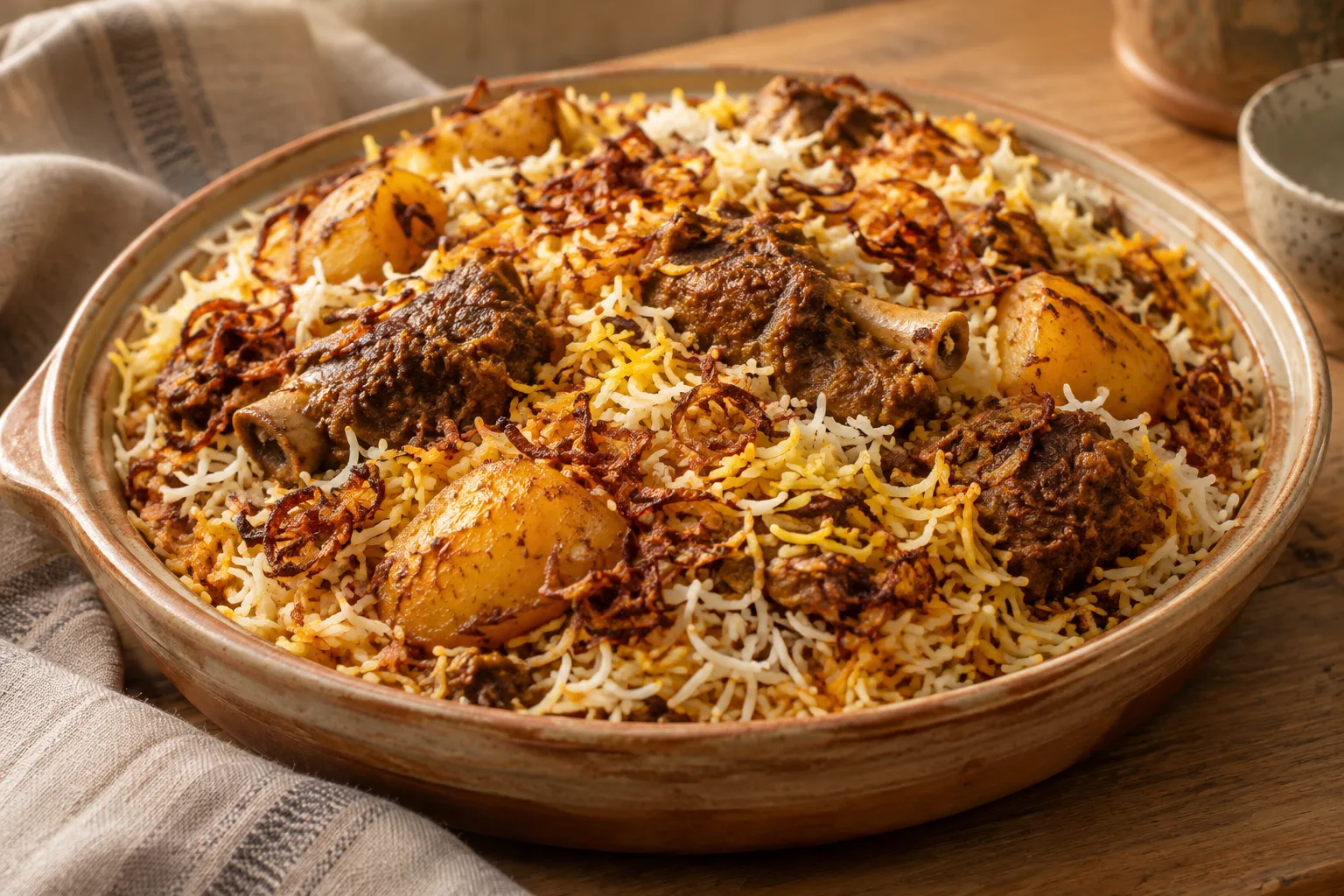
Kewra water is a liquid floral flavouring associated with the flowers of Pandanus and used in cooking. Commercial products may be described as a distilled floral water or essence, or as water containing kewra extract, so check the ingredient list on the particular bottle. Its main culinary purpose is to add an intense floral perfume, described in some product information as fresh and slightly fruity. It is used in sweet preparations such as creams and cakes, as well as savoury dishes, especially aromatic rice. It is not ordinary water for replacing the liquid in a recipe: use a small amount to scent the food.
When to use it
Use kewra water when you want a floral note that complements rather than overwhelms the other ingredients. It can flavour desserts, creams, cakes, syrups and drinks, and is also used with aromatic rice such as biryani or pulao. Some recipes add it to mild stews, sauces or marinades. It is useful when you want a different aromatic profile from spices alone. Because strength can vary between products, begin with a few drops or another small amount, taste, and add more only if needed. Use particular restraint in dishes with delicate aromas.
How to use it
Start with a few drops, mix thoroughly and taste before adding more; kewra can become dominant if poured in freely. For aromatic rice, add it near the end of cooking or just before serving so its perfume is not masked by prolonged cooking. In desserts, creams, cakes, syrups and drinks, stir it into the preparation and adjust gradually. It pairs with cardamom, saffron, cinnamon, vanilla, nuts and coconut, but avoid combining too many strong aromatics at once. Follow the recipe and the product label, since concentration and ingredients can differ among commercial bottles.
Flavour and texture
Kewra water contributes a floral aroma; product descriptions also mention fresh, slightly fruity or green notes. The precise profile and intensity may vary with the commercial formulation, so try a small amount before flavouring a whole dish. As a liquid, it blends into drinks, syrups, moist mixtures and sauces without adding solid texture. Its purpose is to perfume a preparation, not to thicken it or replace its main liquid.
How to choose it
Choose a bottle clearly identified for food use and check its ingredient list: products may be described as floral distillate, or may contain water, extract and preservatives. Compare the description and any stated concentration, since aroma can differ between products. Check the packaging, use-by date and directions as well. Do not assume that a kewra product intended for cosmetics is suitable for cooking.
Storage
Follow the storage instructions on the specific bottle, since product composition and directions can vary. Keep the container closed between uses and observe its stated date. Do not assume that every product needs refrigeration or has the same storage life after opening; use the manufacturer's directions for that particular product.
Substitutions
Rose water can provide a floral note in desserts or rice, but its aroma and flavour are not the same as kewra. Treat it as a change in flavour profile and add a small amount before adjusting. Orange blossom water is mentioned as another floral flavour that can be combined with kewra, but the available evidence does not establish it as an equivalent substitute; do not present it as a direct replacement.
Common mistakes
Adding too much at the start can make the floral aroma overpower the dish. Begin with a few drops, mix and taste before increasing the amount. Another mistake is treating it like plain water or assuming every bottle has the same ingredients and strength. Read the label, and do not cook with a product that is not identified for food use.
Safety and allergens
Use only a product identified for food use and follow its storage and use instructions. Check the ingredients and allergen information on the particular bottle; do not assume that every brand has the same composition. If the package does not identify the product as intended for consumption, do not add it to food.
Culinary uses
- Floral aroma for sweet dishes and desserts
- Finishing flavour for aromatic rice and savoury dishes
- Aromatic addition to drinks
Recommended techniques
- Stir a small amount into a dish near the end of cooking or just before serving to preserve its aroma.
- Blend into a syrup, dessert mixture or drink, then taste and adjust gradually.
Pairs well with
- Cardamom, saffron, cinnamon and vanilla
- Pistachio, almond and coconut
- Rice, milk-based desserts and sweet syrups
Frequently asked questions
What does kewra water taste like?
Its main characteristic is a floral aroma; some product descriptions also mention fresh, slightly fruity or green notes. The profile can vary by product.
When should I add it to rice?
It can be added near the end of cooking or just before serving. Start with a small amount, mix and taste so the perfume does not dominate.
Can I use rose water instead?
Rose water can provide a floral note in desserts or rice, but it does not taste the same. Treat it as a change in aroma and adjust gradually.
Ingredient allergens
Allergen listThere are no verified associations for these ingredients yet.
Sources and review
Automatically researched, cross-checked and validated content. Sources consulted:
- ¿Por qué la muerte es origen de miedos y tabúes? doi.org/10.64628/aao.fccyk3qj3
- En busca del maridaje perfecto con aguas | The Gourmet Journal www.thegourmetjournal.com/enoteca/maridaje-con-aguas/
- Agencia Española de Seguridad Alimentaria y Nutrición www.aesan.gob.es/
- Food allergens | Food Safety and Quality | FAO www.fao.org/food-safety/scientific-advice/food-allergens/en
- Generally Recognized as Safe (GRAS) | FDA www.fda.gov/food/food-ingredients-packaging/generally-recognized-safe-gras
- RISK ASSESSMENT OF FOOD ALLERGENS - IRIS iris.who.int/server/api/core/bitstreams/6c71a3db-88b8-4fcd-a807-f5220eb4fc34/content
- Food labelling and packaging: Ingredients list - GOV.UK www.gov.uk/food-labelling-and-packaging/ingredients-list
- Food additives | EFSA www.efsa.europa.eu/en/topics/topic/food-additives
- Current status of the novel food ingredient safety evaluation system - PMC pmc.ncbi.nlm.nih.gov/articles/PMC10767037/
- Agua de kewra – Blog de Cocinista blogcocinista.wordpress.com/2013/09/23/agua-de-kewra/
- Agua de Kewra 310 ml - Compra Online | Cocinista.es www.cocinista.es/web/es/agua-de-kewra-310-ml-4653.html
- Beneficios del Agua de Kewra | Agua de Kewra 310ml Natco – Desi Gourmet desigourmet.es/products/agua-de-kewra-kewra-water-natco-310ml?srsltid=AYCX9vLaNYvO57Ylth23BD…
- Agua Kewra , Kewra Water , flores de pándano | Blog Savourshop , recetas , trucos , descuentos savourbcn.wordpress.com/2012/04/26/agua-kewra-kewra-water-flores-de-pandano/
- El kewra (pandano) en perfumería: origen y aroma | Anuja Paris www.anuja-paris.com/es/pandanus-kewra-parfum-huile-essentielle/
- Shopify – Namo India Mart-Pooja Malhotra namoindiamart.es/es/products/schani-kewra-water-190-ml
- Water pairing: maridaje de agua en alta gastronomía - Dkristal dkristal.es/water-pairing-el-arte-de-maridar-con-agua/
- Cómo la calidad del agua afecta el sabor de tus recetas favoritas - Agua Miia aguamiia.com/blog/como-la-calidad-del-agua-afecta-el-sabor-de-tus-recetas-favoritas/?srsltid…
- Water pairing o maridaje de aguas: ¿una moda caprichosa o la nueva frontera gastronómica? | Gastronosfera www.gastronosfera.com/tendencias/water-pairing-o-maridaje-de-aguas-una-moda-caprichosa-o-la-…