- Category
- Fruit
- State
- Fresh
- Usual unit
- unit
What it is
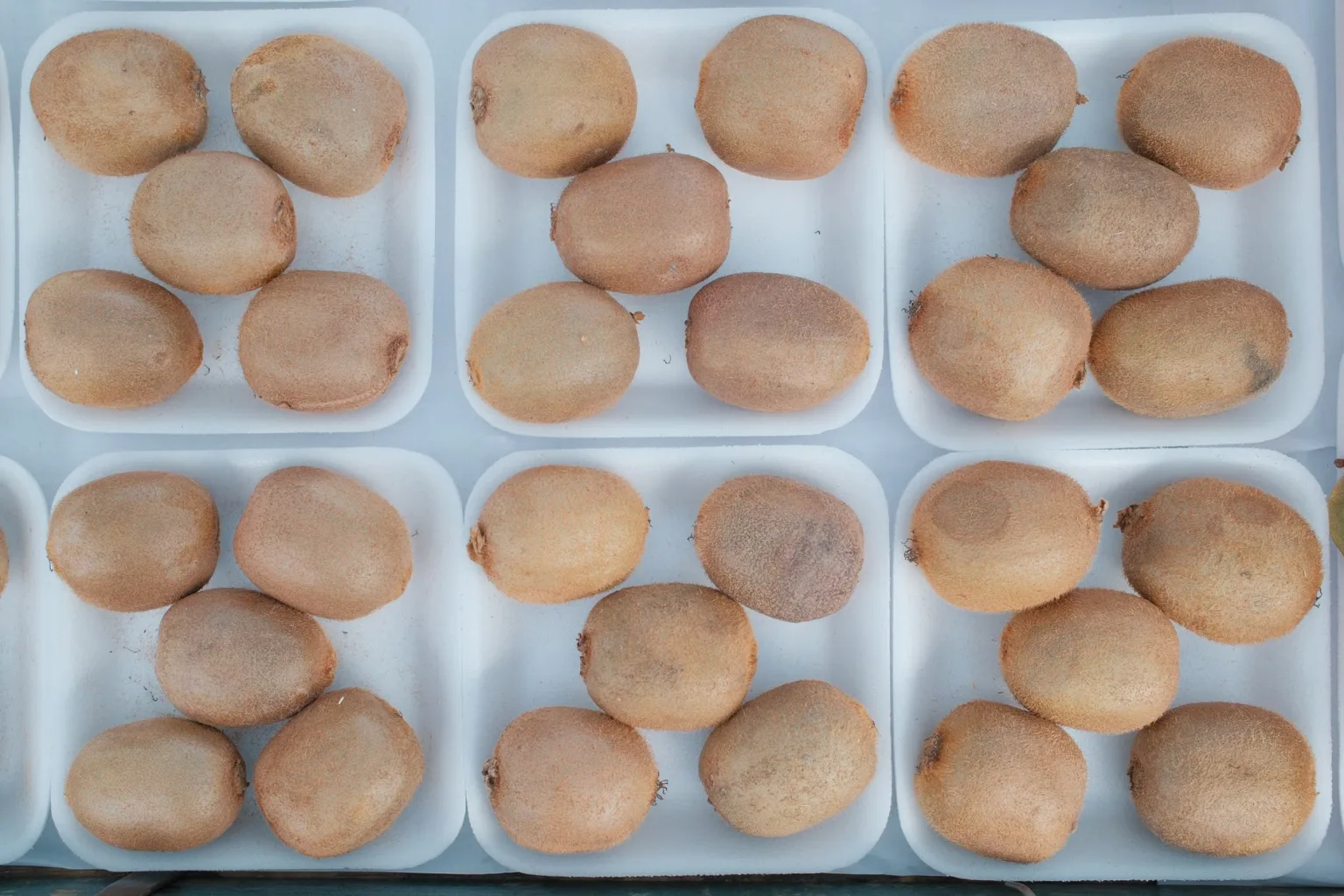
Kiwi is the fruit identified in this profile and is listed here in its fresh state. Powdered kiwi has also been described as an ingredient in sweet-bread preparations. That application makes powdered kiwi relevant to some sweet doughs, but it does not provide a formula that can automatically be applied to every recipe. Nor does it show that fresh and powdered kiwi behave in the same way in a dough. They are different forms, so choose the one specified by the recipe rather than assuming equal quantities, moisture, or results. The available information does not establish a buying season or provide quality criteria for selecting fresh fruit.
When to use it
Consider powdered kiwi when making a sweet bread or sweet dough whose recipe specifies that form. The described application concerns adding powdered kiwi to sweet-bread preparations; it does not establish general guidance for other doughs, drinks, or dishes. If a recipe calls for fresh kiwi, do not assume powdered kiwi can replace it in the same quantity or produce the same result. Choose the form suited to the preparation and avoid assuming an equivalence that has not been established. The available information also does not support a seasonal calendar for buying fresh kiwi.
How to use it
To use powdered kiwi in a sweet-bread preparation, follow a recipe that specifies the ingredient and how it is incorporated. The described application is adding the powder to sweet-bread preparations, but no general proportion, mixing time, or sequence of steps is provided for all products. Do not improvise a conversion between fresh fruit and powder or transfer a specific amount to a different dough. If the recipe does not specify the form, check which one it requires before starting. The available information also does not establish baking times or temperatures or recommend a specific storage method for fresh or powdered kiwi.
Flavour and texture
Powdered kiwi has been studied as an ingredient for contributing organoleptic qualities to sweet-bread preparations. The available information does not precisely describe its flavor, aroma, texture, or intensity in a dough, and it does not show that results will be the same in every recipe. Fresh and powdered kiwi are different forms; do not assume they contribute the same moisture or texture. For a particular result, use a recipe suited to the form you have and do not extrapolate the outcome to other uses.
How to choose it
Choose the form that suits the intended use: fresh kiwi if the recipe calls for it, or powdered kiwi if the preparation specifies that ingredient. The available information describes powdered kiwi in sweet bread but does not provide ripeness criteria, quality indicators, recommended varieties, or guidance for comparing commercial products. Read the label and check that the form matches the recipe. Do not infer that kiwi powder is equivalent to fresh fruit or that all powdered products have the same composition.
Storage
The available information does not specify particular storage times, temperatures, or conditions for fresh or powdered kiwi. Follow the product packaging instructions when provided and use ordinary safe food-handling practices, without extending storage based on an unverified duration. Store each form as directed for that product and check its condition before use. Do not assume that storage instructions for fresh kiwi also apply to powdered kiwi, or vice versa.
Substitutions
There is not enough support to recommend a specific culinary substitute for kiwi in sweet bread or to suggest equivalent quantities. Powdered kiwi is the form described for this application, but that does not show that it replaces fresh kiwi or that another ingredient performs the same role. If you do not have the specified form, look for a recipe developed for the form you do have rather than assuming a direct substitution.
Common mistakes
One mistake is treating fresh and powdered kiwi as though they were the same ingredient in dough. The described application concerns powdered kiwi in sweet-bread preparations, but it does not establish a quantity conversion or equivalent results for fresh fruit. Avoid extending that use to every sweet recipe without specific directions. Follow the recipe’s specified form and instructions, and do not invent baking times, temperatures, or storage conditions.
Safety and allergens
Food allergies can be serious. If you know that a food causes an allergic reaction for you, avoid eating it; also check the allergen information on packaged products. Tolerance varies from person to person, so this profile cannot determine whether a product is suitable for you. Review the ingredient list and available allergen information for each product, especially a packaged preparation with several ingredients.
Culinary uses
- Ingrediente en polvo para preparaciones de pan dulce
- Aporte de cualidades organolépticas a masas de pan dulce
Recommended techniques
- Pulverizar kiwi para usarlo como ingrediente
- Incorporar kiwi pulverizado a una preparación de pan dulce
Pairs well with
- Kiwi pulverizado y masa de pan dulce
- Kiwi pulverizado y preparaciones tradicionales de pan dulce
Frequently asked questions
How has kiwi been used in sweet bread?
Powdered kiwi has been described as an ingredient in sweet-bread preparations. The available information does not establish a general recipe or quantity for all preparations.
Can I replace fresh kiwi with powdered kiwi?
No equivalence between the two forms is established. Follow a recipe that specifies the ingredient and form you intend to use.
How should kiwi be stored?
The available information does not specify particular times or temperatures. Follow the packaging instructions for the product you have.
Ingredient allergens
Allergen listThere are no verified associations for these ingredients yet.
Estimated nutrition
- Fat
- 0.68 g
- Saturates
- 0 g
- Carbohydrate
- 14.9 g
- Sugars
- 8.78 g
- Fibre
- 2.7 g
- Protein
- 1.35 g
- Salt
- 0 g
Sources and review
Automatically researched, cross-checked and validated content. Sources consulted:
- Alérgenos alimentarios | EFSA www.efsa.europa.eu/es/safe2eat/food-allergens
- Client Challenge doi.org/10.2307/jj.27939689.16
- Gastronomía de México - Wikipedia, la enciclopedia libre es.wikipedia.org/wiki/Gastronom%C3%ADa_de_M%C3%A9xico
- Etiquetado de sustancias que causan alergias e intolerancias alimentarias www.aesan.gob.es/seguridad-alimentaria/informacion-alimentaria/etiquetado-sustancias
- Maridar vinos y mariscos: claves para potenciar sabores elspescadors.com/maridar-vinos-mariscos-claves-potenciar-sabores/
- Food Allergies | FDA www.fda.gov/food/nutrition-food-labeling-and-critical-foods/food-allergies
- Oficina Comunitaria de Variedades Vegetales (OCVV) | Unión Europea european-union.europa.eu/institutions-law-budget/institutions-and-bodies/search-all-eu-insti…
- - YouTube www.youtube.com/watch?v=gHmk2w4H6kw
- Variedades de Uva Denominación de Origen Rioja | Web Oficial DOCa Rioja riojawine.com/es/doca-rioja/variedades-de-uva/
- LAS VARIEDADES DEL CACAO - Magdalena, cocina y más delahuertaalacazuela.blogspot.com/2016/07/las-variedades-del-cacao.html
- Kiwifruit’s Allergy in Children: What Do We Know? - PMC pmc.ncbi.nlm.nih.gov/articles/PMC10346195/
- Kiwi fruit; chinese gooseberry - allergy information (InformAll: Communicating about Food Allergies - University of Manchester) research.bmh.manchester.ac.uk/informall/allergenic-food/?FoodId=30
- Tomate cherry, ¿se me ha cruzado con otras variedades? | La Fertilidad de la Tierra www.lafertilidaddelatierra.com/tomate-cherry-se-me-ha-cruzado-con-otras-variedades/
- Visita el museo y el Jardín de las Variedades | Bodegas Valdelana www.bodegasvaldelana.com/tienda/reserva-visita-a-la-bodega-museo-y-a-nuestro-jardin-de-las-v…
- Obtención de pulverizado de kiwi y su aplicación en la preparación de panes dulces. | OpenAlex openalex.org/W4413132880