- Category
- Vegetables
- State
- Dry
- Usual unit
- g
What it is
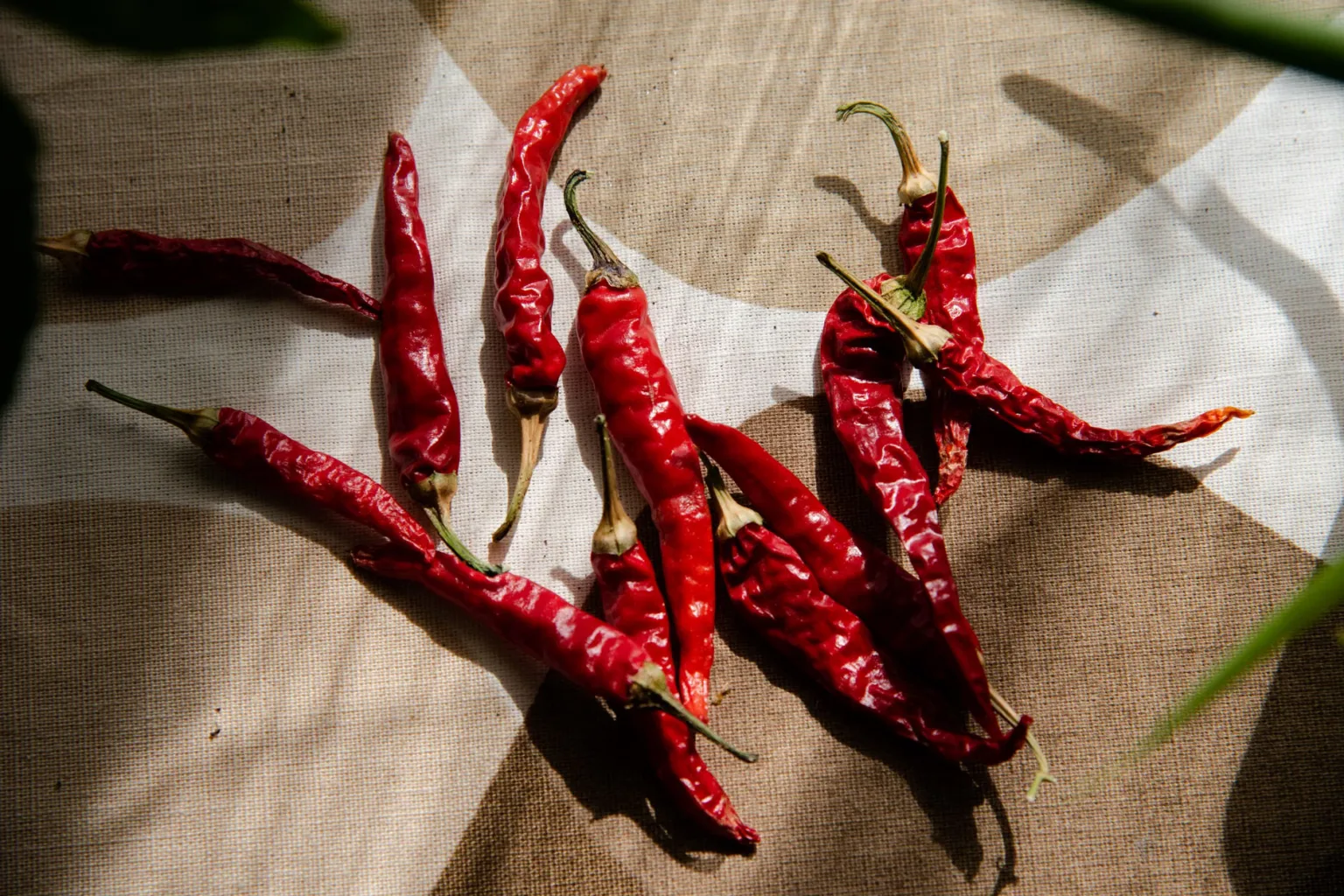
“Large mild dried chiles” describes a culinary group rather than one specific variety. They are dehydrated chile fruits, and their size, flavor, and heat can differ by variety and product. They are used to add flavor and color, and some mild dried chiles have fruity or sweet notes. Do not assume that every one is entirely heat-free: inspect the chile, taste a small amount, and adjust the dish to your preference. The available evidence does not identify an exact cultivar from this generic name.
When to use it
Use them when you want chile flavor and color in a sauce, marinade, or stew without necessarily making heat the main feature. They can be combined with other dried chiles for a more complex base, or blended with tomato and other juicy ingredients into a sauce. Heat varies between products, so they are useful when you can taste and adjust as you cook. If you need the profile of a particular named variety, this generic name alone cannot guarantee it.
How to use it
Remove the stem and open the chile to take out the seeds and veins if you want to moderate its intensity; these parts are associated with more heat in some preparations. You can toast it briefly before rehydrating and blending it with juicy ingredients for a sauce, or use it with other chiles in a marinade or mole. Watch it closely while toasting: a scorched skin can taste bitter. Start with a small amount, taste the mixture, and add more only if you like. Soaking time can vary by chile, so there is no single time that can be specified for this generic product.
Flavour and texture
Flavor depends on the variety: mild dried chiles can have fruity or sweet profiles, while others may taste different. Dehydration leaves the skin dry and often wrinkled; after rehydrating, the chile softens and can be blended into a sauce. Heat is not identical in every product either.
How to choose it
Look for clean chiles with vivid color and a noticeable aroma; where the product allows, a skin that bends slightly is preferable to one that breaks easily. Do not choose by size alone: it does not identify the variety or guarantee flavor or heat. If the package names a variety, use that information to anticipate its profile, and check that the package is intact.
Storage
Keep them dry and protected from moisture in a closed container. Their color and texture can change in storage, so inspect them before use. Do not store them damp or in a container that lets them absorb moisture. The available sources do not establish one universal storage life for every kind of dried chile.
Substitutions
Ancho is one example of a large, mild dried chile, but not every generic product will be ancho or taste the same. Another mild dried chile may serve a similar role for color and flavor, but the result can change. If you combine a mild chile with a hotter one, add the hotter chile gradually and taste as you go.
Common mistakes
Do not assume that a large size means no heat, or that all dried chiles have the same profile. Toasting them too long can make them bitter; blending them without tasting first can make a sauce hotter than expected. When replacing a named variety, remember that flavor and color may change.
Safety and allergens
Check the product label and do not use chiles with visible dirt, insects, or signs of spoilage. If you have a food allergy, check the package information and ask the manufacturer if you have questions about a particular product.
Culinary uses
- Añadir sabor y color a salsas, adobos y guisos
- Aportar cuerpo y notas dulces o afrutadas sin buscar mucho picor
Recommended techniques
- Abrir y retirar semillas y venas cuando se quiera moderar el picor
- Tostar brevemente y rehidratar antes de triturar para una salsa
Pairs well with
- Tomate y otros ingredientes jugosos para salsas
- Otros chiles secos para adobos y moles
Frequently asked questions
Are all large mild dried chiles low in heat?
Not necessarily. The name does not specify one variety, and heat can vary. Taste a small amount before adjusting your dish.
How can I moderate the heat?
Opening the chile and removing the seeds and veins may help reduce it. Add the chile gradually and taste the preparation.
What dishes are they used in?
They are useful in sauces, marinades, and stews. They can be combined with tomato or other juicy ingredients and with other dried chiles.
Ingredient allergens
Allergen listThere are no verified associations for these ingredients yet.
Sources and review
Automatically researched, cross-checked and validated content. Sources consulted:
- Alérgenos alimentarios | EFSA www.efsa.europa.eu/es/safe2eat/food-allergens
- Los japonesismos culinarios | OpenAlex openalex.org/W2906636610
- Gastronomía de México - Wikipedia, la enciclopedia libre es.wikipedia.org/wiki/Gastronom%C3%ADa_de_M%C3%A9xico
- Agencia Española de Seguridad Alimentaria y Nutrición www.aesan.gob.es/
- Tipos de Chiles Secos Mexicanos: Características y Usos abarrotes.es/blog/chiles-secos-mexicanos-caracteristicas-y-usos/
- Chiles secos: el Ama de nuestra gastronomía | Love Veg loveveg.mx/chiles-secos-el-ama-de-nuestra-gastronomia/
- Para cocineros en Europa: 12 chiles mexicanos básicos y sus sustitutos lacondesabarcelona.com/chiles-mexicanos-basicos/
- Allergies - Food Safety - European Commission food.ec.europa.eu/food-safety/campaign-2026/allergies_en
- Food Allergies | FDA www.fda.gov/food/nutrition-food-labeling-and-critical-foods/food-allergies
- RISK ASSESSMENT OF FOOD ALLERGENS - IRIS iris.who.int/server/api/core/bitstreams/6c71a3db-88b8-4fcd-a807-f5220eb4fc34/content
- Food allergen labelling and information requirements technical guidance - GOV.UK www.gov.uk/government/publications/food-allergen-labelling-and-information-requirements-tech…
- El teorema de Gauss-Bonnet en variedades suaves doi.org/10.24275/uami.8k71nh69m
- Chiles Secos Tajín | Línea Premium 100% Mexicanos jalapenostugitana.es/chiles-secos-tajin/
- Tipos de Chiles Secos | Carácteristicas y usos en la Cocina Mexicana www.mexicoenmicocina.com/tipos-de-chiles-secos/
- Chiles Mexicanos: Guía de Variedades y Usos | Recetas Mexas recetasmexas.com/blog/chiles-mexicanos-guia-variedades
- - YouTube www.youtube.com/watch?v=8JextH9_EHE