- Category
- Bread and dough
- State
- Fresh
- Usual unit
- g
What it is
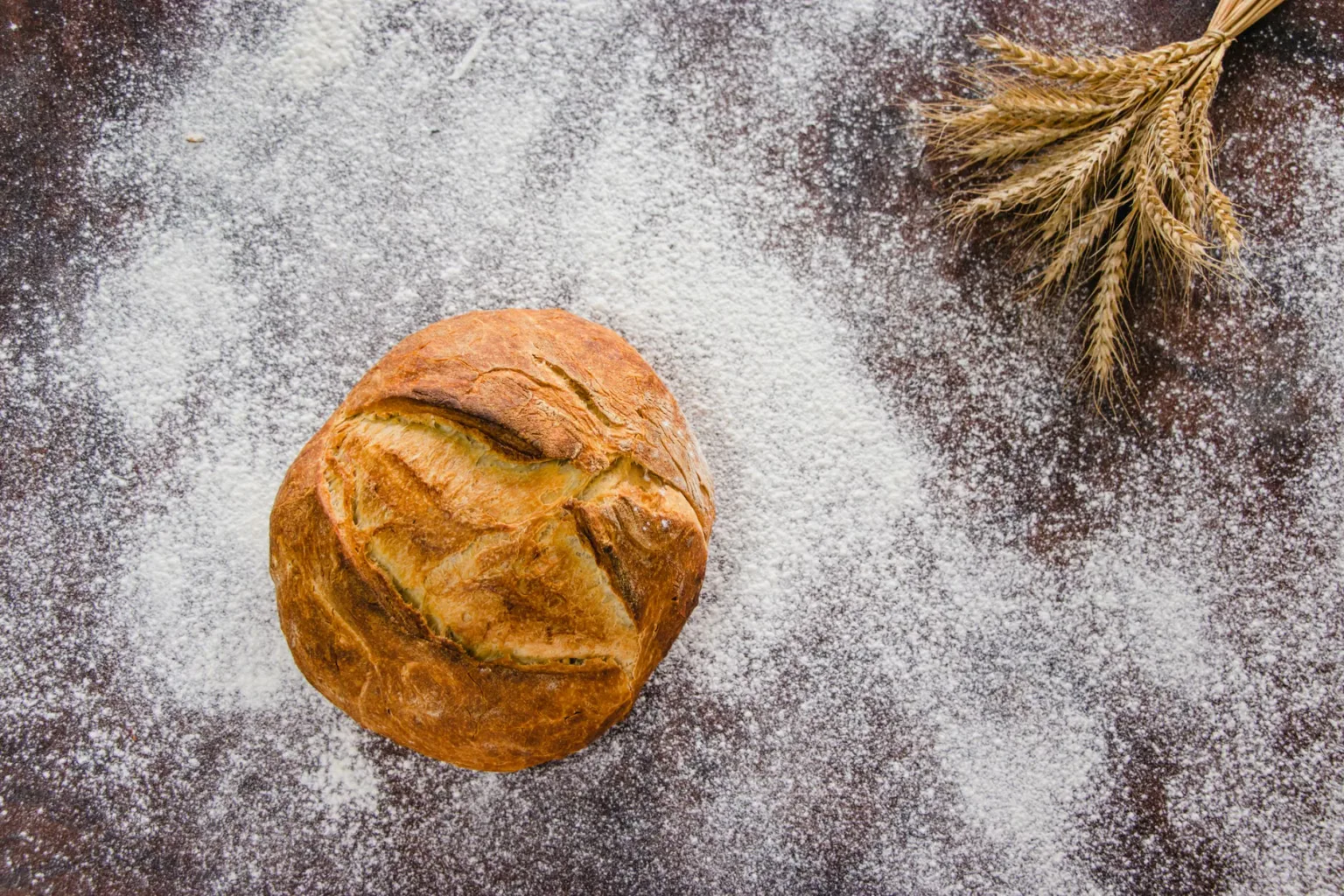
Loaf bread is bread sold as a large piece, often round, although other shapes are possible. Some loaves have a thick, browned crust and a soft, airy crumb with holes; that description does not apply to every version. The recipe and result depend on the flour and method used. Loaves may be made with wheat flour and sourdough, while other versions use wholemeal flour or flour blends. The name therefore describes a format or style of bread rather than one fixed recipe or ingredient list. Check the particular product’s label when you need to know exactly what it contains.
When to use it
Choose a loaf when you want bread to share at the table or to provide several servings, as it is often sold as a large piece. Slice it to serve alongside a meal, with spreads and fillings, or as bread for sandwiches and topped preparations. Loaves are not all alike: crumb, crust and flour can vary from one type to another. Take those differences into account if you want a firm slice, a softer crumb or a particular flavour.
How to use it
Cut the loaf into slices with a suitable knife and serve them alongside a meal or with spreads and fillings. You can also use slices as a base for mini pizzas or other topped preparations. For sandwiches, choose a slice thickness that suits the filling and the bread’s texture. If you buy a whole loaf, cut only what you plan to serve and store the rest according to when you expect to use it. Wholemeal and sourdough loaves can differ in flavour and texture from loaves made with white wheat flour; check the product description and ingredients.
Flavour and texture
Flavour and texture vary with the flour and method. Many loaves have a browned crust and a soft, airy crumb, but some have denser crumb or use wholemeal flour. Some sourdough loaves have a slight tang; not all do.
How to choose it
Choose a loaf for the way you plan to serve it: a soft crumb can be convenient alongside meals, while a firmer slice can hold toppings. Loaves vary in shape, size, flour and method, so check the product name and ingredients rather than assuming they share one recipe.
Storage
Choose a suitable container or wrapping based on how soon you plan to eat the loaf. One bakery describes keeping it in a cloth bag or wooden bread box if it will be eaten that day or the next, and freezing slices for later use. Storage conditions can vary by bread and product; follow the package instructions too.
Substitutions
For serving bread, another loaf or a wholemeal loaf may play a similar role, but the crust, crumb and flavour will differ. Do not treat the swap as equivalent in a recipe that depends on a particular texture. Check ingredients if you need to avoid any of them.
Common mistakes
Do not assume every loaf is round, made from white wheat flour or made with sourdough: there are different versions. A wholemeal loaf or one made with another flour will not necessarily have the same crumb or flavour. Read the product label.
Safety and allergens
Ingredients can differ between loaves and brands. If you need to avoid an ingredient because of an allergy or intolerance, check the product’s ingredients and allergen information before eating it; do not infer its composition from the bread’s name alone.
Culinary uses
- Base for sandwiches and open-faced toppings
- Table bread served alongside meals
Recommended techniques
- Slice for serving
- Use slices as a base for mini pizzas
Pairs well with
- Spreads and sandwich fillings
- Roasted meats and cured meats
Frequently asked questions
Is every loaf made with white wheat flour?
No. Loaves include wheat-flour versions, wholemeal versions and recipes using flour blends. Check the ingredients for each product.
How can I serve loaf bread?
Slice it to serve with meals, use it for sandwiches, or use slices as a base for topped preparations.
How should I store leftover loaf bread?
Recommendations depend on the product. One bakery suggests a cloth bag or wooden bread box for bread to be eaten soon, and freezing slices for longer storage; also follow the package directions.
Ingredient allergens
Allergen listThere are no verified associations for these ingredients yet.
Sources and review
Automatically researched, cross-checked and validated content. Sources consulted:
- Alérgenos alimentarios | EFSA www.efsa.europa.eu/es/safe2eat/food-allergens
- ¿Por qué la muerte es origen de miedos y tabúes? doi.org/10.64628/aao.fccyk3qj3
- Agencia Española de Seguridad Alimentaria y Nutrición www.aesan.gob.es/
- Obtención del ajo negro por reacción de Maillard para el desarrollo de productos culinarios y su aplicación en cocina innovadora | OpenAlex openalex.org/W2991569715
- Food Allergies | FDA www.fda.gov/food/nutrition-food-labeling-and-critical-foods/food-allergies
- Food allergen portal | Food Standards Australia New Zealand www.foodstandards.gov.au/consumer/foodallergies/food-allergen-portal
- Allergen guidance for food businesses - GOV.UK www.gov.uk/government/publications/allergen-guidance-for-food-businesses/allergen-guidance-f…
- Global food safety standards body Codex agrees on new guidance on “may contain” allergen labels www.fao.org/newsroom/detail/global-food-safety-standards-body-codex-adopts-new-guidance-on--…
- Food safety www.who.int/news-room/fact-sheets/detail/food-safety
- Hogaza - Wikipedia, la enciclopedia libre es.wikipedia.org/wiki/Hogaza
- Receta hogaza de León | Panadería Chapela chapela.es/receta-hogaza-leon/?srsltid=AYCX9vJHLWqhxdWyBA0ZMxnM_GTwdzWIeGZUxcnK2ogQrVsjE1vfd…
- Pan de hogaza elaborado con masa madre, rico y esponjoso polvillo.es/pan-de-hogaza-elaborado-con-masa-madre-rico-y-esponjoso/
- Cómo hacer una hogaza de pan con masa madre - Bake-Street.com bake-street.com/como-hacer-una-hogaza-de-pan/?srsltid=AYCX9vLeALmHx7xLH24vUTyRMma61UqCGOPkRZ…
- Hogaza de pan en campana cerámica — webos fritos webosfritos.es/hogaza-de-pan-en-campana-ceramica/
- El origen de la hogaza – Horgrupan horgrupan.com/el-origen-de-la-hogaza/