- Category
- Fruit
- State
- Preserved
- Usual unit
- unit
What it is
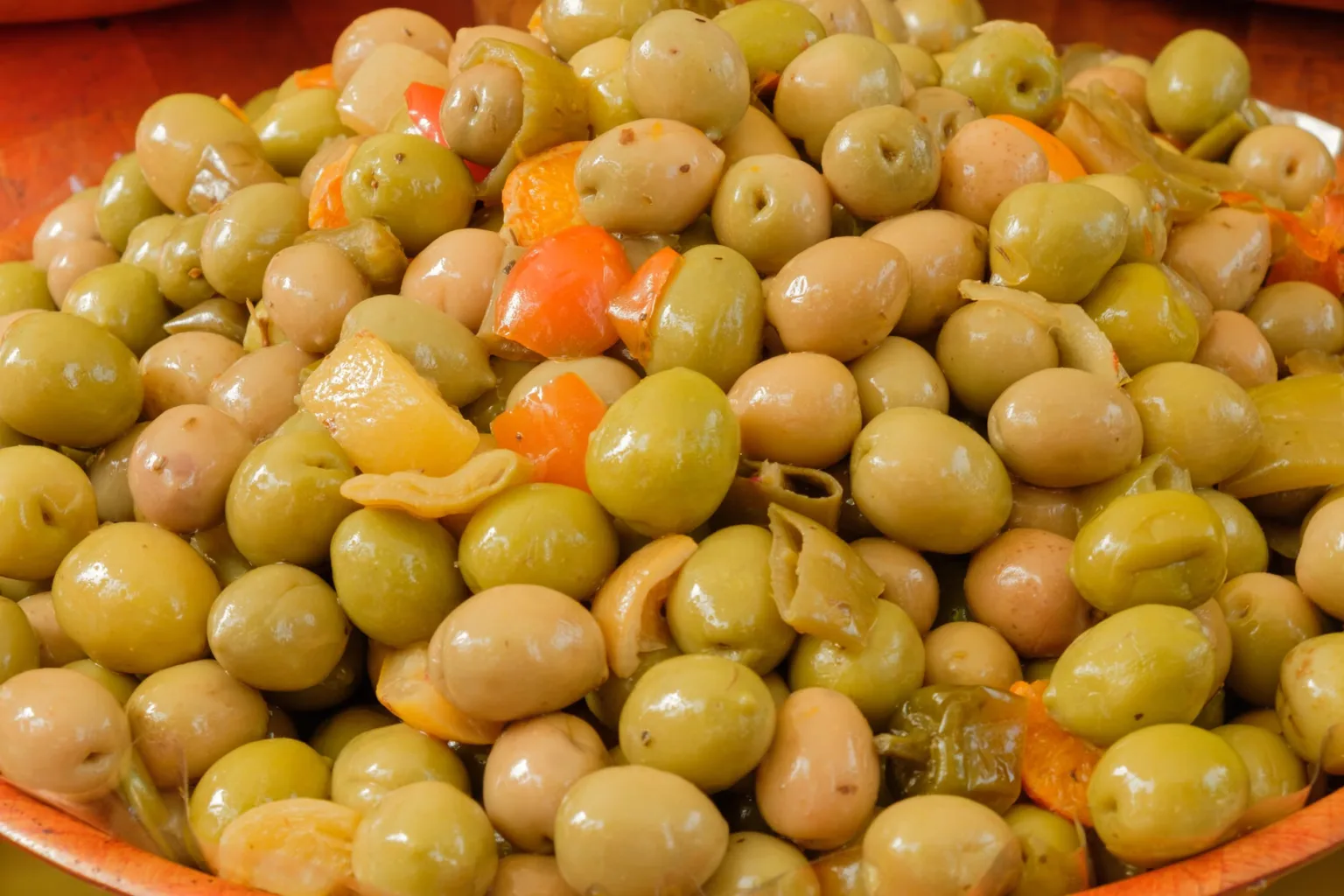
Manzanilla is a variety of olive, the fruit of the olive tree, sold for eating as a table olive. Like other edible olives, it is generally prepared or cured before serving because untreated fruit can taste bitter. The name Manzanilla identifies the variety; it does not, by itself, guarantee one colour, seasoning, filling or processing method. Products may be sold whole or pitted, and may also be seasoned or stuffed. Their ingredients and characteristics can therefore differ. Read the product label and use the particular preparation accordingly rather than assuming that every Manzanilla olive is the same.
When to use it
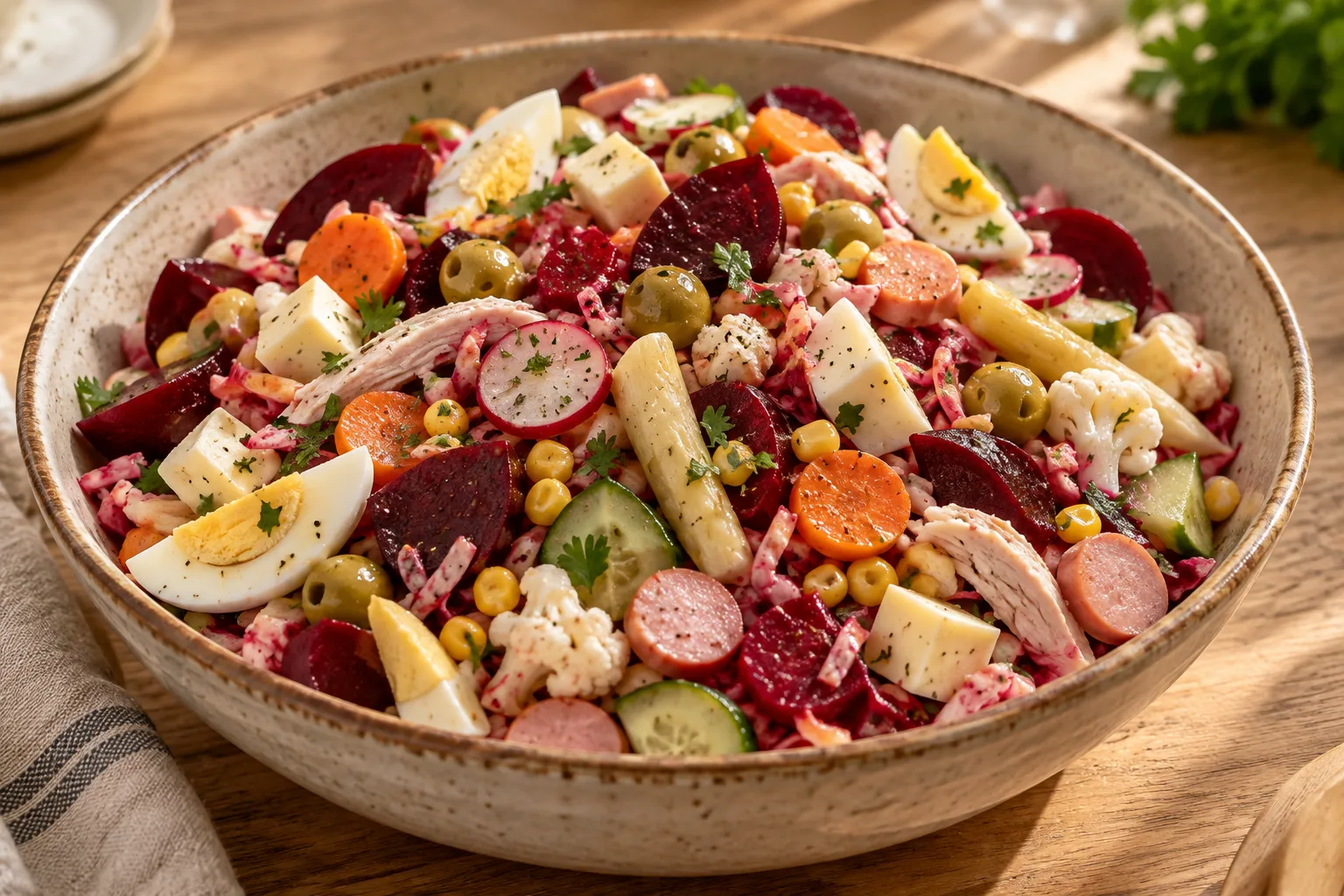
Use Manzanilla olives when you want to add a savoury taste and fleshy texture to a snack, tapa or salad. Whole olives are convenient for a serving bowl or skewers; pitted olives are easier to chop and distribute through salads, potato salads and pasta dishes. They can also be blended into an olive paste for spreading on bread or using as a condiment. If the olives are stuffed or seasoned, remember that the filling or marinade changes their flavour and adds ingredients. Check the package and adjust the rest of the recipe before adding them.
How to use it
Drain the olives if the recipe does not need the packing liquid. If you have whole olives, remove the stones when the dish calls for pieces without stones. Serve them as a snack, or combine them with anchovies, pickles or mild cheese in tapas and skewers. For salads, slice or chop them and mix them with tomatoes and other ingredients; for pasta, add them cut up. You can also blend pitted olives with garlic, capers and olive oil into a spread for bread or a savoury condiment. Taste before adding salt: olives are savoury, and their packing liquid can affect the finished dish.
Flavour and texture
Green Manzanilla olives are commonly described as mild, with a slight almond-like note and fleshy pulp. The final taste depends on curing, ripeness and, especially, the product’s seasoning or filling. Stuffed versions may taste more pronounced and savoury than plain ones. Taste one before adding salt or other strong seasonings to a dish.
How to choose it
Choose the format to suit the dish: whole olives for serving intact and pitted ones for easy chopping or mixing. Check whether they are plain, seasoned or stuffed, and read the ingredient list if you need to know the exact composition. Make sure the package is intact and check its date; size and flavour can vary from one product to another.
Storage
Follow the storage instructions on the package, as they may differ by product and preparation. After opening, check whether refrigeration is required and how the olives should be kept in their liquid. Use clean utensils when serving. Do not eat a product from damaged packaging or one with unusual signs; if in doubt, follow the manufacturer’s directions.
Substitutions
For a dish that needs olives without stones, replace whole Manzanilla olives with pitted ones and cut them to suit the recipe. Another table olive can play a similar role in a tapa or salad, but its size, firmness, flavour and seasoning may differ. Taste and adjust salt and other ingredients rather than assuming an exact swap.
Common mistakes
Do not assume that all Manzanilla olives have the same seasoning, filling or flavour, or that the variety name specifies one particular preparation. Avoid adding salt before tasting: the olives and their packing liquid can contribute a savoury, salty taste. If the dish needs pieces without stones, choose pitted olives or remove the stones before serving.
Safety and allergens
Check the label on seasoned or stuffed olives because their ingredients may differ from plain olives. If you have a food allergy, check the information for the specific product and do not eat it if you cannot confirm its composition. Store the product according to the package directions.
Culinary uses
- Aperitivo y tapa
- Ingrediente salado para ensaladas, pastas y untables
Recommended techniques
- Servir entera o deshuesada; cortar en rodajas o picar para mezclar con otros ingredientes
- Triturar aceitunas deshuesadas para preparar una pasta tipo tapenade
Pairs well with
- Anchoas, pepinillos y quesos suaves
- Tomate, ajo, aceite de oliva y hierbas como el orégano
Frequently asked questions
Are Manzanilla olives always sold with stones?
No. They are sold whole and pitted, as well as in seasoned or stuffed preparations. Check the package to see which format you are buying.
How can I add them to salad or pasta?
Pit them if needed, slice or chop them, and mix them with the other ingredients. Taste before adding salt and adjust the seasoning to the product.
How should I store an opened package?
Follow the storage directions for the opened product. Instructions can vary, so do not assume there is one method for every package.
Ingredient allergens
Allergen listThere are no verified associations for these ingredients yet.
Sources and review
Automatically researched, cross-checked and validated content. Sources consulted:
- Alérgenos alimentarios | EFSA www.efsa.europa.eu/es/safe2eat/food-allergens
- Aceituna - Wikipedia, la enciclopedia libre es.wikipedia.org/wiki/Aceituna
- COMPARACIÓN DE TRATAMIENTO ALCALINO EN PRODUCCIÓN DE ACEITUNAS VERDES FERMENTADAS VARIEDADES MANZANILLA Y SEVILLANA | Ciencia & Desarrollo doi.org/10.33326/26176033.2017.21.738
- Agencia Española de Seguridad Alimentaria y Nutrición www.aesan.gob.es/
- La cocina fusión: antecedentes y nuevas propuestas en 8 recetas aplicada en la cocina Italiano-Ecuatoriano | OpenAlex openalex.org/W84058138
- Food Allergies | FDA www.fda.gov/food/nutrition-food-labeling-and-critical-foods/food-allergies
- Food allergens | Food Safety and Quality | FAO www.fao.org/food-safety/scientific-advice/food-allergens/en
- Food allergen labelling and information requirements technical guidance - GOV.UK www.gov.uk/government/publications/food-allergen-labelling-and-information-requirements-tech…
- DOCUMENTO ÚNICO ACEITUNA MANZANILLA DE SEVILLA» / «ACEITUNA MANZANILLA SEVILLANA» www.juntadeandalucia.es/sites/default/files/inline-files/2024/02/DU_IGP_Aceituna_Manzanilla_…
- Maridaje de aceitunas y vinos - Aceitunas Zambudio aceitunaszambudio.com/maridaje-de-aceitunas-y-vinos/
- Aceitunas Manzanilla - aceitunas de mesa "la aguilareña" www.bonillayaceitunasdemesa.com/aceitunas-manzanilla
- aceituna manzanilla | Que vino va con quevinovacon.wordpress.com/tag/aceituna-manzanilla/
- Explorando el sabor intenso de las aceitunas manzanilla negras - Garpa Alimentación - Almacenamiento y Distribución para las Islas Canarias garpa-alimentacion.com/explorando-el-sabor-intenso-de-las-aceitunas-manzanilla-negras/
- LA ACEITUNA MANZANILLA TODAS SUS POSIBILIDADES - Martín Martín www.martinmartin.es/2021/07/20/la-aceituna-manzanilla-todas-sus-posibilidades/