- Category
- Dairy and eggs
- State
- Fresh
- Usual unit
- g
What it is
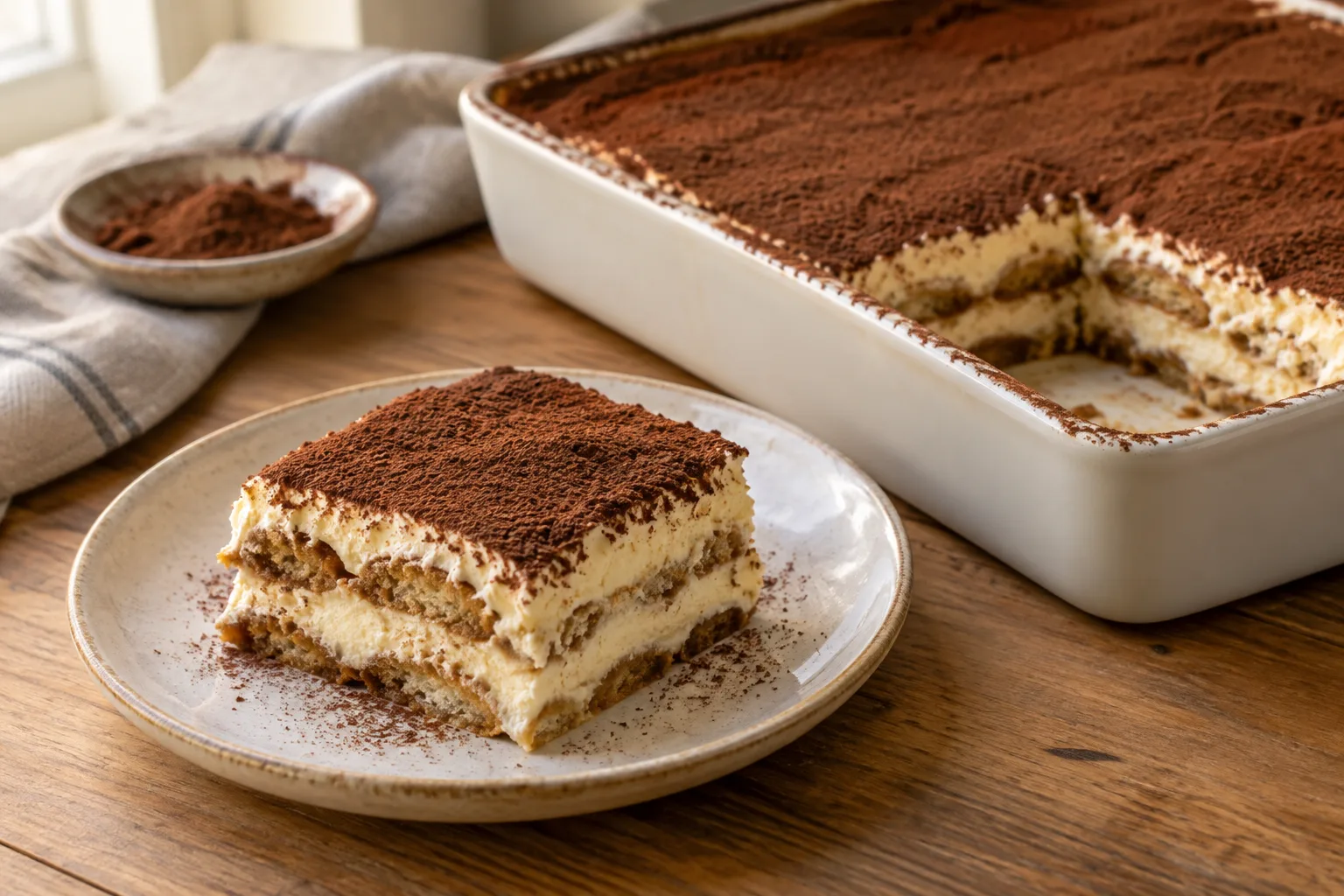
Mascarpone is a fresh, very creamy dairy product commonly classified among fresh cheeses. It is made by thickening cream through acidification, which distinguishes it from many cheeses set with rennet. Its consistency is usually smooth, dense and easy to blend, while its flavor is milky and mild, with a little sweetness and sometimes a slight tang. These qualities make it useful in both sweet and savory cooking. It is best known as an ingredient in tiramisu, but it can also give a rich, creamy texture to fillings, desserts, pasta and risotto. Formulations and textures can differ between products, so check the package and consider the consistency of the mascarpone you have when choosing how to use it.
When to use it
Use mascarpone when a dish needs a rich, smooth, creamy texture and its mild dairy flavor will work with the other ingredients. In desserts, it can be used in tiramisu cream, cakes, fillings or mixtures with coffee, cocoa, chocolate and fruit. In savory cooking, it can enrich pasta, risotto or sauces with a fuller, creamier body. It is less suitable when you want a distinctly tangy flavor or a light texture: the result may feel richer and denser. Products and recipes vary, so check the consistency of the mascarpone and adjust the dish rather than assuming every product behaves in exactly the same way.
How to use it
Measure out the amount you need and mix it gently into dessert creams, fillings or other sweet preparations. In a dessert such as tiramisu, it works well with coffee and cocoa; chocolate or fruit can complement it in other creams. For savory dishes, stir it into pasta, risotto or a creamy sauce to add a smooth, rich texture. Mix until incorporated, adding it gradually if you need to control the final consistency. Mascarpone can also be spread or blended into dishes where a creamy dairy base is wanted. The flavor and firmness can vary from product to product, so taste and assess the mixture as you go. Adjust the recipe as needed rather than assuming that another cheese will behave as an exact equivalent.
Flavour and texture
Mascarpone tastes mild and milky, with a subtle sweetness and, depending on the product, a slight tang. Its texture is generally smooth, dense and very creamy. It blends readily and contributes body more than a strong flavor. The precise firmness and richness can vary between products.
How to choose it
Look for a product with an even appearance and creamy consistency, and read the package for its ingredients and storage directions. Commercial formulations can vary, so some products may be firmer than others. Choose a consistency that suits your recipe and follow the manufacturer’s product-specific information.
Storage
Follow the storage instructions printed on the package and observe the date provided by the manufacturer. After opening, reseal the container or transfer the product to a clean, covered container in line with the product directions. If the package gives specific instructions, follow those rather than assuming every mascarpone has the same storage life.
Substitutions
Cream cheese can replace mascarpone in some preparations, but it usually gives a tangier flavor and a different texture. A mixture of ricotta and cream is another culinary alternative described for this use. Neither substitution guarantees the same result; choose according to the recipe and adjust the consistency rather than assuming a universal equivalent.
Common mistakes
Do not assume that any creamy cheese will produce the same result: flavor and texture can change. Another common mistake is overlooking mascarpone’s dense consistency, which can make a cream or sauce richer than intended. Check the product and adjust the recipe gradually.
Safety and allergens
Check the product label and allergen information before eating, especially if you have a food allergy. Lactose intolerance is not the same as milk allergy; consult the product information when making choices appropriate to your situation.
Culinary uses
- Adds a rich, creamy body to desserts and fillings.
- Enriches pasta, risotto and creamy sauces.
Recommended techniques
- Fold or blend into a dessert cream until smooth.
- Stir into pasta or risotto to give the dish a creamy finish.
Pairs well with
- Coffee and cocoa in layered desserts such as tiramisu.
- Chocolate or fruit in sweet creams and fillings.
Frequently asked questions
Is mascarpone a cheese?
It is commonly classified as a fresh cheese, although it is made by thickening cream through acidification and differs from many cheeses set with rennet.
Is mascarpone only for desserts?
No. Alongside desserts such as tiramisu, it is used to add body and creaminess to pasta, risotto and sauces.
Can I substitute cream cheese for mascarpone?
In some recipes, yes, but the result may be tangier and have a different texture. Check the consistency and adjust the preparation.
Ingredient allergens
Allergen listThere are no verified associations for these ingredients yet.
Estimated nutrition
- Fat
- 42.9 g
- Saturates
- 32.1 g
- Carbohydrate
- 3.57 g
- Sugars
- 3.57 g
- Fibre
- 0 g
- Protein
- 3.57 g
- Salt
- 0.14 g
Sources and review
Automatically researched, cross-checked and validated content. Sources consulted:
- Alérgenos alimentarios | EFSA www.efsa.europa.eu/es/safe2eat/food-allergens
- Client Challenge doi.org/10.2307/jj.27939689.16
- Mascarpone - Wikipedia, la enciclopedia libre es.wikipedia.org/wiki/Mascarpone
- Mascarpone: origen y propiedades de este queso y 18 recetas para que brille en la cocina www.directoalpaladar.com/ingredientes-y-alimentos/mascarpone-origen-propiedades-este-queso-1…
- Agencia Española de Seguridad Alimentaria y Nutrición www.aesan.gob.es/
- La cocina técnico conceptual: origen, significado, características y propuesta gastronómica a partir de 25 productos cultivados, en la provincia del Azuay-Ecuador | OpenAlex openalex.org/W66629700
- Food Allergies | FDA www.fda.gov/food/nutrition-food-labeling-and-critical-foods/food-allergies
- Food allergen labelling and information requirements technical guidance - GOV.UK www.gov.uk/government/publications/food-allergen-labelling-and-information-requirements-tech…
- Etiquetado precautorio de alérgenos NO intencionados < Tecoal ® tecoal.net/seguridad-alimentaria/etiquetado-precautorio-alergenos-no-intencionados/
- Queso Mascarpone: Qué es, receta casera y cómo usarlo lafamigliarestaurantes.com/blog/mascarpone-toda-la-cremosidad-lombardia/
- - YouTube www.youtube.com/watch?v=n0ZqupKM96E
- Mascarpone - Mundoquesos www.mundoquesos.com/mascarpone/
- Queso mascarpone | Gastronomía & Cía www.gastronomiaycia.com/queso-mascarpone/
- Mascarpone: sabor, textura y origen | Cheesepedia www.cheesepedia.app/es/queso/mascarpone-lombardo/
- Por qué reemplazar el mascarpone: 8 alternativas eficaces y deliciosas mae-innovation.com/es/por-que-reemplazar-el-mascarpone-guia-completa-de-alternativas/