- Category
- Meat
- State
- Fresh
- Usual unit
- g
What it is
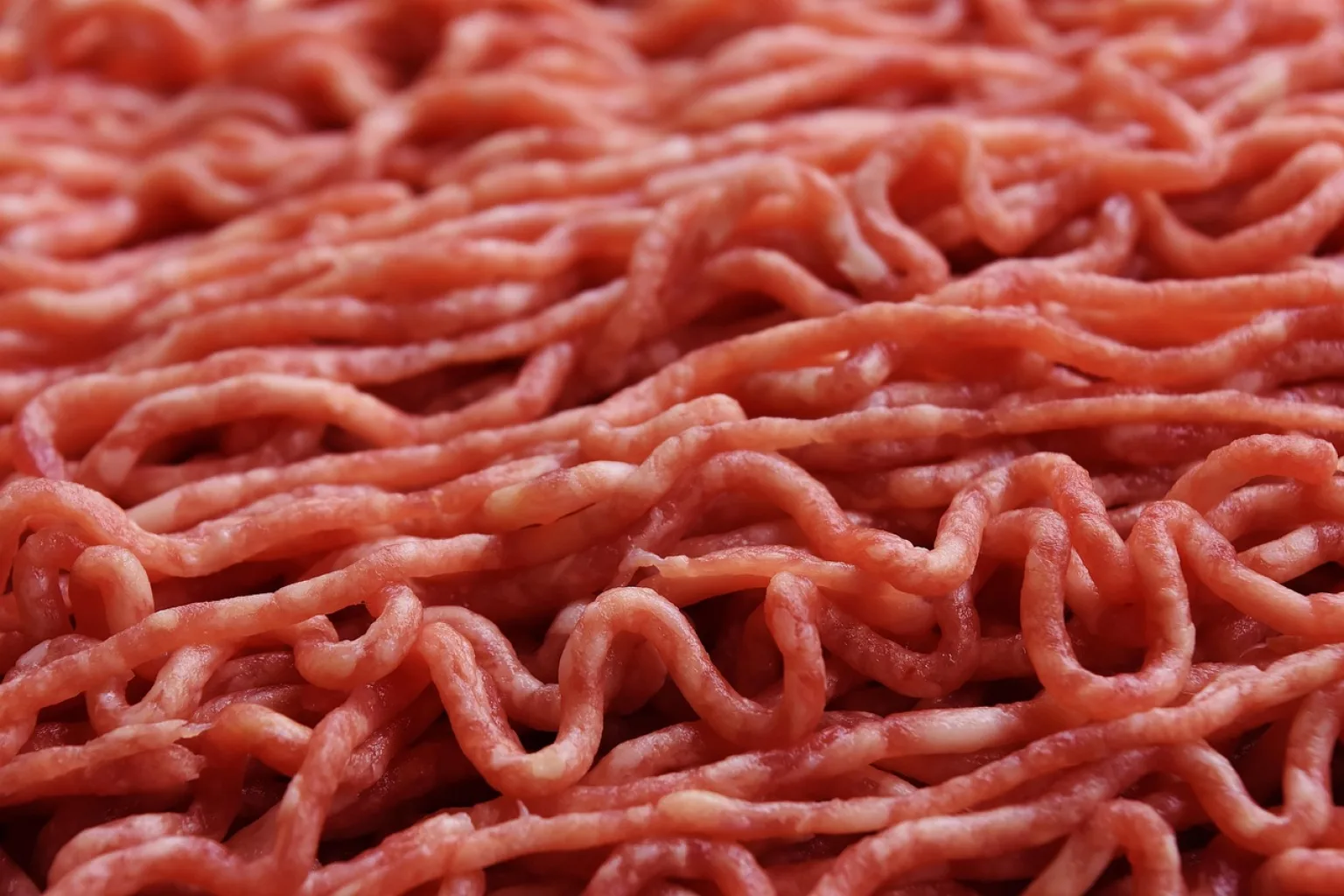
Minced beef is beef cut or broken into small pieces so that it can be mixed and cooked easily. Here it is treated as fresh beef intended for a filling, although it can also be used in sauces, stews, meatballs or burgers. Products can differ: the cut used and the amount of fat affect juiciness and how the meat behaves during cooking. A prepared meat product may also contain ingredients other than beef, so check the ingredient list if you want beef without additions. Its small pieces make it convenient to distribute through a filling and combine with vegetables, pasta or pastry.
When to use it
Use it when you want beef distributed inside vegetables, pastry, pies or pasta, or when making a sauce to serve with pasta or grains. It can also form the base of meatballs and other shaped preparations. Choose it with the dish and desired result in mind: the fat content and the size of the mince affect juiciness and texture. In fillings that continue cooking inside another preparation, it can be combined with vegetables and other ingredients. Use it on its own when you want the beef flavour to stand out, or consider a meat blend for a different profile.
How to use it
First check the product name and ingredient list: minced meat and prepared meat products may have different compositions. Prepare the other ingredients, then break up the beef in a pan with a spatula; cook in batches if necessary so the pan is not overcrowded. Brown it with vegetables and add it to a sauce, or cook it as part of a filling for vegetables, pastry or pasta. Match the mince and seasonings to the recipe rather than assuming every pack has the same fat content. Finish cooking as required for the dish and follow the storage and preparation instructions on the pack.
Flavour and texture
It has a recognizable beef flavour and small pieces that are easy to mix into other filling ingredients. Fat content, cut and mince size can vary between products, affecting juiciness and the final texture. It blends readily into a sauced preparation; when pan-cooking, avoid overcrowding so the meat is less likely to release liquid and steam instead of browning.
How to choose it
Choose the beef for the dish and check the product name and ingredient list: a prepared meat product may contain ingredients in addition to meat. Fat content and mince size affect the result, and no single fat percentage suits every use. Check the date and storage conditions on the pack, and choose a pack size that suits the amount you plan to cook.
Storage
As a fresh product, it should be kept according to the storage conditions and date shown on its packaging. Keep it in its packaging until needed and follow the manufacturer's directions if freezing or thawing it. There is no universal storage period to give here: packaging, product format and label instructions can differ.
Substitutions
Minced pork or poultry can replace it in some fillings, but the dish's flavour and texture will change. A beef-and-pork blend is another option when it suits the recipe. There is no universal substitution ratio; check the alternative product's ingredients and adjust seasoning to the result you want.
Common mistakes
Do not assume all minced beef is made up of meat alone: check its product name and ingredient list. Nor should you assume that one fat content works equally well for every filling. Overcrowding a pan can prevent browning; cook in batches when needed and avoid extending cooking beyond what the preparation requires.
Safety and allergens
Follow the storage conditions, date and preparation directions on the packaging. Do not infer a universal cooking time or temperature from the ingredient name.
Culinary uses
- Relleno para verduras, masas y pastas
- Base para salsas y guisos
- Ingrediente principal de albóndigas y hamburguesas
Recommended techniques
- Saltear o dorar en una sartén, evitando amontonar demasiada carne
- Cocinar dentro de una salsa o guiso
- Mezclar y rellenar otras preparaciones antes de completar su cocción
Pairs well with
- Cebolla y otras verduras
- Pasta y cereales como el arroz
- Tomate y hierbas aromáticas
Frequently asked questions
Is minced beef always just beef?
Not necessarily. Check the product name and ingredient list, as prepared meat products may contain other ingredients.
Can I use it to fill vegetables and pasta?
Yes. It can be used in fillings for vegetables, pastry and pasta, as well as in sauces and stews.
Can I replace it with minced poultry?
Poultry can be used in some fillings, but its flavour and texture will differ. Adjust the seasoning to the recipe and check the product composition.
Ingredient allergens
Allergen listThere are no verified associations for these ingredients yet.
Sources and review
Automatically researched, cross-checked and validated content. Sources consulted:
- Alérgenos alimentarios | EFSA www.efsa.europa.eu/es/safe2eat/food-allergens
- Comprobando su navegador doi.org/10.31428/10317/3741
- Carne picada - Wikipedia, la enciclopedia libre es.wikipedia.org/wiki/Carne_picada
- Carne picada mixta, de ternera o cerdo: cuál elegir - Carnicerías Juan Ortíz - Carnicería en Móstoles - Online www.carniceriasjuanortiz.com/carne-picada-mixta-de-ternera-o-cerdo-cual-elegir/
- - YouTube www.youtube.com/watch?v=ulRhVZ7NC0I
- Carne picada de ternera: cómo elegirla, cuánta grasa debe tener, conservarla y cocinarla - El Mercado de Origen www.elmercadodeorigen.com/carne-picada-ternera-que-es-como-elegir-cocinar/
- Léxico culinario autorizado en el primer diccionario académico | OpenAlex openalex.org/W2285293455
- Food information to consumers - legislation - Food Safety food.ec.europa.eu/food-safety/labelling-and-nutrition/food-information-consumers-legislation…
- Información alimentaria www.aesan.gob.es/seguridad-alimentaria/informacion-alimentaria
- CAMPAÑAS NACIONALES ACTUACIONES INSPECTORAS www.dsca.gob.es/sites/default/files/consumo_masinfo/rpaCarnePicada.pdf
- Carne picada de ternera: análisis y comparación entre embutidos y quesos para elegir la mejor calidad laovejaquebala.es/carne-picada-de-ternera/
- Carne picada.... y bien aprovechada www.solobuey.com/carne-picada-bien-aprovechada/
- Más de 10 recetas con rellenos de carne picada www.abc.es/recetasderechupete/mas-de-10-recetas-con-rellenos-de-carne-picada/154153/
- Carne picada: de relleno o protagonista | Consumer www.consumer.es/alimentacion/carne-picada-de-relleno-o-protagonista.html
- Carne de ternera picada - Gastronomía Vasca: Escuela de Hostelería Leioa sutondo.hostelerialeioa.net/es/gastro/glossary/carne-de-ternera-picada
- Delicioso Picadillo De Carne Para Rellenos, Farsas Y Salsas cocinafrancia.com/2023/03/20/picadillo-de-carne-para-rellenos/