- Category
- Oils and fats
- State
- Liquid
- Usual unit
- ml
What it is
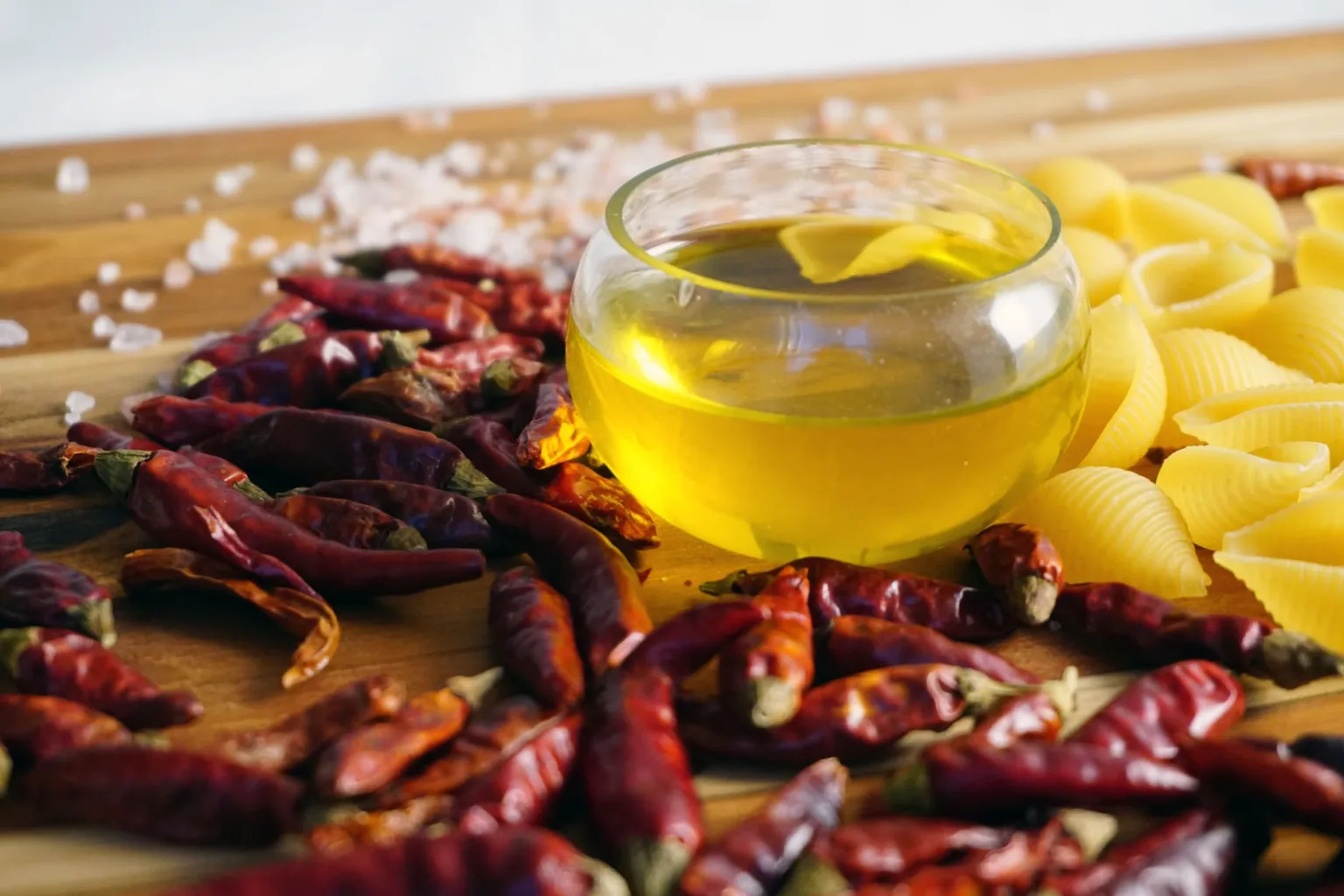
Neutral oil for chili is a mild-tasting edible oil used as a base for cooking with chili flakes. “Neutral” describes its intended flavor and role, not one specific oil: examples may include sunflower or rapeseed oil. Oil can help cook ingredients and give a dish a smoother, richer feel, while carrying chili flavor through the preparation. Since this generic name does not identify a particular seed or composition, check the product label to find out which oil you have.
When to use it
Use it when you want the chili to stand out without a strong oil flavor taking over. It can be a base for combining chili with a sauce or dressing, or for adding heat to pizza, salads, or pasta. Choose an oil that suits the intended use and follow its label directions; “neutral” does not mean that all oils are identical or interchangeable for every cooking technique.
How to use it
Choose a mild-tasting oil and check its label to identify the source. Combine it with chili flakes as directed by your preparation, and warm it carefully if the recipe calls for cooking the ingredients. Avoid letting the oil burn or the chili flakes toast excessively, as this can spoil the flavor. You can also stir the oil into a sauce or dressing, or drizzle a little over a finished dish. Adjust the heat gradually and taste before adding more.
Flavour and texture
Neutral oil is chosen for a mild flavor that does not compete too strongly with chili or other ingredients. It adds a smooth, rich feel and can help distribute seasoning through a dish. The precise flavor and texture vary with the oil: the word “neutral” does not guarantee identical products.
How to choose it
Check the label to find out which oil the product contains: “neutral” describes a culinary role, not a plant or seed. Choose a product whose flavor suits your dish and follow its use instructions. If you need to avoid an ingredient because of an allergy, check the ingredient list and allergen information; this generic name does not identify the specific oil.
Storage
Follow the product label and keep the container closed. Because this name can refer to different oils, there is no single storage or shelf-life instruction that applies to every product. If you make a chili mixture, do not assume it keeps like the original oil: use a preparation with reliable storage directions and do not store a mixture without clear guidance.
Substitutions
Sunflower or rapeseed oil can be alternatives when you want a mild, neutral flavor. Choose according to the intended use and the product directions. Oils do not all taste or perform the same way, so check the label rather than assuming an exact equivalence.
Common mistakes
A common mistake is assuming that “neutral oil” identifies a specific composition or that all neutral oils behave alike. Check which oil you have and do not overlook the label, especially when checking allergens. When cooking with chili, avoid burning the oil or over-toasting the flakes.
Safety and allergens
Handle hot oil carefully to avoid splashes and burns. Check the specific oil’s label for ingredients and allergen information; this generic name does not establish its composition.
Culinary uses
- Cooking medium for chili flakes
- Mild-flavored base for a chili condiment or dressing
Recommended techniques
- Warm gently with chili flakes to help carry their flavor into the oil
- Stir into sauces or dressings, or drizzle over a finished dish
Pairs well with
- Chili flakes and sauces
- Salads, pizza and pasta
Frequently asked questions
What does “neutral oil” mean?
It describes an oil with a mild flavor that does not dominate a dish. It is not one specific ingredient, so check the label to identify the oil.
Can I use sunflower oil?
It can be an option when you want a mild, neutral flavor. Check that its stated use suits your preparation.
Does this name tell me whether the oil contains an allergen?
No. The name is generic and does not specify the oil. Read the ingredient list and allergen information on the product.
Ingredient allergens
Allergen listThere are no verified associations for these ingredients yet.
Sources and review
Automatically researched, cross-checked and validated content. Sources consulted:
- Alérgenos alimentarios | EFSA www.efsa.europa.eu/es/safe2eat/food-allergens
- Aceites, el alma de cada plato | Hello Chefs www.hellochefs.es/alta-cocina/v/aceites-alma-cada-plato
- Etiquetado de sustancias que causan alergias e intolerancias alimentarias www.aesan.gob.es/seguridad-alimentaria/informacion-alimentaria/etiquetado-sustancias
- - YouTube www.youtube.com/watch?v=exhgJuJDT10
- ¿Qué aceite uso para cada plato? | El Comidista | Gastronomía | EL PAÍS elpais.com/gastronomia/el-comidista/2020/09/09/articulo/1599665045_603630.html
- Conoce los tipos de aceite para cocinar | Recetas Nestlé www.recetasnestle.com.ve/escuela-sabor/coccion/tipos-aceite-cocinar
- Aceite Picante: ?️ Usos Culinarios y Recetas con pique aceiteralamaria.com/aceite-picante-receta/
- Chile de árbol: guía completa para cocinarlo en Europa lacondesabarcelona.com/chile-de-arbol/
- Allergies - Food Safety - European Commission food.ec.europa.eu/food-safety/campaign-2026/allergies_en
- Food Allergies | FDA www.fda.gov/food/nutrition-food-labeling-and-critical-foods/food-allergies
- Food allergens | Food Safety and Quality | FAO www.fao.org/food-safety/scientific-advice/food-allergens/en
- Food Allergy Labeling Laws: International Guidelines for Residents and Travelers - PMC pmc.ncbi.nlm.nih.gov/articles/PMC10169132/
- Food allergen labelling and information requirements technical guidance - GOV.UK www.gov.uk/government/publications/food-allergen-labelling-and-information-requirements-tech…
- Allergen labelling for consumers | Food Standards Australia New Zealand www.foodstandards.gov.au/consumer/labelling/allergen-labelling
- PLAN DE NEGOCIOS PARA ACEITE DE ACHIOTE | OpenAlex openalex.org/W7225246318