- Category
- Oils and fats
- State
- Liquid
- Usual unit
- tablespoon
What it is
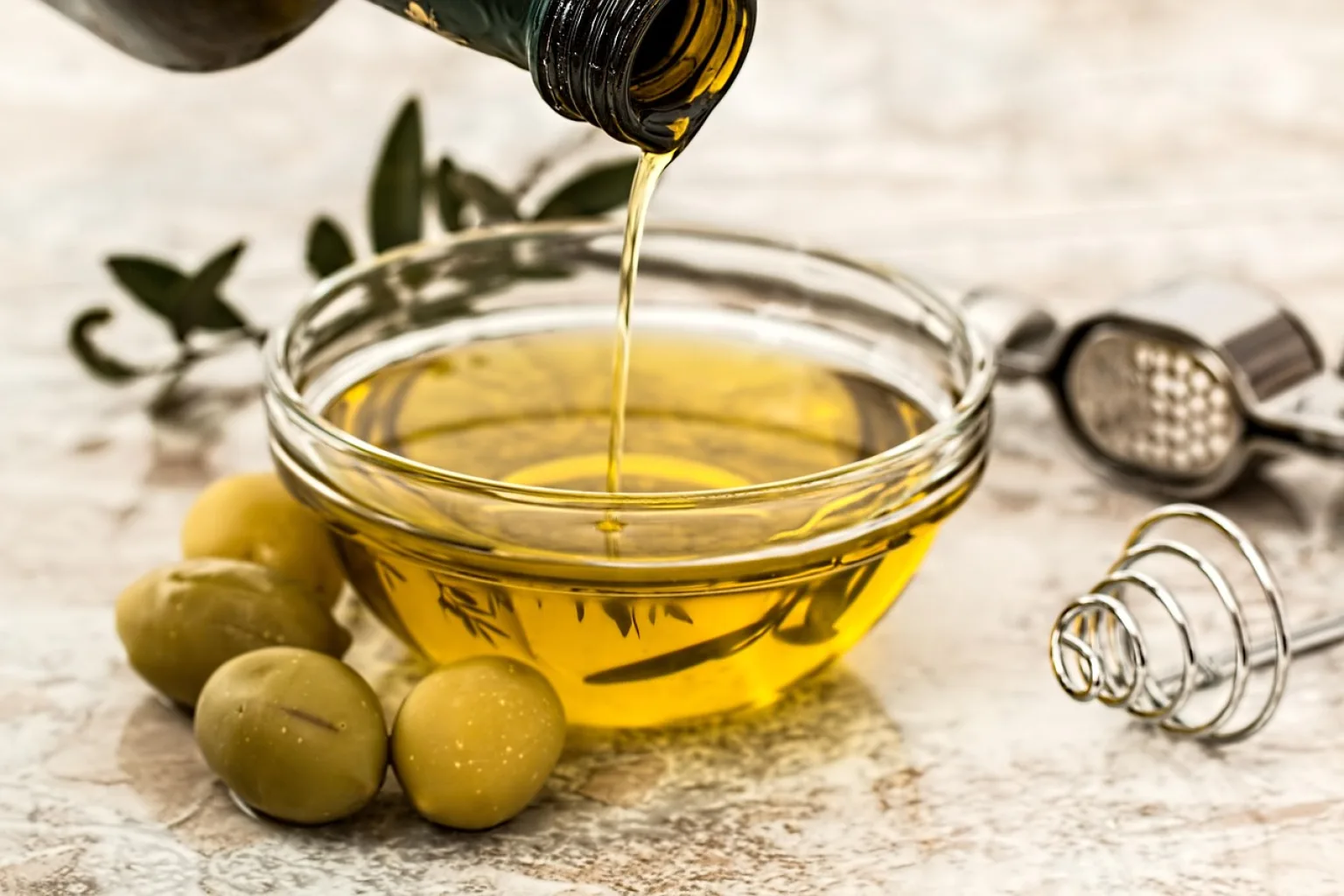
“Oil for the salsa” describes an edible oil’s role in a sauce, but does not identify a particular variety. Cooking oils can come from plants and, less commonly, animals; examples of plant oils include olive, sunflower, soybean, peanut and sesame oil. Many edible oils are liquid at room temperature. Their aromas and flavors vary, so the generic name alone cannot tell you exactly how a sauce will taste or which oil suits a particular preparation. Think of the oil as one ingredient in the mixture: it can complement other flavors and form a base for dressings or sauces. Check the product name and ingredient list on the label to identify the oil you are using.
When to use it
Use oil when a recipe includes it as part of a sauce or dressing, and choose the type with the other ingredients and the flavor you want to preserve in mind. It can be mixed with vinegar, lemon, herbs or spices for a dressing, or incorporated into sauces with aromatic ingredients. If the preparation already has delicate or pronounced flavors, remember that some oils taste strong and can dominate if used too freely. There is no single oil specified here for every sauce: the recipe and the oil’s flavor profile both matter. When a recipe simply says “oil,” choose an edible oil and check the label to identify its variety.
How to use it
Read the recipe and product label to confirm which oil you have, since “oil for salsa” does not specify a variety. For a dressing, combine the oil with the other ingredients—such as vinegar or lemon, herbs and spices—and whisk until integrated. For a sauce that is blended, add the oil with the other ingredients or pour it in gradually while mixing, following the texture the recipe calls for. In an aromatic sauce, avoid letting a strongly flavored oil mask the other ingredients: start with a moderate amount and adjust to taste. Quantities and method depend on the preparation; there is no universal ratio for every sauce.
Flavour and texture
Flavor and aroma depend on the particular oil: the generic description does not predict them. Some oils have a more pronounced character than others and can dominate if used too generously. Edible oil is commonly liquid at room temperature and gives the mixture a fluid texture; the final texture also depends on the other ingredients and how they are mixed.
How to choose it
Check the product label for the type of oil: “oil for salsa” does not identify its source or variety. Choose an edible oil whose flavor complements the other ingredients; a strongly aromatic oil may dominate a delicate preparation. Also check the ingredient list and allergen information, particularly for a blend or a seasoned oil.
Storage
The available evidence does not establish storage conditions or time limits for every type of oil. Follow the instructions on the specific product’s label and keep it in its identified container. Do not assume that a seasoned or blended oil has the same storage characteristics as another oil; consult the product’s own directions.
Substitutions
In a recipe that calls for oil without specifying a variety, another edible oil may be an option, but it will change the flavor and possibly the result. Olive and sunflower oils are examples of distinct oils; they are not guaranteed to be interchangeable in every sauce. Choose according to the desired flavor and the recipe.
Common mistakes
Using a strongly flavored oil without considering the other ingredients can make it dominate the sauce. Another mistake is assuming that the word “oil” identifies a particular variety or that all oils give the same aroma and result. Read the label and adjust the amount to the preparation.
Safety and allergens
If you have a food allergy, check the label and allergen information for the specific product; the generic word “oil” does not identify all its ingredients. The composition of a blended or seasoned oil cannot be determined without checking its packaging.
Culinary uses
- Base grasa para salsas y aderezos
- Aporta sabor y ayuda a integrar ingredientes al mezclar
Recommended techniques
- Mezclar o batir con los ingredientes del aderezo
- Incorporar poco a poco al triturar una salsa
Pairs well with
- Vinagre, limón, hierbas y especias en aderezos
- Albahaca, ajo, frutos secos y queso en salsas tipo pesto
Frequently asked questions
Which oil should I use for a sauce?
It depends on the recipe and the flavor you want. Since no variety is specified here, check the recipe and product label before choosing.
Can I substitute one oil for another?
You can consider another edible oil, but the sauce’s flavor may change. There is no universal substitution for every preparation.
How do I mix oil into a dressing?
Combine it with the dressing ingredients, such as vinegar or lemon and herbs, and whisk until integrated. Follow the recipe’s quantities.
Ingredient allergens
Allergen listThere are no verified associations for these ingredients yet.
Sources and review
Automatically researched, cross-checked and validated content. Sources consulted:
- Alérgenos alimentarios | EFSA www.efsa.europa.eu/es/safe2eat/food-allergens
- Etiquetado de sustancias que causan alergias e intolerancias alimentarias www.aesan.gob.es/seguridad-alimentaria/informacion-alimentaria/etiquetado-sustancias
- Qué es eso llamado epistemología, para qué sirve, por qué es inexcusable para la universidad y para la paz | Reencuentro. Análisis de problemas universitarios doi.org/10.24275/uamxoc-dcsh/reencuentro/202386-14
- - YouTube www.youtube.com/watch?v=DBmH1PUOadY
- Aceite de cocina - Wikipedia, la enciclopedia libre es.wikipedia.org/wiki/Aceite_de_cocina
- Cómo utilizar los aceites en la cocina para mejorar el sabor de tus platos - Aceites y Vinos Lara aceitesyvinoslara.com/como-utilizar-los-aceites-en-la-cocina-para-mejorar-el-sabor-de-tus-pl…
- Laoganma o Lao Gan Ma, el aceite de chile más sabroso que se hace en China (posiblemente) | Gastronomía & Cía www.gastronomiaycia.com/laoganma-o-lao-gan-ma-el-aceite-de-chile-mas-sabroso-que-se-hace-en-…
- Food Allergies | FDA www.fda.gov/food/nutrition-food-labeling-and-critical-foods/food-allergies
- Food allergen labelling and information requirements technical guidance - GOV.UK www.gov.uk/government/publications/food-allergen-labelling-and-information-requirements-tech…
- Food Safety - Food Safety - European Commission food.ec.europa.eu/index_en
- Declaration of allergens on food labels: overview of Latin America - PMC pmc.ncbi.nlm.nih.gov/articles/PMC11205258/
- TOP 7 mejores salsas del mundo con aceites vegetales - ADEOLIVA adeoliva.com/las-mejores-salsas-del-mundo-con-aceites-vegetales/
- Aceite y gastronomía | Denominación de Origen DOP Aceite de la Rioja - Aceite de Oliva Virgen Extra www.aceitedelarioja.com/es/aceite-y-gastronomia
- Salsa Pesto: Receta original, ingredientes y preparación lafamigliarestaurantes.com/blog/salsa-pesto-receta-original-italiana/