- Category
- Vegetables
- State
- Preserved
- Usual unit
- g
What it is
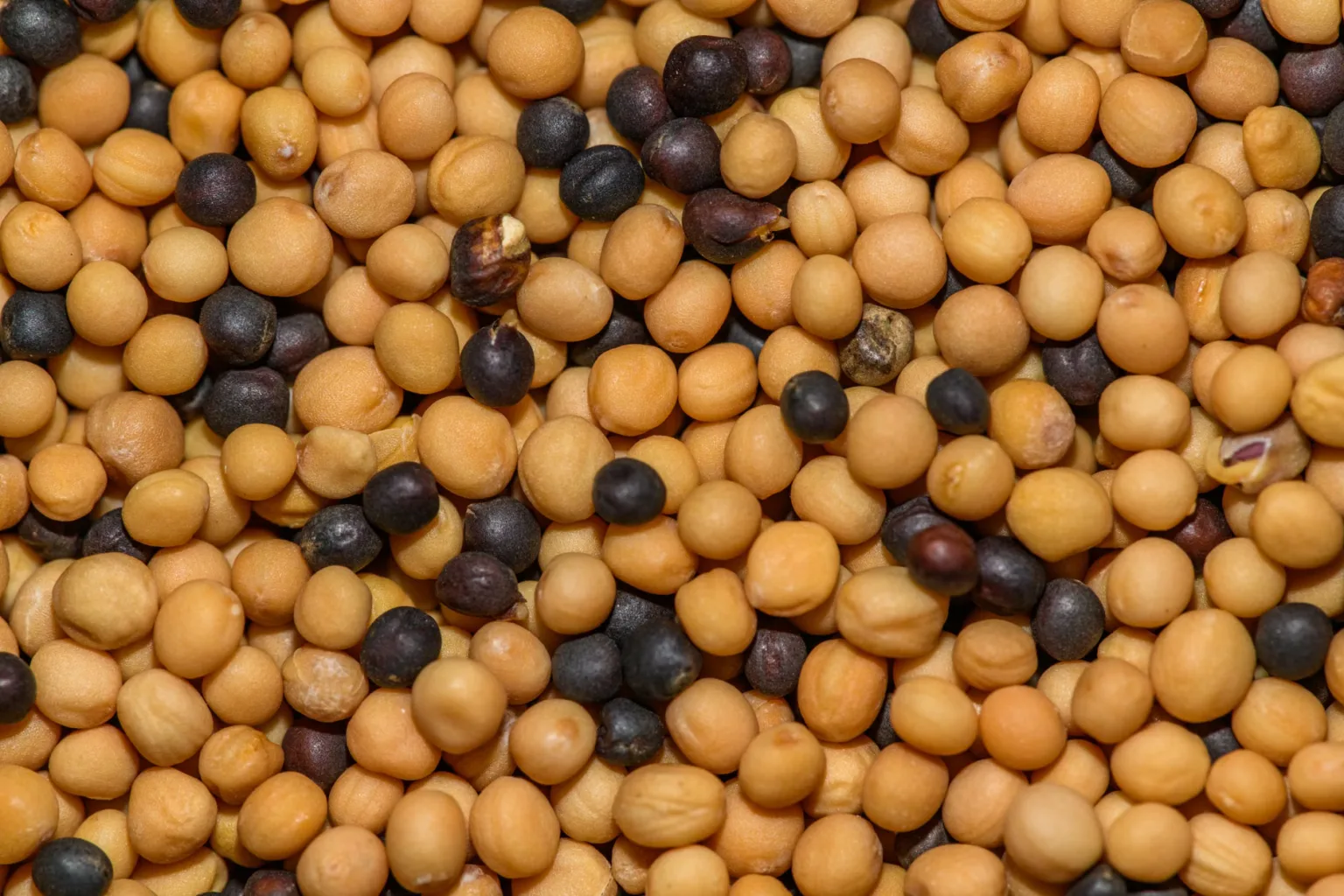
Pickled mustard greens are a preserved leafy vegetable, as the ingredient name indicates. Mustard belongs to the Brassicaceae family, and its leaves are used raw or cooked in different culinary preparations. Mustard leaves are also used in curries. The available information does not establish one recipe for the pickled version or specify which liquid, seasonings or process each commercial product uses. Check the label rather than assuming a uniform formulation. Pickled leaves should not automatically be confused with mustard seeds or prepared mustard sauce, which are different products.
When to use it
Consider them when you want to add a preserved leafy vegetable to a dish or explore a curry-style preparation with mustard leaves. Mustard leaves are used in curries and in other raw or cooked preparations, but this does not establish a specific recipe for the pickled version. Ingredients and seasoning may differ between products, so taste yours before deciding how much to add, then adjust the rest of the dish to suit. Do not assume they are interchangeable with fresh leaves: a preserve and fresh greens may not provide the same texture or seasoning.
How to use it
First read the label to identify the ingredients and product instructions. If you choose to add the greens to a curry or another cooked vegetable dish, start with a small amount, taste, and adjust the rest of the seasoning to the result. This is a cautious approach, not a universal measurement: the available information does not establish a recipe or intensity for different commercial versions. Mustard leaves are also used raw or cooked in other culinary contexts, but that does not mean every preserve should be prepared in the same way. For a particular texture or flavor, consult the product description rather than assuming the preserve is equivalent to fresh leaves or mustard sauce.
Flavour and texture
The available information does not establish a uniform flavor, acidity, saltiness or texture for pickled mustard greens. These qualities may depend on the ingredients and process used for each product. Taste a small amount before adding it to a dish, and do not measure it as though every brand were the same. Fresh mustard greens and prepared mustard sauce are different products, so they are not reliable descriptions of this preserve's texture.
How to choose it
Choose a package whose label clearly identifies the product and its ingredients. Check the storage directions before and after opening, as well as any product-specific instructions from the manufacturer. Do not assume a standard recipe or identical formulations across brands: the available information does not establish which liquid or seasonings each preserve contains. If you need to avoid an ingredient because of an allergy, check the full ingredient list and allergen information for the specific product.
Storage
Follow the storage directions printed on the package, both before and after opening. The available information does not establish one temperature or time limit for every form of pickled mustard greens. Keep the product in the specified packaging and follow the manufacturer's instructions. If clear directions are not available, do not infer a storage period from other pickles; check the label or contact the manufacturer.
Substitutions
If the important feature is mustard-leaf flavor rather than the preserved character, cooked fresh mustard leaves can be a culinary alternative, since the leaves are also used raw or cooked. They can be added to a curry, but they are not an exact replacement and do not necessarily provide the qualities of a preserve. No equivalent quantity is established here, so adjust the dish to the ingredient you use.
Common mistakes
Do not assume every preserve has the same flavor, texture or formulation. Do not confuse pickled leaves with mustard seeds or prepared mustard sauce, or use them as though they were the same ingredient. Avoid adding a large amount before tasting the product and checking its label. Do not use storage directions for another preserve to set a time or temperature that this product's package does not provide.
Safety and allergens
Check the label for the specific product, especially if you have a food allergy, and follow its storage directions. In the European Union, mustard is among the allergens that must be declared when used as an ingredient. Use the product label to check its ingredients and allergen information; do not assume different brands have the same formulation.
Culinary uses
- Preserved leafy vegetable
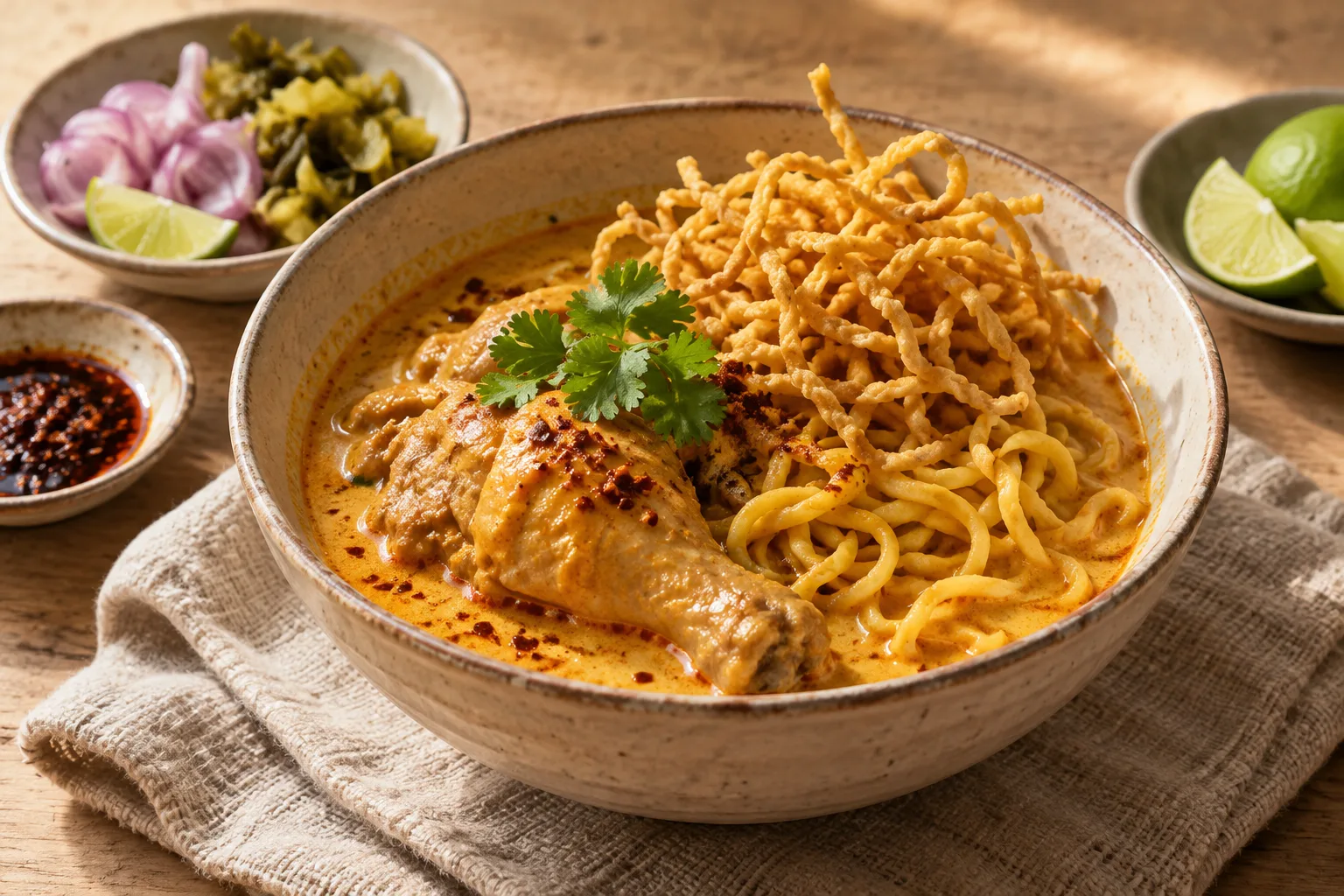
- Leafy vegetable for curry-style dishes
Recommended techniques
- Add a small amount to a cooked vegetable dish, then taste and adjust the seasoning.
- Use as a leafy-vegetable ingredient in a curry-style dish, checking the product label first.
Pairs well with
- Curry-style dishes
- Cooked vegetable dishes
Frequently asked questions
Are pickled mustard greens the same as mustard sauce?
No. The name refers to preserved mustard leaves; prepared mustard sauce is a different product, usually made from seeds and other ingredients.
Can I use them in a curry?
Mustard leaves are used in curries, but no single recipe for this preserve is established here. Read the label, start with a small amount and taste.
How should I store them after opening?
Follow the package directions. No universal time limit or temperature is established for every brand and product form.
Ingredient allergens
Allergen listThere are no verified associations for these ingredients yet.
Estimated nutrition
- Fat
- 0.42 g
- Saturates
- 0.01 g
- Carbohydrate
- 4.67 g
- Sugars
- 1.32 g
- Fibre
- 3.2 g
- Protein
- 2.86 g
- Salt
- 0.05 g
Sources and review
Automatically researched, cross-checked and validated content. Sources consulted:
- Alérgenos alimentarios | EFSA www.efsa.europa.eu/es/safe2eat/food-allergens
- Usos culinarios apropiados de las variedades de plátano verde barraganete, dominico y maqueño, en la gastronomía ecuatoriana. | Revista de Gastronomía y Cocina doi.org/10.70221/rgc.v4i2.97
- La guía definitiva de las mostazas: variedades, usos en cocina y cuáles tienen más azúcar www.directoalpaladar.com/cultura-gastronomica/guia-definitiva-mostazas-variedades-usos-cocin…
- Agencia Española de Seguridad Alimentaria y Nutrición www.aesan.gob.es/
- Mostaza: origen, tipos, propiedades y usos en la cocina bonviveur.com/es/noticias/mostaza
- Todo sobre la mostaza | Cook for Your Life www.cookforyourlife.org/es/nuestro-blog-de-cocina/todo-sobre-la-mostaza/
- - YouTube www.youtube.com/watch?v=s1AjT8zR8Y4
- ¿Qué hago con esta mostaza? | El Comidista | Gastronomía | EL PAÍS elpais.com/gastronomia/el-comidista/2018/09/06/articulo/1536248066_806993.html
- Todo lo que tienes que saber sobre la mostaza: qué es, tipos y recetas www.hola.com/cocina/noticias/20200609169649/que-es-mostaza-tipos-recetas/
- Allergies - Food Safety - European Commission food.ec.europa.eu/food-safety/campaign-2026/allergies_en
- Food Allergies | FDA www.fda.gov/food/nutrition-food-labeling-and-critical-foods/food-allergies
- Allergen labelling for food businesses | Food Standards Australia New Zealand www.foodstandards.gov.au/business/labelling/allergen-labelling
- Food Allergy Labeling Laws: International Guidelines for Residents and Travelers - PMC pmc.ncbi.nlm.nih.gov/articles/PMC10169132/
- Food allergen labelling and information requirements technical guidance - GOV.UK www.gov.uk/government/publications/food-allergen-labelling-and-information-requirements-tech…
- Mustard - A priority food allergen - Canada.ca www.canada.ca/en/health-canada/services/food-nutrition/reports-publications/food-safety/must…
- La Mostaza: Descubre su origen, el uso y las variedades elportaldelchacinado.com/la-mostaza-descubre-su-origen-el-uso-y-las-variedades/