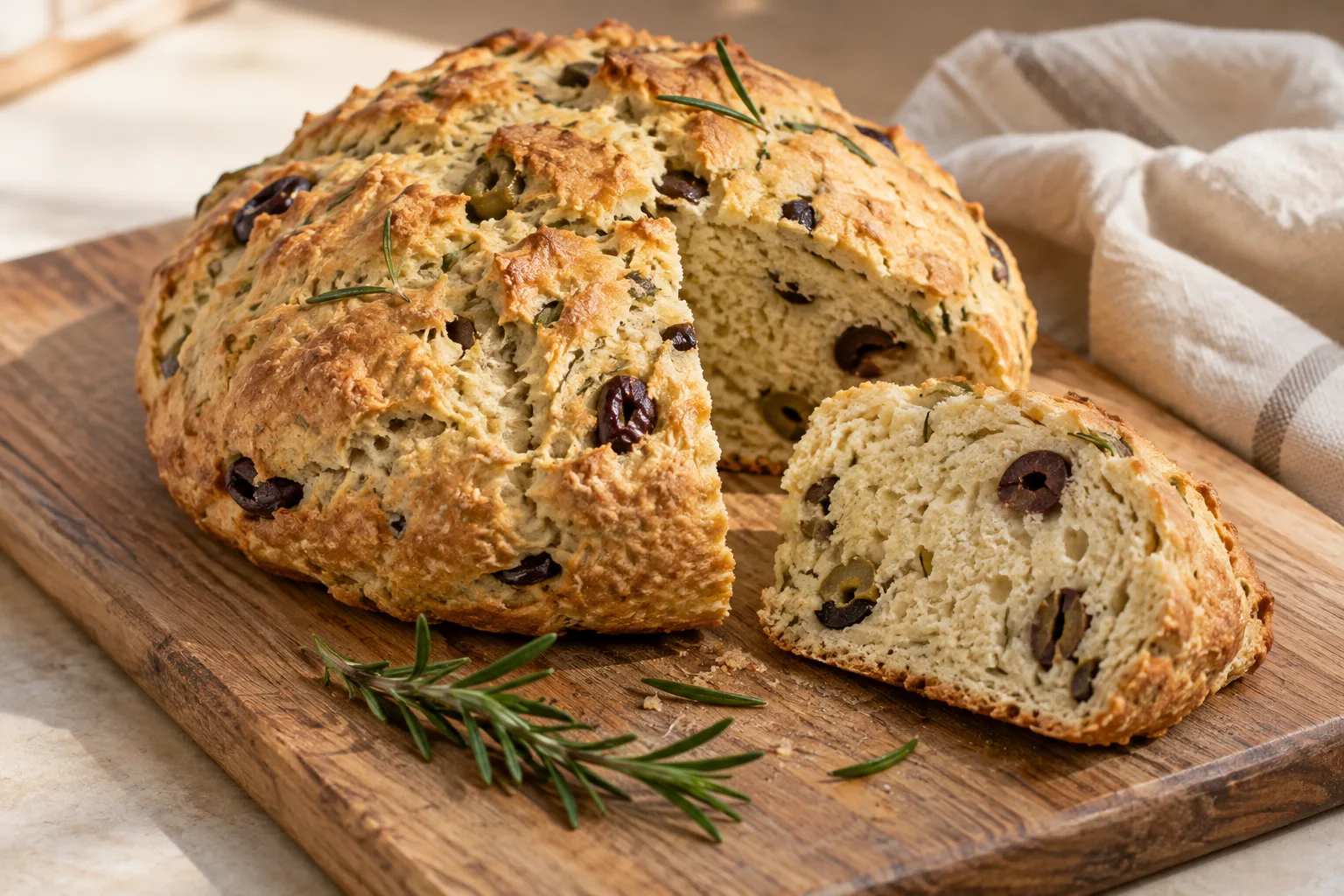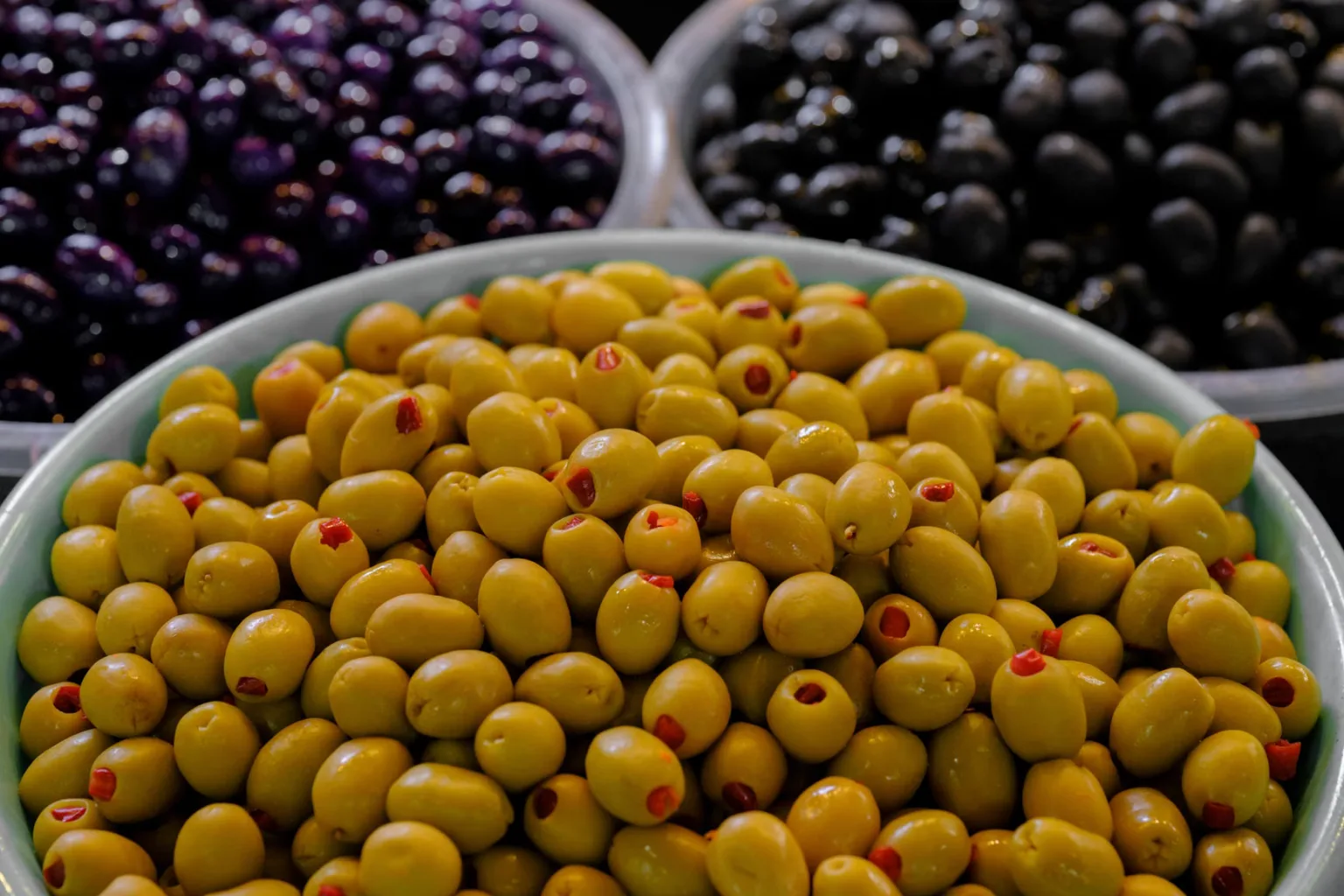
- Category
- Fruit
- State
- Preserved
- Usual unit
- g
What it is
Pitted olives are olives with the stones removed, sold for cooking or serving. The available evidence describes green table olives and notes that they are often prepared in brine or oil, sometimes with herbs or spices. Olives can vary in color, maturity, flavor and texture: untreated green olives are described as firm and bitter, while riper black olives may be sweeter and softer. This profile covers pitted olives without assuming a particular color, filling or seasoning. Check the product label for those details, since they are not uniform across all jars or packages.
When to use it
Use pitted olives when you want to add them to a salad, serve them as a garnish or include them in dishes such as pasta, pizza and stews. They can also be used in an olive spread such as tapenade. Choose a type that suits the result you want: the evidence describes differences in bitterness, sweetness and firmness between green and black olives. Check whether the product is filled or seasoned, since those additions affect its flavor and may influence how it works in a dish.
How to use it
Check the label to see whether the olives are packed in brine or oil and whether they have a filling or seasoning. Drain them if the packing liquid does not suit the recipe. Serve them whole as a garnish, or chop them before adding them to salads, pasta, pizza or stews. They can also be blended into an olive spread; the tapenade described in the evidence may use green or black olives with ingredients such as capers, garlic and olive oil. Taste the dish before adjusting its seasoning, since olive variety and preparation can change the result.
Flavour and texture
Flavor and firmness vary with color, maturity and preparation. The evidence describes untreated green olives as hard and very bitter, and notes that processing helps remove bitter compounds. Riper black olives are described as less bitter, sweeter and softer in texture. Fillings, oil, brine and seasonings can also influence the particular product you buy, so do not assume every pitted olive tastes or feels the same.
How to choose it
Check the label to confirm that the olives are pitted and see whether they are filled, seasoned or packed in brine or oil. Color alone does not guarantee a uniform flavor or treatment: the evidence describes differences between green and black olives and also mentions olives colored during processing. Choose a product whose format and flavor suit the dish you have in mind.
Storage
Follow the storage directions on the package, since the available evidence does not establish one method or storage duration for every kind of pitted olive. If the olives are packed in liquid, use the label’s directions rather than assuming that brine-packed and oil-packed products should be stored identically. After opening, refer to the manufacturer’s instructions.
Substitutions
For tapenade, the evidence supports using either green or black olives; switching between them changes the flavor and may change the spread’s texture. In other dishes, try the alternative color only if the recipe can accommodate that change. The supplied evidence does not establish other ingredients as equivalent substitutes for pitted olives.
Common mistakes
Do not assume that all pitted olives are green, black, equally firm or identical in flavor. A filling is not a defining feature of every olive. Check the label before adding them to a dish: the packing liquid, filling and seasonings can affect how the olives fit the recipe.
Safety and allergens
Follow the package directions and do not eat the product if its packaging or contents show obvious spoilage or damage. The supplied evidence does not provide a specific official safety warning for pitted olives.
Culinary uses
- guarnición
- ingrediente para ensaladas y platos mediterráneos
- base para pasta de aceitunas
Recommended techniques
- marinar en salmuera o aceite
- picar e incorporar a ensaladas, pastas, pizzas o guisos
- triturar en una pasta de aceitunas
Pairs well with
- tomate, pepino, pimiento y cebolla
- ajo, alcaparras y aceite de oliva
- perejil
Frequently asked questions
What dishes can I use pitted olives in?
Serve them as a garnish or add them to salads, pasta, pizza and stews. They can also be blended into an olive spread.
Can I use green or black olives in tapenade?
Yes. The evidence describes tapenade made with either green or black olives. The choice changes the flavor and may affect the spread’s texture.
How should I store pitted olives after opening?
Follow the manufacturer’s directions. The available evidence does not establish one storage method or duration for every product.
Estimated nutrition
- Fat
- 20 g
- Saturates
- 6.67 g
- Carbohydrate
- 0 g
- Sugars
- 0 g
- Fibre
- 0 g
- Protein
- 0 g
- Salt
- 0.55 g
Sources and review
Automatically researched, cross-checked and validated content. Sources consulted:
- Español Inglés - Berkeley hia.berkeley.edu
- Maduración de la Fruta y Manejo del Etileno ucanr.edu
- JOYA DE CERéN colorado.edu
- opinión científica aesan.gob.es
- The Texas Folklore Society Fire Burns On - UNT Digital Library digital.library.unt.edu
- Volume 18 - CURRENT RESEARCH IN THE PLEISTOCENE liberalarts.tamu.edu
- Aceitunas, verdes, sin hueso, crudas (¿orgánicas?) | Fundación G+E diet-health.info