- Category
- Meat
- State
- Fresh
- Usual unit
- g
What it is
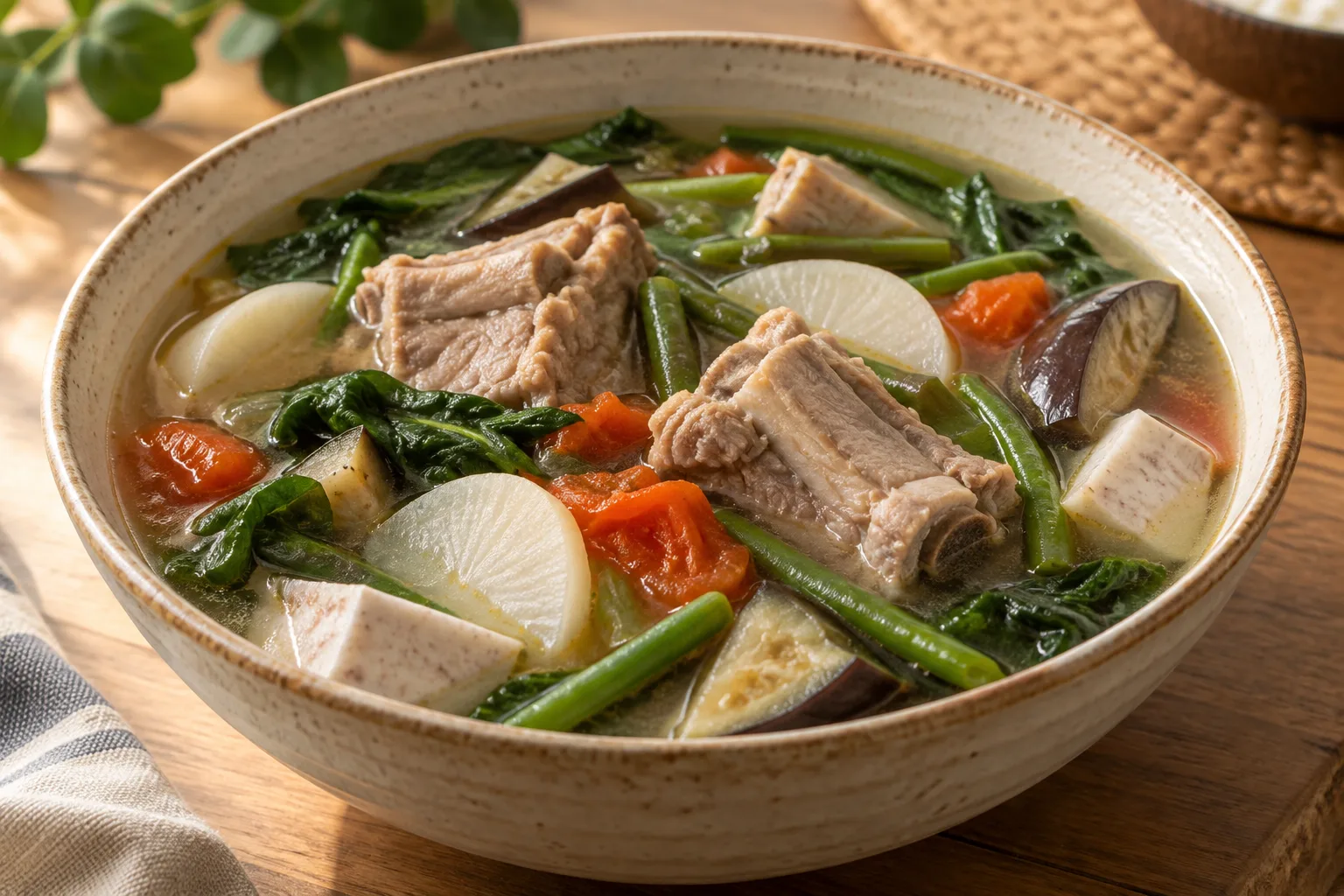
Pork ribs are a cut of pork consisting of bones with meat attached. They may be sold as a rack or separated into individual ribs, and the size and amount of meat vary with the cut. In the kitchen, they can be roasted, grilled or barbecued, fried, or cooked in a stew. Seasonings and sauces can be adapted to the dish, and potatoes are one possible accompaniment. The bones and shape distinguish ribs from boneless cuts such as pork loin or tenderloin. Those cuts can take the place of ribs in some recipes, but they will not give the dish the same bone-in structure or texture.
When to use it
Choose ribs when you want a bone-in cut to be the centrepiece of a roast, barbecue or shared meal. They can also be used in stews, braises and rice dishes that call for pieces of pork. Separated ribs are convenient for serving individual portions or cooking with sauce; a whole rack suits a presentation where the cut remains intact. Pair them with potatoes, aromatic seasonings or a sauce to suit the style of the dish.
How to use it
First decide whether to cook the rack whole or separate it into individual ribs. Season the meat with salt and chosen flavourings; options include herbs such as oregano or combinations featuring paprika, cumin, fennel or pepper. For an oven preparation, place the ribs in a suitable dish and cook them until done, following a recipe suited to the size and cut. Ribs can also be grilled or barbecued, braised, stewed or fried. If using a sauce or glaze, add it during cooking or near the end as directed by the recipe. Serve with potatoes, vegetables or other suitable accompaniments. Follow the product label and local food-safety guidance.
Flavour and texture
The flavour of pork ribs depends on the cut, seasoning and cooking method. The meat next to the bone takes well to herbs, spices and sauces, from barbecue-style flavours to sweet-and-sour combinations. Roasting can brown the outside; frying can create a crisp exterior, while braising cooks the ribs in liquid and sauce. Rib size and the proportion of meat to bone vary, so texture is not identical from one rack to another.
How to choose it
Choose fresh ribs that look suitable for your intended recipe, with meat distributed reasonably evenly around the bones. Check whether you are buying a whole rack or separated ribs, and consider the cut and the amount of meat you need. Keep the product in its packaging until preparation and check the label for its date and storage instructions.
Storage
Store pork ribs according to the package directions and the temperature guidance for the product. If you will not use them soon, check the label for whether refrigeration or freezing is recommended and for any stated time limits. Keep raw meat separate from ready-to-eat food, and clean any utensils and surfaces that have been in contact with it.
Substitutions
Pork loin or tenderloin can replace ribs in some sweet-and-sour preparations. They are not exact substitutes: both are boneless cuts, so the dish will have a different shape and texture. Adapt the recipe to the cut you choose rather than assuming it needs the same treatment as ribs.
Common mistakes
Do not assume every rack has the same size, meat content or cooking time. A whole rack and separated ribs may not cook in exactly the same way. Nor should a boneless cut be expected to preserve the structure of ribs. Choose a recipe suited to the cut and follow the package's storage instructions.
Safety and allergens
Follow the package storage directions and local food-safety guidance. Keep raw meat from contacting ready-to-eat food, and clean utensils and surfaces after use.
Culinary uses
- Main ingredient for roasted or grilled dishes
- Meaty addition to braises, stews and rice dishes
Recommended techniques
- Roasting
- Grilling or barbecue
- Braising or stewing
- Frying
Pairs well with
- Potatoes
- Paprika, oregano, fennel or cumin
- Barbecue or sweet-and-sour sauces
- Pineapple and peppers
Frequently asked questions
Are pork ribs sold whole or separated?
They may be sold as a whole rack or separated into individual ribs. Choose the format that suits the recipe and serving style.
How can I cook pork ribs?
They can be roasted, grilled or barbecued, fried, or added to stews and braises. The cut and recipe help determine the best method.
Can pork loin replace pork ribs?
Loin can replace ribs in some preparations, including certain sweet-and-sour dishes, but it is boneless and will give the dish a different shape and texture.
Ingredient allergens
Allergen listThere are no verified associations for these ingredients yet.
Estimated nutrition
- Fat
- 9.29 g
- Saturates
- 3.57 g
- Carbohydrate
- 17.9 g
- Sugars
- 14.3 g
- Fibre
- 0 g
- Protein
- 12.1 g
- Salt
- 1.77 g
Sources and review
Automatically researched, cross-checked and validated content. Sources consulted:
- ¿Por qué la muerte es origen de miedos y tabúes? doi.org/10.64628/aao.fccyk3qj3
- Food Allergens - International Regulatory Chart | Food Allergy Research & Resource Program | Nebraska farrp.unl.edu/IRChart/
- Evolución del léxico culinario desde 1932 a 1972 | OpenAlex openalex.org/W2291578502
- Allergies - Food Safety - European Commission food.ec.europa.eu/food-safety/campaign-2026/allergies_en
- Food Allergies | FDA www.fda.gov/food/nutrition-food-labeling-and-critical-foods/food-allergies
- Food allergens | Food Safety and Quality | FAO www.fao.org/food-safety/scientific-advice/food-allergens/en
- 34 formas de cocinar costillas de cerdo para chuparse los dedos, literalmente www.directoalpaladar.com/recetas-de-carnes-y-aves/31-formas-de-cocinar-costillas-de-cerdo-pa…
- Food allergen portal | Food Standards Australia New Zealand www.foodstandards.gov.au/consumer/foodallergies/food-allergen-portal
- Food labelling and packaging: Ingredients list - GOV.UK www.gov.uk/food-labelling-and-packaging/ingredients-list
- Guía para el control oficial del etiquetado y composición de ... www.aesan.gob.es/dam/jcr:6246ffc7-74b7-43c6-93a9-ababa0f94a20/Guia_etiquetado_composicion_CA…
- Costillas de cerdo especiadas, ¡os van a flipar! Receta india - Jaleo en la Cocina www.jaleoenlacocina.com/2017/10/costillas-de-cerdo-especiadas.html
- - YouTube www.youtube.com/watch?v=2Sks2Ynb5wQ
- Costillas de cerdo al horno - Denominación de Origen Estepa www.doestepa.com/cocinaconaove/recetas/carnes/costilla-cerdo-horno/
- Costillas de cerdo agridulces – Kwan Homsai www.kwanhomsai.com/costillas-de-cerdo-agridulce/
- Las costillas, desde un delicioso manjar en la prehistoria hasta las nuevas recetas www.origenonline.es/actualidad/las-costillas-desde-un-delicioso-manjar-en-la-prehistoria-has…
- Costilla de cerdo archivos - RAG - Real Academia de Gastronomía realacademiadegastronomia.com/ingrediente-principal/costilla-de-cerdo/
- Las costillas asadas de Don Asado - Comidas Don Asado www.donasado.es/costillas-asadas-don-asado/