- Category
- Meat
- State
- Fresh
- Usual unit
- g
What it is
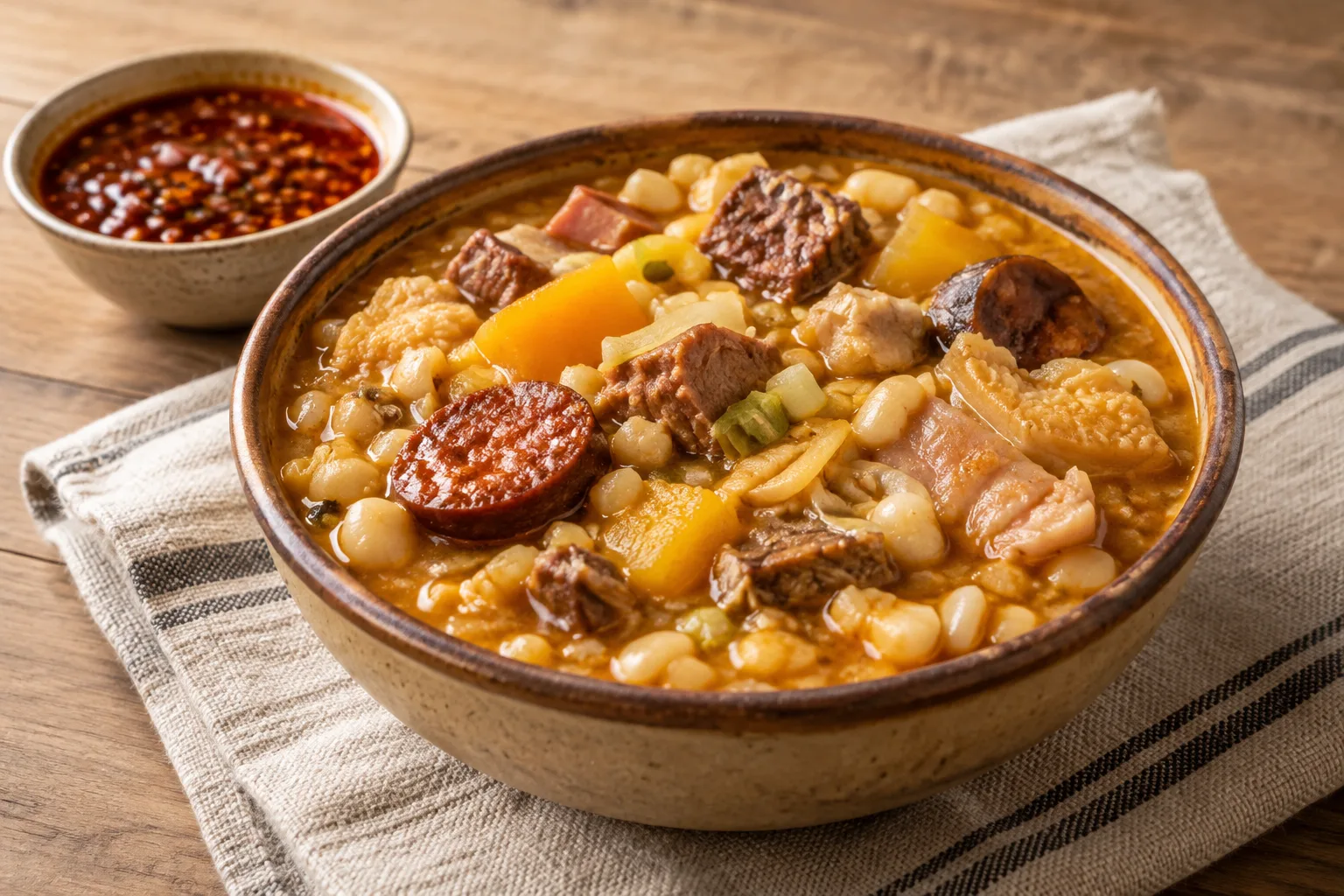
Pork trotters are the feet of a pig, a cut containing bones, skin, tendons and cartilage. In cooking, they are valued for their gelatinous texture and for the consistency they can bring to cooking liquid and sauces. They may be cooked whole or split, and can also be deboned after cooking. They are commonly used in stews and braises, and may be included in legume-based pot meals or broths. They need sufficient cooking to soften their connective tissues; they do not behave like a lean cut and do not have the same texture as boneless meat. Depending on the market, trotters may be sold fresh or preserved, for example in salt.
When to use it
Choose pork trotters when you want a cut for a long-cooked stew, braise or broth with body. They suit recipes where a tender, gelatinous texture is an important part of the result, and pair well with tomato sauces, vegetables and spices. They can also be added to legume-based pot meals or served as a main dish with a side. They are not the most straightforward choice when you want lean, quick-cooking meat or a cut that is easy to eat without bones. If a recipe calls for meat that becomes tender or contributes gelatin, allow for the cooking and cleaning time, as well as any deboning.
How to use it
Before cooking, check that the trotters are clean; carefully remove any remaining hairs or debris. You can ask the butcher to split them to make them easier to handle in a pot. For a simple preparation, cover them with water and simmer until tender. Many stews begin by cooking the trotters and then finishing them in a sauce made with vegetables, tomato, wine or spices. You can also cook them with aromatics and use some of the cooking liquid to give body to a sauce. Once tender, serve them bone-in or debone them for a terrine or easier-to-eat portions. Adjust the cooking time and method to the recipe and the size of the pieces; recipes in the supplied material describe the meat separating easily from the bone as a culinary sign of tenderness.
Flavour and texture
Pork trotters have a characteristic pork flavor and, after prolonged cooking, can become very tender, soft and gelatinous. The skin, tendons and cartilage add consistency to the cooking liquid and help make a sauce feel rich and silky. Because the cut contains bones, eating it whole is less convenient than eating a deboned preparation. The finished flavor also depends on the other ingredients in the dish: vegetables, herbs, spices and sauce can all shape its profile.
How to choose it
Choose trotters that look fresh and have no unpleasant smell; if possible, ask the butcher to clean and split them to suit your recipe. Cleaning may involve removing hairs or residue from the skin, so check the pieces before cooking. Longitudinally split trotters can be easier to handle in some pots and recipes. If you buy a salted or cooked product, check its label and adapt the recipe to that presentation rather than treating it as fresh meat.
Storage
The supplied material does not include specific official storage guidance for fresh pork trotters. Keep the product under the conditions stated on its packaging or by the seller, and avoid leaving raw meat at room temperature for extended periods. For salted, packaged or already-cooked trotters, follow the storage and use instructions on the label.
Substitutions
There is no exact substitute that reproduces the meat, bones and gelatinous texture of pork trotters all at once. Other pork cuts may work in some stews, but the result will have a different texture and may add less body to the broth. Choose a replacement according to the role the trotters play in the recipe: meat for the stew, or a cut with gelatinous tissues to thicken the liquid.
Common mistakes
A common mistake is expecting a tender result after too little cooking: trotters need to cook until their tissues soften. Check that they are clean before putting them in the pot, and remember that the bones can make whole trotters awkward to serve. Do not assume another pork cut will thicken a sauce in the same way; its texture and gelatin contribution may differ.
Safety and allergens
Treat fresh trotters as raw meat and follow the storage and cooking instructions on the package or provided by the seller. Do not eat them raw or insufficiently cooked.
Culinary uses
- Ingrediente principal de guisos y estofados
- Aporta cuerpo gelatinoso a caldos y salsas
Recommended techniques
- Cocción lenta en agua o caldo hasta que quede tierna
- Cocción previa seguida de guisado en salsa
Pairs well with
- Tomate, ajo, cebolla y pimentón en guisos
- Legumbres, patatas o arroz como acompañamiento
Frequently asked questions
Which part of the pig are pork trotters?
They are the pig’s feet. They may be sold whole or split and contain bones, skin, tendons and cartilage.
Why do pork trotters become gelatinous when cooked?
Prolonged cooking softens the skin, tendons and cartilage, which can give the dish a gelatinous texture and add body to the cooking liquid.
Can pork trotters be deboned?
Yes. They can be deboned after cooking, making them easier to serve in preparations such as terrines or compact portions.
Ingredient allergens
Allergen listThere are no verified associations for these ingredients yet.
Sources and review
Automatically researched, cross-checked and validated content. Sources consulted:
- ¿Por qué la muerte es origen de miedos y tabúes? doi.org/10.64628/aao.fccyk3qj3
- Sopa - Wikipedia, la enciclopedia libre es.wikipedia.org/wiki/Sopa
- Las manitas de cerdo, el plato que condujo a la guillotina a Luis XVI | El Diario Montañés www.eldiariomontanes.es/cantabria-mesa/plato-condujo-guillotina-20221006145245-ntvo.html
- Evolución del léxico culinario desde 1932 a 1972 | OpenAlex openalex.org/W2291578502
- Food Allergies | FDA www.fda.gov/food/nutrition-food-labeling-and-critical-foods/food-allergies
- Food allergens | EFSA www.efsa.europa.eu/en/safe2eat/food-allergens
- Guía para el control oficial del etiquetado y composición de ... www.aesan.gob.es/dam/jcr:6246ffc7-74b7-43c6-93a9-ababa0f94a20/Guia_etiquetado_composicion_CA…
- - YouTube www.youtube.com/watch?v=cJ9s0tA5KGQ
- Manitas de cerdo: así se hace la receta tradicional de la abuela – Bigcrafters bigcrafters.com/blogs/posts/manitas-de-cerdo-asi-se-hace-la-receta-tradicional-de-la-abuela?…
- Manitas de cerdo en salsa - Gallina Blanca www.gallinablanca.es/receta/manitas-de-cerdo-en-salsa/
- Manitas de cerdo en salsa - Receta casera La Española www.laespanolaaceites.com/recetas/manitas-de-cerdo-salsa/
- ▷ Manitas de cerdo: ingrediente indispensable del cocido madrileño www.gastronomicspain.com/blog/es/manitas-de-cerdo/?srsltid=AYCX9vKzD3qW-nNix-kjAKlArCtNC6rPm…
- Manitas de cerdo - - Receta - Canal Cocina canalcocina.es/receta/manitas-de-cerdo-1
- Manitas de cerdo en salsa tradicional: melosas y con gelatina perfecta | TerraCarnicerías Recetas Master Chef Terra Carnicerías blog terracarnicerias.es/blogs/sabores-de-terra/manitas-de-cerdo-en-salsa-tradicional-melosas-y-c…
- Terrina de manitas de cerdo (sous vide) recipes.anovaculinary.com/recipe/terrina-de-manitas-de-cerdo-sous-vide
- Manitas de cerdo guisadas - Carnicerías Juan Ortíz - Carnicería en Móstoles - Online www.carniceriasjuanortiz.com/manitas-de-cerdo-guisadas/