- Category
- Meat
- State
- Fresh
- Usual unit
- pieza
What it is
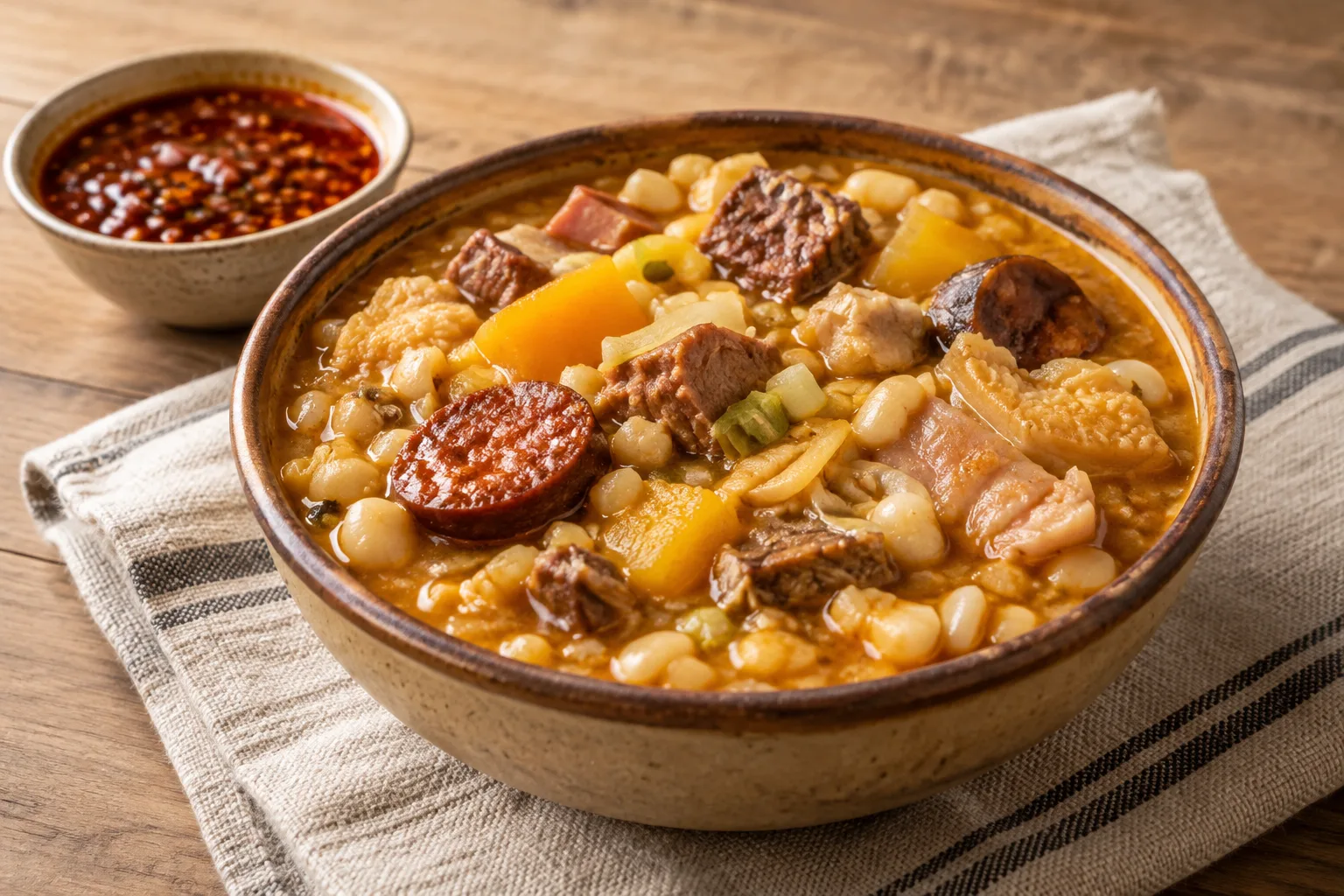
Red chorizo is a name used for chorizo products with a red or reddish appearance. Chorizo is generally a seasoned sausage made with minced meat, often pork, fat, paprika, garlic, salt and other seasonings, although recipes and meats vary. Paprika is associated with the colour and spiced profile of many versions. The name alone does not specify one production method: some products are fresh or tender and need cooking, while others are cured and served sliced. Identify the particular product before deciding how to prepare or serve it.
When to use it
Use it when you want to add a spiced flavour and reddish hue to hot dishes such as stews, soups, rice or meals with legumes. It can also be cooked on a griddle or grill when the particular style is intended for cooking. For a sandwich or platter served without further cooking, choose a cured product whose label says it is ready to eat; do not assume that fresh or tender chorizo can be served this way. Heat, smoke and curing vary from one product to another.
How to use it
Start by checking the label to determine whether the chorizo is fresh or tender and needs cooking, or cured and ready to serve. For a hot dish, slice it and cook it in a pan, or add it to a stew, soup, rice dish or preparation with legumes. It can also be cooked on a griddle or grill when that style is suitable. Adjust the amount to the product’s seasoning and heat, which can vary. If serving it without cooking, use only a cured variety whose label says it is ready to eat. Follow the package instructions for preparation and storage.
Flavour and texture
The flavour is often spiced, with paprika and garlic notes in many versions; heat and smokiness vary between products. Fresh or tender chorizo is usually softer and juicier before cooking, while cured chorizo is firmer and drier. The meat grind and fat also affect the mouthfeel. Check the specific product: red colour alone does not reveal its heat level or how it was made.
How to choose it
Choose the style for the intended use: fresh or tender chorizo for cooking, and cured chorizo for slicing if it is labelled ready to eat. Check the label for ingredients, heat level and preparation and storage instructions. The term red chorizo can describe different products, so do not rely on the colour or name alone. If you have a food allergy, check the specific product’s ingredient list and allergen information.
Storage
Storage needs depend on whether the chorizo is fresh or cured and on its packaging. Follow the label and any instructions given after opening; do not infer storage conditions from the name or appearance. Keep it in suitable packaging or a suitable container and observe the stated date. If the label does not explain how to store it, ask the seller or manufacturer before storing or eating it.
Substitutions
For a hot dish, tender or fresh chorizo can stand in for another chorizo intended for cooking, but its heat, fat and flavour may differ. Cured chorizo may work in some dishes, although its texture is firmer and it is not identical to fresh chorizo. For uncooked slices, use only a cured style labelled ready to eat. There is no universal substitute or fixed equivalent amount for every style.
Common mistakes
Do not treat every chorizo as the same: some is fresh and needs cooking, while other styles are cured for slicing. Do not assume that red colour signals a particular heat level, smokiness or degree of curing. Check the label rather than choosing a use from the name alone, and follow its preparation and storage instructions.
Safety and allergens
Products vary. Check the label to see whether the chorizo needs cooking and follow its handling and storage instructions. Do not serve fresh or tender chorizo as though it were cured and ready to eat. For packaged products, check the ingredient list and allergen information.
Culinary uses
- Aportar sabor especiado y color a guisos, sopas y platos de legumbres.
- Servirse cocinado como ingrediente principal o en preparaciones a la parrilla.
Recommended techniques
- Cocinar en sartén o a la plancha; la forma fresca o tierna debe cocinarse antes de comer.
- Añadir a guisos, sopas, arroces o legumbres.
- Asar a la parrilla o a la barbacoa.
Pairs well with
- Legumbres y potajes.
- Pan, especialmente en bocadillos.
- Arroz y guisos.
Frequently asked questions
Is red chorizo always fresh?
No. The name can refer to different products. Some chorizo is fresh or tender and needs cooking; cured versions may be served sliced. Check the label.
How can I cook red chorizo?
Depending on the style, it can be cooked in a pan, on a griddle or grill, or added to stews, soups, rice and dishes with legumes. Follow the package directions.
Is red chorizo always spicy?
No. Heat varies by product. Check the description and ingredients on the label instead of judging by colour.
Ingredient allergens
Allergen listThere are no verified associations for these ingredients yet.
Sources and review
Automatically researched, cross-checked and validated content. Sources consulted:
- Alérgenos alimentarios | EFSA www.efsa.europa.eu/es/safe2eat/food-allergens
- Client Challenge doi.org/10.2307/jj.27939689.16
- Etiquetado de sustancias que causan alergias e intolerancias alimentarias www.aesan.gob.es/seguridad-alimentaria/informacion-alimentaria/etiquetado-sustancias
- Chorizo - Wikipedia, la enciclopedia libre es.wikipedia.org/wiki/Chorizo
- Chorizo - Conozca las diferentes variedades - BR Spanish Gourmet www.brspanishgourmet.com/es/blog/289-chorizo-conozca-las-diferentes-variedades.html
- El chorizo: historia, tipos y beneficios de un icono de la gastronomía española - Cárnicas Anjos carnicasanjos.com/historia-del-chorizo-tipos-beneficios/
- EU Pesticides Database - Food Safety - European Commission food.ec.europa.eu/plants/pesticides/eu-pesticides-database_en
- Obtención del ajo negro por reacción de Maillard para el desarrollo de productos culinarios y su aplicación en cocina innovadora | OpenAlex openalex.org/W2991569715
- Todo sobre el chorizo criollo: trucos, ingredientes y curiosidades Todo sobre el chorizo criollo: trucos, ingredientes y curiosidades - El Jamoncito fabricaeljamoncito.com/secreto-del-chorizo-criollo/
- Curiosidades del chorizo criollo que quizás no sabías - Torre de Núñez torredenunez.com/curiosidades-del-chorizo-criollo-que-quizas-no-sabias/
- EL CHORIZO ESPAÑOL – Consorcio del Chorizo Español chorizoespanol.es/elchorizoespanol/
- Origen del chorizo: historia de un embutido legendario www.campofrio.es/origen-del-chorizo
- Chorizo asados: análisis y comparativa de los mejores quesos y embutidos para maridar laovejaquebala.es/chorizo-asados/
- - YouTube www.youtube.com/watch?v=Awt1UEH9O2E
- Chorizo al cava: análisis y comparativa de maridajes con bebidas alcohólicas suspecados.es/chorizo-al-cava/
- Chorizo artesano: dulce, picante o tierno – Embutidos La Matillana www.embutidoslamatillana.com/blogs/tradicion-y-sabor-a-pueblo/chorizo-dulce-picante-tierno-d…