- Category
- Vegetables
- State
- Fresh
- Usual unit
- unit
What it is
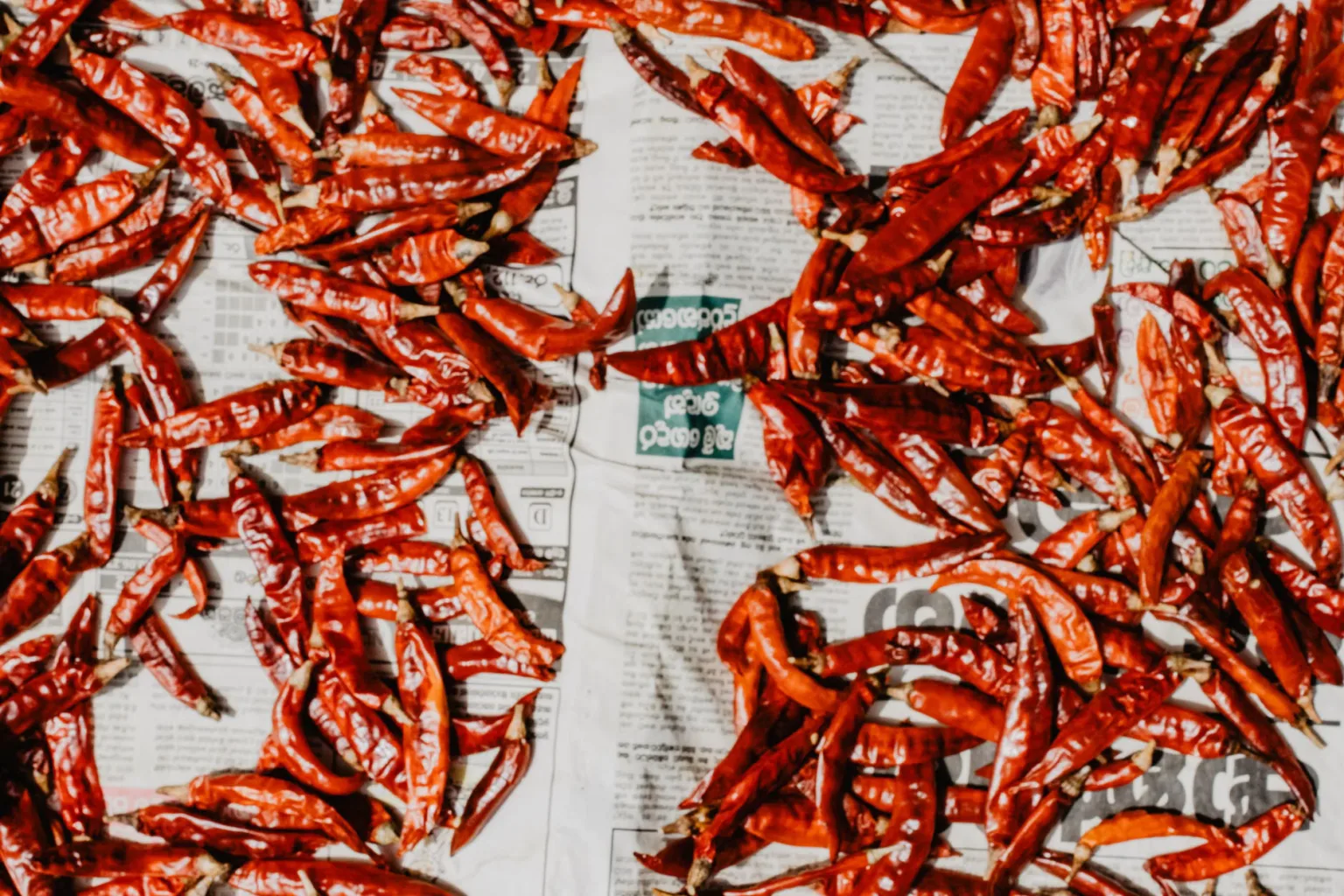
Red hot chilies are fresh fruits of the Capsicum genus, used in cooking as a vegetable ingredient or seasoning. The name covers different varieties, so it does not indicate one fixed level of heat: flavor, size and intensity can differ from one type to another. Chilies can be chopped into uncooked dishes, cooked with other ingredients, or used in salsa and stews. They are also sold dried, pickled or ground, but these are different forms from fresh chili and can bring different flavors and textures. If a recipe does not specify a variety, start with a small amount and adjust after tasting.
When to use it
Use them when you want to add heat and a pronounced vegetal flavor to salsa, stew, soup or a fresh dish. Finely chopped or sliced into rings, they can go into uncooked preparations; cooked with other ingredients, they add character to sauces and hot dishes. Choose the amount to suit the variety and your preferred heat: chilies do not all have the same intensity, and individual fruits can vary too. For a milder result, start with a little, taste, and add more only if needed.
How to use it
Wash the chili and cut it into rings or small pieces so it distributes through the dish. Add it raw to salads and other fresh preparations, or cook it with the other ingredients in salsa, soups and stews. It can also be roasted or fried as part of a preparation. Since intensity varies with both the chili type and the individual fruit, begin with a modest amount, taste, and adjust gradually. If you switch from fresh chili to dried or ground chili, remember that the form changes and the flavor and heat will not necessarily be the same.
Flavour and texture
The most noticeable characteristic is its heat, which varies considerably between varieties and individual fruits. Flavors can have different nuances, and the red color gives a dish visual impact. Raw chili has a fresh, fleshy texture; when cooked, it blends into salsa and stews and becomes softer. Do not treat heat as a fixed measure: taste a small amount before using more, especially when the variety is unfamiliar.
How to choose it
Check the chili's name or variety when it is provided and choose according to the heat you want; red color alone cannot reliably tell you how hot it will be. Since intensity varies among varieties and fruits, buy an amount that lets you try it in a small preparation before adding it generously to a recipe. If you need a particular result, do not assume that two different red chilies will behave the same way.
Storage
Fresh chilies can be used raw or cooked, while drying and pickling are other forms and preparations. If you want to keep the character of the fresh ingredient, plan to use it in a fresh or cooked dish before switching to a dried, pickled or ground form. Heat alone cannot tell you the condition or storage state of a chili; check the fruit before use and do not mistake a transformed form for fresh chili.
Substitutions
You can replace one fresh chili with another, but adjust the amount: heat and flavor nuances vary by type and fruit. Dried or ground chili can add heat to salsa and cooked dishes, although the texture and flavor may change. Add the substitute gradually, taste, and adjust the seasoning; do not assume an exact equivalence between forms.
Common mistakes
A common mistake is assuming that every red chili has the same heat. Intensity varies, so adding a large amount immediately can overwhelm a dish. Start with a little, taste, and adjust. Do not automatically treat fresh chili and a dried or ground form as identical: texture and flavor can differ.
Safety and allergens
Heat varies from chili to chili and can be intense. If you do not know the variety, start with a small amount and avoid tasting a large portion at once.
Culinary uses
- Aportar picor y sabor a salsas, guisos y platos cocinados
- Añadir un toque picante y color a preparaciones frescas
Recommended techniques
- Picar o cortar en aros para añadir crudo
- Asar, freír o cocinar junto con otros ingredientes
Pairs well with
- Tomate y otros ingredientes para salsas
- Carnes y pescados
- Sopas y guisos
Frequently asked questions
Do all red hot chilies have the same heat?
No. Heat varies by variety and can also differ between individual fruits. Start with a little, taste the dish, and adjust.
Can fresh red chilies be used raw?
Yes. Slice or chop them into fresh dishes, or cook them in salsa, soups and stews.
Can I substitute dried or ground chili?
It can work in some salsa and cooked dishes, but the flavor and texture may differ. Add it gradually and taste as you go.
Ingredient allergens
Allergen listThere are no verified associations for these ingredients yet.
Estimated nutrition
- Fat
- 0.44 g
- Saturates
- 0.04 g
- Carbohydrate
- 8.81 g
- Sugars
- 5.3 g
- Fibre
- 1.5 g
- Protein
- 1.87 g
- Salt
- 0.02 g
Sources and review
Automatically researched, cross-checked and validated content. Sources consulted:
- Alérgenos alimentarios | EFSA www.efsa.europa.eu/es/safe2eat/food-allergens
- Client Challenge doi.org/10.2307/jj.27939689.16
- Etiquetado de sustancias que causan alergias e intolerancias alimentarias www.aesan.gob.es/seguridad-alimentaria/informacion-alimentaria/etiquetado-sustancias
- El chile, ingrediente esencial en la cocina de México - Formacion en Gastronomia www.formacionengastronomia.com/cocina-latina/chile/
- Tipos de Chiles Secos Mexicanos: Características y Usos abarrotes.es/blog/chiles-secos-mexicanos-caracteristicas-y-usos/
- Usos del chile y sus variedades en la cocina | Recetas Nestlé www.recetasnestle.com.mx/escuela-de-sabor/ingredientes/tipos-de-chile
- El chile — Canela Limón Chile www.canelalimonchile.com/pagina-ingredientes/el-chile
- Chiles rojos, crudos (orgánicos) | Fundación G+E www.diet-health.info/es/recetas/ingredientes/in/fs3667-chile-tabasco-rojo-crudo
- Allergies - Food Safety - European Commission food.ec.europa.eu/food-safety/campaign-2026/allergies_en
- Food Allergies | FDA www.fda.gov/food/nutrition-food-labeling-and-critical-foods/food-allergies
- Food allergens | Food Safety and Quality | FAO www.fao.org/food-safety/scientific-advice/food-allergens/en
- Food Allergy Labeling Laws: International Guidelines for Residents and Travelers - PMC pmc.ncbi.nlm.nih.gov/articles/PMC10169132/
- Food allergen portal | Food Standards Australia New Zealand www.foodstandards.gov.au/consumer/foodallergies/food-allergen-portal
- Food allergen labelling and information requirements technical guidance - GOV.UK www.gov.uk/government/publications/food-allergen-labelling-and-information-requirements-tech…
- Common food allergens - Canada.ca www.canada.ca/en/health-canada/services/food-nutrition/food-safety/food-allergies-intoleranc…
- Los Chiles del Mundo | Variedades, Picor e Historia | The SauceMan thesauceman.es/los-chiles
- Alimentos picantes: lo que debes saber | Consumer www.consumer.es/alimentacion/alimentos-picantes-locales-sabor-sensaciones.html