- Category
- Herbs and spices
- State
- Dry
- Usual unit
- pinch
What it is
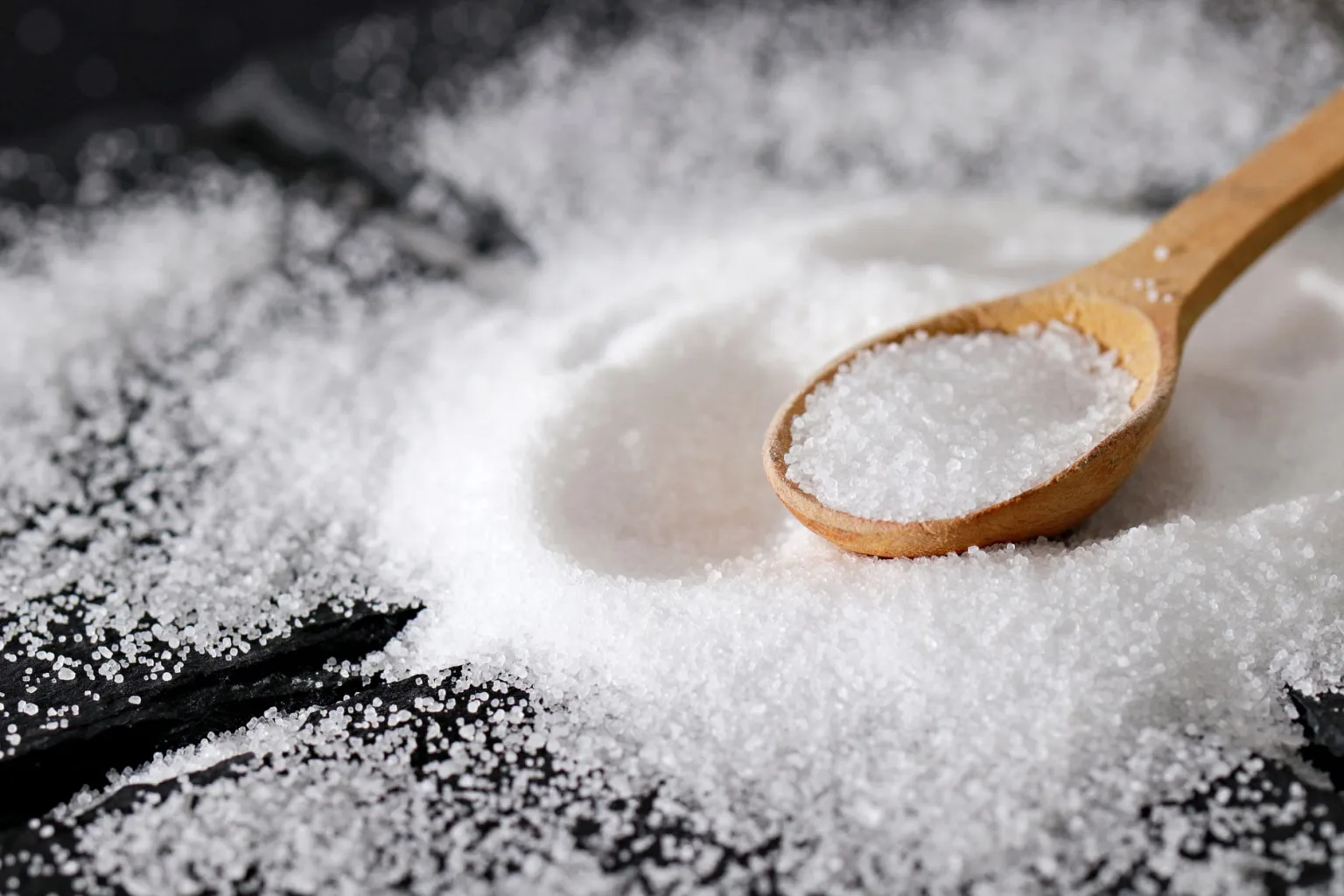
Table salt, also known as common salt, is a mineral seasoning whose main component is sodium chloride. It is sold in forms such as fine salt, coarse salt and flakes, and there are varieties associated with different sources or processing, including sea salt and rock salt. These forms differ in texture and appearance: fine salt spreads readily, while larger crystals or flakes give a different sensation when eaten. In cooking, salt is used to season food and can also be part of preservation methods such as salting. It is a simple ingredient, but choosing a form that suits the point of use and adding it attentively helps you control the result.
When to use it
Use salt when you want to season a dish or adjust its flavour during cooking or just before serving. Fine salt is handy for distributing seasoning through stews and salads; coarse crystals or flakes can work when you want a more noticeable finishing texture. Some varieties are also used in salted or pickled preparations. Because crystal size and shape affect how salt spreads, do not assume that the same measure of different varieties will give the same result. Add a little at a time, taste the dish and consider salt already present in packaged ingredients.
How to use it
Choose the form to suit the dish: fine salt blends readily into stews and dressings, while coarse salt or flakes can give a more visible, textured finish. Add a small amount, mix or distribute it well, then taste before adding more; this lets you control seasoning without relying on a fixed conversion between crystal sizes. To finish a dish, sprinkle a more textured salt just before serving if that finish suits the recipe. Salt is also used in salting and some pickles, but those methods call for an appropriate recipe and should not be improvised from a generic quantity of salt. Check the label of seasoned or blended varieties, as they may include other ingredients.
Flavour and texture
Common salt mainly contributes a salty taste and can enhance or modify other flavours. Perceived intensity and mouthfeel depend, among other things, on the variety and crystal size. Fine salt distributes differently from coarse salt or flakes; some salts also vary in colour or texture. Choose a form for the effect you want rather than assuming one type will automatically work the same way in every dish.
How to choose it
Choose a form to suit its use: fine salt is convenient for even seasoning, while coarse salt or flakes can give a more visible, textured finish. Read the product name and package information to distinguish common salt from varieties such as sea salt or rock salt, and check whether the product includes other ingredients. Crystal size affects how salt is distributed, so do not compare volume measures without adjusting for the result you want.
Storage
Salt is sold in different forms, so follow the storage directions on the specific package. Keep it identified in its packaging so you can distinguish common salt from varieties with different ingredients or textures. Give any product-specific directions on the label priority, and avoid combining different products in an unmarked container, as their type and texture may then be hard to identify.
Substitutions
You can swap fine salt for coarse salt or flakes when the texture suits the recipe, but do not assume the same measure will give the same result. Fine salt spreads more readily; larger crystals or flakes are more noticeable as a finish. Adjust gradually and taste. For salting or pickling recipes, do not change ingredients or quantities without an appropriate recipe.
Common mistakes
A common mistake is replacing fine salt with coarse salt or flakes using exactly the same measure and expecting identical distribution. It is also easy to add more without tasting first, or to overlook salt already present in other ingredients. Season gradually, taking the crystal form and timing into account.
Safety and allergens
If you have a food allergy, check the label of any salt variety that includes other ingredients. For packaged foods, review ingredient and allergen information; if you are unsure about a particular product, ask its manufacturer or seller.
Culinary uses
- Seasoning and flavour enhancement
- Preserving foods through salting
Recommended techniques
- Season during cooking or at the table
- Use in salting and pickling preparations
Pairs well with
- Fish and seafood
- Meat and grilled foods
- Salads and vegetables
Frequently asked questions
Are fine salt and coarse salt the same?
Both can season food, but crystal size changes how they spread and how they feel when eaten. Adjust gradually rather than assuming an exact one-for-one volume conversion.
When should I use salt flakes?
They can be used as a finishing salt when you want the crystal texture to be noticeable. Fine salt is usually more convenient for mixing evenly into stews or dressings.
Is salt used only for seasoning?
No. In addition to being a seasoning, salt is used in preservation methods such as salting and in some pickled preparations.
Ingredient allergens
Allergen listThere are no verified associations for these ingredients yet.
Estimated nutrition
- Fat
- 0 g
- Saturates
- 0 g
- Carbohydrate
- 0 g
- Sugars
- 0 g
- Protein
- 0 g
- Salt
- 97.5 g
Sources and review
Automatically researched, cross-checked and validated content. Sources consulted:
- Alérgenos alimentarios | EFSA www.efsa.europa.eu/es/safe2eat/food-allergens
- Client Challenge doi.org/10.2307/jj.27939689.16
- Sal común - Wikipedia, la enciclopedia libre es.wikipedia.org/wiki/Sal_com%C3%BAn
- 15 tipos de sal para dar variedad a nuestros platos: cómo elegirlas y usarlas en la cocina www.directoalpaladar.com/ingredientes-y-alimentos/15-tipos-sal-para-dar-variedad-a-nuestros-…
- Sal común: qué es, tipos y propiedades bonviveur.com/es/noticias/sal
- Tipos de sal y cuál elegir - Unión Vegetariana Española (UVE) unionvegetariana.org/tipos-de-sal-y-cual-elegir/
- Agencia Española de Seguridad Alimentaria y Nutrición www.aesan.gob.es/
- Técnicas de cocina moderna y vanguardista | Fish Solutions : Pescanova Fish Solutions fishsolutions.pescanova.es/formacion-para-hosteleria/trucos-de-cocina-para-hosteleria/tecnic…
- El amaranto, propiedades, usos y aplicación en la gastronomía | OpenAlex openalex.org/W20082531
- Food Allergies | FDA www.fda.gov/food/nutrition-food-labeling-and-critical-foods/food-allergies
- Food allergens | Food Safety and Quality | FAO www.fao.org/food-safety/scientific-advice/food-allergens/en
- RISK ASSESSMENT OF FOOD ALLERGENS - IRIS iris.who.int/server/api/core/bitstreams/6c71a3db-88b8-4fcd-a807-f5220eb4fc34/content
- Food Allergy: Labelling and exposure risks - PMC pmc.ncbi.nlm.nih.gov/articles/PMC11250542/
- Allergen labelling for consumers | Food Standards Australia New Zealand www.foodstandards.gov.au/consumer/labelling/allergen-labelling
- Tipos de sal para cocinar: descubre cómo usarlas en tu cocina www.laespanolaaceites.com/blog/8-tipos-de-sal-y-como-usarlas-en-tu-cocina-diaria/
- - YouTube www.youtube.com/watch?v=S5zDHCDab4Y