- Category
- Meat
- State
- Preserved
- Usual unit
- g
What it is
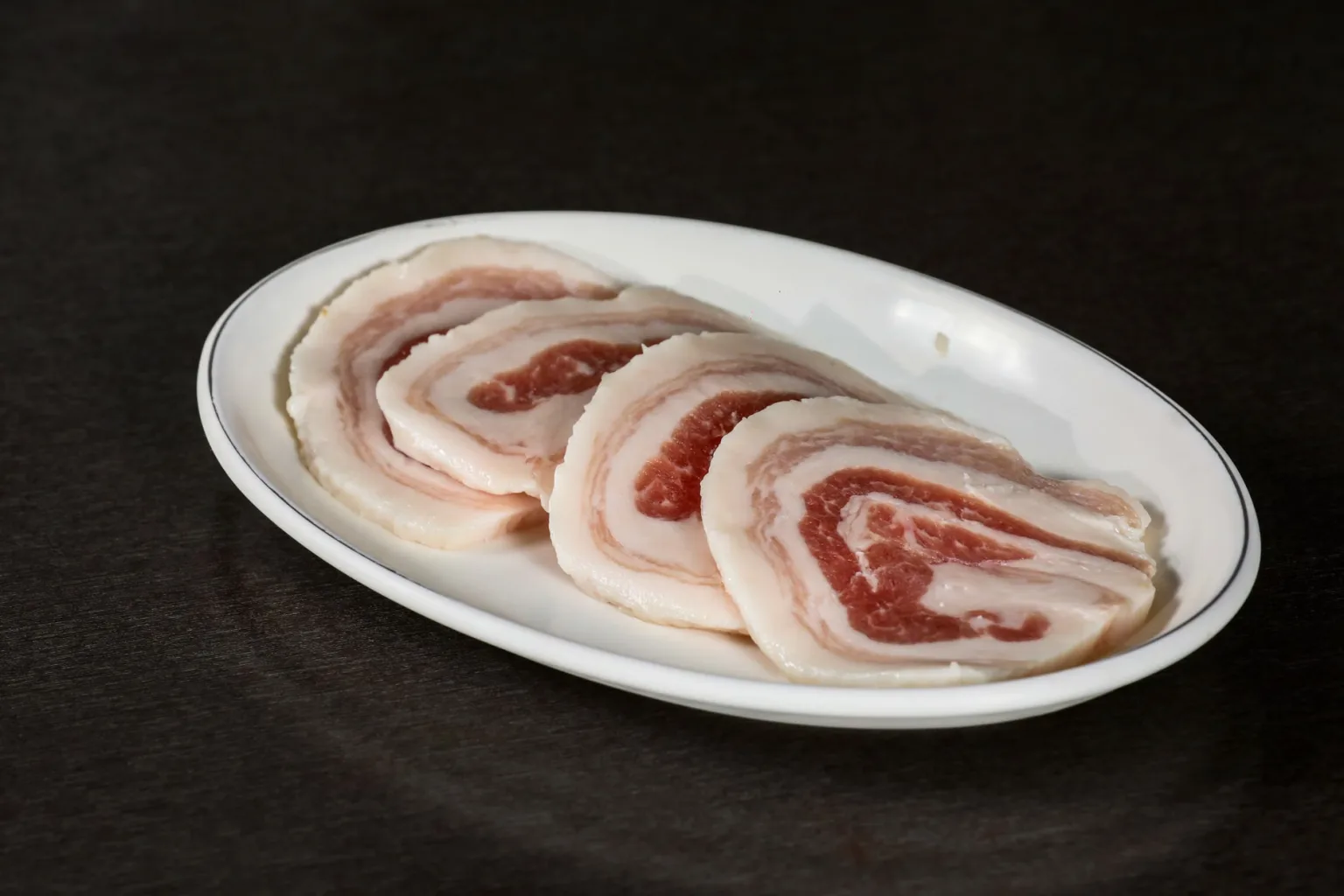
Salted pork belly is a cut from the abdominal area of the pig that is preserved by salting. It may be sold as a whole piece or pre-cut, and contains both fatty and lean portions; their proportions depend on the cut. Its saltiness and fat give it a distinct presence in a dish, so it is often used in modest amounts as a flavoring ingredient rather than as a neutral addition. It is not the same as smoked pork belly: smoking gives the meat a different aroma. The exact composition can vary between products, so check the package when you need details about a particular item.
When to use it
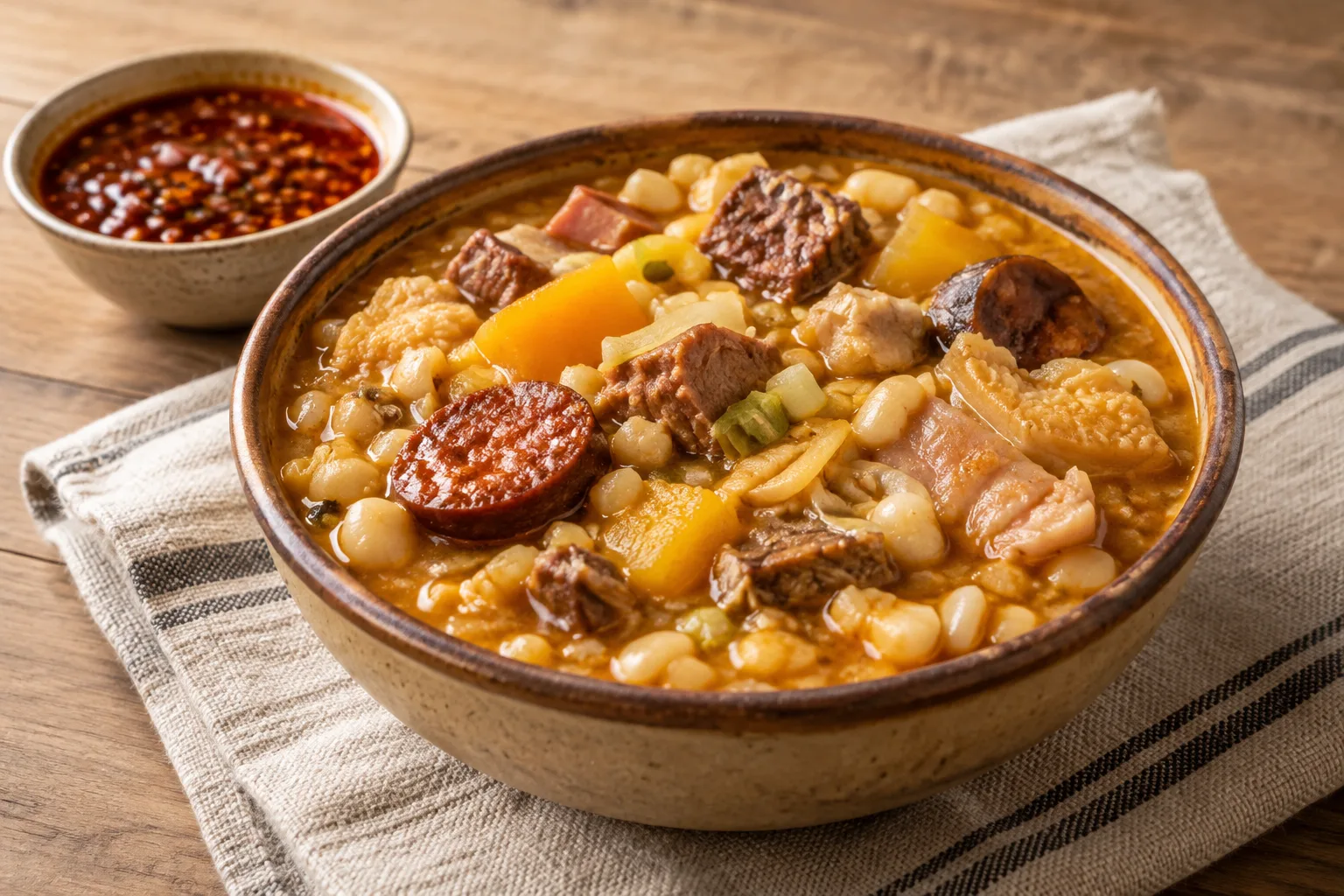
Use it when you want to add a salty, meaty flavor to a stew, a bean dish or migas. It can also be cut into strips or cubes and cooked until browned, then added in small crisp pieces to eggs, toast or pasta. Because it already contributes salt, taste the dish before seasoning and adjust near the end. If you want a smoky flavor, this may not be the right choice: salting and smoking are different processes.
How to use it
Cut the pork belly into cubes or strips to suit the dish. For a stew or legume dish, add it during cooking to flavor the food; the product information describes using it in slow-cooked dishes with legumes. To serve it crisp, fry the pieces in a pan until browned; they may release their own fat. Cooked pieces can also be added to migas, eggs or toast. Salted pork belly can make a dish quite salty, so do not add your usual amount of salt at the start; taste and adjust. Follow the package directions for preparing and handling the specific product.
Flavour and texture
Its flavor is salty and porky, with a rich, silky quality from the streaks of fat. When cooked in a stew, some fat can render into the dish; when fried, the pieces can develop browned, crisp surfaces. The salt level and the balance of fat to lean meat vary by cut and product, so taste before adding more salt. Smoked pork belly has a different, more pronounced smoky note.
How to choose it
Check that the product is labeled salted pork belly rather than smoked pork belly, as these have different flavor profiles. It may be sold whole or sliced, in different thicknesses; choose a cut suited to cubes for a stew or strips for browning. Check the package for ingredients and the product-specific storage and preparation directions, since products can differ in their formulation and processing.
Storage
Follow the storage directions on the package, both before opening and after opening. Products and packaging can differ, so do not assume that every piece has the same shelf life or storage requirements. If the package does not give clear directions, ask the seller or manufacturer before storing it for an extended period.
Substitutions
Another salted pork belly is the closest substitute, though its fat ratio, cut and saltiness may differ. Smoked pork belly or bacon can contribute pork flavor and fat, but also bring a distinct smoky profile. Adjust the dish's salt, and do not assume that these products are identical in flavor or composition.
Common mistakes
A common mistake is seasoning the dish as usual before tasting it: salted pork belly may contribute substantial salt. It is also easy to confuse salted pork belly with smoked pork belly, even though smoke changes the dish's flavor. Choose a suitable cut and follow the package directions.
Safety and allergens
Check the package for storage and preparation directions for the specific product. Do not assume that salted pork belly is ready to eat without cooking: follow the label and do not eat it raw unless the product is expressly identified as suitable for that use.
Culinary uses
- A salty, savory ingredient for enriching stews and legume dishes.
- A crisp cooked topping or small accompaniment for dishes such as migas and eggs.
Recommended techniques
- Cut into pieces and simmer in stews or legume dishes.
- Cut into strips or cubes and fry until browned and crisp.
Pairs well with
- Legumes and stews
- Migas, eggs and toasted bread
Frequently asked questions
Is salted pork belly the same as smoked pork belly?
No. Salting and smoking are different processes, and smoked pork belly has a smoky aroma.
What dishes can I use it in?
Add it to stews and legume dishes, or cook pieces to serve with migas, eggs or toast.
Should I add salt to the dish?
Taste it first, since salted pork belly can add considerable salt. Adjust the seasoning near the end.
Ingredient allergens
Allergen listThere are no verified associations for these ingredients yet.
Estimated nutrition
- Fat
- 53 g
- Saturates
- 19.3 g
- Carbohydrate
- 0 g
- Sugars
- 0 g
- Fibre
- 0 g
- Protein
- 9.34 g
- Salt
- 0.08 g
Sources and review
Automatically researched, cross-checked and validated content. Sources consulted:
- Alérgenos alimentarios | EFSA www.efsa.europa.eu/es/safe2eat/food-allergens
- Client Challenge doi.org/10.2307/jj.27939689.16
- Agencia Española de Seguridad Alimentaria y Nutrición www.aesan.gob.es/
- Migas - Wikipedia, la enciclopedia libre es.wikipedia.org/wiki/Migas
- Te explicamos la diferencia entre la panceta ahumada y la salada www.cerditomio.es/blog/diferencia-entre-la-panceta-salada-y-ahumada/
- derivados cárnicos. denominación de venta. piezas no ... servicio.mapa.gob.es/ricalwebwai/Fichero.aspx?id=ES&idConsulta=113
- - YouTube www.youtube.com/watch?v=PIyxgvq0V30
- Food Allergies | FDA www.fda.gov/food/nutrition-food-labeling-and-critical-foods/food-allergies
- Food allergen portal | Food Standards Australia New Zealand www.foodstandards.gov.au/consumer/foodallergies/food-allergen-portal
- Panceta salada. 3 consejos prácticos y muy fáciles www.ceballosmaya.com/panceta-salada/
- Allergen guidance for food businesses - GOV.UK www.gov.uk/government/publications/allergen-guidance-for-food-businesses/allergen-guidance-f…
- Panceta Salada de Cerdo • Sabor Tradicional. comprarcarnegallega.es/comprar/panceta-salada/?srsltid=AYCX9vJ9MHOlii8HSJRP3SA2iCNOwqeQPl7iP…
- Panceta Salada Iberica es.openfoodfacts.org/producto/2358220003287/panceta-salada-iberica
- Estrategias de enseñanza en gastronomía: Saberes intergeneracionales en "Hoy cocina mi abuela" | OpenAlex openalex.org/W4411475201