- Category
- Vegetables
- State
- Fresh
- Usual unit
- g
What it is
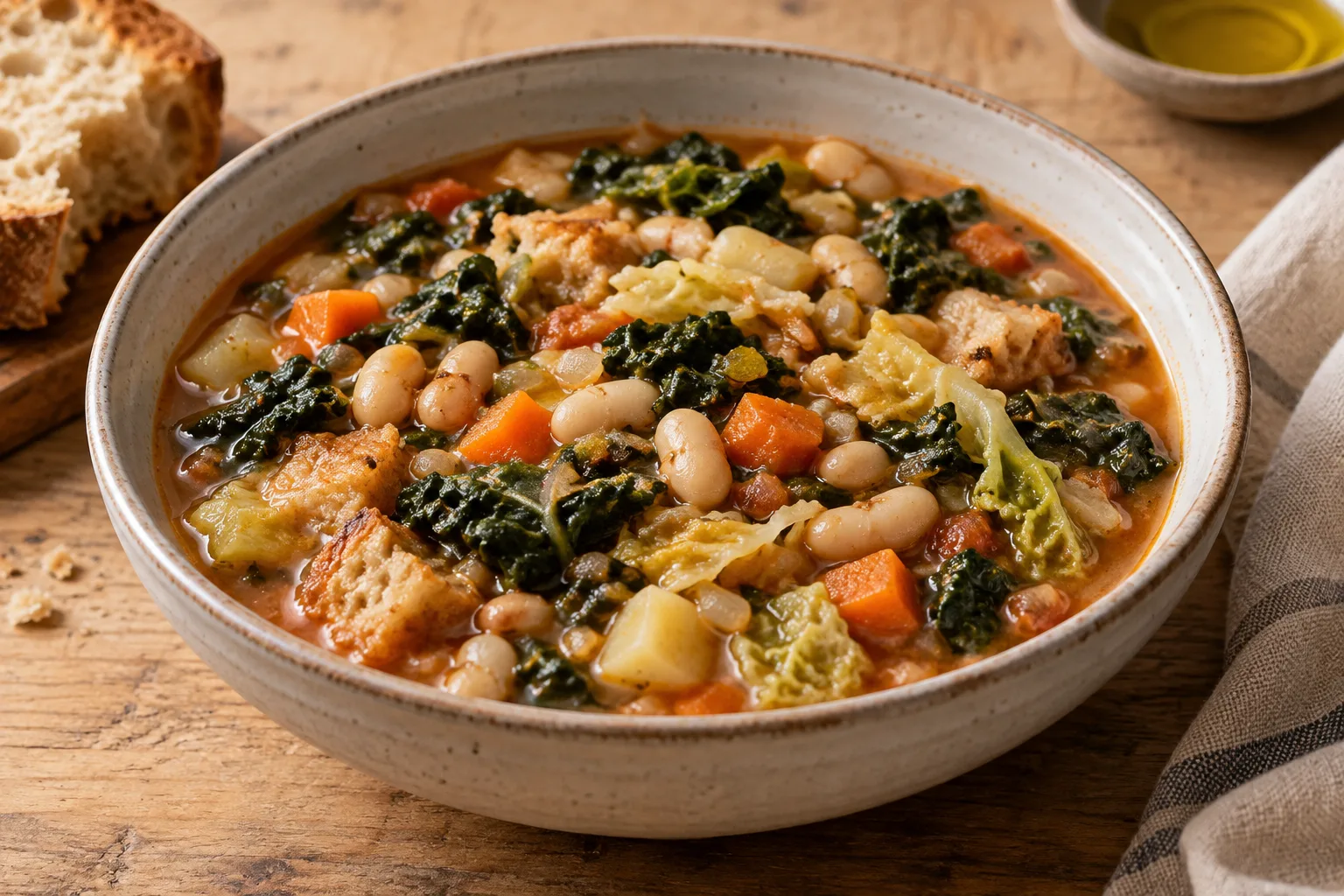
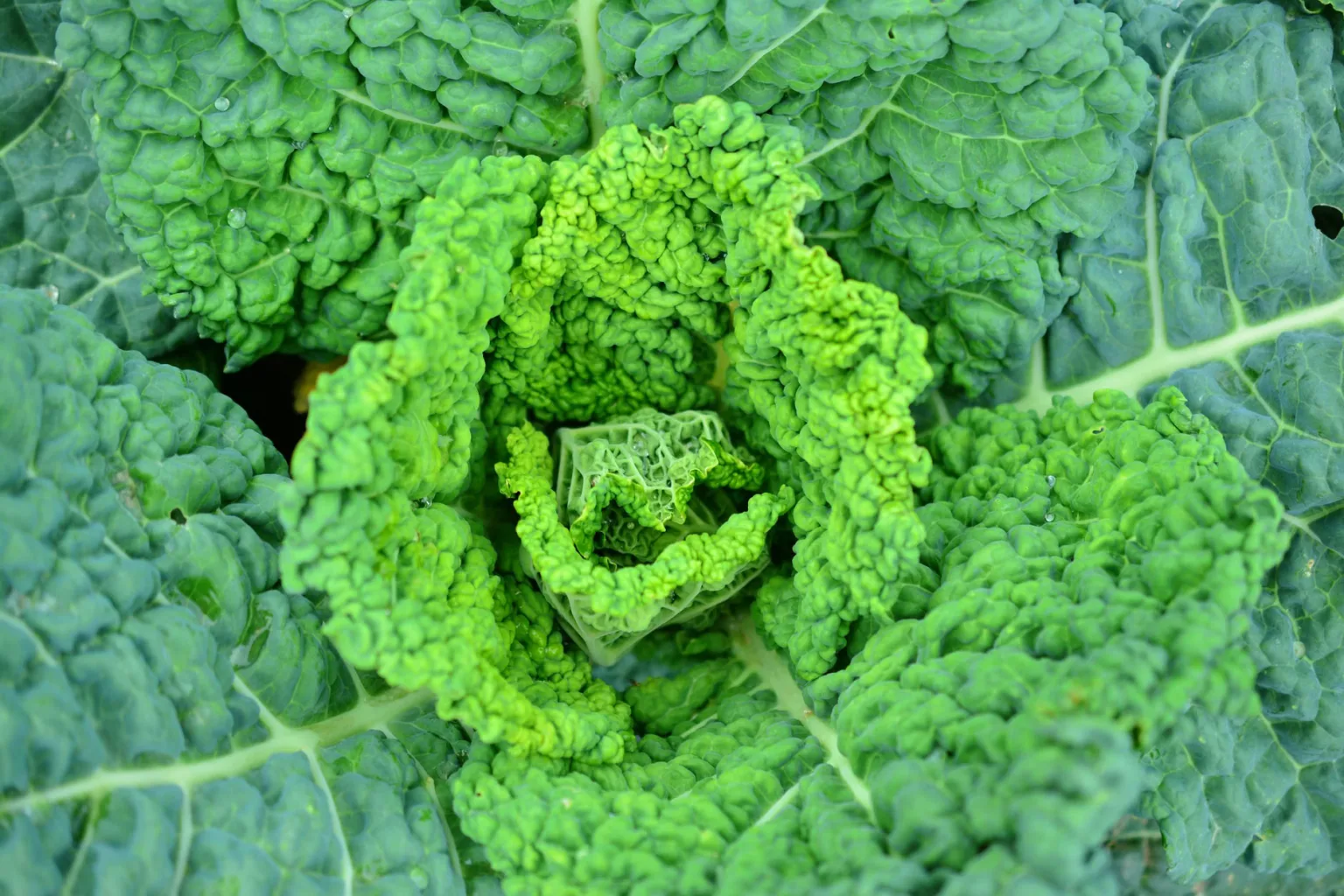
Savoy cabbage, also known as Savoy or crinkled cabbage, is a leafy vegetable in the Brassicaceae family. It forms a head of green leaves with a rippled, crinkled surface rather than the smooth leaves of common white cabbage. The leaves are often more tender and flexible than those of smooth cabbage, so they can be shredded, cooked in moist dishes or used to wrap fillings. Cultivars may differ in appearance and texture, but the crinkled leaves are its most recognisable feature.
When to use it
Choose it when you want flexible cabbage leaves for wrapping a filling, or a leafy vegetable to add body to soups, stews and braises. For a raw dish, slice it very thinly and add it to a salad or sandwich. For a simple side, sauté or braise shredded leaves with the other ingredients in your recipe. Savoy cabbage can work in many dishes that call for cabbage, although its texture will not be exactly the same as smooth white cabbage.
How to use it
Remove any outer leaves that are damaged and wash the leaves you plan to use. For a salad, slice the leaves into fine ribbons and toss them with the dressing and other ingredients. To sauté, cut the cabbage into strips or pieces and cook it in a pan with the ingredients specified in your recipe. You can also add it to soups, stews and braises, or use it in a baked dish. For cabbage rolls, separate whole leaves and use them to wrap the filling. Match the cut and cooking method to the dish: thin strips suit quicker cooking, while whole leaves are useful for wrapping.
Flavour and texture
The leaves have a mild, vegetal cabbage flavour. Finely sliced raw leaves add texture; cooking makes them more tender and flexible. Their crinkled surface and leaf ribs distinguish Savoy cabbage from smooth cabbage, and the leaves are generally less firm than those of the smooth type. The finished texture depends on the cut and preparation: fine ribbons mix readily into salads, while whole leaves can hold their shape as wrappers.
How to choose it
Choose a head that looks fresh, with green, firm leaves, and avoid wilted heads or visibly damaged areas. Its characteristically rippled, crinkled leaves help distinguish Savoy cabbage from smooth cabbage. Look over the outer leaves and choose a size you can use. Head shape and leaf colour can vary, so also check that the cabbage has no obvious signs of deterioration.
Storage
Keep unwashed cabbage in the refrigerator vegetable drawer and allow some airflow, for example by using a perforated bag. If you have cut part of the head, cover the exposed cut surface and refrigerate the remainder. Remove any outer leaves that deteriorate and wash the leaves you plan to use. Savoy cabbage may keep for slightly less time than smooth cabbage, so plan to use it soon and check its condition before preparing it.
Substitutions
Smooth white cabbage can replace Savoy cabbage in many cabbage dishes, but its leaves are firmer and smoother, so the texture will change. Red cabbage can also work in dishes that allow other cabbage varieties, although it changes the colour and is usually sweeter. Choose according to the cabbage's role: for wrapping, look for whole, pliable leaves; for salads or sautéing, either option can be shredded.
Common mistakes
Do not mistake Savoy cabbage's naturally crinkled surface for wilting; the leaves should still look fresh. Avoid cooking it longer than the recipe requires, since the leaves can lose their firmness. For raw dishes, slice the cabbage finely; thick pieces are harder to mix into a salad. Do not assume smooth cabbage will give exactly the same texture in a stew or stuffed dish.
Safety and allergens
Discard visibly damaged leaves and wash the leaves you plan to eat or cook. If the cabbage is packaged or pre-cut, check the label and follow its storage directions. If you have a food allergy, also check the ingredients and product information for anything served with it.
Culinary uses
- Leafy vegetable for soups, stews and braises
- Filling or wrapper for stuffed dishes
- Raw, finely sliced addition to salads
Recommended techniques
- Shred finely and serve raw
- Sauté or braise in a pan
- Cook in soups and stews
- Use whole leaves as wrappers for fillings
Pairs well with
- Potatoes
- Bacon
- Truffle
- Bone marrow
Frequently asked questions
How can I recognise Savoy cabbage?
Look for a head of green leaves with a rippled or crinkled surface, unlike the smooth leaves of white cabbage.
Can Savoy cabbage be eaten raw?
Yes. Remove damaged leaves, wash the leaves you plan to use and slice them finely for salads or sandwiches.
What can I use instead of Savoy cabbage?
Smooth white cabbage works in many recipes. Red cabbage is another option when its colour and sweeter flavour suit the dish.
Ingredient allergens
Allergen listThere are no verified associations for these ingredients yet.
Sources and review
Automatically researched, cross-checked and validated content. Sources consulted:
- Alérgenos alimentarios | EFSA www.efsa.europa.eu/es/safe2eat/food-allergens
- ¿Por qué la muerte es origen de miedos y tabúes? doi.org/10.64628/aao.fccyk3qj3
- Food Allergens - International Regulatory Chart | Food Allergy Research & Resource Program | Nebraska farrp.unl.edu/IRChart/
- Para la ciudadanía www.aesan.gob.es/para-la-ciudadania
- GastroWiki - Blog sobre Gastronomía gastroalianza.es/gastrowiki/articulo/los-repollos-las-coles-con-cabeza
- Tipos de col: 6 variedades y su diferencia con el repollo agricolacampolor.com/tipos-de-col/
- Food Allergies | FDA www.fda.gov/food/nutrition-food-labeling-and-critical-foods/food-allergies
- Food allergens | Food Safety and Quality | FAO www.fao.org/food-safety/scientific-advice/food-allergens/en
- “La otra” col: de Saboya | CocinaSinReceta.com www.cocinasinreceta.com/tecnicas/manual-de-instrucciones/la-otra-col-de-saboya/
- Cómo cultivar Repollo de Saboya (Col Rizada de Milán) plotmygarden.com/es/plants/savoy-cabbage
- Brassica oleracea var. capitata - Wikipedia, la enciclopedia libre es.wikipedia.org/wiki/Brassica_oleracea_var._capitata
- Lombarda o Col roja. Origen, propiedades y receta. | Las Hortalizas del Valle lashortalizasdelvalle.es/lombarda-o-col-roja-origen-propiedades-y-receta/
- Col de Milán, propiedades, beneficios y valor nutricional www.lavanguardia.com/comer/materia-prima/20210415/6750538/col-milan-propiedades-beneficios-v…
- Col de Milán - Información general www.frutas-hortalizas.com/Hortalizas/Presentacion-Col-de-Milan.html
- El repollo está oficialmente de moda: así es como se logra que tenga un sabor increíble www.directoalpaladar.com/recetas-vegetarianas/repollo-esta-oficialmente-moda-asi-como-se-log…
- ¿Qué col elegir para cocinar? - promesse de flores www.promessedefleurs.es/consejos-plantas-jardin/fichaconsejos/que-col-elegir-en-la-cocina/