- Category
- Vegetables
- State
- Fresh
- Usual unit
- g
What it is
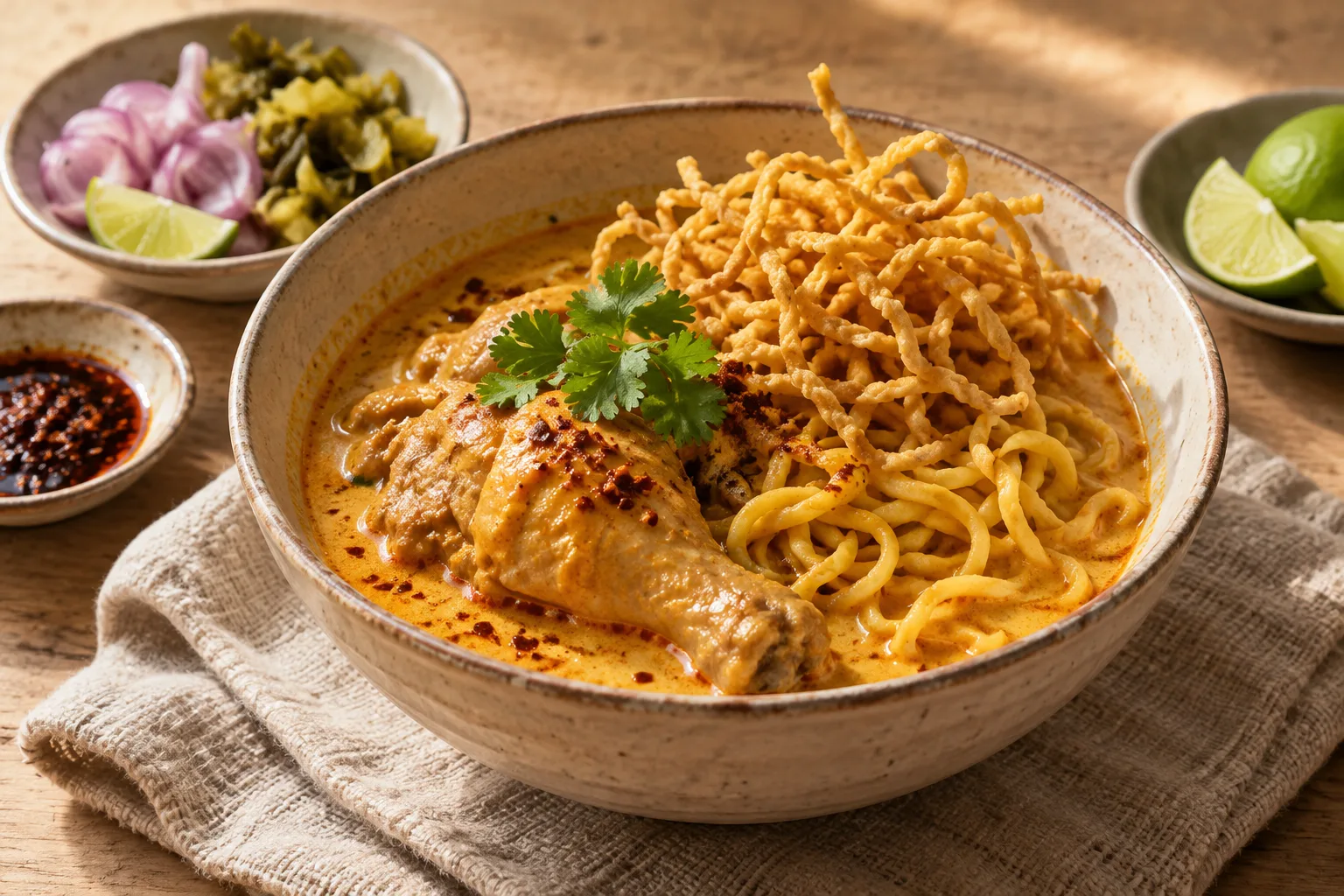
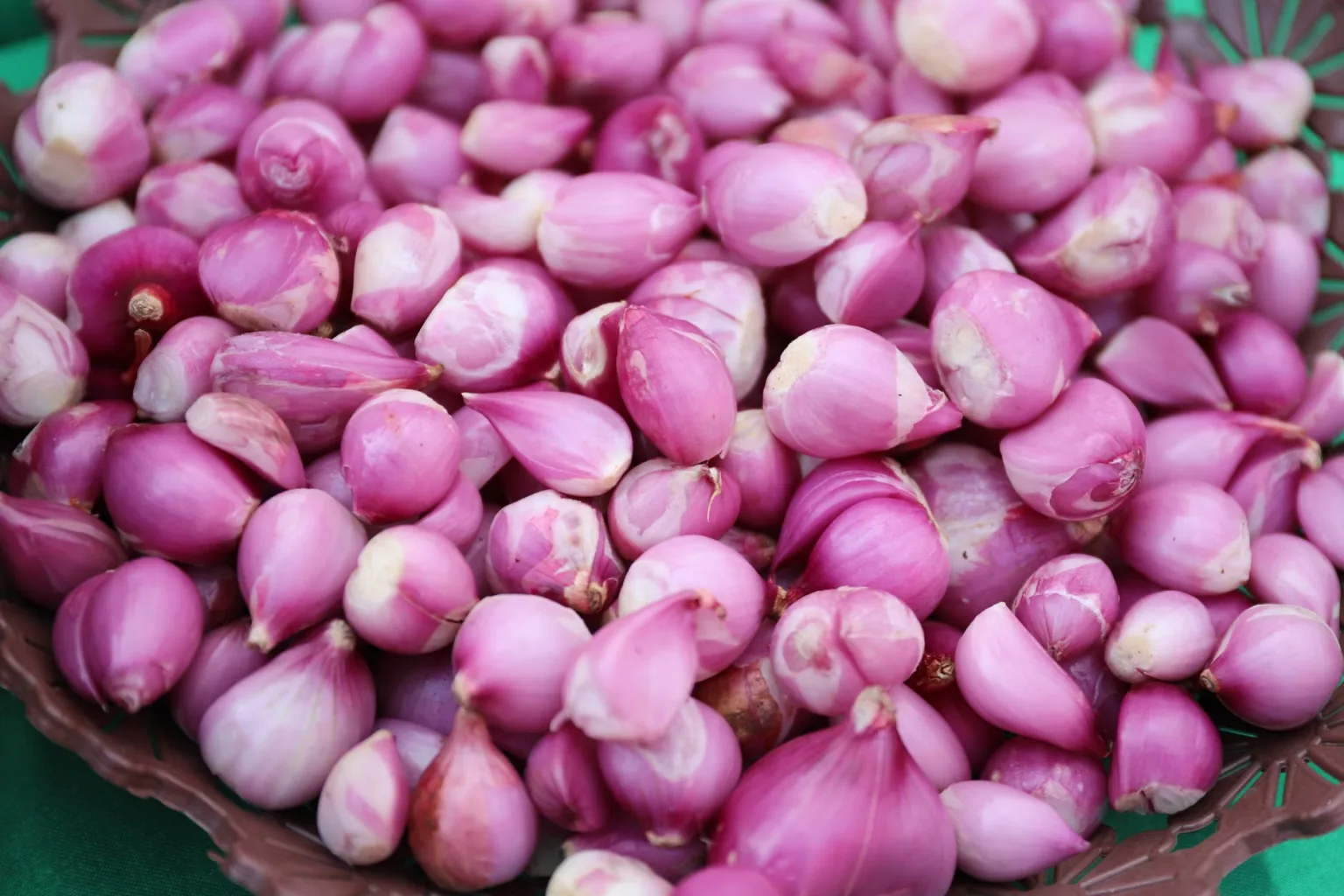
A shallot is an edible bulb in the Allium family, related to onions, garlic and leeks. It is usually smaller than an onion and may be elongated or rounded; skin and flesh colour vary with the variety. In cooking, shallots are valued for an onion-like aroma that is generally more delicate, with sweet notes and sometimes a mild, garlic-like or peppery edge. “Shallots for serving” describes how they are used at the table rather than a particular preparation: they may be served raw or cooked, whole or cut. Raw shallots add an aromatic lift to salads and dressings, while cooking softens their sharpness and can bring out sweeter notes. The result depends on the variety, cut and cooking method.
When to use it
Use shallots when you want an onion-family flavour that is often more delicate, particularly in dishes where the aroma should support rather than dominate. Thinly sliced raw shallots work in salads, vinaigrettes and as a finishing touch. Cooked, they can form part of a sauce or stew, or be served alongside meat, fish or roasted vegetables. Browning or slow cooking usually softens their sharper edge and brings out sweetness. Their intensity varies with size, variety and preparation, so begin with a modest amount and adjust to taste.
How to use it
Remove the dry outer skin and trim the ends if needed. To serve shallots raw, mince or slice them thinly and add them to a salad or vinaigrette; a small amount can add aroma without overwhelming the other ingredients. For a sauce or stew base, chop them and cook gently until softened. You can also brown, roast or cook them slowly to serve as a side: heat mellows their flavour and accentuates sweetness. Present them whole, halved or chopped depending on the dish. Adjust the cut and amount to the texture and flavour you want, and do not assume every variety will have the same intensity.
Flavour and texture
Shallots taste like onion but are often milder and more aromatic, with sweet notes and a hint that can suggest garlic. Raw, they retain a sharper edge and a crisp texture; cooking makes them softer and sweeter. Variety and cooking method change the result.
How to choose it
Choose firm shallots that feel heavy for their size and have dry, intact skins. Avoid bulbs that are soft, bruised, discoloured, damp or mouldy. Size, shape and colour vary among varieties and do not by themselves mean that a bulb is spoiled.
Storage
Keep whole shallots in a cool, dark, dry place with good air circulation. Avoid damp storage conditions. Once peeled or cut, refrigerate them in a covered container and use them promptly; discard any that show visible spoilage.
Substitutions
Onion can replace shallot when needed, but its flavour may be stronger. Start with less and adjust to taste; the result will not be identical. In salads, scallion can provide a similar fresh allium role, though its flavour and texture differ.
Common mistakes
Do not expect every shallot to taste exactly the same: variety and cooking affect its flavour. When substituting onion, do not automatically use the same amount, as it may be more assertive. Also avoid assuming shallots always need the same heat or cooking time as onions.
Safety and allergens
Wash and prepare shallots with clean hands, utensils and surfaces. If you have a food allergy, check packaged-product labels and ask about the ingredients in ready-to-serve preparations.
Culinary uses
- Fresh garnish or topping
- Aromatic base for sauces, stews and dressings
- Side dish when cooked whole or in pieces
Recommended techniques
- Finely slice or mince for raw salads and vinaigrettes
- Sauté gently until softened or golden
- Roast, braise or caramelize for a sweeter accompaniment
Pairs well with
- Salads, vinaigrettes and fresh vegetables
- Meat, fish and roasted vegetables
- Mushrooms, beans and peas
Frequently asked questions
Can shallots be served raw?
Yes. Finely cut shallots add an aromatic note to salads and vinaigrettes; start with a small amount if you prefer a mild flavour.
What changes when shallots are cooked?
They generally soften and become sweeter and less sharp. Add them to sauces and stews or serve them as a side.
Can I replace a shallot with onion?
Yes, though onion may taste stronger. Begin with a smaller amount and adjust to suit the dish.
Ingredient allergens
Allergen listThere are no verified associations for these ingredients yet.
Sources and review
Automatically researched, cross-checked and validated content. Sources consulted:
- Alérgenos alimentarios | EFSA www.efsa.europa.eu/es/safe2eat/food-allergens
- Client Challenge doi.org/10.2307/j.ctvndv9t9.22
- Curry - Wikipedia, la enciclopedia libre es.wikipedia.org/wiki/Curry
- Chalotas | www.cocinista.es www.cocinista.es/web/es/enciclopedia-cocinista/ingredientes-del-mundo/chalotas.html
- Chalota, la hermana más dulce y suave de la familia de las cebollas: propiedades, beneficios y recetas www.directoalpaladar.com/ingredientes-y-alimentos/chalota-hermana-dulce-suave-familia-ceboll…
- Chalota: qué es, propiedades y usos en la cocina del sustituto de la cebolla bonviveur.com/es/noticias/chalota
- Agencia Española de Seguridad Alimentaria y Nutrición www.aesan.gob.es/
- Chalotas o escalonias | Gastronomía & Cía www.gastronomiaycia.com/chalotas-o-escalonias/
- Evolución del léxico culinario desde 1932 a 1972 | OpenAlex openalex.org/W2291578502
- Food Allergies | FDA www.fda.gov/food/nutrition-food-labeling-and-critical-foods/food-allergies
- Allergen labelling for food businesses | Food Standards Australia New Zealand www.foodstandards.gov.au/business/labelling/allergen-labelling
- Managing allergens | Food Standards Scotland www.foodstandards.gov.scot/business-guidance/running-a-food-business/managing-allergens
- Allergen guidance for food businesses - GOV.UK www.gov.uk/government/publications/allergen-guidance-for-food-businesses/allergen-guidance-f…
- Recetas con cebolla chalota - Mejores recetas - Grupo Lomar www.grupolomar.es/las-mejores-recetas-con-cebolla-chalota/
- ¿Qué es la chalota? - Actualidad | Centro Médico Quirónsalud Tres Cantos www.quironsalud.com/tres-cantos/es/comunicacion/actualidad/chalota
- Cebolla chalota: un tesoro en la cocina y el huerto - Abonos Calsilla www.abonoscalsilla.com/cebolla-chalota-un-tesoro-en-la-cocina-y-el-huerto/?srsltid=AYCX9vKRD…
- Usa chalotas en lugar de cebolla | CocinaSinReceta.com www.cocinasinreceta.com/tecnicas/usa-chalotas-en-lugar-de-cebolla/