- Category
- Sugar and sweeteners
- State
- Dry
- Usual unit
- g
What it is
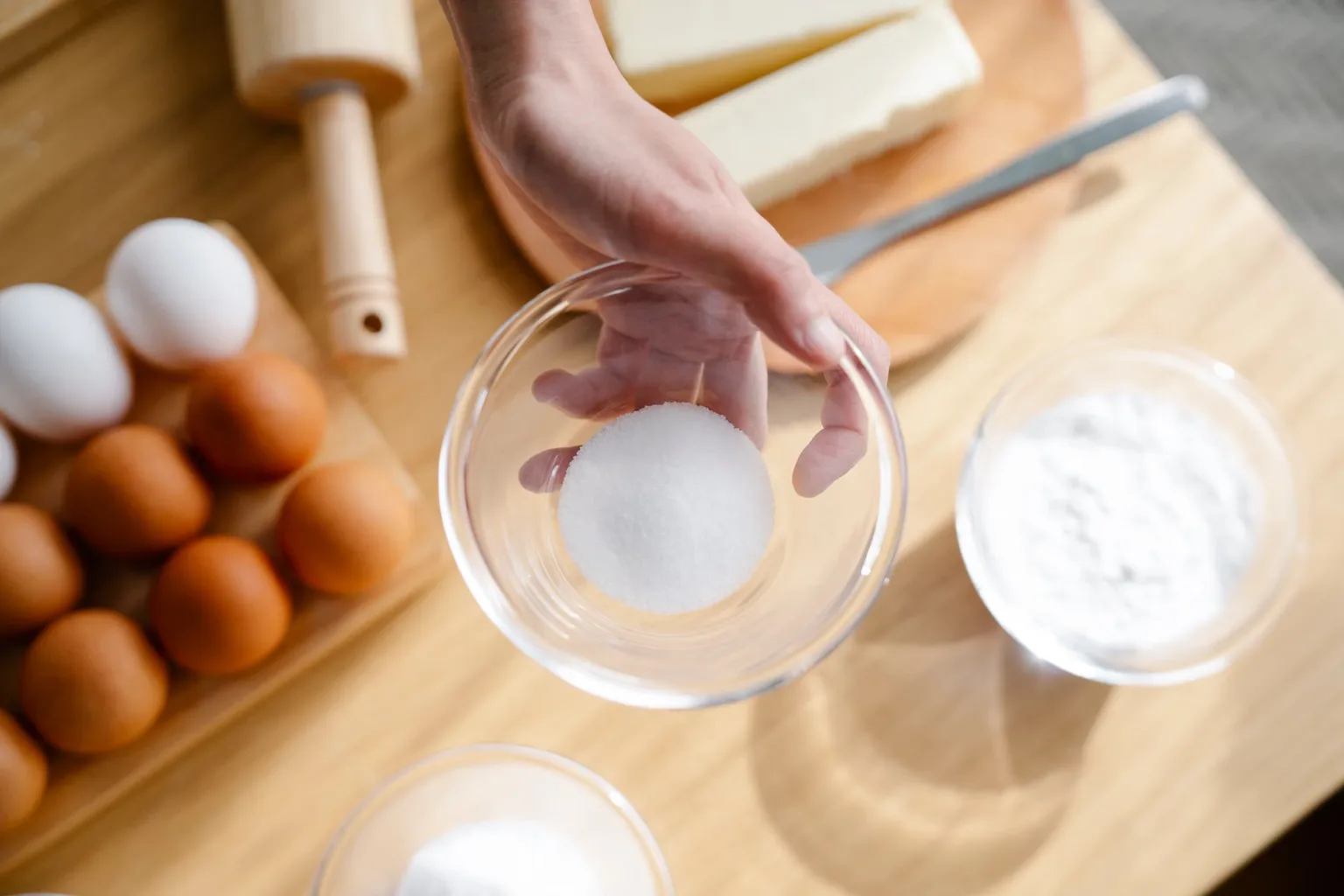
“Sugar for egg whites” means sugar added to preparations made with egg whites, especially sweet foams such as meringue. The phrase does not identify a single sugar form: it may refer to granulated sugar or a finer-grained type, depending on the recipe. Superfine sugar dissolves faster than ordinary granulated sugar and is used in meringues and other desserts. Sugar is not a replacement for the egg whites; it contributes sweetness and plays a part in the preparation’s texture. Check the specified form before substituting, because crystal size affects how quickly sugar dissolves.
When to use it
Use it when a recipe for meringue, pavlova, or another egg-white preparation calls for sugar. Sugar can help stabilize whipped egg whites and sweetens the mixture. If the recipe benefits from crystals dissolving quickly, a fine-grained sugar may be suitable when the recipe allows it. Do not automatically change the sugar form or amount: the available sources describe uses for different sugars but do not give one universal proportion for every egg-white recipe.
How to use it
Measure the sugar as directed and use the form specified in the recipe. For meringue, add the sugar according to the recipe’s method as you work the egg whites; sources describe both beating egg whites with sugar and using superfine sugar in meringues. Fine-grained sugar dissolves faster than ordinary granulated sugar, but that alone does not guarantee the result: follow the stated order of addition and beating method. Do not convert the amount or switch to powdered sugar without checking that the formula allows it.
Flavour and texture
Sugar adds sweetness; white sugar is described as a choice that lets other flavors come through. Granulated sugar has perceptible crystals, while superfine sugar has smaller particles and dissolves faster. The form you choose can affect how it blends into the egg-white mixture.
How to choose it
Read the label to distinguish granulated, superfine, and powdered sugar; these are not identical forms. For an egg-white recipe, choose the type it specifies. If it calls for superfine sugar, look for crystals finer than ordinary table sugar. Check that the package is intact and the product shows no visible moisture.
Storage
Keep sugar in the pantry in a closed container in a dry place so it stays free-flowing and easy to measure. One source describes ordinary granulated sugar as keeping in the pantry practically indefinitely without special conditions; that does not establish the same duration for every sugar product or blend.
Substitutions
Superfine sugar is a reasonable alternative to granulated sugar when the recipe allows a sugar that dissolves more quickly. Do not assume powdered sugar is interchangeable: its texture differs, and some commercial products contain starch or another anti-caking ingredient. Keep the recipe’s amount and method unless it specifies another adjustment.
Common mistakes
A common mistake is treating granulated, superfine, and powdered sugar as identical. Their particle sizes and behavior when mixed differ. Changing both the sugar form and the beating method at once is another pitfall, since it makes texture changes harder to assess. Follow the recipe and the form it specifies.
Safety and allergens
The available evidence provides no specific warning about sugar used with egg whites. Keep the product dry and clean, and follow a reliable recipe and local official guidance for handling eggs.
Culinary uses
- Endulzar preparaciones con claras de huevo
- Ayudar a dar estabilidad a espumas como el merengue
Recommended techniques
- Batir con claras para preparar merengue
- Incorporar a mezclas dulces; el azúcar fino se disuelve con mayor rapidez
Pairs well with
- Claras de huevo
- Merengue y pavlova
Frequently asked questions
What sugar should I use for egg whites?
Use the form specified by the recipe. Granulated and superfine sugars are both used in sweet preparations; superfine sugar dissolves more quickly.
Does sugar help stabilize meringue?
Yes. Culinary sources describe sugar as helping stabilize beaten egg whites in preparations such as meringues and pavlovas.
Can I replace granulated sugar with powdered sugar?
Do not assume so. Powdered sugar has a different texture and may contain starch or another anti-caking ingredient; check that the recipe allows the swap.
Sources and review
Automatically researched, cross-checked and validated content. Sources consulted:
- The Essential Glossary of Cooking Terms for the Culinary Arts - Escoffier escoffier.edu
- Del blanco a la panela: los 19 tipos de azúcar más comunes, en qué se diferencian y cómo usarlos en cocina directoalpaladar.com
- Tipos de azúcar: cuáles son y cómo usarlos | Fine Dining Lovers finedininglovers.es
- Nutrition After Your Transplant - Health Online healthonline.washington.edu
- Azúcar para todos los gustos – La vida sabe mejor lavidasabemejor.es
- Azúcar: El ingrediente mágico que -con moderación- transforma tus recetas hola.com
- Guía de aplicación ANFABRA aesan.gob.es
- Oregon’s Cottage Food Exemption | Servicio de Extensión de OSU extension.oregonstate.edu
- Qué es el entrenamiento multicomponente y por qué es beneficioso para las personas mayores doi.org
- development of a culinary medicine assessment tool for scholars.csus.edu
- Merengues Helados 1960 (Ice Cream Meringues) - lacocina.utsa.edu
- Preparación de Comida en Altitud Alta – Food Smart Colorado foodsmartcolorado.colostate.edu
- Manzanas | KSRE Bookstore bookstore.ksre.ksu.edu
- Vista de La Ciencia del Merengue academiaculinaria.org