- Category
- Vegetables
- State
- Fresh
- Usual unit
- g
What it is
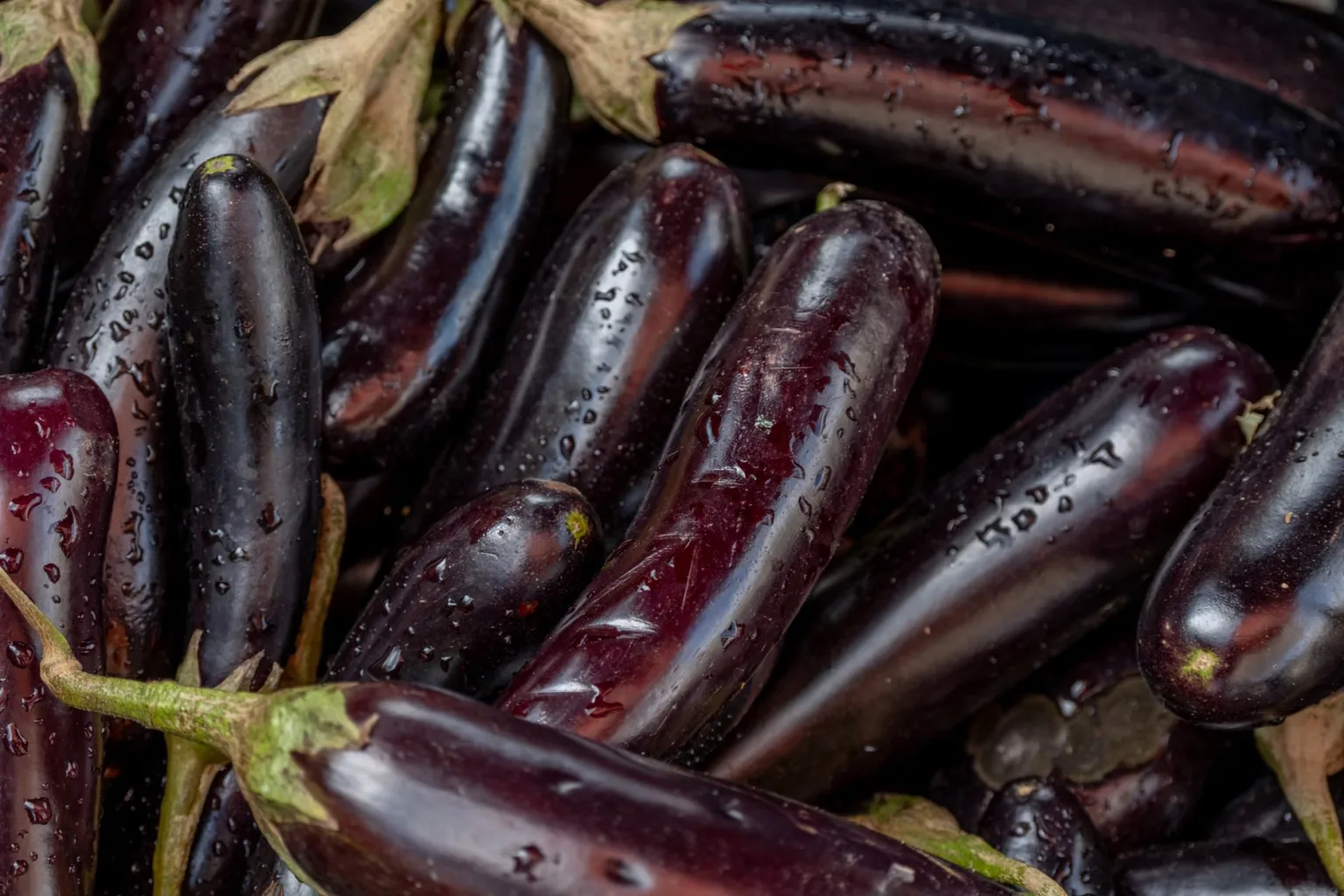
Eggplant is the edible fruit of a plant in the nightshade family, though it is usually treated as a vegetable in cooking. The fruits can be round, oval or elongated and vary in colour; the flesh is usually pale and contains small seeds. Shape and appearance depend on the variety. On the information available, the name “sweet eggplant” is not enough to identify a particular variety or to establish a distinctive sweetness. This guide therefore offers general advice for fresh eggplant without assigning an unverified varietal characteristic to the product.
When to use it
Use eggplant when you want a cooked vegetable that adds substance and flesh to a dish. It can be the main ingredient in stuffed eggplant, form layers in a baked dish, or be included in stews with tomato and other vegetables. It can also be grilled or fried. For recipes that call for slices, choose a piece whose shape suits that cut; halves can be used for stuffing. Since “sweet eggplant” does not identify a specific variety here, do not assume it tastes sweeter than other eggplants.
How to use it
Wash the eggplant before preparing it, then decide whether to keep the skin according to the recipe and the texture you prefer. Cut it into rounds or slices for roasting, grilling or frying. You can also halve it, scoop out some flesh, prepare a filling with that flesh and bake the halves. For a stew, cut it into chunks and cook it with tomato, onion, garlic or other vegetables. Roasted eggplant can also be mashed into a spread. These are general ways to cook eggplant: the name “sweet eggplant” alone does not establish a special method or a specific cooking time.
Flavour and texture
Eggplant flesh is usually pale and spongy before cooking; it softens as it cooks. Its flavour is described as mild, though it can have a slightly bitter note and varies by variety. There is not enough information to assign a distinctive sweetness to this particular eggplant. Shape, colour, skin and seeds can also differ among varieties, so appearance alone does not define flavour or texture.
How to choose it
Choose pieces with smooth, glossy-looking skin and no clearly damaged or shrivelled areas. Eggplants vary in shape, size and colour, so appearance alone cannot confirm that a piece is a particular “sweet eggplant” variety. If the variety matters for your recipe, look for that information on the label or ask at the point of sale. Choose a shape and size that suit the intended cut, such as rounds, slices or halves for stuffing.
Storage
Fresh eggplant is perishable, so plan to use it promptly and keep damaged pieces separate from sound ones. The culinary guidance available advises refrigerating it separately from other fruit and vegetables. Conditions can vary; check the piece before cooking and do not extend storage if it shows visible deterioration. If already cut, keep it covered and use it soon.
Substitutions
The available information does not establish direct equivalents between eggplant and other vegetables. If you need to change the piece, you can choose another eggplant with a different shape or colour when the recipe allows variation in appearance; adapt the cut to the preparation. Sources describe round, elongated and striped varieties, but do not establish that they are interchangeable in every dish. Do not assume a substitution will produce exactly the same texture or result.
Common mistakes
Do not assume that “sweet eggplant” identifies a particular variety or that all eggplants taste sweet. Nor should you choose a piece by colour or shape alone: varieties have different appearances. Another mistake is expecting every variety to give exactly the same result in a recipe; shape can affect how it is cut and presented. If you use a different variety, consider whether the dish needs rounds, slices or halves.
Safety and allergens
Wash fresh eggplant before cutting it. If you buy a prepared or packaged product containing eggplant, check its ingredients list and allergen information: the preparation may include other ingredients. Fresh eggplant alone does not establish the allergens in a processed product.
Culinary uses
- Ingrediente principal en platos asados, a la parrilla o guisados
- Hortaliza para rellenar, freír o incorporar en capas al horno
Recommended techniques
- Asar o cocinar a la parrilla
- Freír o rebozar
- Guisar
- Rellenar y hornear
Pairs well with
- Tomate, cebolla y ajo
- Otras verduras
- Carne picada y salsa de tomate
- Queso y hierbas
Frequently asked questions
Does “sweet eggplant” identify a specific variety?
The name alone does not identify a variety from the available information. This guide describes fresh eggplant generally and does not assume special sweetness.
What shapes and colours can eggplant have?
Varieties can be round, oval or elongated and can have different colours. Appearance depends on the variety.
Which cooking methods can I use?
Eggplant can be roasted, grilled, fried, stewed, or stuffed and baked. Choose the cut to suit the preparation.
Ingredient allergens
Allergen listThere are no verified associations for these ingredients yet.
Sources and review
Automatically researched, cross-checked and validated content. Sources consulted:
- Alérgenos alimentarios | EFSA www.efsa.europa.eu/es/safe2eat/food-allergens
- Client Challenge doi.org/10.2307/jj.27939689.16
- La Berenjena: Historia, Expansión, Usos Gastronómicos Y Beneficios Nutricionales - Restaurante Romero restaurante-romero.es/la-berenjena-historia-expansion-usos-gastronomicos-y-beneficios-nutric…
- Solanum melongena - Wikipedia, la enciclopedia libre es.wikipedia.org/wiki/Solanum_melongena
- Agencia Española de Seguridad Alimentaria y Nutrición www.aesan.gob.es/
- GastroWiki - Blog sobre Gastronomía gastroalianza.es/gastrowiki/articulo/la-berenjena-los-mitos-sobre-este-huevo-vegano-a-lo-lar…
- Origen histórico de la berenjena en la cocina. - De la Manuela delamanuela.com/origen-historico-de-la-berenjena-en-la-cocina/
- Evolución del léxico culinario desde 1932 a 1972 | OpenAlex openalex.org/W2291578502
- Food Allergies | FDA www.fda.gov/food/nutrition-food-labeling-and-critical-foods/food-allergies
- Food allergens | Food Safety and Quality | FAO www.fao.org/food-safety/scientific-advice/food-allergens/en
- Precautionary labelling of foods for allergen content: are we ready for a global framework? - PMC pmc.ncbi.nlm.nih.gov/articles/PMC4005619/
- Allergen guidance for food businesses - GOV.UK www.gov.uk/government/publications/allergen-guidance-for-food-businesses/allergen-guidance-f…
- Las berenjenas - Vida Mediterránea www.vidamediterranea.es/las-berenjenas/
- Historia de las berenjenas y su oscuro pasado www.historiacocina.com/historia/articulos/berenjena.htm
- La berenjena, un alimento imprescindible para sentirse bien | manacormanacor revista de información local y comarcal manacormanacor.com/art/29556/la-berenjena-un-alimento-imprescindible-para-sentirse-bien
- - YouTube www.youtube.com/watch?v=d9oxLl0lXSc