- Category
- Vegetables
- State
- Fresh
- Usual unit
- unit
What it is
Sweet pepper is a common name for a mild pepper, often referring to a bell pepper. It belongs to the Capsicum genus, which includes both sweet and hot varieties, so it is worth distinguishing sweet pepper from hot chillies when a recipe or label uses the word “pepper” without more detail. This profile covers the fresh vegetable, not a dried spice or a sauce. Peppers vary in shape and maturity, so the exact size, colour and firmness depend on the individual item available. In cooking, sweet pepper can add vegetable bulk to raw or cooked preparations. Some larger peppers can also be used for stuffing. Common names vary by region: if in doubt, check that the product is sweet rather than hot.
When to use it
Choose sweet pepper when you want a mild ingredient that adds a vegetable element without the heat associated with some Capsicum varieties. It can be cut for a raw preparation or added to a cooked dish. A suitably large pepper can also serve as the base for a filling. Variety and size affect the result, so consider the shape and amount of flesh available before choosing one for stuffing. If a recipe says only “pepper” or “chilli”, check which variety it means: depending on local usage, these names may refer to sweet or hot products.
How to use it
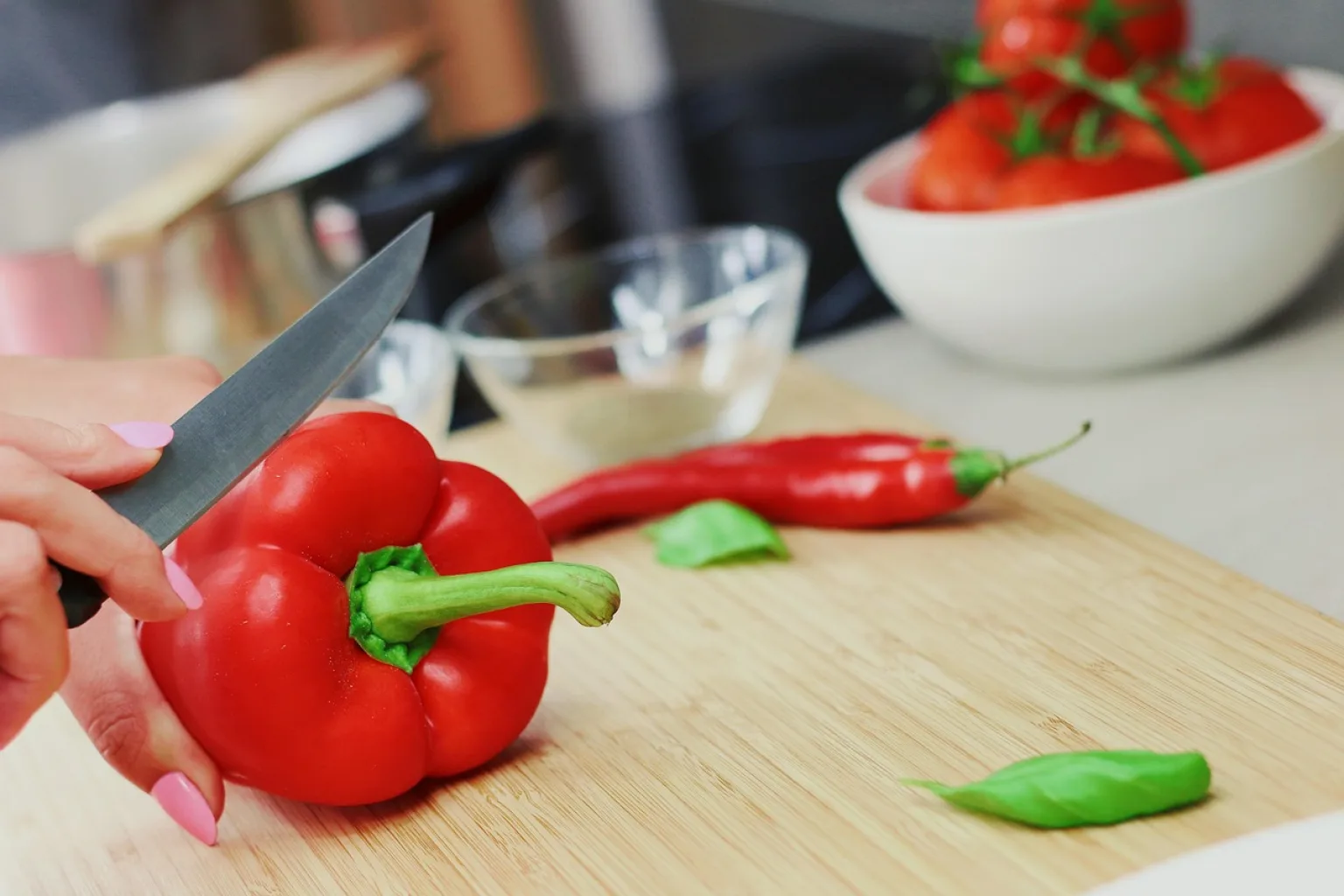
Before cooking, check that the pepper is sweet and not a hot variety, especially if the recipe only says “chilli” or “pepper”. To serve it raw, cut it into strips or pieces suited to the dish. For a cooked preparation, roast it and then add it to the dish; if you prefer it without the skin, remove the skin after roasting. Larger peppers can be used as vessels for a filling, with the amount and shape of the filling adjusted to each pepper. It can also be used in preparations with meat, fish, seafood or other vegetables. Handle food hygienically and follow the recipe instructions for the other ingredients. Do not assume that all peppers have the same sweetness, texture or size.
Flavour and texture
Sweet pepper is distinguished from hot varieties by its mild character, although flavour and texture can vary from one product to another. Shape and size also vary, so a large pepper may be more convenient for stuffing than a small one. If you want to avoid heat, check the type before using it, as the word “chilli” or “pepper” may refer to different varieties.
How to choose it
Look for a product identified as sweet, particularly when it is sold under the general name pepper or chilli. Choose a size and shape that suit the intended use: a broad pepper may be more convenient for stuffing, while any manageable shape can work when cutting it up. The available information does not establish specific freshness criteria for this product, so check the label or ask the seller if you are unsure.
Storage
The available information does not establish a specific storage period or conditions for fresh sweet pepper. Follow the package or seller’s instructions and do not eat items showing clear signs of deterioration. If the pepper has been cut or prepared, follow the storage instructions for the recipe and its other ingredients; this profile does not provide a specific storage time.
Substitutions
To keep a mild pepper flavour, replace sweet pepper with another fresh pepper identified as sweet. Shape, size and the amount of flesh may change the result, especially if the pepper is to be stuffed. Do not automatically substitute a hot chilli: the name may be similar, but its heat can alter the dish.
Common mistakes
Confusing sweet pepper with a hot chilli can substantially change a dish. Check the product type on the label or with the seller if the name is unclear. Another mistake is choosing a pepper without considering its intended use: a small one may be awkward to stuff even though it can be cut up.
Safety and allergens
Check the product name and label if you need to avoid a particular ingredient or if the pepper is part of a packaged preparation. Composition and allergen information can depend on the commercial product. Handle food hygienically and follow the package’s storage instructions.
Culinary uses
- Fresh vegetable for raw preparations
- Vegetable to roast or use as a filling
Recommended techniques
- Serve raw, cut into pieces or strips
- Roast and, if desired, remove the skin before using
- Use as a filling
Pairs well with
- Meat
- Fish and seafood
- Other vegetables
Frequently asked questions
Is sweet pepper hot?
The name refers to a sweet pepper, but common names vary. Check the variety on the label or with the seller if heat matters.
Can sweet pepper be stuffed?
Yes. A large pepper can be used as a vessel for a filling; adapt the preparation to the size and shape of each pepper.
Can I eat it raw?
It can be served raw, for example in strips or pieces. Make sure it is a sweet variety if you want to avoid heat.
Ingredient allergens
Allergen listThere are no verified associations for these ingredients yet.
Estimated nutrition
- Fat
- 12.8 g
- Saturates
- 1.56 g
- Carbohydrate
- 6.57 g
- Sugars
- 4.28 g
- Fibre
- 1.8 g
- Protein
- 1.04 g
- Salt
- 0.05 g
Sources and review
Automatically researched, cross-checked and validated content. Sources consulted:
- Alérgenos alimentarios | EFSA www.efsa.europa.eu/es/safe2eat/food-allergens
- Client Challenge doi.org/10.2307/jj.27939689.16
- Gastronomía de Chile - Wikipedia, la enciclopedia libre es.wikipedia.org/wiki/Gastronom%C3%ADa_de_Chile
- El chile, ingrediente esencial en la cocina de México - Formacion en Gastronomia www.formacionengastronomia.com/cocina-latina/chile/
- La guía práctica para un buen maridaje - Industrias Espadafor S.A. espadafor.es/guia-para-un-buen-maridaje/
- Salsa de chile dulce | Gastronomía & Cía www.gastronomiaycia.com/salsa-de-chile-dulce/
- Allergies - Food Safety - European Commission food.ec.europa.eu/food-safety/campaign-2026/allergies_en
- Food Allergies | FDA www.fda.gov/food/nutrition-food-labeling-and-critical-foods/food-allergies
- Food allergens | Food Safety and Quality | FAO www.fao.org/food-safety/scientific-advice/food-allergens/en
- Allergen labelling for food businesses | Food Standards Australia New Zealand www.foodstandards.gov.au/business/labelling/allergen-labelling
- Food Allergy Labeling Laws: International Guidelines for Residents and Travelers - PMC pmc.ncbi.nlm.nih.gov/articles/PMC10169132/
- Food allergen labelling and information requirements technical guidance - GOV.UK www.gov.uk/government/publications/food-allergen-labelling-and-information-requirements-tech…
- Información alimentaria www.aesan.gob.es/seguridad-alimentaria/informacion-alimentaria
- ¿Qué es el Chamoy? Origen, Usos y Recetas jalapenostugitana.es/que-es-el-chamoy/
- Todo lo que necesitas (y no sabías que quieres) saber sobre el chile | Sobremesa sobremesa.es/art/6263/curiosidades-chile-datos-historia-gastronomia-tipos