- Category
- Vegetables
- State
- Fresh
- Usual unit
- g
What it is
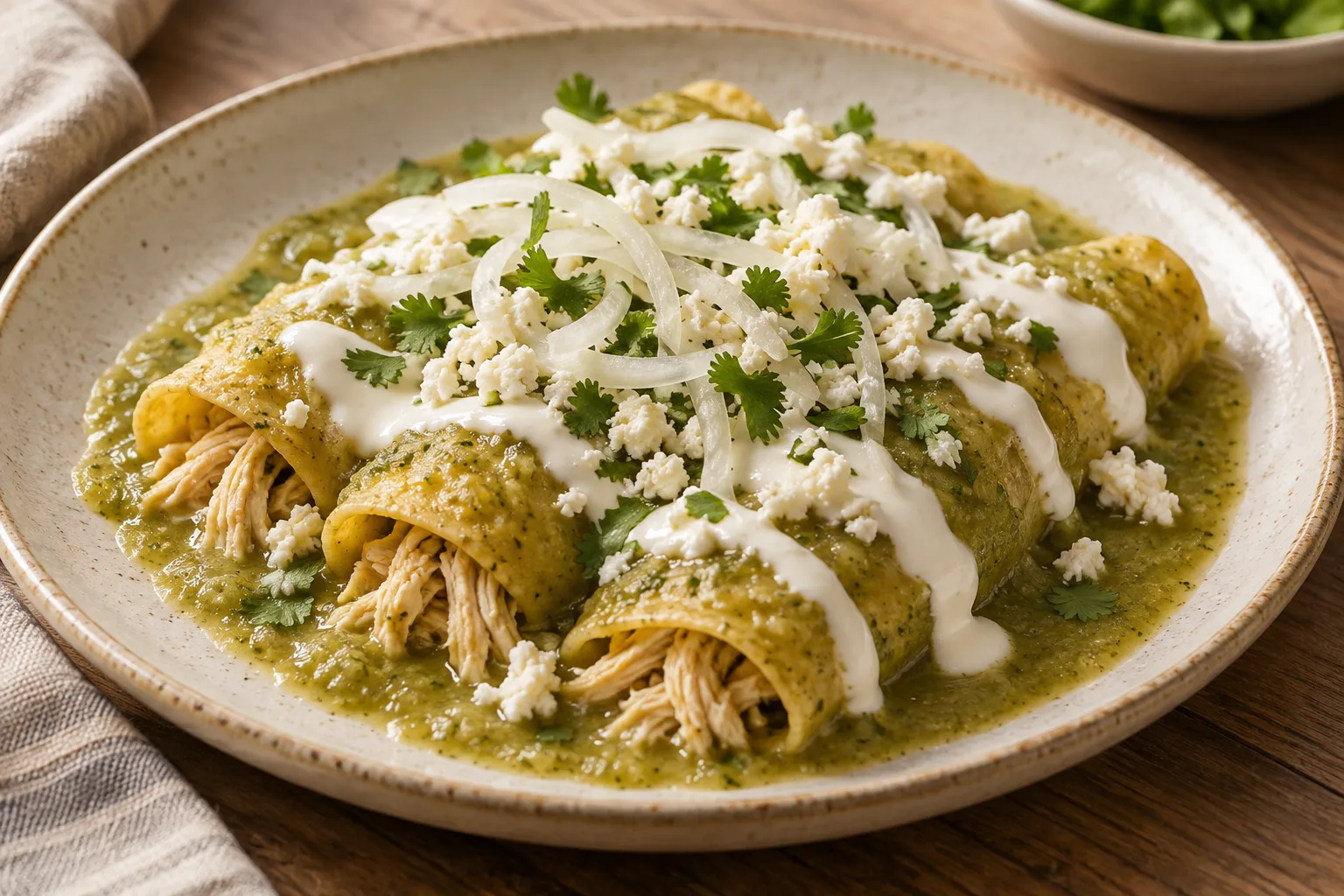
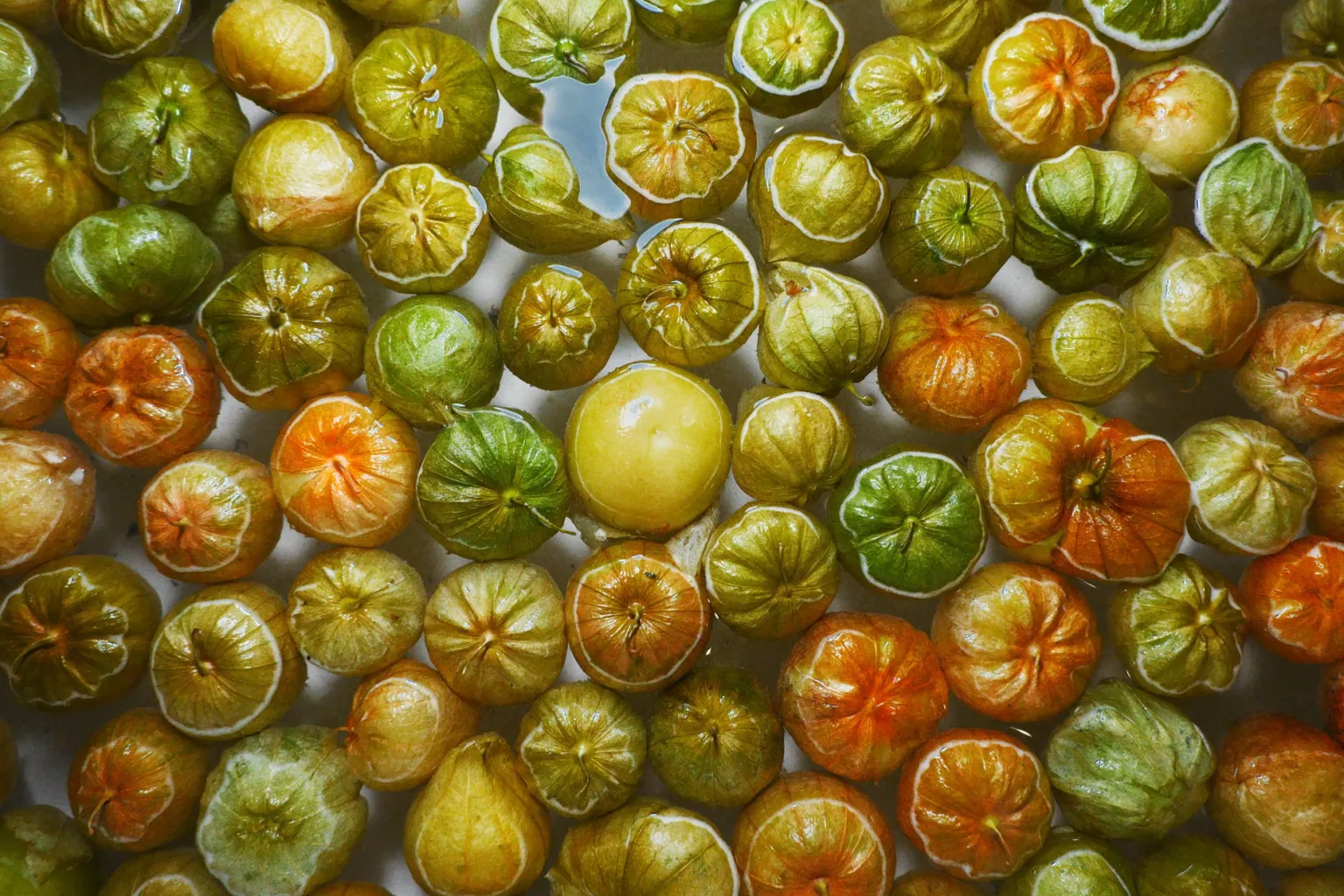
A tomatillo is the fruit of a plant in the Physalis genus. Its most distinctive feature is the thin, papery husk around the fruit. Despite sometimes being called a green tomato, it is not a red tomato that has failed to ripen; it is a different ingredient. It is used while green and can be eaten raw or included in cooked dishes. Tomatillos are commonly used for salsa verde and also appear in dishes such as enchiladas and chilaquiles. The name can be confusing when shopping, so identify the fruit by its characteristic husk and clear product labelling rather than by colour alone.
When to use it
Choose tomatillos when you want a green ingredient with a fresh, tangy character for a sauce, salad or other dish. They are especially associated with salsa verde and are also used in enchiladas and chilaquiles. They can be served raw, for example in salads or sauces, or included in a cooked preparation. Do not mistake them for unripe red tomatoes: the two ingredients are not interchangeable simply because they may both be green. If a recipe calls for tomatillos, look for the fruit with its characteristic husk.
How to use it
Remove the thin husk before using the fruit, and make sure you have identified a tomatillo rather than an unripe red tomato. Use it raw in salads or sauces, or add it to a cooked preparation. Salsa verde is one of its best-known uses; tomatillos are also used in chilaquiles and enchiladas. Their flavour is often described as sweet and somewhat tart, though it varies between varieties. For a simple preparation, make the tomatillo a main ingredient in a sauce and adjust the other ingredients to taste rather than assuming it behaves exactly like a common tomato.
Flavour and texture
Tomatillos usually bring a fresh, vegetal and somewhat tart flavour with a hint of sweetness. Their flesh tends to be denser and less watery than that of common tomatoes. The flavour can vary by variety, and some fruits may taste more fruity than others. As a result, a sauce or salad can differ from one batch to another; taste the ingredient and adjust the preparation to suit the result.
How to choose it
Look for the characteristic fruit covered by a thin, papery husk; green colour alone is not enough to identify it, since a tomatillo is not an unripe red tomato. If buying tomatillos without their husks, check that the product is clearly identified. The flesh can feel slightly sticky once the fruit is uncovered. Flavour varies between varieties, so do not expect every tomatillo to have exactly the same taste.
Storage
No specific storage temperature or duration is established here. If the product is packaged, follow the instructions on its label; if buying it loose, ask the seller how to store that particular produce. Do not assume that recommendations for common tomatoes apply in exactly the same way: a tomatillo is a different fruit, and its husk is one of its distinctive features.
Substitutions
The available information does not establish a direct substitute that reproduces a tomatillo’s flavour and texture. An unripe red tomato is not the same ingredient, even if both look green. If you replace tomatillos in a recipe, expect the result to differ and do not treat the replacement as an exact equivalent.
Common mistakes
A common mistake is confusing a tomatillo with an unripe red tomato. They are different ingredients, even though a tomatillo is green. Do not expect its texture to match that of a common tomato either: tomatillo flesh tends to be denser and less watery. Look for its characteristic husk and clear product identification when shopping.
Safety and allergens
For prepared tomatillo sauces and other packaged products, check the ingredient list and allergen information on the label. The composition of a prepared product depends on its ingredients; do not assume it is suitable for someone with an allergy just because it contains tomatillos.
Culinary uses
- Fresh ingredient for salads
- Base for salsa verde and other sauces
Recommended techniques
- Use raw in salads or sauces
- Cook into sauces, enchilada fillings, or preserves
Pairs well with
- Salsa verde
- Chilaquiles and enchiladas
Frequently asked questions
Is a tomatillo an unripe tomato?
No. A tomatillo is a different fruit from an unripe red tomato, even though both may be green.
How can I use tomatillos?
Use them raw in salads or sauces, or cooked in preparations such as salsa verde, chilaquiles and enchiladas.
What do tomatillos taste and feel like?
They are usually somewhat tart and vegetal, with a hint of sweetness. Their flesh tends to be denser and less watery than common tomato flesh.
Ingredient allergens
Allergen listThere are no verified associations for these ingredients yet.
Estimated nutrition
- Fat
- 1.15 g
- Saturates
- 0 g
- Carbohydrate
- 3.85 g
- Sugars
- 1.54 g
- Fibre
- 0.8 g
- Protein
- 1.54 g
- Salt
- 1.27 g
Sources and review
Automatically researched, cross-checked and validated content. Sources consulted:
- Alérgenos alimentarios | EFSA www.efsa.europa.eu/es/safe2eat/food-allergens
- Client Challenge doi.org/10.2307/jj.27939689.16
- Tomate - Wikipedia, la enciclopedia libre es.wikipedia.org/wiki/Tomate
- La historia del tomate en la cocina | Hida hida.es/historia-del-tomate-en-la-cocina/
- 6 VARIEDADES DE TOMATES Y SUS USOS EN COCINA - Masymas Supermercados super-masymas.com/variedades-de-tomates/
- Agencia Española de Seguridad Alimentaria y Nutrición www.aesan.gob.es/
- Que son los Tomatillos - El Aderezo, blog de cocina y gastronomía desde 2006 www.eladerezo.com/la-alacena/que-son-los-tomatillos.html
- El tomate: Historia, cocina y cultura. Cinco siglos entre ... www.scielo.cl/scielo.php?pid=S0719-49942025000300102&script=sci_arttext&tlng=es
- 8 variedades de tomate y su uso ideal en la cocina | Hostelería Salamanca www.hosteleriasalamanca.es/comer/comer-1/8-variedades-de-tomate-y-su-uso-ideal-en-la-cocina
- Allergies - Food Safety - European Commission food.ec.europa.eu/food-safety/campaign-2026/allergies_en
- Food Allergies | FDA www.fda.gov/food/nutrition-food-labeling-and-critical-foods/food-allergies
- Food allergens | Food Safety and Quality | FAO www.fao.org/food-safety/scientific-advice/food-allergens/en
- Food Allergy Labeling Laws: International Guidelines for Residents and Travelers - PMC pmc.ncbi.nlm.nih.gov/articles/PMC10169132/
- Allergen guidance for food businesses - GOV.UK www.gov.uk/government/publications/allergen-guidance-for-food-businesses/allergen-guidance-f…
- Tomatillo Verde Mexicano | Comprar Fresco en España jalapenostugitana.es/tomatillo-verde-mexicano/