- Category
- Vegetables
- State
- Fresh
- Usual unit
- unit
What it is
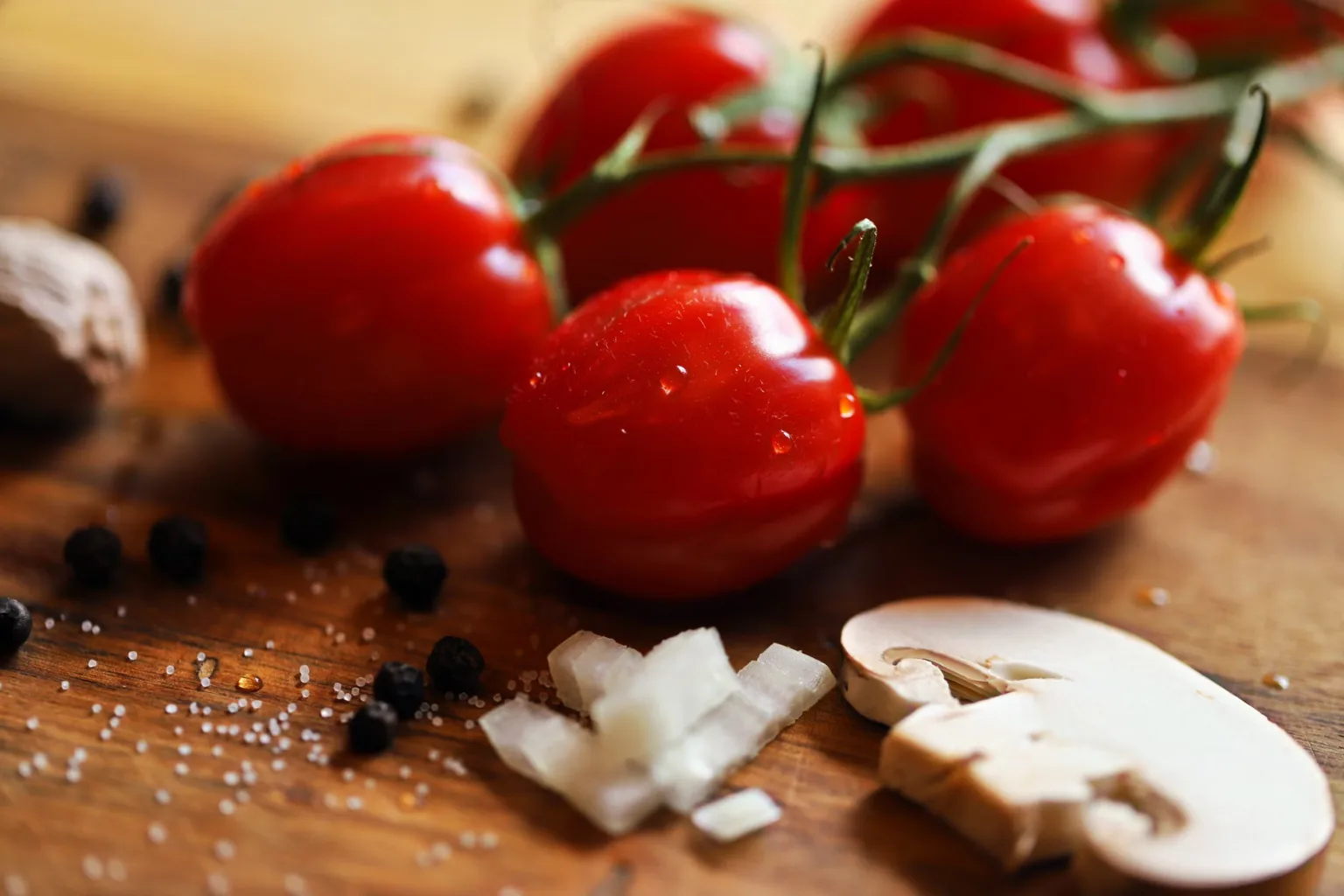
A tomato is the edible fruit of a plant in the nightshade family. In cooking, it is commonly treated as a vegetable, although botanically it is a fruit containing seeds. Tomatoes come in different sizes, shapes, and colors: some are small and firm, while others are large, meaty, and very juicy. These differences affect their pulp and liquid, so it helps to choose a type that suits the dish. Fresh tomatoes can be served whole, sliced, or chopped, and they also work well cooked or puréed. Their versatility makes them useful in simple everyday meals as well as sauces and soups.
When to use it
Choose firm, ripe tomatoes when you want slices that hold their shape in salads, sandwiches, or tomato-and-cheese dishes. Very juicy tomatoes work well chopped in salads and other fresh preparations, while meaty tomatoes with plenty of pulp are handy for sauces and fillings. If a tomato is very soft or overripe, use it promptly in a cooked dish rather than saving it for neat slices. Variety, ripeness, and texture all affect the result, so let the intended use guide your choice.
How to use it
Wash the tomato, remove the stem end, and cut it whole, into slices, wedges, or dice as the recipe requires. Serve it raw in a salad or sandwich; chop or purée it for soup or sauce. You can also stuff, bake, grill, fry, or stew tomatoes. Tomatoes with plenty of flesh are a practical choice for sauces, while small ones can be served whole or halved in salads. For a smoother texture, blend the preparation; to keep pieces intact, cut the tomato and use it without processing. Match the cut and type to the amount of juice and firmness you want in the dish.
Flavour and texture
Tomato flavor often combines sweet, fruity notes with fresh acidity, but the balance varies with variety and ripeness. The flesh may be firm and compact or soft and very juicy; the skin usually adds a little bite. Small, large, meaty, and pulp-rich tomatoes behave differently when cut and cooked. These are normal variations that let you choose fruit that holds its shape or breaks down readily into a sauce.
How to choose it
Look for clean, firm, plump tomatoes with smooth skins and no cracks, dark spots, bruised areas, or major damage. A ripe tomato usually gives slightly to gentle pressure and shows the color typical of its variety; not every tomato needs to be red. Avoid very soft fruit if you do not plan to cook it right away. Choose tomatoes to suit the recipe: meaty types are useful when you want less excess juice, and firm ones are often easier to slice neatly.
Storage
To better preserve flavor and texture, keep ripe tomatoes at room temperature and avoid chilling them if you plan to eat them fresh. Tomatoes that are not yet ripe can finish ripening on the counter, away from direct sunlight and heat. Check them regularly and use very soft or overripe ones promptly. Storage does not improve the quality of the fruit you start with; keep tomatoes where they will not be crushed, and follow package directions for packaged products.
Substitutions
Canned tomatoes can replace fresh ones in sauces and stews, although the product and resulting texture will differ. Tomato purée is another option for smooth or blended preparations. Replacing a meaty type with a juicier one may make a dish more liquid; swapping a slicing tomato for small tomatoes also changes the size of the pieces. Choose a substitute for the role the tomato plays in the recipe, not just by name.
Common mistakes
Do not choose a tomato by color alone: flesh, juiciness, and firmness matter too. A very soft tomato may fall apart when sliced, so it is not ideal for tidy rounds. Conversely, a firm or meaty tomato may not provide the juiciness you want in a salad. Avoid refrigerating ripe tomatoes when preserving their flavor and texture is the priority. Do not assume every type works equally well in every preparation.
Safety and allergens
For packaged tomatoes and tomato products, follow any storage and use directions on the label. Instructions can vary with the product and its presentation.
Culinary uses
- Fresh salad and sandwich ingredient
- Base for sauces, soups, stews, and cooked dishes
- Juicy garnish or filling
Recommended techniques
- Slice or chop for raw dishes
- Blend or purée for soups and sauces
- Bake, grill, stew, or roast
Pairs well with
- Basil and olive oil
- Mozzarella and bread
- Onion, garlic, and herbs
Frequently asked questions
Is a tomato a fruit or a vegetable?
Botanically, it is a fruit with seeds; in cooking, it is commonly used as a vegetable.
How should I choose tomatoes for sauce?
Choose ripe, meaty tomatoes if you want plenty of flesh and less excess juice. Variety and ripeness affect the finished texture.
How should ripe tomatoes be stored?
To better preserve flavor and texture, keep them at room temperature and avoid chilling them if serving fresh.
Estimated nutrition
- Fat
- 0 g
- Saturates
- 0 g
- Carbohydrate
- 35.7 g
- Sugars
- 14.3 g
- Fibre
- 14.3 g
- Protein
- 14.3 g
- Salt
- 0.45 g
Sources and review
Automatically researched, cross-checked and validated content. Sources consulted:
- En el etiquetado alimentario hay algunas menciones que son obligatorias eletiquetadocuentamucho.aesan.gob.es
- Client Challenge doi.org
- Tomate - Wikipedia, la enciclopedia libre es.wikipedia.org
- La historia del tomate en la cocina | Hida hida.es
- Los 6 mejores tipos de tomate y cómo usarlos en cocina mercadosantamariadelacabeza.es
- Food Selection & Storage | Home & Garden Information Center hgic.clemson.edu
- Tomatoes | Cooperative Extension Service uaf.edu
- The Potential of a Tomato | Institute of Culinary Education ice.edu
- tomato - FoodLink - Purdue Extension extension.purdue.edu
- Para la ciudadanía aesan.gob.es
- Arkansas Tomatoes | Buying, Storing, & Preparing uaex.uada.edu