- Category
- Vegetables
- State
- Fresh
- Usual unit
- unit
What it is
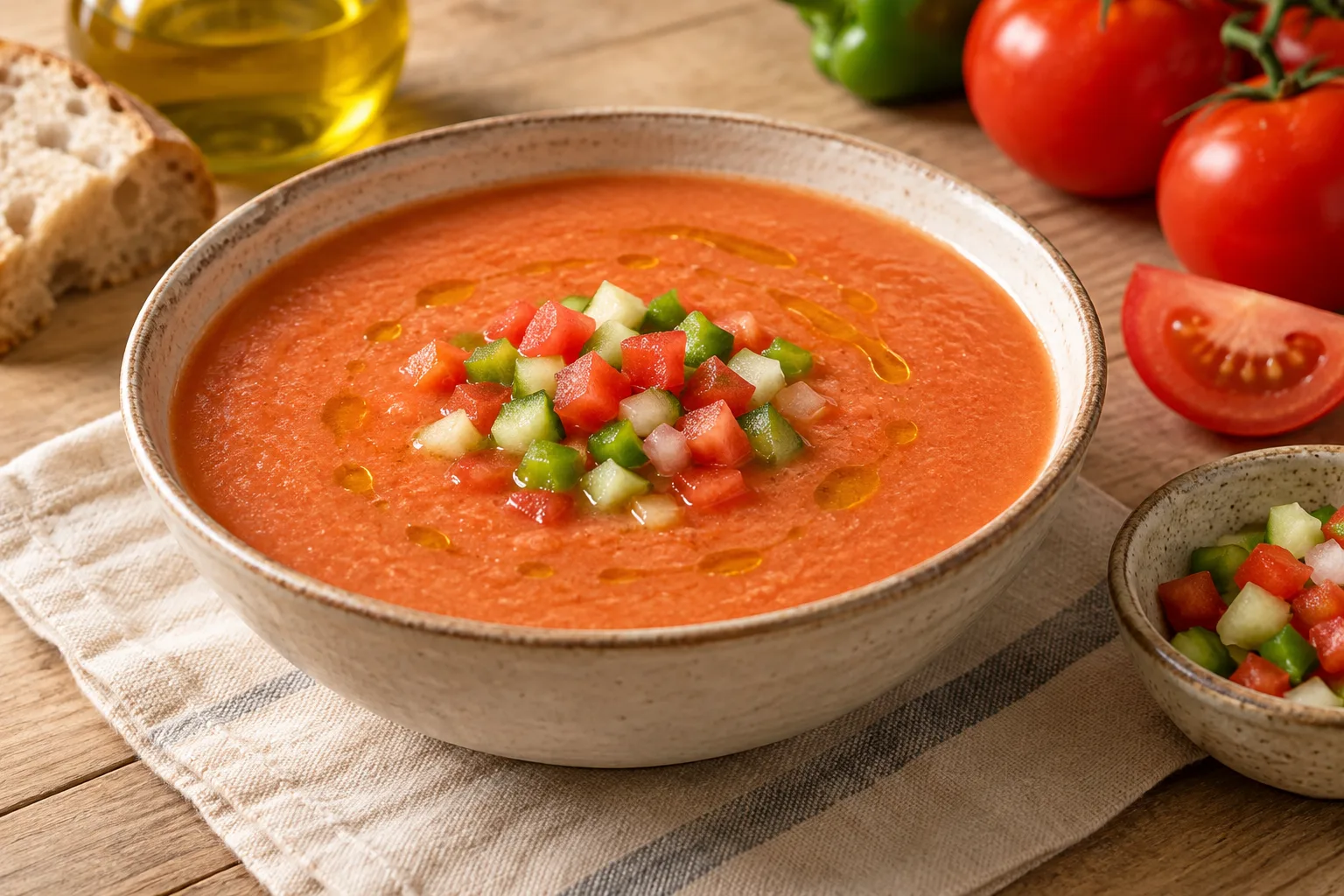
Tomato for garnish means fresh tomato used to accompany or finish a dish; it is not a specific botanical variety. The tomato is the fruit of Solanum lycopersicum, although it is commonly treated as a vegetable in cooking. Tomatoes vary in size, shape, colour, fleshiness and acidity, so the most useful choice depends on how it will be served. A large tomato can be cut into slices or wedges, while a small one can be served whole or halved. Its juicy flesh and gently sweet, characteristically tangy flavour bring freshness and contrast to salads and other dishes. If the garnish needs to hold its shape, choose a firm tomato; for a fuller, fleshier bite, a suitable salad tomato may work well.
When to use it
Use fresh tomato when you want to add colour, freshness and juicy texture to a salad, a finished dish or a simple vegetable plate. Slices provide broad pieces; wedges or dice distribute the tomato across more bites. Small tomatoes can be served whole or cut, depending on the dish. Fresh tomato can also accompany bread and olive oil or be included in preparations with onion and pepper. Choose the variety for the result you want: size for presentation, firmness for shape, and fleshiness for a more substantial bite.
How to use it
Choose a tomato whose size and firmness suit the dish. Just before serving, cut it into slices, wedges or dice with a clean knife; leave small tomatoes whole if their size works for the presentation. For a neat garnish, arrange the pieces on or beside the food, and avoid cutting them far ahead if you want them to look fresh. In a salad, combine tomato with other vegetables; for a simple serving, pair it with bread and olive oil. It can also be used in a cooked preparation with onion and pepper, though that makes it a cooked component rather than a raw garnish. Choose fleshier tomatoes for a fuller piece and small varieties when bite-sized portions are useful. Match the cut to the way the dish will be served rather than following a single fixed rule.
Flavour and texture
Tomato combines a sweet note with characteristic acidity and contains plenty of water, so cut pieces are juicy. Texture varies by variety: some tomatoes are firmer and fleshier, while others have more water or softer flesh. Size, colour and shape also differ. For a garnish with defined edges, a firm tomato is often convenient; for a more tender, substantial bite, choose a suitable salad tomato.
How to choose it
Choose a tomato with the cut and presentation in mind: a large one can provide slices, while small ones work as whole pieces or bite-sized garnishes. Look for a firm tomato when it needs to hold its shape; variety affects fleshiness, water content and acidity. Colour alone does not determine which tomato is best for a particular use. When several types are available, ask what they are and select according to the dish rather than assuming every tomato has the same texture.
Storage
Keep fresh tomatoes at room temperature. While they are ripening, cold storage can impair flavour and leave them soft or mealy. A ripe tomato can also lose flavour and aroma in the refrigerator; if you refrigerate one because you will not use it soon, take it out ahead of serving so some of its aromatic qualities can return. Handle it gently to avoid crushing and cut it when you are ready to prepare the garnish.
Substitutions
If you do not have the specified size, use another fresh tomato variety that can provide a similar cut and presentation. Cherry tomatoes can stand in for a large tomato when small or whole pieces suit the dish better; for slices, choose a firm, round tomato. Fleshiness, acidity and water content can differ by variety, so the result will not be identical. There is no universal quantity: adapt the number and size of pieces to the garnish.
Common mistakes
Do not choose a variety without considering the cut: a very soft tomato may lose its shape, while a small tomato cannot provide the same slices as a large one. Another mistake is assuming all tomatoes have the same fleshiness, water content or acidity. Avoid cutting the garnish too far ahead if you want it to look fresh. Colour alone is not enough to decide which tomato to use.
Safety and allergens
For prepared or packaged dishes containing tomato, check the ingredient and allergen information for that product. Composite recipes and products may contain ingredients in addition to tomato.
Culinary uses
- Fresh garnish for salads and finished dishes
- Sliced or chopped ingredient for raw preparations
Recommended techniques
- Slice or dice shortly before serving
- Use whole small tomatoes or cut larger tomatoes into wedges
Pairs well with
- Onion and pepper in cooked preparations
- Bread and olive oil in simple fresh servings
Frequently asked questions
Which tomato works well for sliced garnish?
Choose a tomato of a suitable size that is firm enough to keep its shape when sliced. Salad tomatoes can be fleshy, but texture varies between varieties.
Can cherry tomatoes be used as a garnish?
Yes. Serve them whole or cut when small pieces suit the presentation. They will not make large slices like a bigger tomato.
How should fresh tomatoes be stored?
Keep them at room temperature. Cold can affect flavour and texture; if a ripe tomato has been refrigerated, take it out before serving.
Ingredient allergens
Allergen listThere are no verified associations for these ingredients yet.
Sources and review
Automatically researched, cross-checked and validated content. Sources consulted:
- Alérgenos alimentarios | EFSA www.efsa.europa.eu/es/safe2eat/food-allergens
- Client Challenge doi.org/10.2307/j.ctvndv9t9.22
- Tomate - Wikipedia, la enciclopedia libre es.wikipedia.org/wiki/Tomate
- La historia del tomate en la cocina | Hida hida.es/historia-del-tomate-en-la-cocina/
- Tomate Italiano: Historia, Variedades y Usos en la Cocina | Casa Longini 🇮🇹 Productos Italianos www.casalongini.com/tomate-italiano-historia-variedades-y-usos-en-la-cocina/
- Etiquetado de sustancias que causan alergias e intolerancias alimentarias www.aesan.gob.es/seguridad-alimentaria/informacion-alimentaria/etiquetado-sustancias
- Tomates: los imprescindibles de la gastronomía | Consumer www.consumer.es/alimentacion/tomates-imprescindibles-gastronomia-verano
- Tomate de verano, guía de tipos y recetas - Mercado de Chamartín mercadodechamartin.es/blog/guia-tomate-verano-variedades-recetas/
- Allergies - Food Safety - European Commission food.ec.europa.eu/food-safety/campaign-2026/allergies_en
- Food Allergies | FDA www.fda.gov/food/nutrition-food-labeling-and-critical-foods/food-allergies
- Risk assessment of food allergens: part 1: review and validation of Codex alimentarius priority allergen list through risk assessment: meeting report www.who.int/publications/i/item/9789240042391
- Food allergens | Food Safety and Quality | FAO www.fao.org/food-safety/scientific-advice/food-allergens/en
- Allergen guidance for food businesses - GOV.UK www.gov.uk/government/publications/allergen-guidance-for-food-businesses/allergen-guidance-f…
- Allergen labelling for consumers | Food Standards Australia New Zealand www.foodstandards.gov.au/consumer/labelling/allergen-labelling
- Safety of yellow/orange tomato extract as a novel food pursuant to Regulation (EU) 2015/2283 - PMC pmc.ncbi.nlm.nih.gov/articles/PMC10190518/
- Cocinar con tomates: variedades, consejos y sabrosas recetas | Gastronosfera www.gastronosfera.com/tendencias/cocinar-con-tomates-variedades-consejos-y-sabrosas-recetas