- Category
- Sauces and condiments
- State
- Paste
- Usual unit
- tablespoon
What it is
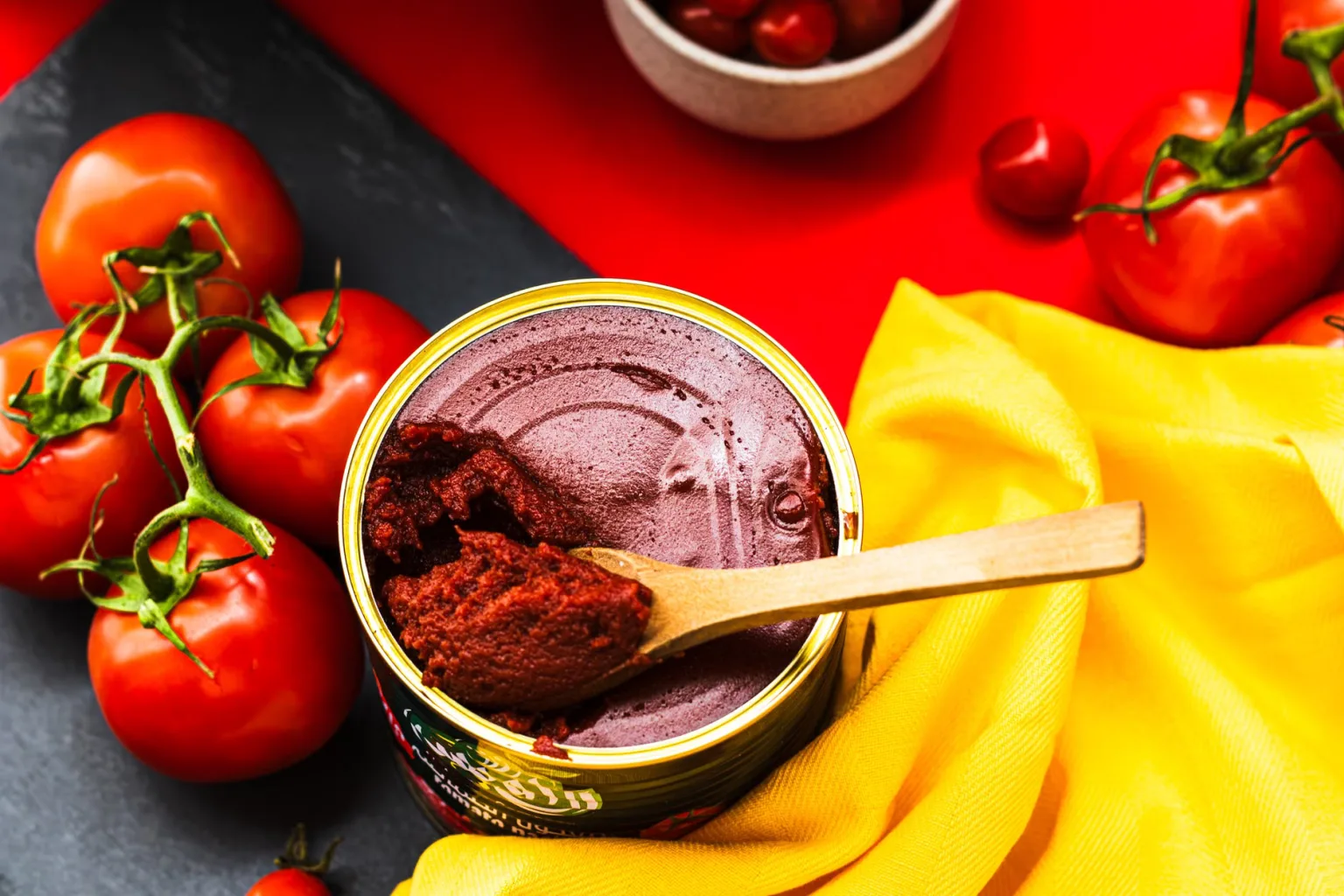
Tomato paste is a dense preparation made by reducing tomatoes and removing some of their water. It differs from tomato purée and tomato sauce in concentration and water content, although names and formulations can vary between countries and manufacturers. It may be sold in small cans or tubes, and some versions contain ingredients in addition to tomatoes. Because its flavor is concentrated, it is generally used in small amounts to reinforce the taste, color, or consistency of a dish.
When to use it
Use tomato paste when a recipe needs a stronger tomato flavor or more body without adding as much liquid as a less concentrated sauce would. It can be added to sauces, soups, and stews, or spread sparingly on pizza dough. It can also be mixed with water or another liquid to make a less concentrated tomato base. Its flavor is powerful, so add it gradually and taste the dish before adjusting the amount.
How to use it
Stir tomato paste into a sauce, soup, or stew and mix well so the concentrate is evenly distributed. Add it during cooking so it can combine with the other ingredients; if the recipe needs a thinner base, mix it separately with water or another liquid before adding it. For pizza, use a moderate layer because the flavor is more intense than that of ordinary tomato sauce. Taste and adjust gradually, bearing in mind that concentration and formulation can vary from one product to another.
Flavour and texture
Tomato paste has a concentrated tomato flavor that may taste more acidic or sweeter depending on the product and its raw material. Its texture is thick and pasty, so it can add body and color to moist dishes. Its concentration gives even a small quantity a noticeable presence; not all brands or formulations taste exactly alike.
How to choose it
Read the product name and ingredient list to check whether you are buying concentrated paste, purée, or sauce, which can differ in water content and concentration. If you prefer a simple product, check whether the label lists only tomatoes or includes other ingredients such as salt. Packaging also varies; small cans and tubes are among the formats available. Use the package information to check the product’s composition and applicable instructions.
Storage
Store unopened product according to its package instructions. Once opened, refrigerate it and follow the manufacturer’s directions for storage and use; do not assume there is one storage period for every product, as this can depend on the formulation and package. Use clean utensils when serving and close the container again. If the label gives specific instructions, follow those rather than general guidance.
Substitutions
Tomato purée or tomato sauce can be used as alternatives, but they are less concentrated or contain more liquid than paste. To keep a similar texture, adjust the amount and reduce recipe liquid when needed. Another option is to mix tomato paste with water or another liquid for a less concentrated base. The result will depend on the product’s formulation and the dish.
Common mistakes
Do not treat tomato paste, purée, and sauce as interchangeable without adjustment: their concentration and water content can differ. Adding too much paste at once can dominate a dish, so start with a modest amount and taste before adding more. Do not assume every brand has the same ingredients or that every opened package stores the same way; check and follow its label.
Safety and allergens
Check the label for the ingredients and the product’s storage and safe-use instructions. After opening, follow the manufacturer’s directions and refrigerate when instructed. If you have an allergy or intolerance, check the package information rather than assuming all formulations are the same.
Culinary uses
- concentrated tomato flavoring for sauces and stews
- thickener and color enhancer in cooked dishes
Recommended techniques
- stir into sauces, soups, or stews during cooking
- mix with water or another liquid to make a less concentrated tomato base
Pairs well with
- onion and garlic
- basil, oregano, and other herbs
Frequently asked questions
How is tomato paste different from tomato purée?
Paste is usually thicker and more concentrated, while purée may contain more water. Names and formulations vary, so check the package.
Can I add tomato paste directly to a stew?
Yes. Stir it through the stew so it is evenly distributed, and add it gradually because its flavor is concentrated.
How should I store tomato paste after opening?
Refrigerate it and follow the manufacturer’s storage and use instructions on the package.
Estimated nutrition
- Fat
- 0 g
- Saturates
- 0 g
- Carbohydrate
- 21.2 g
- Sugars
- 12.1 g
- Fibre
- 6.1 g
- Protein
- 3.03 g
- Salt
- 1.21 g
Sources and review
Automatically researched, cross-checked and validated content. Sources consulted:
- En el etiquetado alimentario hay algunas menciones que son obligatorias eletiquetadocuentamucho.aesan.gob.es
- ¿Por qué la muerte es origen de miedos y tabúes? doi.org
- The Essential Glossary of Cooking Terms for the Culinary Arts - Escoffier escoffier.edu
- Vamos a Conservar Alimentos: Tomates extension.psu.edu
- Salsa de Tomate (con tomates tipo puré) (Spanish) - National Center for Home Food Preservation nchfp.uga.edu
- Canning Tomatoes and Tomato Products | UNL Food | Nebraska food.unl.edu
- IBD-AID ALLOWABLE FOODS LIST, BY PHASE umassmed.edu
- Canning tomatoes and tomato products | OSU Extension Service extension.oregonstate.edu
- Para la ciudadanía aesan.gob.es
- Cooking Classes | ICE Recreational Classes recreational.ice.edu
- Pasta de tomate | Gastronomía & Cía gastronomiaycia.com
- Secretos para Potenciar el sabor de tus recetas con pastas de Tomate importacionescantabria.com
- 5 usos de la pasta de tomate en tu cocina que… | PrimeChef primechef.com.mx