- Category
- Vegetables
- State
- Fresh
- Usual unit
- g
What it is
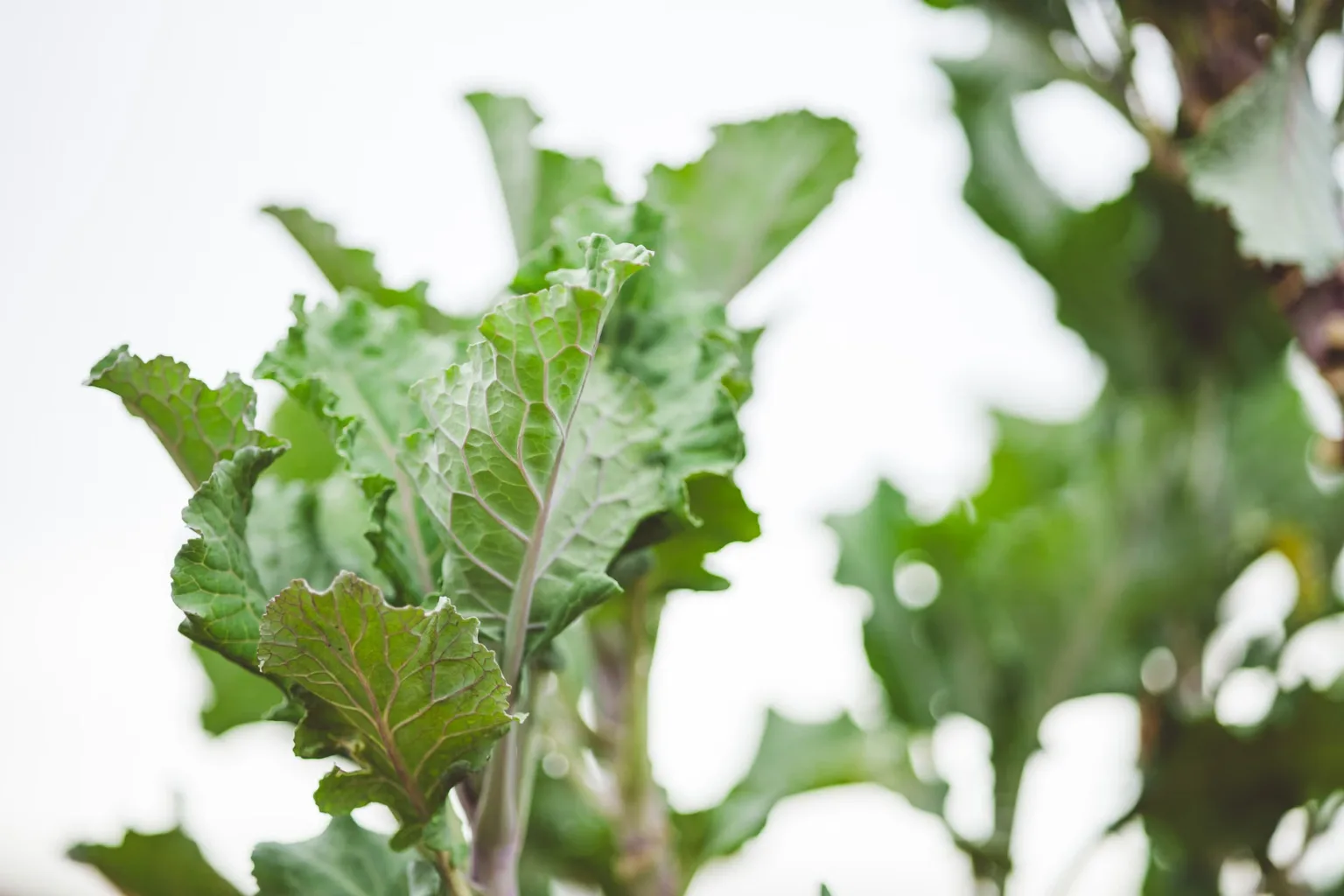
Tuscan kale is a leafy cabbage variety commonly identified as lacinato or dinosaur kale. Compared with curly kale, its leaves are longer and flatter, with a pronounced, puckered surface, and they do not form a compact head. It is sold fresh and can be used whole, sliced into ribbons or chopped. The central rib and stems can be firm, so they are often removed or cooked differently from the leaves. Like other leafy cabbages, Tuscan kale can be eaten raw or added to cooked dishes.
When to use it
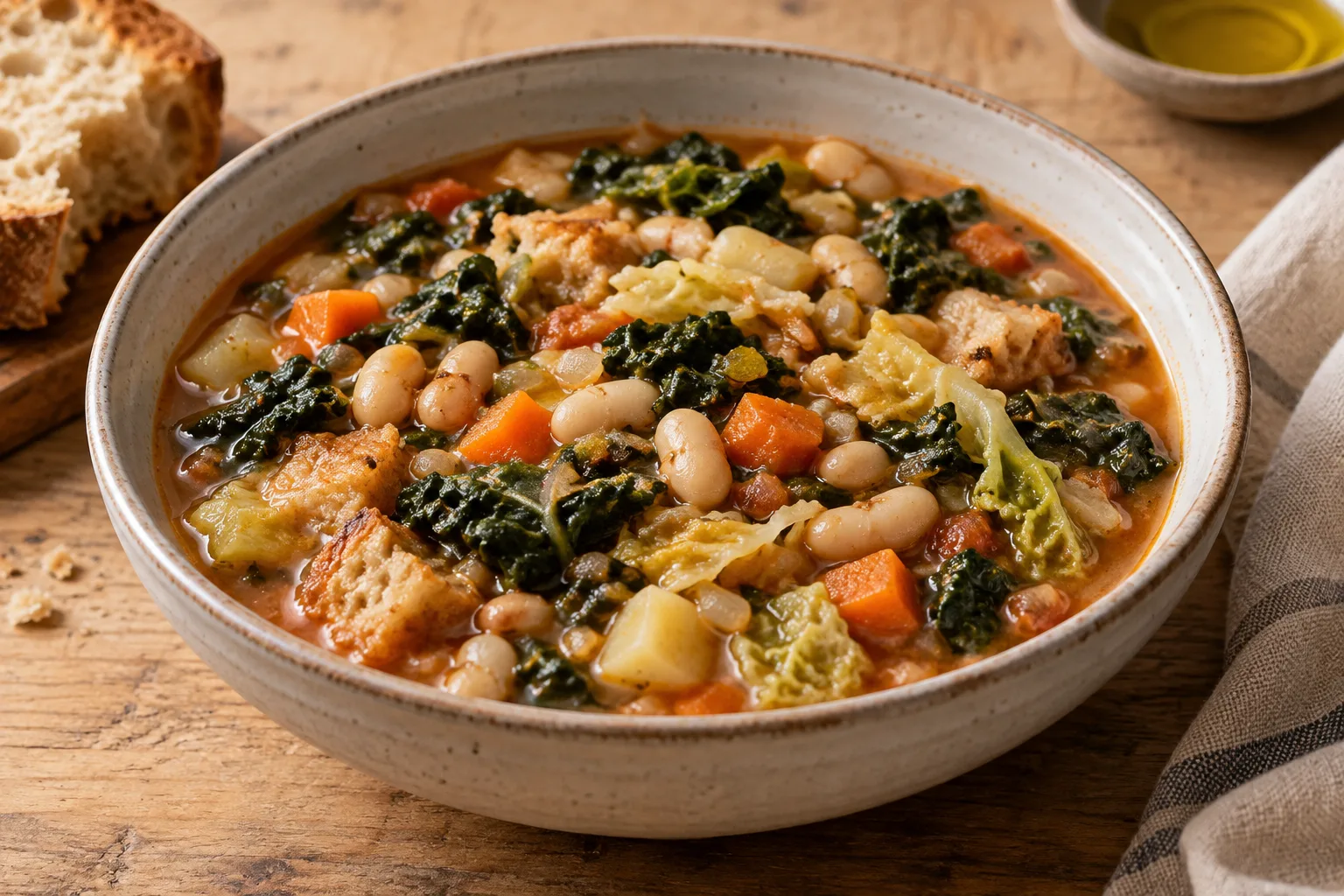
Use it when you want a substantial leafy green that keeps more texture than a tender leaf in soups, stews or pasta. The leaves can also form the base of a salad; if they feel firm, slice them thinly and massage the dressing into them before serving. Tuscan kale is particularly associated with soups, but it can also be sautéed, steamed or roasted until crisp. Choose the method for the texture you want and the firmness of the leaves.
How to use it
Separate the leaves and wash them carefully to remove dirt. Dry them, then cut or pull the leaves away from the central rib, especially if it is thick. For a salad, slice the leaves into thin ribbons and briefly massage them with oil, lemon or your chosen dressing to soften them. For cooking, add them to soup, stew or pasta, or sauté them with a little oil and garlic. You can also steam the leaves or roast them until crisp. Check their texture as they cook and adjust the cut to suit the dish.
Flavour and texture
The leaves are substantial and ridged, and their ribs and stems can be firmer than the green leaf portions. The taste is vegetal and may be bitter, as with some leafy cabbages. Thin slicing and massaging with dressing can make the leaves more pleasant raw; sautéing or roasting changes their texture and brings out toasted notes.
How to choose it
Choose leaves that look fresh and firm, without wilted or yellowing patches. Tuscan kale has a distinctive long, ridged shape and is less curly than common curly kale. Leaf size and stem firmness can vary; thicker ribs may need extra preparation or cooking. If buying loose leaves, choose a bunch you can use while it still looks fresh.
Storage
Keep fresh Tuscan kale refrigerated and use it while the leaves remain firm and in good condition. Avoid leaving it at room temperature for extended periods, and remove any deteriorated leaves before storage. How long it keeps depends on its initial freshness and storage conditions, so check its condition before cooking. Wash the leaves before preparation and dry them well if using them raw.
Substitutions
In soups and stews, curly kale can play a similar role, though its leaves have a different shape and texture. Spinach can replace it in some cooked dishes, but it softens more and loses more volume. Adjust the cut and when you add the substitute according to how firm it is; do not assume all leafy greens need identical cooking or handling.
Common mistakes
Leaving a thick central rib in the leaves can make salad pieces difficult to chew. It is also a mistake to handle every leaf in the same way: whole leaves may be firm, while thin ribbons soften more readily. If serving it raw, wash and dry it well; when cooking, check the texture rather than assuming every leafy green behaves like spinach.
Safety and allergens
Wash the leaves with potable water before eating or cooking them, and discard leaves that are damaged or show signs of spoilage. If you have a food allergy, check packaged-food information and the ingredients in dressings and accompaniments.
Culinary uses
- Hojas para ensaladas y guarniciones
- Verdura para sopas, guisos y salteados
Recommended techniques
- Lavar, secar y retirar la nervadura central dura
- Masajear las hojas crudas con aceite o aliño
- Saltear o cocinar al vapor
- Asar las hojas hasta que queden crujientes
Pairs well with
- Limón y aceite de oliva
- Ajo y pimienta
- Sopas y platos de pasta
- Frutas, legumbres y frutos secos en ensaladas
Frequently asked questions
Should I remove the stem from Tuscan kale?
The central rib can be firm and difficult to chew, particularly when raw. Remove it if it is thick, or cut it separately and cook it according to its texture.
Can Tuscan kale be eaten raw?
Yes. Wash and dry the leaves, remove tough ribs and slice them thinly. Massaging them with oil or dressing helps make them more pleasant in a salad.
What dishes can I use it in?
Add it to soups, stews and pasta, sauté it, steam it or roast it. It can also be a salad green if you prepare the leaves to make them more tender.
Ingredient allergens
Allergen listThere are no verified associations for these ingredients yet.
Estimated nutrition
- Fat
- 0.88 g
- Saturates
- 0 g
- Carbohydrate
- 9.73 g
- Sugars
- 0 g
- Fibre
- 1.8 g
- Protein
- 3.54 g
- Salt
- 0.11 g
Sources and review
Automatically researched, cross-checked and validated content. Sources consulted:
- Alérgenos alimentarios | EFSA www.efsa.europa.eu/es/safe2eat/food-allergens
- Client Challenge doi.org/10.2307/jj.27939689.16
- Agencia Española de Seguridad Alimentaria y Nutrición www.aesan.gob.es/
- Col rizada: una verdura versátil y nutritiva para tus platos de invierno – Fortini fortinigroup.es/col-rizada-una-verdura-versatil-y-nutritiva-para-tus-platos-de-invierno/
- 5 técnicas esenciales para preparar y cocinar kale o col rizada para ensaladas, sopas, guisos y más www.directoalpaladar.com.mx/directo-al-paladar-mexico/5-tecnicas-esenciales-para-preparar-co…
- Tendencias en alimentos saludables - col rizada: MedlinePlus enciclopedia médica medlineplus.gov/spanish/ency/patientinstructions/000729.htm
- Nutritional, Therapeutic, and Functional Food Perspectives of Kale (Brassica oleracea var. acephala): An Integrative Review - PMC pmc.ncbi.nlm.nih.gov/articles/PMC12610807/
- El kale o col rizada: origen, cultivo y usos | Pancha sazonadorespancha.com/el-kale-guia-completa/?srsltid=AYCX9vJpMQITUXqsCYFW8uOiz4lHpHY8HGL3kYD…
- Nueve recetas con kale súper sanas, riquísimas y fáciles de preparar para disfrutar de todos sus beneficios www.directoalpaladar.com/ingredientes-y-alimentos/col-rizada-kale-verdura-hoja-verde-que-sup…
- Kale o Col rizada: Propiedades, beneficios y recetas | Planeta Huerto www.planetahuerto.es/blogs/revista/kale-o-col-rizada-propiedades-beneficios-y-recetas
- Kale: qué es, beneficios para la salud, propiedades y usos en la cocina www.lavanguardia.com/vivo/20160415/401122717617/kale-col-rizada-detox-nutrientes-alimentacio…
- “La otra” col: de Saboya | CocinaSinReceta.com www.cocinasinreceta.com/tecnicas/manual-de-instrucciones/la-otra-col-de-saboya/
- Ensalada de col rizada con judías rojas, nueces y pasta | CreatiVegan.net creativegan.net/archives/ensalada-de-col-rizada-con-judias-rojas-nueces-y-pasta/
- Todo lo que debes saber sobre la col kale, la crucífera más popular www.ametllerorigen.com/es/blog/col-kale-o-col-rizada-la-crucifera-mas-popular/