- Category
- Meat
- State
- Fresh
- Usual unit
- g
What it is
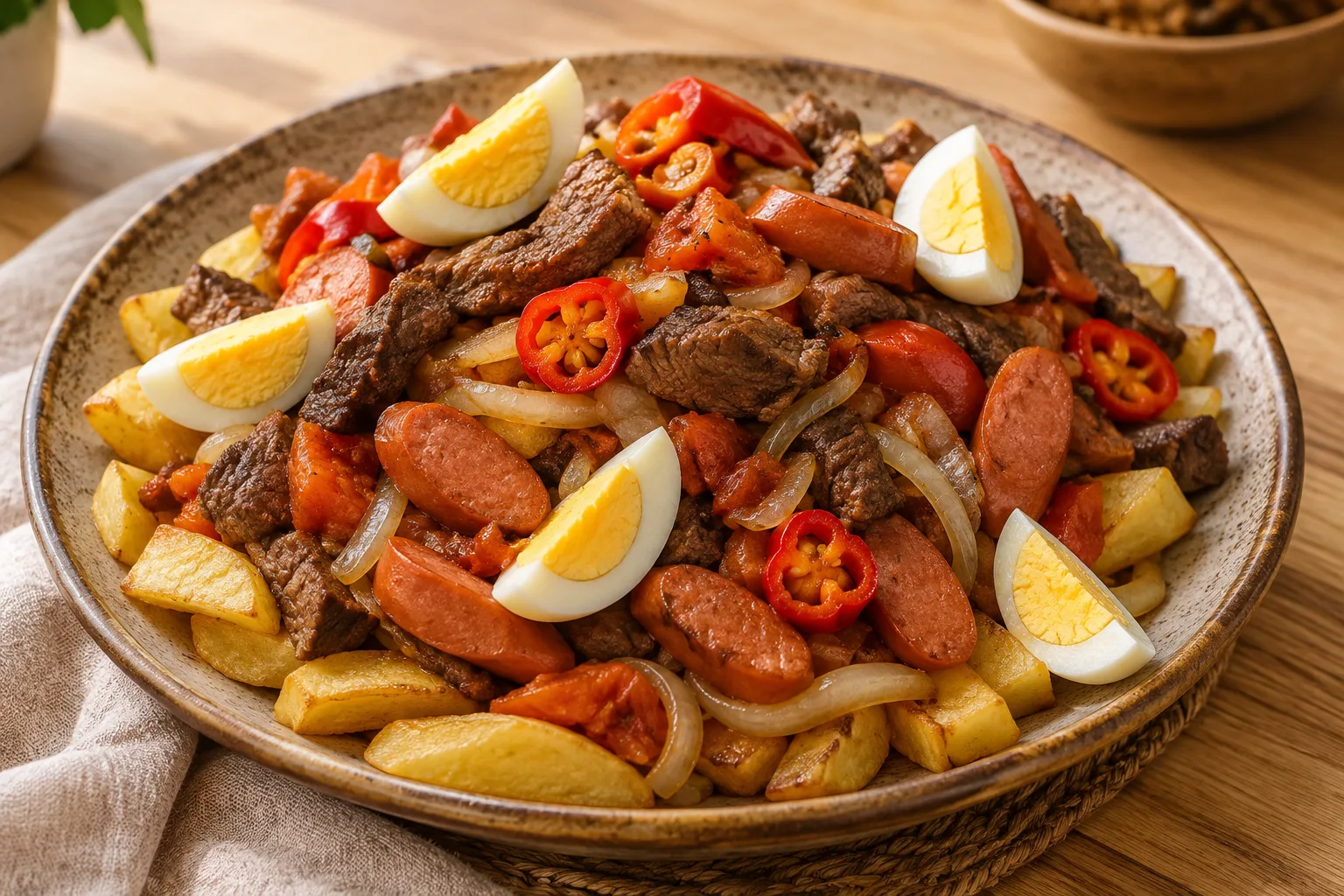
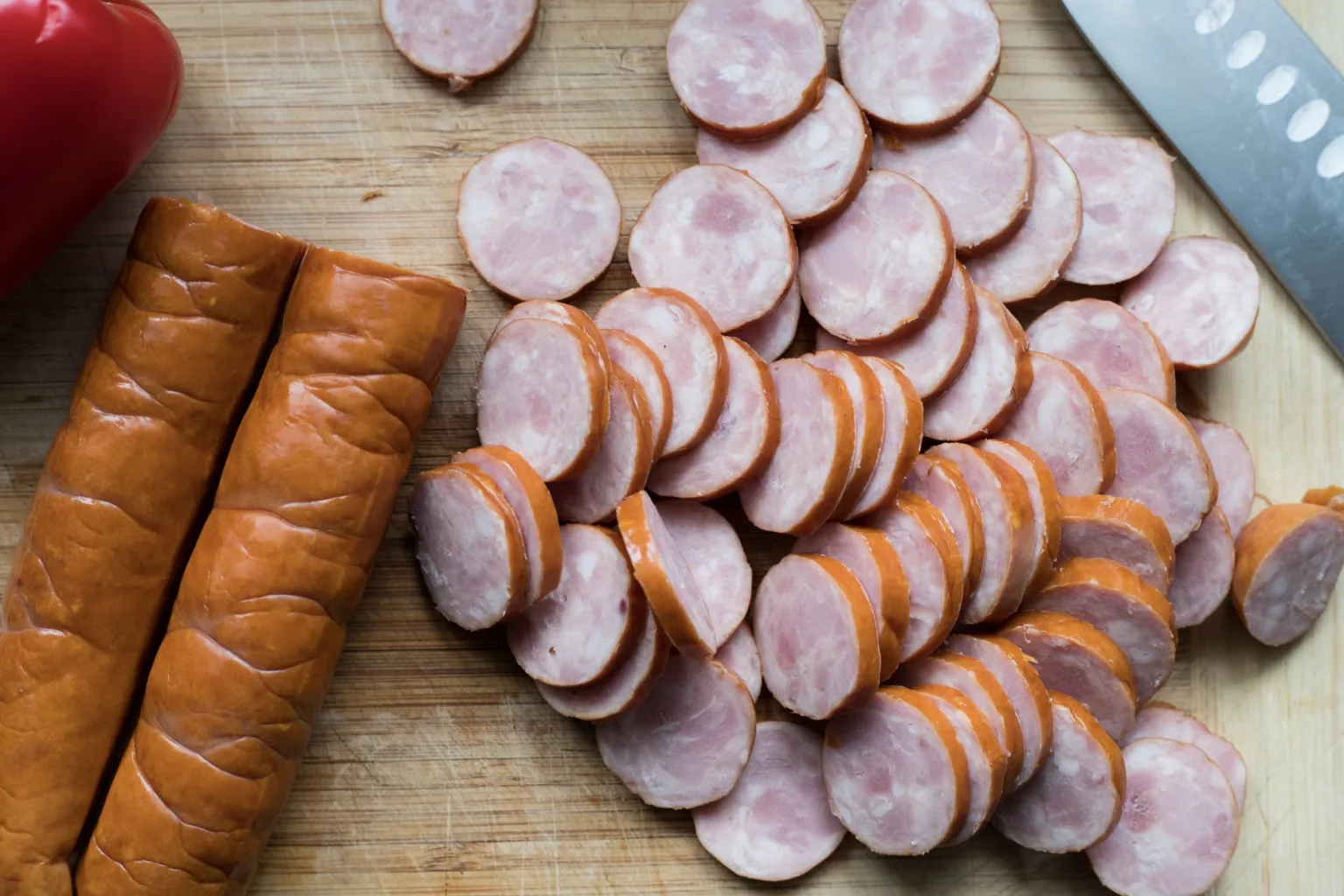
Vienna sausages are seasoned meat sausages made in an elongated shape. The name can refer to different products depending on the country and manufacturer. A classic description places them among scalded sausages, while commercial recipes may use different meat combinations, casings, sizes, and seasonings. Some cooked sausages are ready to heat and serve; other products need cooking. The name alone does not establish the exact ingredients or how a particular pack should be prepared. Check its ingredient list and instructions before serving.
When to use it
Use them for a quick meal, a snack, or a warm sandwich. They work simply in bread with mustard and can also be served with sauerkraut. They are convenient when the particular product is ready to heat, but the name does not guarantee that every version is eaten in the same way. Check the package before serving and follow its directions, especially if it does not clearly state that the sausages are cooked or ready to eat.
How to use it
First check the package to confirm whether the sausages are cooked and how they should be heated or cooked. For a product marked ready to heat, warm it gently in hot water or in a pan, taking care not to dry or split the casing; you can also brown it on a griddle or grill if the instructions allow. Serve it whole in bread with mustard, or alongside sauerkraut and other ingredients of your choice. If the product requires cooking, do not serve it until you have followed the manufacturer's directions. Do not transfer cooking times or temperatures from one variety to another.
Flavour and texture
Flavor and texture depend on the meat blend, seasonings, casing, and processing of the individual product. Some versions have a smoky note; others are milder or more highly seasoned. Scalded sausages are generally described as having a uniform texture, and the outside may brown when heated. Check the label rather than assuming every Vienna sausage follows one recipe.
How to choose it
Choose an intact package and read the ingredient list to see which meats and seasonings it contains. Check whether the product is cooked or needs cooking, its stated date, and its storage instructions. Recipes differ among brands and varieties, so the name “Vienna” alone does not confirm ingredients, flavor, or intended use.
Storage
Follow the storage directions on the package and observe the stated date. The available evidence does not establish a universal refrigeration or freezing period for every Vienna sausage. After opening, follow the manufacturer's specific guidance and do not eat the product if the package is damaged or it shows signs of spoilage.
Substitutions
A beef sausage can replace a mixed-meat version when you want to avoid a particular meat, but its flavor and texture may differ. Chicken or turkey versions are also available. Check the label: recipes and seasonings vary, and changing the meat does not guarantee that other ingredients or allergens are absent.
Common mistakes
Do not assume every Vienna sausage contains the same meat, is smoked, or is ready to eat. Treating a product that needs cooking as a cooked sausage can lead to incorrect preparation. Read the package directions and do not automatically transfer cooking times or methods between products.
Safety and allergens
Follow the package's preparation and storage directions. Check the ingredient list and allergen information for each product because composition can vary. If it is unclear whether a sausage is cooked or ready to eat, do not infer this from its name.
Culinary uses
- Quick meal or main dish
- Snack or appetizer
Recommended techniques
- Warm gently in hot water
- Heat on a griddle or grill
Pairs well with
- Mustard
- Sauerkraut
- Bread
Frequently asked questions
Can Vienna sausages be eaten without heating?
It depends on the product. Some cooked sausages are ready to heat and serve; check the package to confirm how that particular product should be eaten.
What goes well with Vienna sausages?
Bread and mustard are familiar accompaniments, and sauerkraut can also be served alongside some sausages.
Do all Vienna sausages contain the same meat?
No. Products can use different meat blends and seasonings. Read the ingredient list to find out what a particular sausage contains.
Ingredient allergens
Allergen listThere are no verified associations for these ingredients yet.
Estimated nutrition
- Fat
- 20 g
- Saturates
- 6 g
- Carbohydrate
- 2 g
- Sugars
- 2 g
- Fibre
- 0 g
- Protein
- 10 g
- Salt
- 2.45 g
Sources and review
Automatically researched, cross-checked and validated content. Sources consulted:
- Alérgenos alimentarios | EFSA www.efsa.europa.eu/es/safe2eat/food-allergens
- Agencia Española de Seguridad Alimentaria y Nutrición www.aesan.gob.es/
- Tipos de salchichas: variedades y características www.campofrio.es/tipos-de-salchichas
- Salchichas alemanas: un alimento milenario con más de 1500 variedades - Picken picken.es/salchichas-alemanas-un-alimento-milenario-con-mas-de-1500-variedades/
- Allergies - Food Safety - European Commission food.ec.europa.eu/food-safety/campaign-2026/allergies_en
- Food Allergies | FDA www.fda.gov/food/nutrition-food-labeling-and-critical-foods/food-allergies
- Allergen guidance for food businesses - GOV.UK www.gov.uk/government/publications/allergen-guidance-for-food-businesses/allergen-guidance-f…
- Artigo - Editora Artemis doi.org/10.37572/edart_3110243386
- - YouTube www.youtube.com/watch?v=rDlWbsGX0xM
- Cómo Preparar Salchichas De Viena Caseras: Una Guía Detallada especiasbenavidez.com/blog/posts/preparacion-salchichas-viena-caseras-0817cced20c7/
- Salchicha de Viena - Wikipedia, la enciclopedia libre es.wikipedia.org/wiki/Salchicha_de_Viena
- Cómo cocinar salchicha de Viena: 10 Pasos (con imágenes) es.wikihow.com/cocinar-salchicha-de-Viena