- Category
- Drinks
- State
- Liquid
- Usual unit
- cup
What it is
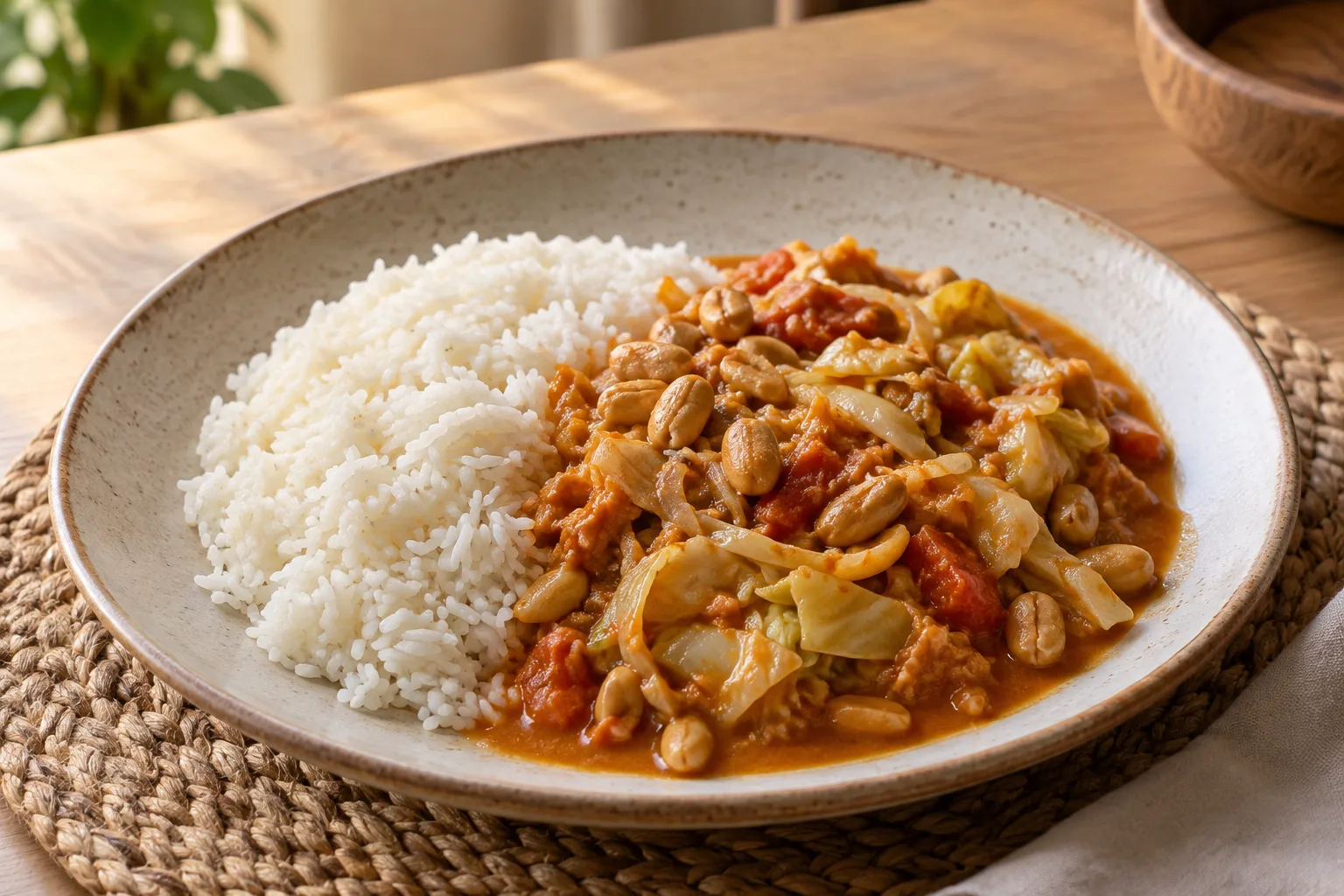
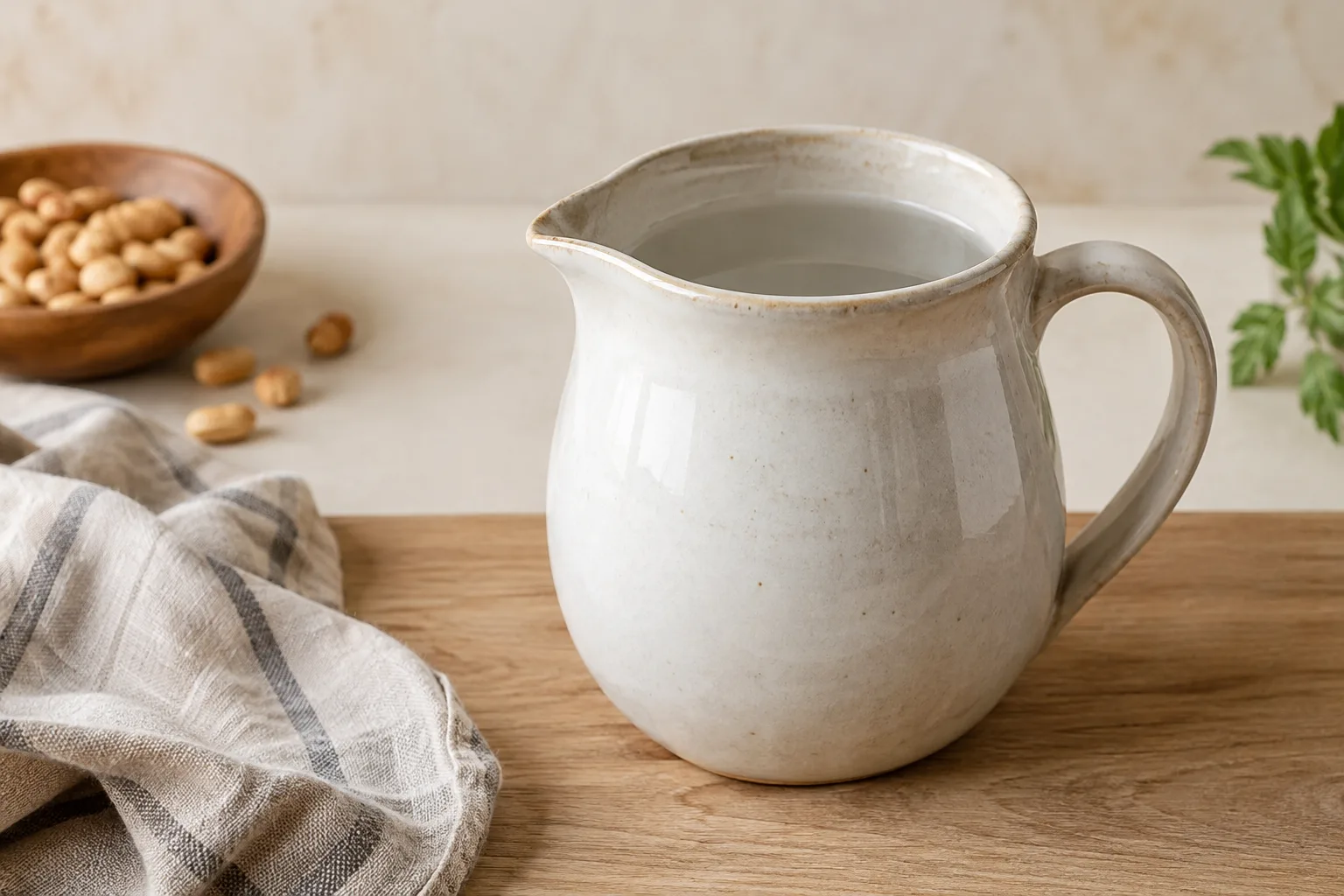
Water for peanut stew is the liquid added to the pot to make and adjust the sauce as the other ingredients cook. In a mafé recipe, it is gradually mixed with peanut butter to turn the thick paste into a smoother, more workable sauce. Water also supports the cooking of chicken and vegetables, and more can be added if the stew becomes too thick. Water does not provide the dish’s characteristic flavor on its own: that comes from ingredients such as peanut butter, tomato, spices and, when used, broth.
When to use it
Add water when you need to loosen peanut butter and turn it into a sauce that can be mixed into the stew. Adding it in stages lets you check the consistency before pouring in more. Water also serves as the cooking liquid for chicken and vegetables. If the sauce thickens too much as it cooks, you can add a little more; for a deeper savory flavor, a mafé recipe can also use chicken broth instead of water.
How to use it
Pour water gradually into the peanut butter while stirring, until the paste is smooth enough to mix into the pot. Adding it in stages helps control the texture and reduces the chance of lumps. Then cook the chicken and vegetables in the sauce as directed by the recipe, stirring from the bottom when needed to keep it from sticking. If the stew reduces and becomes too thick, add a little more water and stir. Alternatively, use chicken broth instead of water; remember that broth contributes its own flavor and seasoning.
Flavour and texture
Water has a neutral taste and adds fluidity rather than peanut flavor. Mixed with peanut butter, it helps turn a dense paste into a smooth, pourable sauce. The amount added affects how thick the finished stew is, so pour it in gradually and adjust to the sauce’s texture.
How to choose it
For cooking, use potable water that you would normally drink. If choosing broth instead, check the ingredient list and allergen information on the package, since commercial broths can vary in composition. The water itself does not need any special feature for this preparation.
Storage
Store water according to the usual conditions for your potable water supply. When cooking, take only the amount you need and do not pour water that has touched utensils or ingredients back into a shared container. If you prepare broth to use instead, follow the storage instructions on its packaging.
Substitutions
Chicken broth can replace water in peanut stew and gives it a more pronounced savory flavor. Broth can also be used instead of water in this style of stew. Prepared broths vary in composition and seasoning, so check the label and adjust other seasonings to taste.
Common mistakes
Adding all the water at once can make the sauce thinner than you want. Pour it in stages, especially when loosening the peanut butter. It is also easy to forget that broth is not neutral: if you use it instead of water, account for its flavor and seasoning before adding more salt or other seasonings.
Safety and allergens
Use potable water for cooking. If replacing it with packaged broth, check the product label and allergen information.
Culinary uses
- Liquid for loosening peanut paste into a smooth stew sauce
- Cooking liquid for stews and rice
Recommended techniques
- Whisk gradually into peanut butter to reduce lumps
- Add during cooking to loosen a stew that has become too thick
Pairs well with
- Peanut butter or peanut paste
- Tomato paste
- Chicken and root vegetables
- Rice
Frequently asked questions
When should I add water to peanut stew?
Add it gradually while mixing the peanut butter to make a smooth sauce. Water is also used as the cooking liquid.
Can I use broth instead of water?
Yes. Chicken broth can replace water in peanut stew, but it adds its own flavor and seasoning.
What if the sauce becomes too thick?
Add a little more water and stir until the sauce reaches the consistency you want.
Ingredient allergens
Allergen listThere are no verified associations for these ingredients yet.
Sources and review
Automatically researched, cross-checked and validated content. Sources consulted:
- ¿Qué es más efectivo para reducir el consumo de agua, la concienciación o un incremento de las tarifas? doi.org/10.64628/aao.56cdfwcqt
- ¿Qué es lo que puede el agua? Límites y posibilidades de las prácticas políticas para el acceso y defensa del agua como derecho en Argentina | Agua y Territorio / Water and Landscape doi.org/10.17561/at.v1i2.1339
- Evolución del léxico culinario desde 1932 a 1972 openalex.org/W2291578502
- Mafe senegalés (guiso de verduras con cacahuete) elpais.com/gastronomia/recetas/2017/03/19/receta/1489947477_047072.html
- Etiquetado de sustancias que causan alergias e intolerancias alimentarias aesan.gob.es/seguridad-alimentaria/informacion-alimentaria/etiquetado-sustancias
- 1 www.edu.xunta.gal/portal/sites/web/files/protected/content_type/advertisement/2012/07/03/pla…
- Mafé: cómo hacer el guiso de cacahuete de Malí, plato nacional de África Occidental sekaigohan.com/es/recipes/africa/mali/mafe
- Receta Agua de Cacahuate – Cocinando con Rita cocinandoconrita.com/la-receta-del-agua-de-cacahuate-abasolo/
- Mafé : la recette traditionnelle sénégalaise pas à pas vivreausenegal.fr/decouvrir/cuisine/mafe
- Mafé connaissance.org/gastronomie/mafe/
- La recette traditionnelle du mafé : origines, ingrédients et secrets d'un ragoût à l'arachide chez-makadi-delice.com/blog/recette-traditionnelle-mafe
- Plasas: guiso gambiano de hojas de boniato con aceite de palma sekaigohan.com/es/recipes/africa/gambia/plasas
- Hispanoamérica en el paisaje lingüístico de Sevilla openalex.org/W2572475970